- What Is the Minimum Deck Railing Height Required by IRC Code (36″ vs 42″)?
{“title”:”What Is the Minimum Deck Railing Height Required by IRC Code (36\” vs 42\”)?”} Determining the correct barrier elevation for your outdoor space is a critical safety step for any homeowner. Whether you are building a new structure or replacing old components, understanding the minimum deck railing height required by IRC Code (36″ vs 42″)…
- When Does Building Code Legally Require 42-Inch High Railings on High Decks?
Determining when building code legally require 42-inch high railings on high decks often confuses homeowners and contractors alike. While many residential structures rely on standard height requirements, specific conditions trigger stricter safety mandates for elevated platforms. Understanding these thresholds is essential for ensuring your outdoor space complies with local regulations and keeps occupants safe from…
- Measuring Railing Height: From the Deck Floor Surface to Top of Cap Rail
Measuring railing height from the deck floor surface to the top of the cap rail is a critical task for any homeowner or contractor. Getting these dimensions correct ensures your outdoor space remains compliant with local safety regulations and provides genuine protection for those using the deck. Whether you are building a new structure or…
- Multi-Level Decks: Transitioning Railing Heights Between Upper and Lower Steps
Designing multi-level decks requires careful planning to ensure safety and structural integrity when transitioning railing heights between upper and lower steps. When your outdoor living area features distinct elevations, the way you connect your guards and handrails determines both the aesthetic appeal and the legal compliance of the build. Homeowners often struggle with the geometry…
- Does a Freestanding Ground-Level Floating Deck Need Any Safety Railings?
Deciding whether a freestanding ground-level floating deck needs any safety railings involves looking closely at your local building code and the specific elevation of your project. Many homeowners assume that because a structure is small or close to the earth, it is exempt from standard safety protocols. However, the legal threshold for guardrails is almost…
- The 4-Inch Sphere Code: Why Baluster Openings Must Reject a 4-Inch Ball
The 4-Inch Sphere Code exists to ensure that guardrails and balusters remain safe for children by preventing them from getting their heads or limbs trapped in gaps. Building codes in the United States mandate that any opening in a guard must not be large enough for a 4-inch diameter sphere to pass through. This simple…
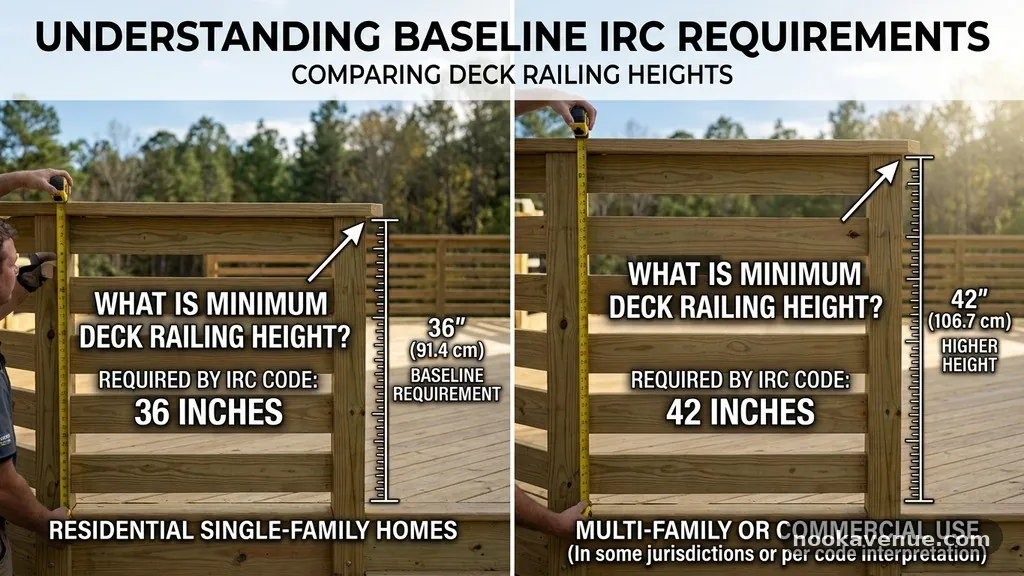 {“title”:”What Is the Minimum Deck Railing Height Required by IRC Code (36\” vs 42\”)?”} Determining the correct barrier elevation for your outdoor space is a critical safety step for any homeowner. Whether you are building a new structure or replacing old components, understanding the minimum deck railing height required by IRC Code (36″ vs 42″)…
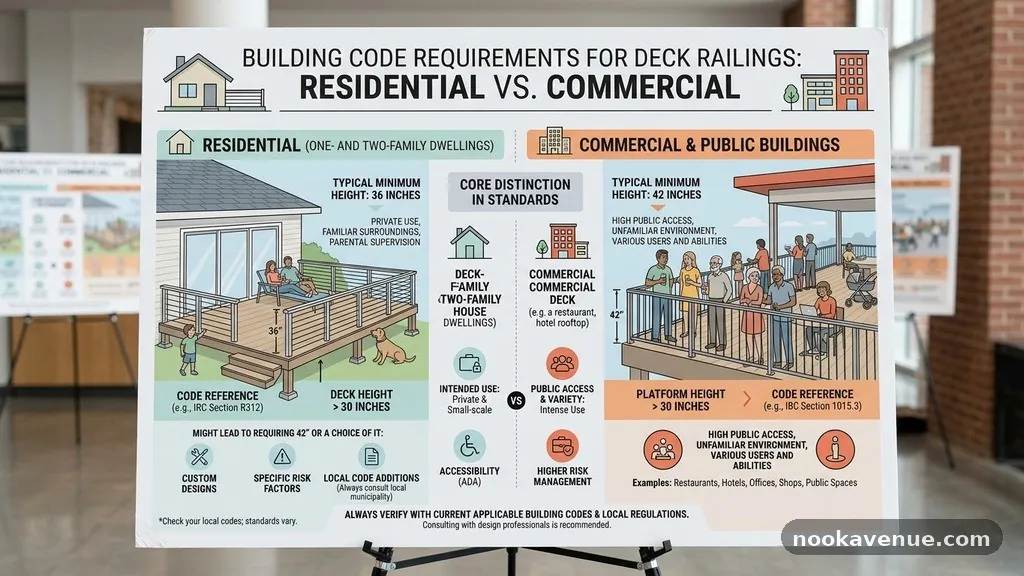 Determining when building code legally require 42-inch high railings on high decks often confuses homeowners and contractors alike. While many residential structures rely on standard height requirements, specific conditions trigger stricter safety mandates for elevated platforms. Understanding these thresholds is essential for ensuring your outdoor space complies with local regulations and keeps occupants safe from…
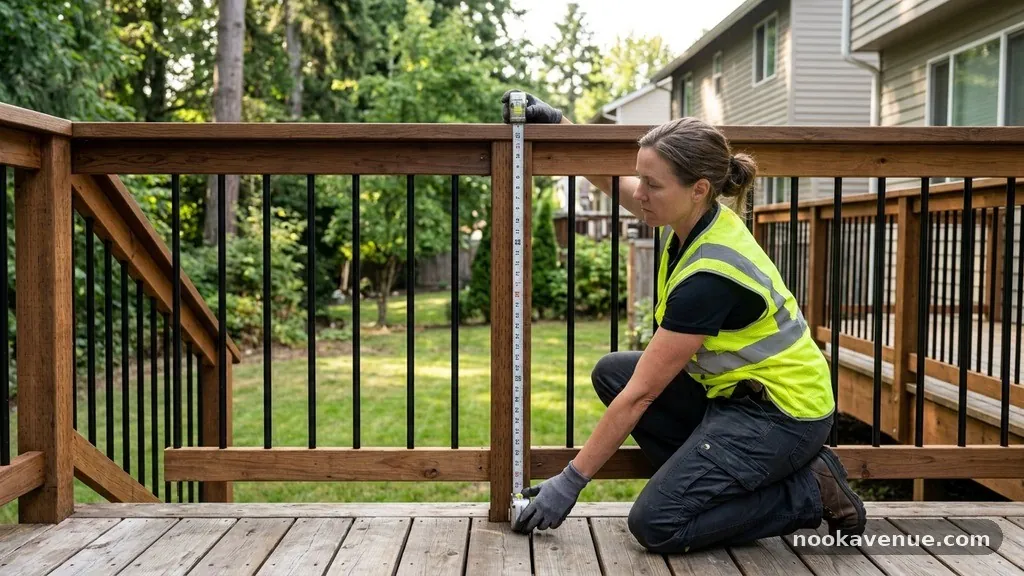 Measuring railing height from the deck floor surface to the top of the cap rail is a critical task for any homeowner or contractor. Getting these dimensions correct ensures your outdoor space remains compliant with local safety regulations and provides genuine protection for those using the deck. Whether you are building a new structure or…
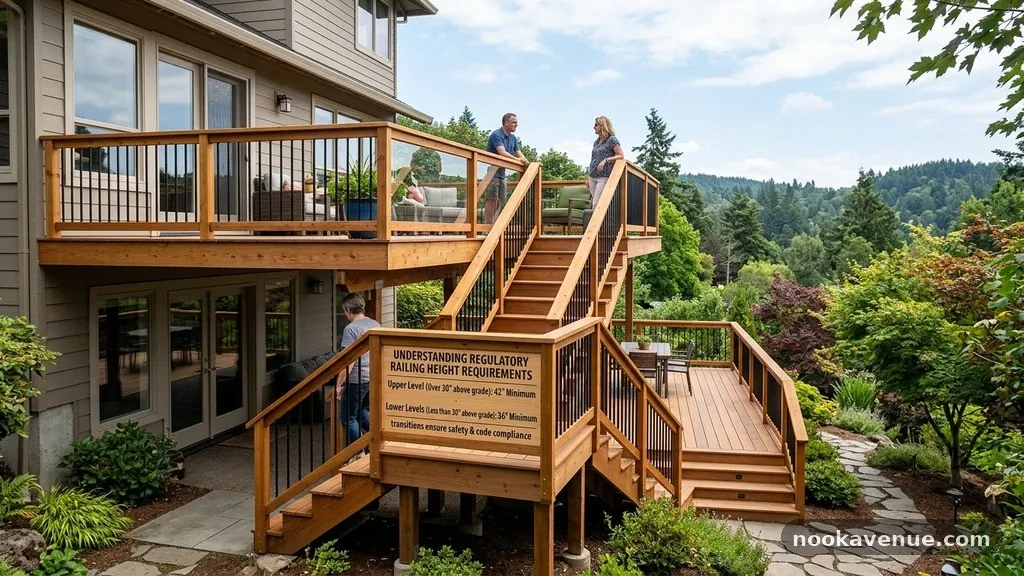 Designing multi-level decks requires careful planning to ensure safety and structural integrity when transitioning railing heights between upper and lower steps. When your outdoor living area features distinct elevations, the way you connect your guards and handrails determines both the aesthetic appeal and the legal compliance of the build. Homeowners often struggle with the geometry…
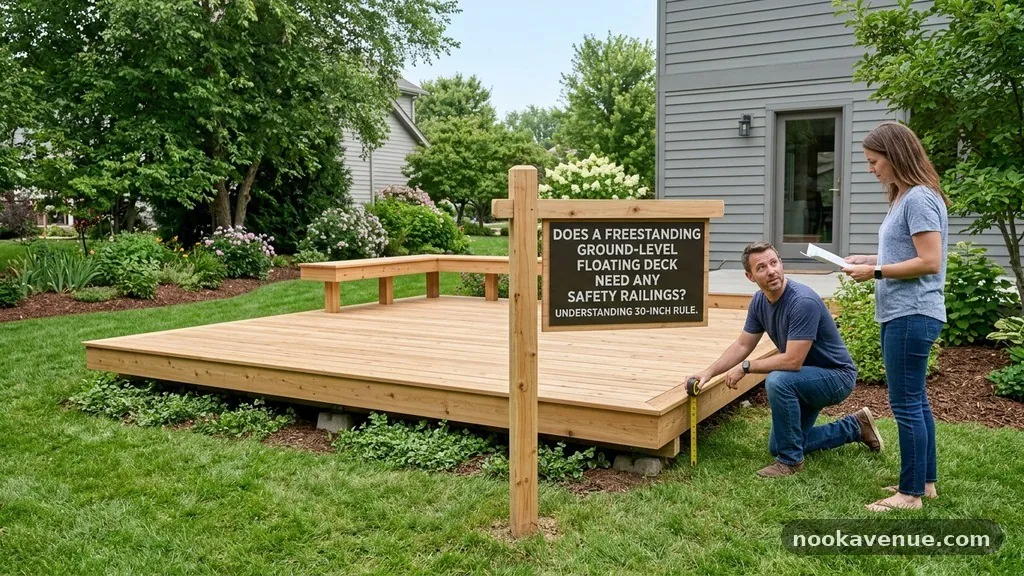 Deciding whether a freestanding ground-level floating deck needs any safety railings involves looking closely at your local building code and the specific elevation of your project. Many homeowners assume that because a structure is small or close to the earth, it is exempt from standard safety protocols. However, the legal threshold for guardrails is almost…
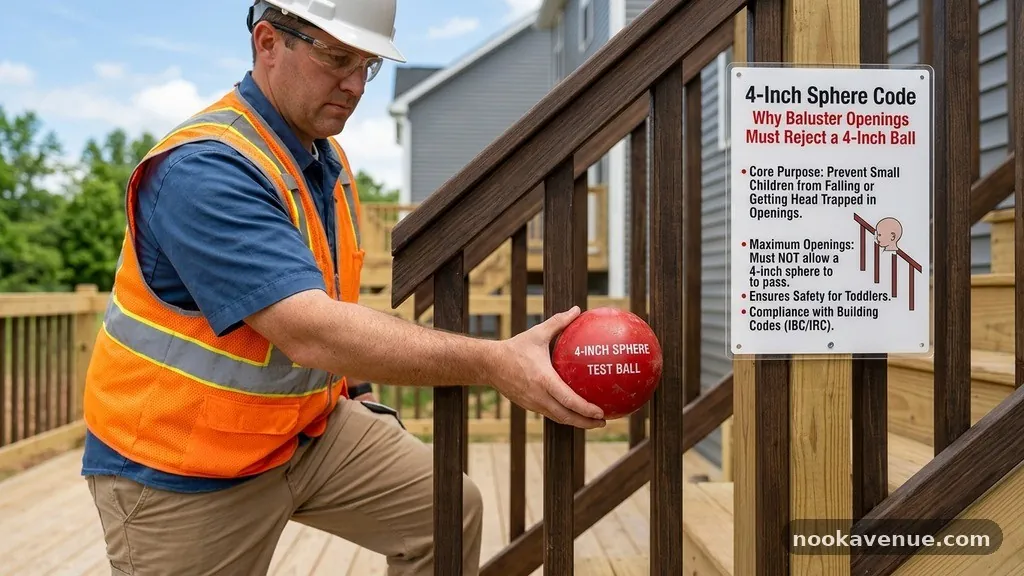 The 4-Inch Sphere Code exists to ensure that guardrails and balusters remain safe for children by preventing them from getting their heads or limbs trapped in gaps. Building codes in the United States mandate that any opening in a guard must not be large enough for a 4-inch diameter sphere to pass through. This simple…