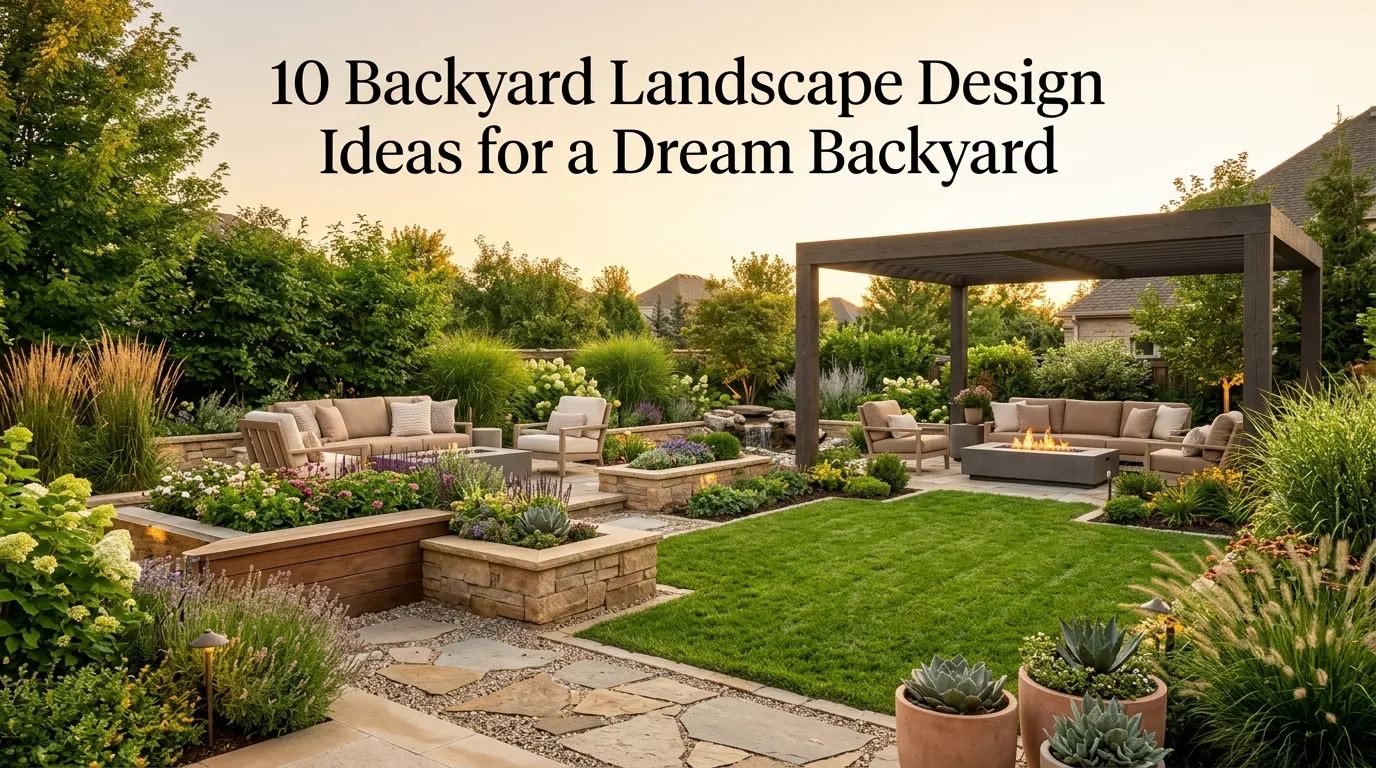
10 Backyard Landscape Design Ideas for a Dream Backyard
A backyard can be much more than an open patch of grass behind the house. With thoughtful landscaping, it can become a comfortable place for morning coffee, family dinners, weekend gatherings, gardening, or simply relaxing at the end of a long day.
The challenge is knowing where to begin. A backyard may have plenty of potential, but without a clear plan, it is easy to add plants, furniture, paths, and decorative features that do not work well together. A beautiful landscape is not necessarily the one with the most elements. It is the one where each part has a purpose and the entire yard feels connected.
Good landscape design starts with the way you want to use the space. Maybe you want a welcoming patio for entertaining, a private garden retreat, a play-friendly lawn, or a low-maintenance outdoor area that looks polished without requiring constant upkeep.
I’ve noticed that the most successful backyards usually combine several simple ideas rather than relying on one dramatic feature. Layered planting, defined outdoor rooms, comfortable seating, attractive pathways, and thoughtful lighting can completely change how a yard feels.
You also do not have to complete everything in one season. A backyard can evolve gradually. Start with the layout, establish the main planting areas, and then add features as your budget and time allow.
The ideas below are designed to help you create a backyard that feels beautiful, practical, and personal while working with the space, climate, and lifestyle you already have.
Table of Contents
1. Layered Planting Beds
Create depth by combining plants of different heights, textures, and forms.
2. Defined Outdoor Rooms
Divide the backyard into useful areas for relaxing, dining, gardening, or entertaining.
3. Natural Stone Pathways
Guide movement through the yard with practical and visually appealing paths.
4. Cozy Patio Retreat
Create a comfortable outdoor living area that feels connected to the landscape.
5. Layered Garden Borders
Use structured borders to give planting areas a finished appearance.
6. Backyard Privacy Planting
Create a sense of seclusion with thoughtful plants, screens, and natural barriers.
7. Water Features
Introduce the soothing visual and auditory qualities of water.
8. Outdoor Lighting
Extend the usability of the backyard with warm, purposeful evening illumination.
9. Native Plant Gardens
Build a beautiful landscape around plants suited to local growing conditions.
10. Multi Season Color
Choose plants and materials that keep the yard interesting throughout the year.
1. Layered Planting Beds
Quick Benefits
- Adds depth and dimension
- Makes planting areas feel fuller
- Creates visual interest
- Allows different plants to complement each other
- Works in both large and small backyards
Why It Works
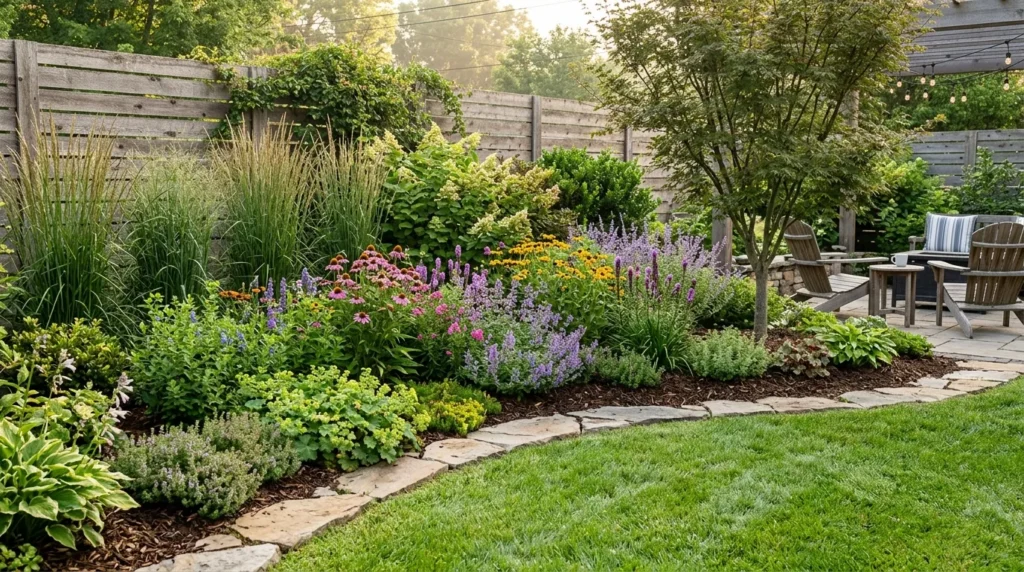
One of the easiest ways to make a landscape look professionally designed is to plant in layers. Instead of placing every plant at the same height, combine low groundcovers, medium-height perennials or shrubs, and taller plants or small trees.
This creates a sense of depth and helps the garden look natural rather than flat. Layering also allows you to see different shapes and textures as you move through the yard.
The idea works particularly well along fences, patios, walkways, and the edges of lawns. A border with only one row of identical plants can look tidy, but several coordinated layers create more visual richness.
The important part is choosing plants according to your local climate, soil, sunlight, and mature size. A plant that looks small at the garden center may become much larger after several seasons.
How To Style It
Begin with the tallest structural plants toward the back of the bed. These might include small ornamental trees, larger shrubs, or tall grasses.
Add medium-height plants in front, followed by lower-growing flowers, groundcovers, or edging plants.
Repeat several plant varieties throughout the bed instead of using one of everything. Repetition helps the landscape feel cohesive.
Use a combination of textures. Pair fine ornamental grasses with broad-leaf plants or rounded shrubs with upright flowers.
Leave enough space between plants for their mature sizes. A landscape that looks slightly sparse when newly planted can become beautifully full as the plants grow.
2. Defined Outdoor Rooms
Quick Benefits
- Makes large yards easier to use
- Creates dedicated functions
- Adds structure to the landscape
- Encourages outdoor living
- Helps furniture placement feel intentional
Why It Works
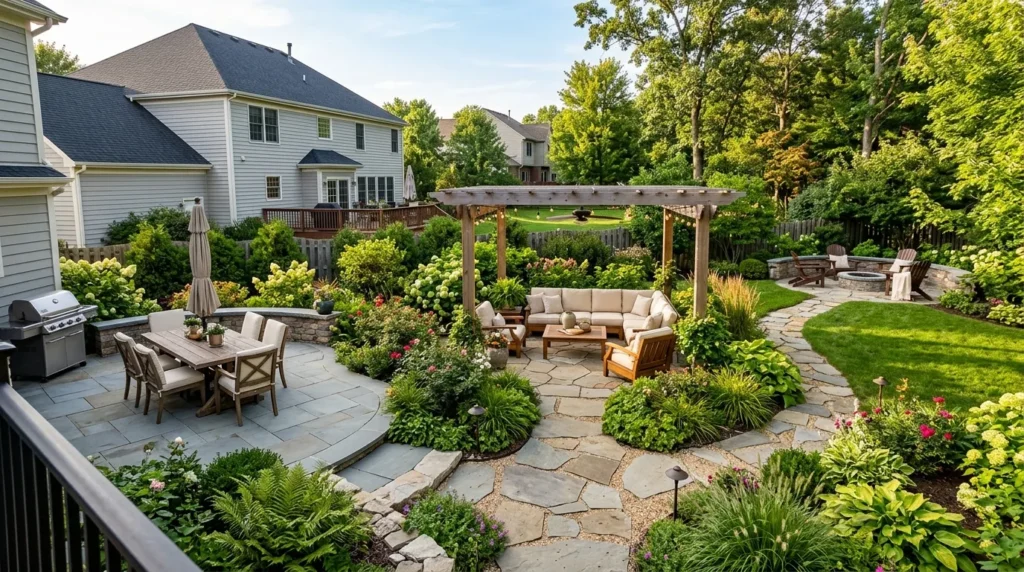
A backyard becomes much more functional when it has distinct areas for different activities. Instead of viewing the entire yard as one space, think of it as a collection of outdoor rooms.
You might have a dining area near the house, a lounge space farther into the garden, and a small planting area along the fence.
These zones do not require permanent walls. Changes in paving, planting, furniture orientation, rugs, or lighting can create enough visual separation.
This approach is particularly useful for larger backyards, where furniture placed randomly can make the space feel disconnected.
How To Style It
Start by listing how you want to use your backyard. Common zones include dining, grilling, lounging, gardening, play, and fire pit areas.
Place the dining zone close to the kitchen or back door for convenience. A lounge area can sit farther into the yard where it feels more secluded.
Use a change in flooring to distinguish zones. A paved patio can define dining while a gravel area creates a separate fire pit space.
Planting beds can also act as natural boundaries without making the backyard feel divided.
Keep sightlines open between zones. The goal is connection, not isolation.
3. Natural Stone Pathways
Quick Benefits
- Creates clear circulation
- Connects different garden areas
- Adds natural texture
- Protects planting beds
- Makes the landscape feel more intentional
Why It Works
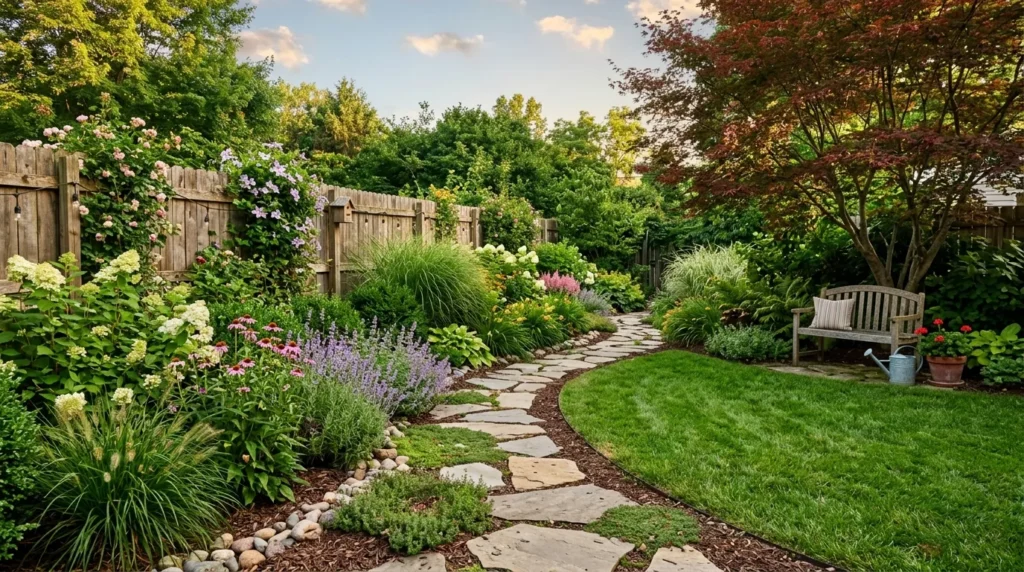
Pathways do more than help people move around the backyard. They guide the eye and create a sense of journey through the landscape.
A path leading from the patio to a garden, seating area, shed, or side gate can make the yard feel more organized.
Natural stone, gravel, brick, and other hardscape materials can all work depending on the overall style. The most important consideration is choosing a material that complements the house and other outdoor surfaces.
A slightly curved pathway can create a relaxed garden feeling, while straight lines tend to look more formal and architectural.
How To Style It
Choose a path width that allows comfortable walking and consider how many people will use it at once.
Use larger stepping stones in lawn or garden areas for a casual look. For high-traffic routes, a more continuous surface may be more practical.
Surround stone paths with low-growing plants or mulch to soften the edges.
Repeat the same stone or color elsewhere in the backyard when possible. For example, the stone used on a pathway can reappear around a patio or garden border.
Avoid creating too many competing pathways. One primary route with smaller secondary connections often feels more natural.
4. Cozy Patio Retreat
Quick Benefits
- Creates an outdoor living room
- Provides space for entertaining
- Extends the usable living area
- Establishes a strong landscape anchor
- Works for both large and compact yards
Why It Works
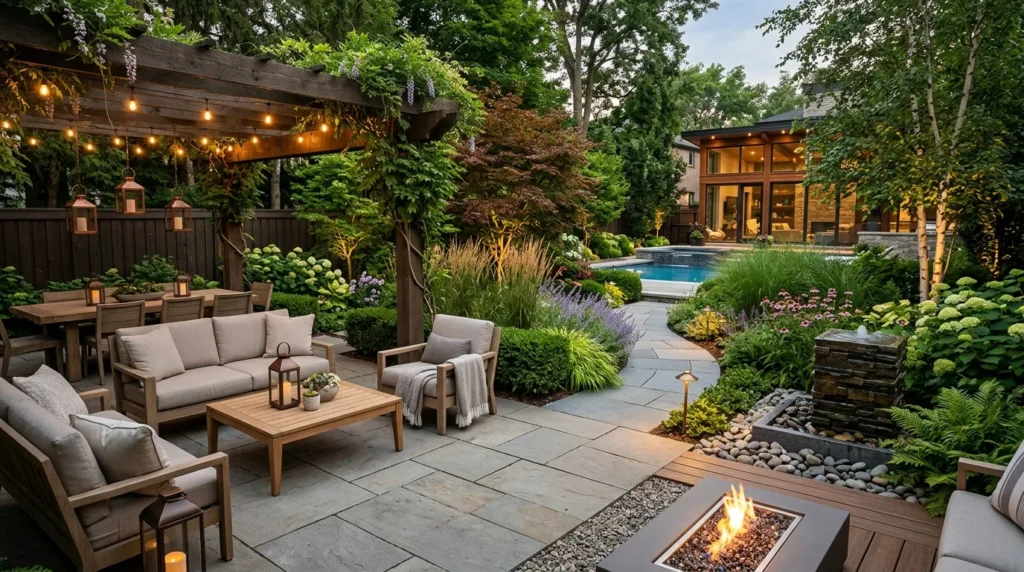
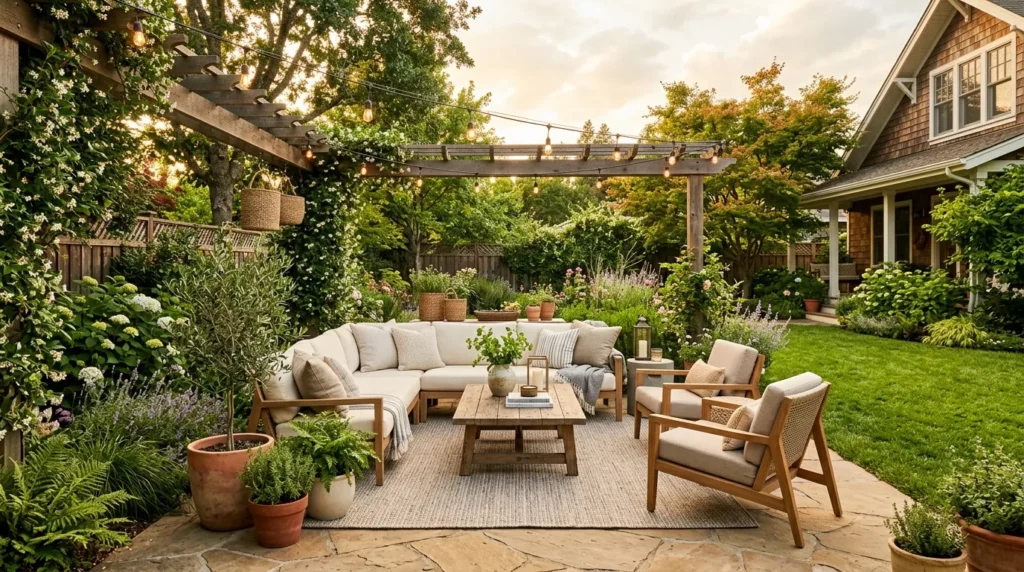
A well-designed patio can become the heart of a backyard. Instead of treating it as a separate slab attached to the house, connect it visually to the surrounding landscape.
Comfortable furniture, plants, shade, lighting, and textiles can transform a basic patio into an outdoor room.
The patio should also reflect how you actually live. If you regularly eat outside, prioritize a dining table. If relaxing is more important, focus on comfortable lounge seating.
The most inviting patios usually include a mix of hard surfaces and greenery rather than sitting alone in the middle of an expanse of lawn.
How To Style It
Start with appropriately scaled furniture. Leave enough room to walk around chairs and pull them away from the table.
Add container plants around the edges to soften the transition between patio and garden.
Outdoor rugs can visually define the seating area, while cushions and throws introduce color and texture.
If the patio receives strong afternoon sun, consider an umbrella, pergola, shade sail, or another suitable shade solution.
Keep the furniture palette coordinated with the home’s exterior and the landscape materials.
5. Layered Garden Borders
Quick Benefits
- Defines lawn and planting areas
- Creates a finished appearance
- Adds structure
- Makes maintenance easier
- Highlights architectural features
Why It Works
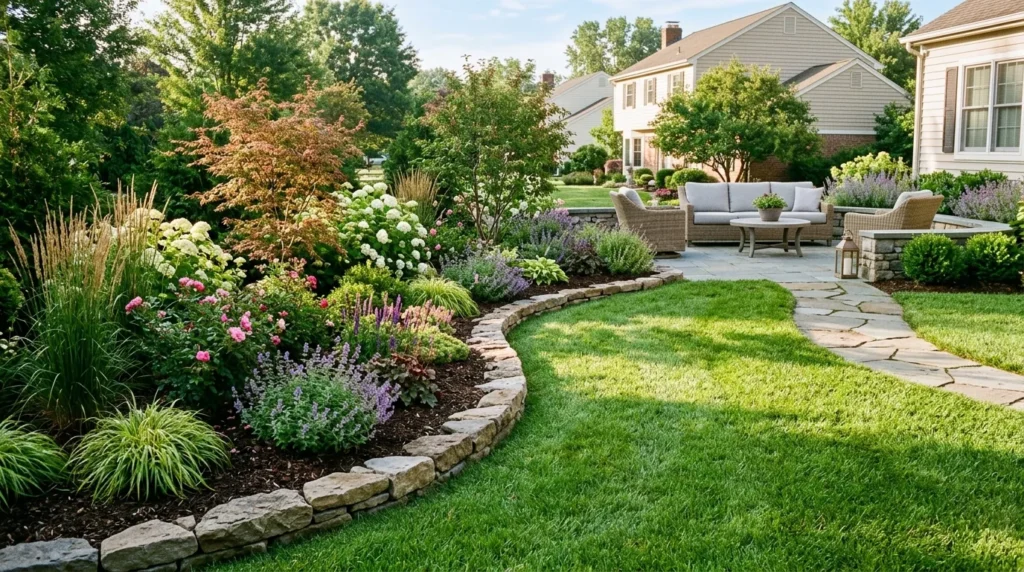
Garden borders give the backyard visual structure. Without defined edges, lawns, planting beds, paths, and patios can sometimes blend together in a way that feels unfinished.
A border does not have to be formal. Curved planting beds with natural stone edging can create a relaxed garden style, while straight beds can complement modern architecture.
Borders also create opportunities to repeat materials and plants throughout the yard.
How To Style It
Use edging materials that relate to the rest of the landscape. Natural stone, brick, metal edging, or simple planting lines can all work.
Keep the border shape consistent with the house. Curved lines often suit informal gardens, while geometric shapes work beautifully with contemporary homes.
Plant the tallest elements toward the back and gradually decrease height toward the lawn.
Mulch can help define the planting bed and reduce the appearance of exposed soil.
Avoid making every border overly complicated. A simple shape with well-chosen plants can look more sophisticated than a highly fragmented layout.
6. Backyard Privacy Planting
Quick Benefits
- Creates a more secluded atmosphere
- Softens fences and property lines
- Adds greenery
- Reduces the feeling of being overlooked
- Can create separate outdoor zones
Why It Works
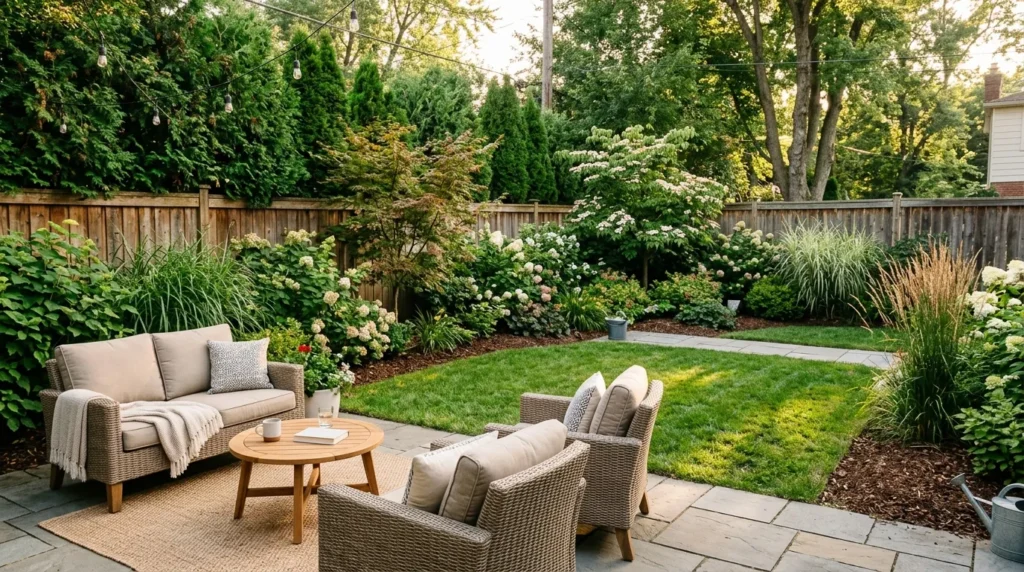
Privacy is one of the most common reasons homeowners invest in landscaping. A backyard can be beautifully designed but still feel uncomfortable if neighboring homes, streets, or nearby properties are constantly visible.
Plants can create a softer privacy screen than a solid wall. Trees, shrubs, ornamental grasses, and climbing plants can be combined to create different heights and textures.
The best privacy solution depends heavily on local climate, mature plant size, maintenance preferences, and property regulations.
How To Style It
Start by identifying exactly where privacy is needed. You may not need to screen the entire property.
Use taller plants where views are most intrusive and lower planting elsewhere to maintain an open feeling.
Evergreen shrubs or trees can provide year-round screening in suitable climates, while deciduous plants may provide seasonal interest.
A trellis with climbing plants can work well near a patio or seating area.
Do not plant large trees too close to structures, underground utilities, or property boundaries. Consider mature dimensions rather than the plant’s size when purchased.
7. Water Features
Quick Benefits
- Adds movement and sound
- Creates a focal point
- Introduces a relaxing element
- Attracts visual interest
- Can enhance garden atmosphere
Why It Works
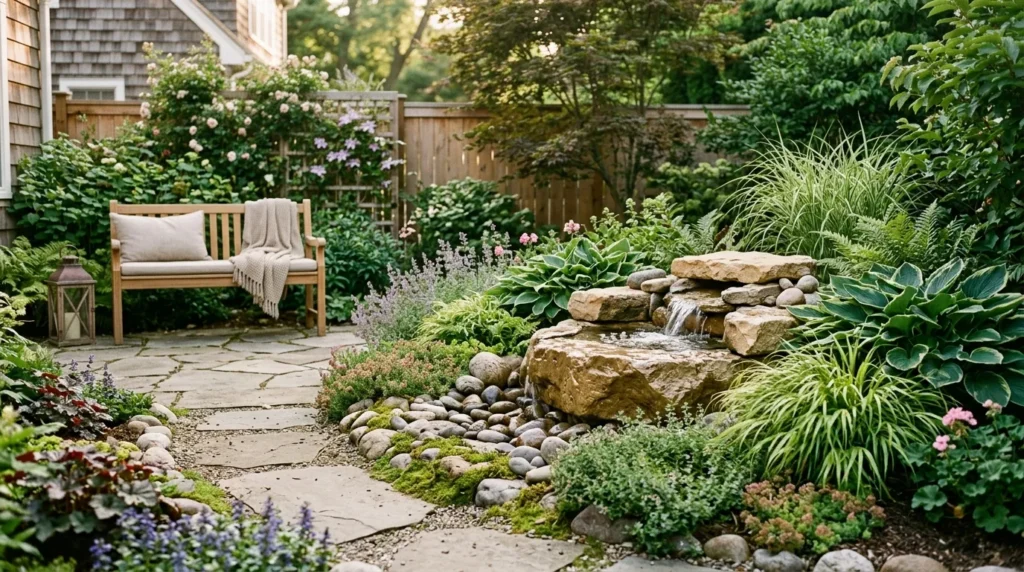
Water naturally attracts attention. Even a modest fountain or small pond can become a focal point that gives a backyard a stronger sense of place.
The sound of moving water can also help mask some background noise, although the effectiveness depends on the feature and surrounding environment.
A water feature does not have to dominate the yard. In a small backyard, a compact fountain can provide enough impact without consuming valuable space.
Maintenance is an important consideration. Water features require appropriate cleaning and care, and ponds can involve more ongoing work than small recirculating fountains.
How To Style It
Position the water feature where it can be seen from a patio, seating area, or major pathway.
Surround it with plants that complement its scale rather than hiding it completely.
Natural stone, gravel, and lush planting can help integrate a fountain into the landscape.
For a contemporary backyard, choose a simple geometric design. For a cottage-style garden, a more natural stone or ceramic feature may fit better.
Keep electrical and water requirements in mind before installation.
8. Outdoor Lighting
Quick Benefits
- Extends evening use
- Highlights landscape features
- Improves visibility
- Creates atmosphere
- Adds depth after sunset
Why It Works
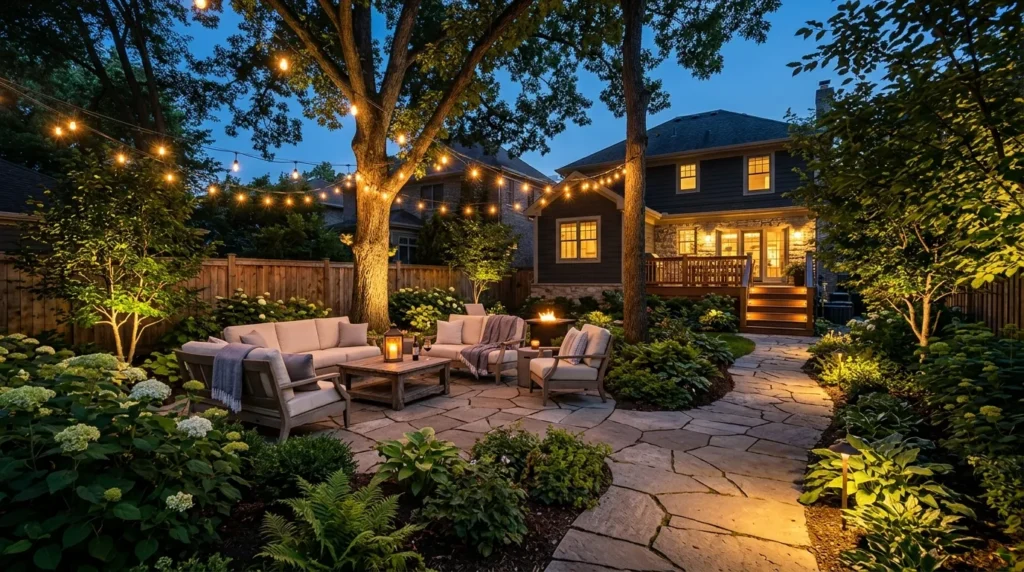
A backyard can look completely different after dark. Without lighting, beautiful planting beds, pathways, and patios may disappear into shadow.
Outdoor lighting allows you to highlight the elements that matter most while providing practical illumination around areas where people walk and gather.
The goal is not to make the entire yard equally bright. Layered lighting is generally more attractive because it creates contrast and depth.
How To Style It
Start with pathways and steps where visibility is important. Then add subtle accent lighting around trees, planting beds, or architectural features.
String lights can create a relaxed atmosphere over a patio or seating area when installed appropriately.
Use warmer-looking illumination for entertaining and garden accents while keeping practical areas adequately visible.
Avoid placing bright lights directly at eye level. Lighting should illuminate the space without creating glare.
Use outdoor-rated fixtures and follow local electrical requirements for installation.
9. Native Plant Gardens
Quick Benefits
- Supports a regionally appropriate landscape
- Can reduce certain maintenance demands
- Creates seasonal interest
- Provides habitat for local wildlife
- Connects the garden to its surroundings
Why It Works
Choosing plants suited to your local environment is one of the smartest long-term landscaping decisions you can make. Native and regionally appropriate plants are adapted to local conditions, although their exact maintenance needs still vary.
They can also create a landscape that feels naturally connected to the surrounding environment rather than relying entirely on plants that look out of place.
A native-focused garden does not have to look wild or unstructured. Thoughtful placement can create a polished landscape with plenty of color and texture.
How To Style It
Research plants that naturally perform well in your local area and match them to your yard’s sun, soil, moisture, and drainage conditions.
Group plants with similar needs together. This makes irrigation and maintenance easier.
Combine flowering plants with grasses, shrubs, and groundcovers to create layers.
Repeat key plant varieties throughout the backyard to establish visual continuity.
If you’re unsure which plants are appropriate, consult local extension services, reputable native plant organizations, or experienced local garden professionals.
10. Multi Season Color
Quick Benefits
- Keeps the backyard visually interesting
- Creates changing focal points
- Provides year-round structure
- Encourages thoughtful plant selection
- Makes the landscape feel dynamic
Why It Works
A backyard should not look beautiful for only a few weeks of the year. Planning for multiple seasons creates a landscape that changes gradually while retaining its structure.
This does not mean every plant needs to flower constantly. Trees, shrubs, grasses, foliage, bark, seed heads, and evergreen forms can all contribute visual interest.
A well-planned landscape might feature spring flowers, summer foliage, autumn color, and winter structure.
How To Style It
Start with permanent elements such as trees, shrubs, pathways, fences, patios, and garden structures.
Then select plants that provide interest at different times of the year.
Use evergreen plants strategically to maintain structure through colder months where appropriate.
Add seasonal flowers in containers or smaller beds if you enjoy changing the look of the garden.
Think about the view from inside your home, too. A beautiful tree or planting bed visible through a kitchen or living room window can make the landscape enjoyable even when you are indoors.
How To Plan Your Backyard Landscape
Before purchasing plants or outdoor furniture, spend some time observing the backyard.
Notice where sunlight falls throughout the day. Pay attention to areas that stay wet, dry out quickly, or receive strong afternoon heat. Look at existing trees and consider how their mature size affects the space.
Then think about how your household actually uses the backyard.
Do you want an outdoor dining area? A quiet garden? A place for children to play? Space for pets? A vegetable garden? A fire pit? A pool or spa?
Write those priorities down before designing the layout.
Once you know what the backyard needs to accomplish, divide it into zones.
A simple plan might include:
- A patio near the house
- A lawn or open area in the center
- Planting beds around the perimeter
- A seating or fire pit area farther into the yard
- A pathway connecting the major zones
- Privacy planting along the property line
You do not need to build every feature immediately. Treat the landscape as a long-term project.
How To Choose Backyard Plants
Plant selection should begin with conditions rather than appearance.
Consider:
Sunlight: Determine whether the area receives full sun, partial shade, or mostly shade.
Soil: Soil type and drainage can significantly influence plant performance.
Water: Understand how much irrigation the plants will require once established.
Mature size: Check the expected height and width rather than planting based on the current container size.
Maintenance: Consider pruning, leaf cleanup, watering, and seasonal care.
Climate: Choose plants appropriate for your local growing conditions.
Wildlife: Decide whether you want plants that attract pollinators, birds, or other beneficial wildlife.
A beautiful garden is easier to maintain when plants are matched to the conditions instead of constantly being forced to survive in an unsuitable location.
Creating A Backyard On A Budget
A dream backyard does not have to be completed in one large project.
Start with the changes that have the biggest visual impact.
Defining planting beds can immediately make an ordinary yard feel more structured. Mulch, edging, and carefully selected plants can create a polished appearance without requiring expensive construction.
If your patio is already functional, improve the furniture and styling rather than replacing the entire surface.
Container gardens are another useful option because they allow you to experiment with plants and colors without committing to permanent beds.
You can also build the landscape in phases.
Phase one: Create the basic layout and improve existing planting.
Phase two: Add pathways, garden borders, or a patio refresh.
Phase three: Introduce lighting, seating, privacy planting, or a water feature.
Phase four: Add seasonal plants and decorative details.
This approach makes the project more manageable and allows you to see how each improvement affects the overall landscape.
Common Backyard Landscaping Mistakes
Planting Too Closely
Plants need room to reach their mature size. Overcrowding may create unnecessary pruning and maintenance later.
Ignoring Drainage
Water problems can damage plants, hardscape, and structures. Understand how water moves through the property before installing major landscape features.
Using Too Many Plant Varieties
A collection of unrelated plants can make the landscape feel chaotic. Repeating a few key plants usually creates better visual continuity.
Forgetting The View From Inside
Your backyard is part of the home’s visual environment. Consider how the landscape looks from major windows and doors.
Making Every Area Decorative
Not every corner needs a feature. Lawn, open space, and simple planting can provide valuable visual breathing room.
Choosing Plants Only For Appearance
A plant that looks beautiful at the garden center may not be suitable for your soil, climate, sunlight, or maintenance preferences.
Skipping A Long-Term Plan
A backyard evolves. Consider how trees and shrubs will look several years from now, not just on installation day.
Related Articles
- 10 Backyard Landscaping Ideas That Add Beauty and Function
- 10 Backyard Privacy Ideas for a More Peaceful Outdoor Space
- 10 Small Backyard Ideas That Make Every Inch Count
- 10 Backyard Patio Ideas for Outdoor Entertaining
- 10 Low-Maintenance Landscaping Ideas for Busy Homeowners
Frequently Asked Questions
How do I design my backyard landscape?
Start by identifying how you want to use the space, then divide the yard into functional zones. Consider patios, seating, dining, planting beds, pathways, lawn, and privacy areas. After creating the basic layout, choose plants according to sunlight, soil, drainage, climate, and mature size. Build the landscape in stages if a complete project is not practical.
What makes a backyard look professionally landscaped?
Professional-looking landscapes usually have a clear structure, repeated plants or materials, defined edges, appropriate furniture scale, and thoughtful transitions between different areas. Layered planting and consistent colors can also create a cohesive appearance. The goal is not to fill every space but to create a balanced relationship between hardscape, plants, lawn, and open areas.
What are the easiest ways to improve a backyard?
Start with simple changes such as defining garden borders, refreshing planting beds, adding mulch, improving outdoor furniture, creating a clear pathway, and installing appropriate landscape lighting. These changes can make the yard feel more intentional without requiring major construction. Removing overgrown or unnecessary elements can also have a surprisingly large impact.
How can I make my backyard feel more private?
Use a combination of trees, shrubs, ornamental grasses, trellises, fencing, or outdoor screens depending on your property and local regulations. Focus on the specific views that need screening rather than enclosing the entire backyard. Layering plants at different heights often creates privacy while keeping the landscape visually open.
What plants are best for backyard landscaping?
The best plants depend on your local climate, soil, sunlight, drainage, water availability, and maintenance preferences. Native and regionally appropriate plants are often excellent choices because they are suited to local conditions. Before purchasing, check mature size and growing requirements rather than choosing plants based solely on appearance.
How can I landscape a backyard on a budget?
Prioritize layout and planting structure before expensive features. Define beds, add mulch, improve existing plants, use containers, and create simple pathways. Refreshing outdoor furniture and adding lighting can also make a major difference. Complete larger projects in phases so the landscape develops over time rather than requiring one large investment.
Should I hire a landscape designer?
A landscape professional can be especially helpful for large properties, complex grading or drainage issues, major hardscape projects, irrigation systems, or landscapes with many different functional zones. For smaller projects, a homeowner can often begin with a simple scaled plan and gradually develop the yard. Professional advice can be valuable when the project involves significant structural or technical work.
Conclusion
A dream backyard does not have to be enormous or filled with expensive features. The most inviting landscapes usually come from thoughtful planning, appropriate plants, comfortable outdoor spaces, and a clear connection between the house and garden.
Start by deciding how you want to use the backyard. From there, establish the main zones, create comfortable pathways, and choose planting that works with your local conditions. Layered beds, natural materials, privacy planting, outdoor lighting, and seasonal interest can gradually turn an ordinary yard into a space that feels purposeful and welcoming.
Resist the urge to complete everything at once. A landscape needs time to grow, and some of the best design decisions become clearer after you have lived with the space.
Start with one meaningful improvement this season. Define a planting bed, create a patio seating area, add a pathway, or introduce plants that bring more life to the yard. Then build on that foundation.
When the landscape reflects the way you actually live, the backyard becomes more than decoration. It becomes an extension of the home and a place you’ll want to enjoy throughout the seasons.