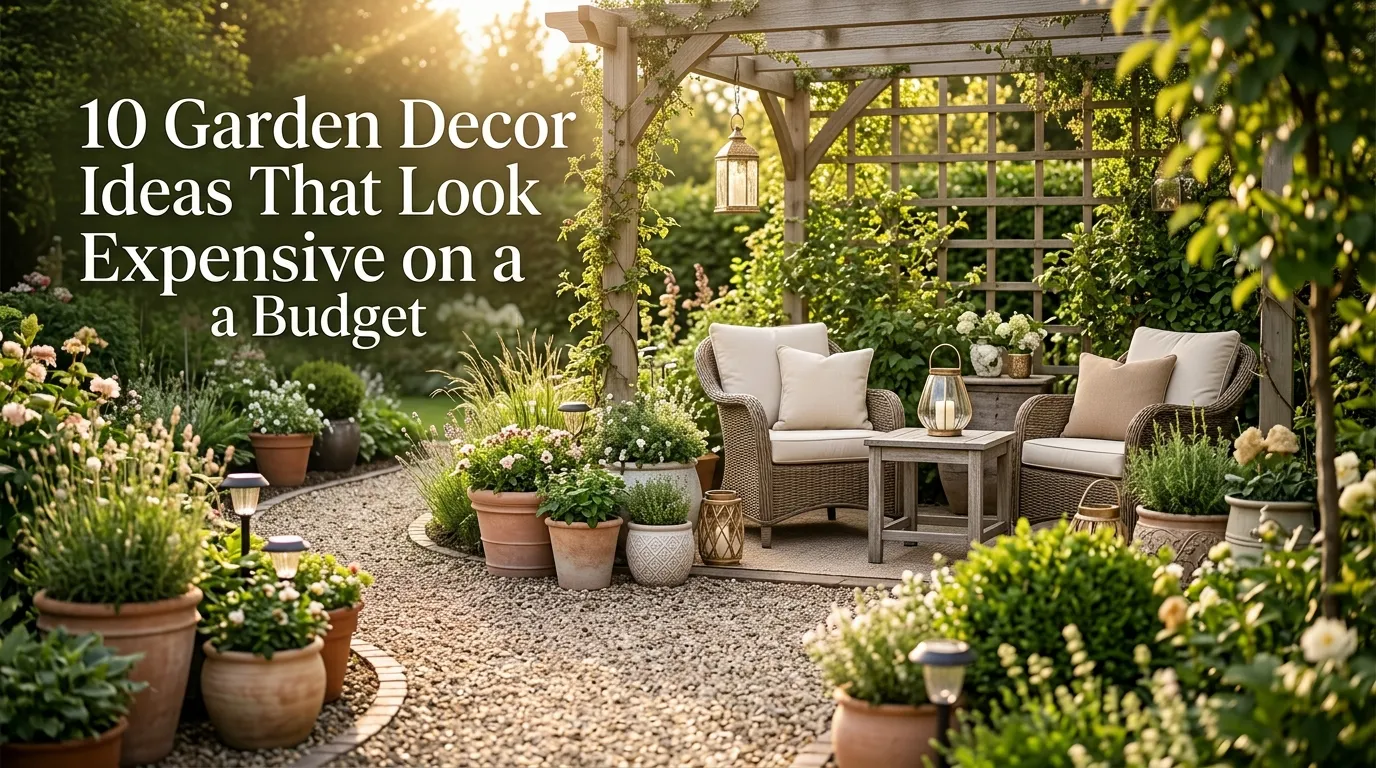
10 Garden Decor Ideas That Look Expensive on a Budget
A beautiful garden doesn’t require a huge decorating budget. In fact, some of the most polished outdoor spaces rely on simple materials, thoughtful placement, and a few details that create a sense of intention.
The difference between a garden that looks ordinary and one that feels elevated often comes down to how everything is arranged. A weathered planter can look charming beside the right pathway. A basic outdoor chair can feel much more refined when surrounded by greenery and paired with a simple cushion. Even inexpensive garden accessories can look considered when they share a consistent color palette.
I’ve noticed that one of the easiest ways to make an outdoor space feel more expensive is to stop thinking about individual decorations and start thinking about the overall composition. Repetition, symmetry, texture, scale, and negative space can make inexpensive pieces look far more sophisticated.
You also don’t need a large backyard. These ideas can work in suburban gardens, small patios, side yards, cottage gardens, townhouse spaces, and even compact rental-friendly outdoor areas.
The best part is that many of these updates can happen gradually. You can start with one focal area, improve the planting around it, then add lighting or seating as your budget allows.
This guide focuses on garden decorating ideas that deliver visual impact without requiring a complete landscape renovation. You’ll find practical ways to use planters, pathways, lighting, seating, containers, vertical elements, and simple DIY-style touches to create an outdoor space that feels collected and intentional.
The goal isn’t to make your garden look expensive for the sake of appearances. It’s to make every dollar work harder while creating a space that feels beautiful, welcoming, and enjoyable to use.
Table of Contents
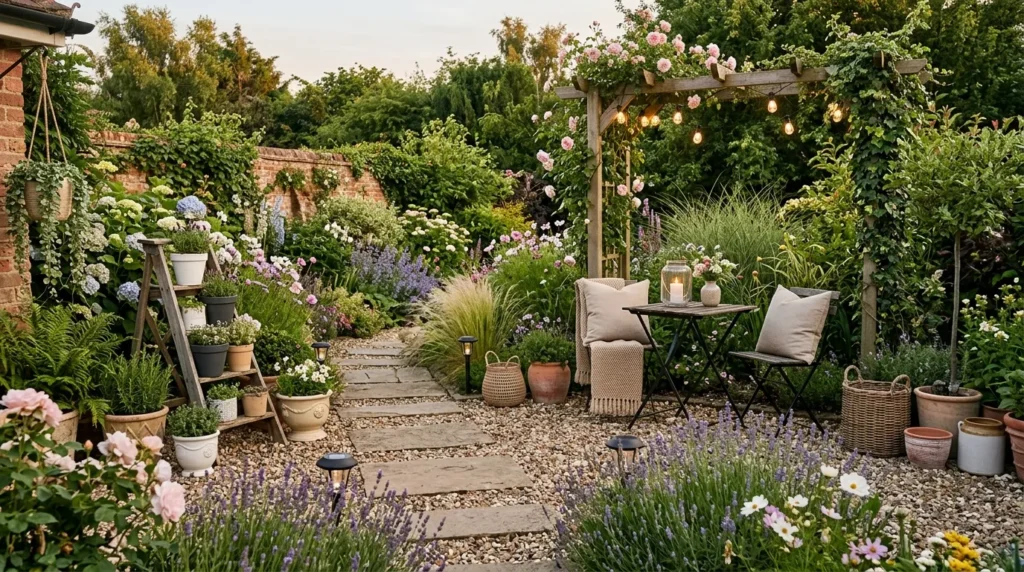
1. Grouped Planters
Arrange affordable containers together to create a sophisticated focal point with height and repetition.
2. Gravel Garden Paths
Use inexpensive gravel to define walking areas and give the garden a structured landscape appearance.
3. Painted Garden Furniture
Refresh basic outdoor furniture with a cohesive finish that makes the seating area feel intentional.
4. Oversized Planters
Use a few large containers to create visual impact instead of filling the garden with many small pots.
5. Warm Outdoor Lighting
Add inexpensive lighting around pathways and seating areas to create an inviting evening atmosphere.
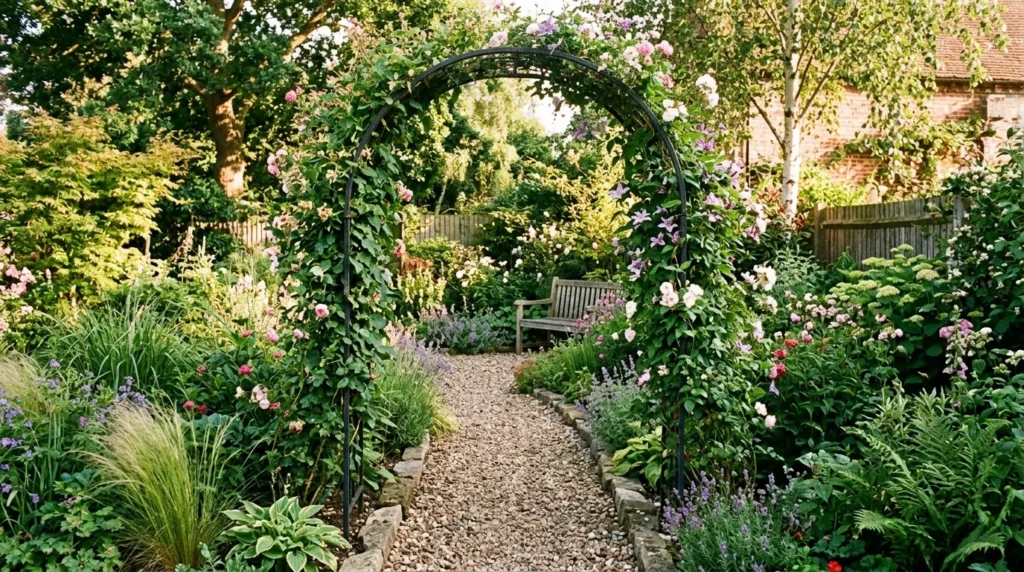
6. Simple Garden Arches
Introduce height and architectural structure with an affordable arch covered in climbing greenery.
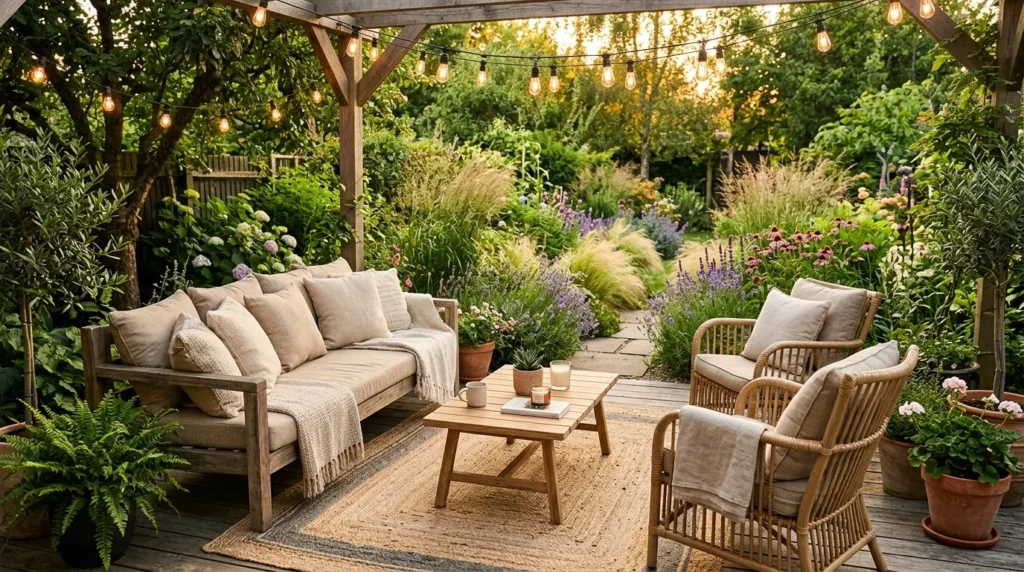
7. Layered Seating Areas
Create a welcoming outdoor retreat with simple furniture, cushions, rugs, and carefully chosen accessories.
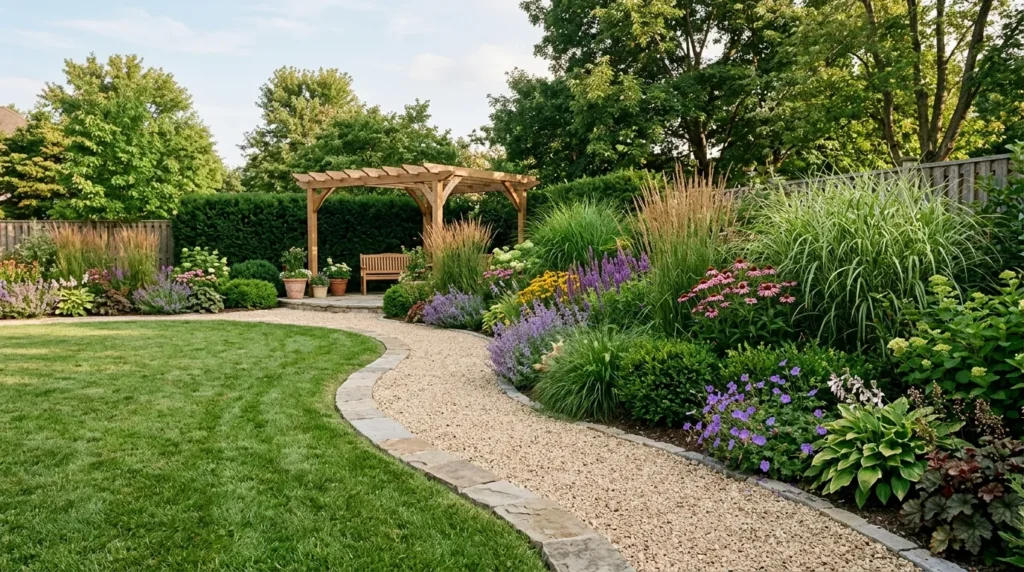
8. Decorative Garden Edges
Define planting beds with clean borders that make the entire garden look more finished.
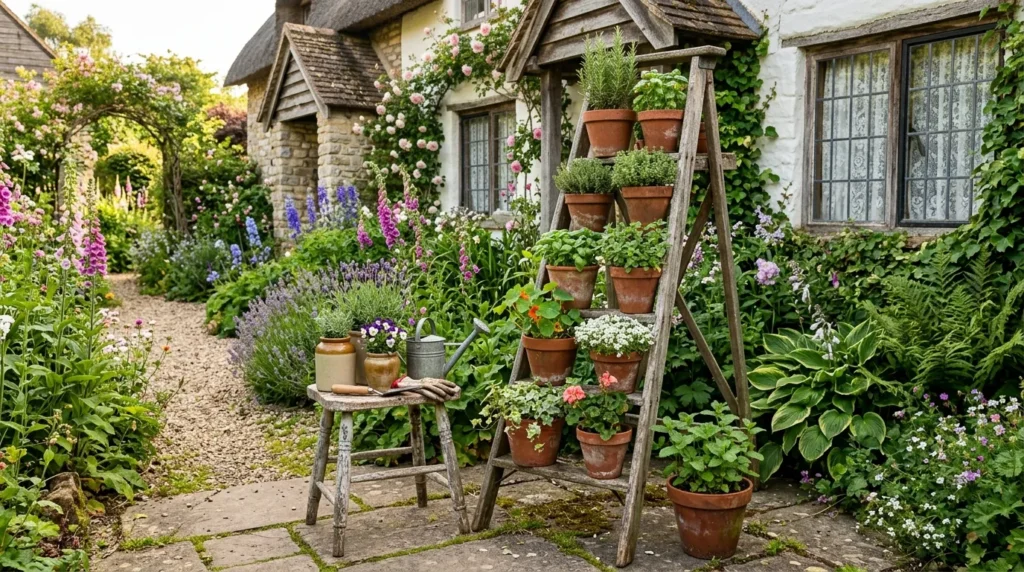
9. Repurposed Garden Decor
Give useful household or secondhand items a new purpose as planters, displays, or garden accents.
10. Statement Focal Points
Create one memorable feature that draws attention and makes the surrounding garden feel intentionally designed.
1. Grouped Planters
Quick Benefits
- Creates a designer-inspired display
- Adds height and dimension
- Makes inexpensive pots look coordinated
- Works in gardens of different sizes
- Allows seasonal changes
Why It Works
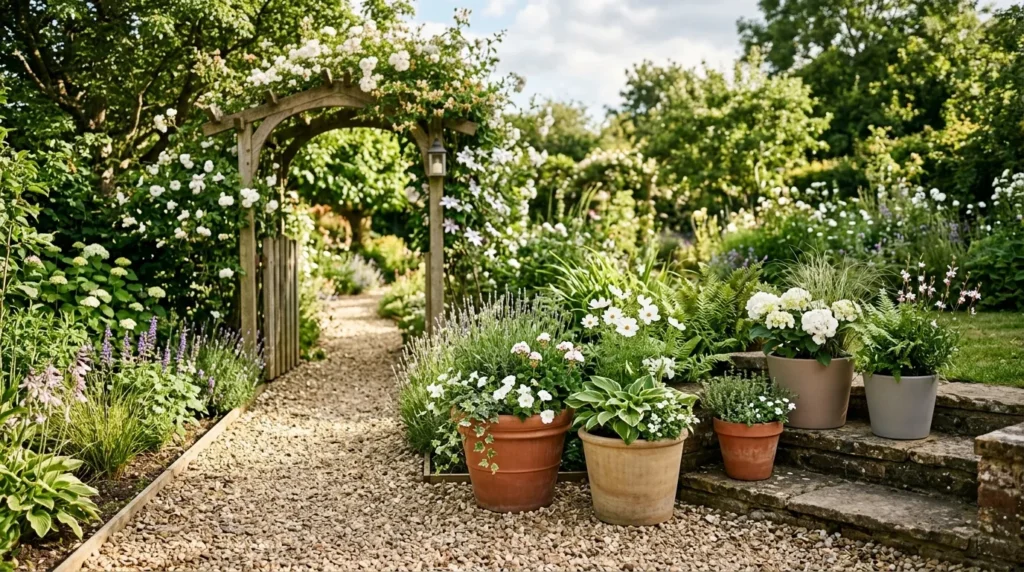
One inexpensive planter can look ordinary, but several planters arranged as a deliberate group can create a much stronger visual effect.
Garden designers frequently use repetition to create cohesion. You can borrow that principle without buying a matching collection of expensive containers.
The trick is combining different heights, shapes, and textures while keeping one element consistent. That might be the color of the pots, the type of plants, or the overall plant palette.
Grouping also creates a focal point. Instead of scattering containers randomly around the garden, place them where you want the eye to stop.
A mixture of terracotta, stone-look, concrete-look, or matte black containers can look particularly sophisticated when arranged with enough space between them.
How To Style It
Start with three to five containers in different sizes. Place the tallest pot toward the back and gradually lower the height toward the front.
Use one larger plant as the anchor, then surround it with smaller plants and trailing varieties.
For an expensive-looking arrangement, repeat one color throughout the group. Green foliage with white flowers, for example, creates a simple and cohesive appearance.
You can also use containers with similar finishes even when their shapes differ.
Place grouped planters beside a front entrance, patio seating area, garden gate, or staircase where they can create an immediate visual focal point.
Avoid placing too many containers in one location. Give the arrangement enough surrounding space so each plant remains visible.
If you’re decorating on a tight budget, start with existing pots and repaint them in a unified finish.
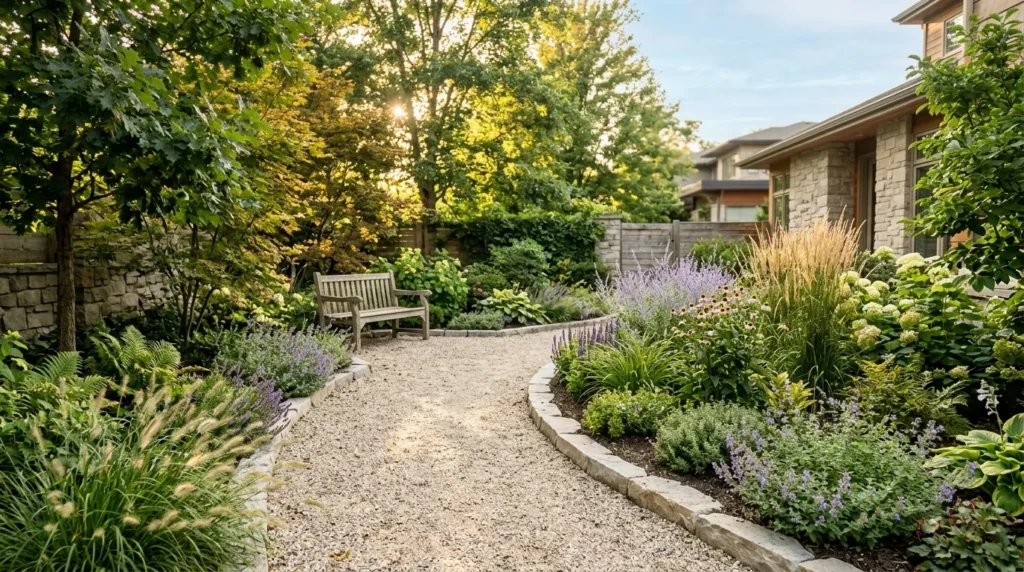
2. Gravel Garden Paths
Quick Benefits
- Defines walking areas
- Creates visual structure
- Costs less than many hardscape options
- Adds texture
- Works with casual and modern gardens
Why It Works
A defined pathway can make even a simple garden feel more professionally planned. Gravel is particularly useful because it creates a finished walking surface without the cost and permanence associated with some larger hardscape projects.
The sound and texture of gravel also contribute to the sensory experience of the garden.
Light-colored gravel can create a bright, Mediterranean-inspired atmosphere, while darker gravel works well in modern landscapes.
The expensive-looking effect comes from the shape and boundaries of the path, not simply the gravel itself. A clearly defined edge makes the installation look intentional.
How To Style It
Plan the path before spreading gravel. A gently curved path can create a relaxed garden feeling, while a straight path feels more architectural.
Define the edges with stone, brick, metal edging, or another suitable landscape border.
Choose a gravel color that works with the home’s exterior and surrounding plants. Warm beige and soft gray are versatile choices.
Add plants along the edges rather than filling every available space. Ornamental grasses, low shrubs, herbs, and flowering perennials can soften the border.
For a more elevated appearance, repeat the same stone or gravel material elsewhere in the garden.
Keep the path wide enough for comfortable walking. A beautiful path becomes less useful when it feels cramped.
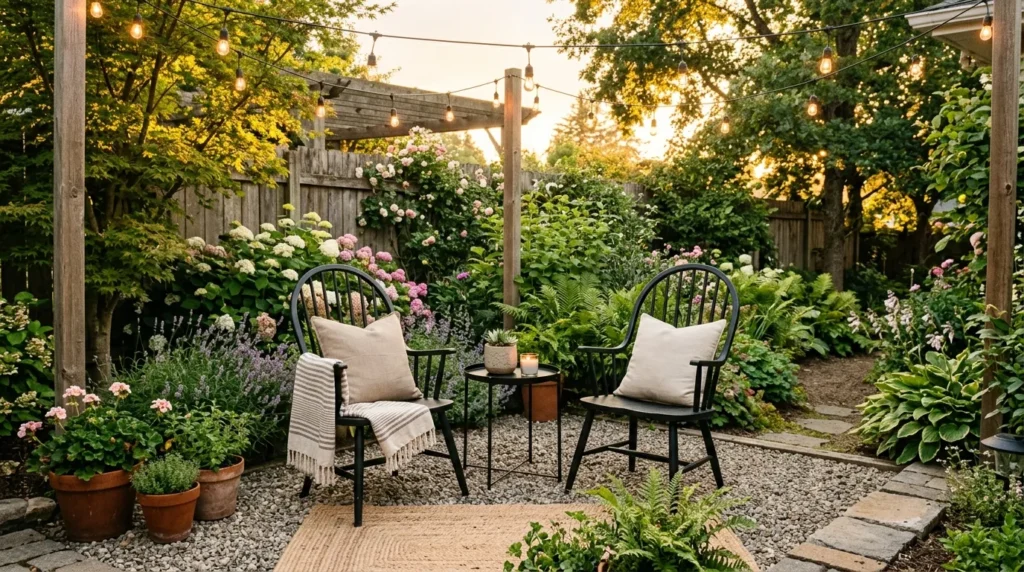
3. Painted Garden Furniture
Quick Benefits
- Refreshes tired outdoor furniture
- Creates a cohesive color palette
- Extends the visual life of basic pieces
- Can transform secondhand finds
- Adds personality
Why It Works
Outdoor furniture doesn’t have to be expensive to look attractive. A simple chair or table can become much more polished when its finish coordinates with the garden.
Painting or refinishing furniture gives you control over the color and allows mismatched pieces to feel more cohesive.
Muted shades generally create a sophisticated appearance. Soft black, warm white, olive, charcoal, taupe, and muted blue can all work depending on the landscape.
The preparation matters. Outdoor furniture exposed to weather needs a finish appropriate for the material and intended use. Follow the coating manufacturer’s surface preparation and application instructions.
How To Style It
Start with clean, structurally sound furniture. Repair loose joints and prepare the surface according to the finish you’re using.
Choose one primary furniture color and repeat it across chairs, a table, or small accessories.
Soft black can create a classic contrast against greenery. Olive blends naturally into planting. Warm white creates a lighter cottage-garden appearance.
Add simple outdoor cushions in neutral or muted colors.
Position the furniture where it feels connected to the garden rather than simply placing it on the largest empty surface.
A small bistro table beneath a tree, beside a flower bed, or near a garden path can create a charming destination.
Secondhand furniture can be particularly useful here. A thoughtful finish and attractive surroundings can completely change its appearance.
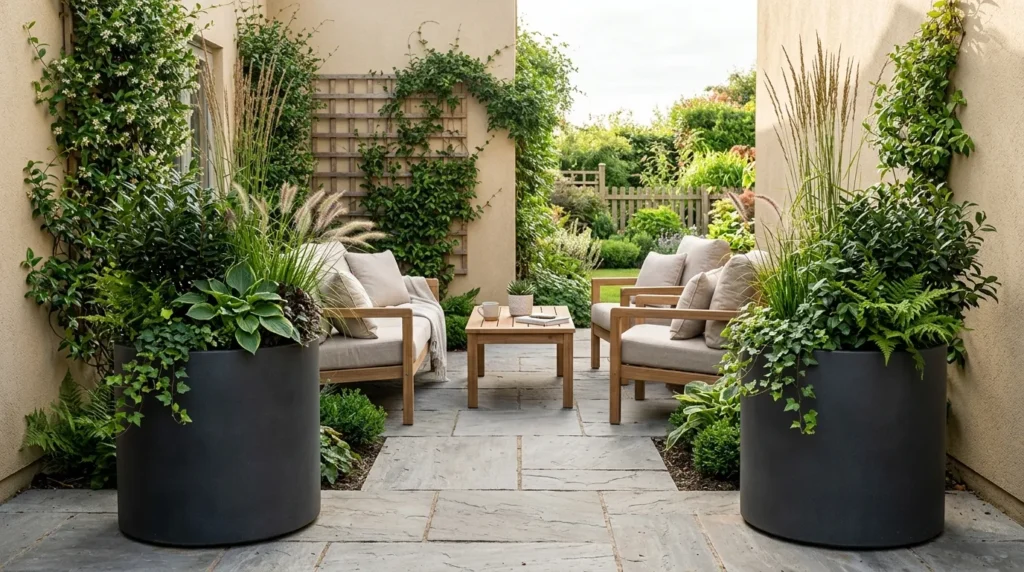
4. Oversized Planters
Quick Benefits
- Creates instant visual impact
- Makes entrances feel more substantial
- Reduces visual clutter
- Adds height
- Makes simple plants look intentional
Why It Works
Large planters often look more sophisticated than many tiny containers because they create stronger visual anchors.
Instead of filling a patio with a dozen small pots, two or three larger containers can establish a cleaner composition.
This is especially effective near entrances, patios, outdoor dining areas, and garden walls.
Large containers also give plants enough visual space to become part of the architecture. A small tree, ornamental grass, or substantial leafy plant can transform a plain corner.
You don’t need expensive stone or handcrafted containers. Large simple planters with a matte finish can create a similar sense of scale.
How To Style It
Choose containers with simple silhouettes. Cylindrical, tapered, square, and rounded forms can all work.
Place large planters where they frame something important, such as a doorway, staircase, patio entrance, or seating area.
For symmetry, use matching planters on either side of a door.
For a more relaxed garden, use two or three containers in different shapes but similar finishes.
Choose plants according to the container’s location, sunlight, drainage, and local growing conditions.
If you want a designer-inspired arrangement, combine a tall central plant with lower foliage around its base.
Keep the surrounding area relatively uncluttered. The simplicity makes the large container feel intentional.
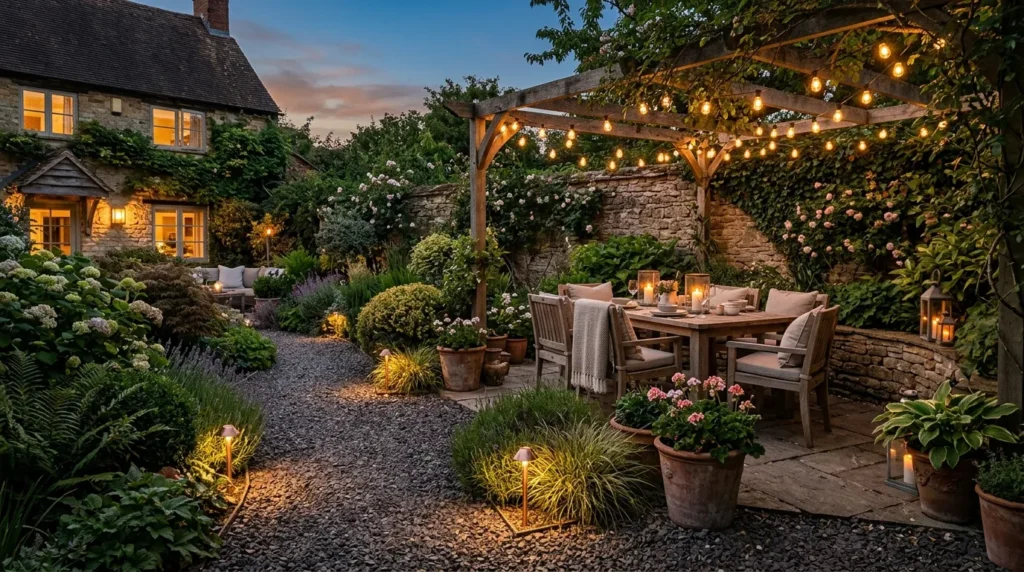
5. Warm Outdoor Lighting
Quick Benefits
- Extends garden enjoyment into the evening
- Creates atmosphere
- Highlights plants and paths
- Makes seating areas more inviting
- Adds visual depth after sunset
Why It Works
Lighting can dramatically change how a garden looks after dark. Even inexpensive outdoor lights can make a space feel more finished when they’re positioned thoughtfully.
The goal isn’t to illuminate everything equally. Good garden lighting creates layers: subtle path lighting, a warm glow around seating, and selective illumination of trees or architectural features.
Warm light tends to create a comfortable evening atmosphere, while excessive brightness can make a garden feel harsh.
Lighting also adds depth. When the foreground, middle ground, and background contain different levels of illumination, a small garden can feel more visually expansive.
How To Style It
Begin with the areas you use most. Add lights along a pathway, near steps, around a seating area, or beside an entrance.
Solar path lights can be useful where appropriate because they don’t require electrical installation. String lights can create a relaxed atmosphere above patios or seating areas.
Use lighting to highlight one or two special plants rather than illuminating every shrub.
Keep spacing relatively consistent along pathways.
For seating areas, position lights above or around the perimeter rather than directly in people’s line of sight.
Choose fixtures that complement the home’s exterior. Simple black, bronze, or neutral fixtures can blend into many garden styles.
Always follow the manufacturer’s installation and outdoor-use instructions, particularly for electrical connections.
6. Simple Garden Arches
Quick Benefits
- Adds vertical interest
- Creates an entrance or transition
- Supports climbing plants
- Makes a garden feel more established
- Creates a strong photo opportunity
Why It Works
Vertical structures can make a garden feel larger because they encourage the eye to move upward.
An arch also creates a sense of transition. Passing beneath one naturally makes a garden feel like it has separate rooms or destinations.
The structure itself can be simple. Once climbing plants begin to cover it, the greenery becomes the main feature.
This is a great example of how inexpensive garden elements can gain visual value through time and planting.
How To Style It
Place an arch at the entrance to a garden path, between two garden areas, or near a patio.
Choose a climbing plant suited to your climate, sunlight, soil, and available support. Roses, clematis, jasmine, honeysuckle, and other climbers may work in appropriate conditions, but local growing requirements vary.
Keep the surrounding plants relatively simple so the arch remains visible.
A dark metal arch creates strong contrast against greenery. A lighter painted finish can create a softer cottage-garden effect.
Add a narrow gravel path beneath the arch to reinforce the sense of destination.
The structure doesn’t need to be enormous. Even a modest arch can add height and character to a compact garden.
7. Layered Seating Areas
Quick Benefits
- Creates a destination in the garden
- Encourages outdoor use
- Adds comfort
- Makes simple furniture feel more complete
- Supports entertaining and relaxation
Why It Works
An outdoor seating area feels more expensive when it looks like a place people genuinely want to spend time.
The furniture itself is only one part of the composition. A rug, cushions, side table, greenery, lighting, and nearby planting can turn a basic chair into a complete outdoor retreat.
This is similar to decorating an indoor room. Instead of treating the patio as an empty surface, give it a clear purpose.
A small garden can benefit from one well-designed seating area rather than several scattered chairs.
How To Style It
Start with the seating arrangement. A pair of chairs and a small table works well for a compact space. A sofa or sectional can anchor a larger patio.
Add cushions in one or two coordinating neutral or earthy colors.
An outdoor rug can visually define the seating zone, provided it is suitable for exterior use and local weather conditions.
Place potted plants around the perimeter rather than directly in the walking path.
Add a small side table for drinks or books.
Warm lighting above or around the seating area can make it feel especially inviting after sunset.
Don’t overcrowd the space. Comfortable circulation contributes just as much to the sense of quality as decorative details.
8. Decorative Garden Edges
Quick Benefits
- Creates cleaner planting beds
- Separates lawn from garden areas
- Makes the landscape look organized
- Defines shapes
- Can use affordable materials
Why It Works
Clean edges are one of the simplest ways to make a garden look maintained and intentional.
Without a defined border, planting beds can gradually blur into lawns or pathways. A crisp edge creates a clear visual boundary and makes even inexpensive plants look more deliberate.
You don’t need elaborate stonework. Depending on the garden, simple metal edging, brick, stone, timber, or even a carefully maintained natural edge can work.
The most important thing is consistency.
How To Style It
Choose an edging material that relates to existing architecture and hardscape.
For a cottage-style garden, brick or natural stone can work beautifully. For a modern garden, simple metal or clean stone borders may be more appropriate.
Keep curves smooth and deliberate rather than creating irregular shapes.
Use the same edging material in multiple garden beds when possible.
Once the border is installed, maintain it. Overgrown grass and weeds can quickly hide even the best garden structure.
Combine clean edges with layered planting. Place taller plants toward the back and lower plants toward the border to create depth.
A simple border can make the entire garden appear more expensive because it creates visual order.
9. Repurposed Garden Decor
Quick Benefits
- Keeps decorating costs low
- Adds personality
- Creates one-of-a-kind details
- Gives old objects a second life
- Works well with cottage and eclectic gardens
Why It Works
A garden doesn’t need a collection of matching accessories to feel beautiful. Sometimes the most memorable outdoor spaces include objects with character and history.
Repurposing can also help you avoid buying unnecessary decorations. An old wooden ladder can become a vertical plant display. A sturdy metal container may become a planter. An unused stool can become a small plant stand.
The key is making the object look intentional rather than simply placing household clutter outdoors.
Choose items that suit the garden’s conditions and can safely withstand weather where applicable.
How To Style It
Look around your home, garage, attic, or secondhand stores for sturdy objects with interesting shapes.
A wooden ladder can support small pots against a garden wall. A vintage-style chair can hold a container of flowers. Old terracotta pots can be grouped into a layered display.
If an object looks mismatched, consider repainting it in a consistent finish.
Avoid using too many unrelated pieces. One or two repurposed features can feel charming; an entire collection may make the garden feel cluttered.
Use natural greenery to soften the object.
This approach works especially well when the garden already has an informal or cottage-inspired character.
10. Statement Focal Points
Quick Benefits
- Gives the garden a clear visual anchor
- Makes inexpensive surroundings feel intentional
- Creates a memorable feature
- Helps organize other decorations
- Works in small and large gardens
Why It Works
Every garden benefits from a place where the eye naturally stops.
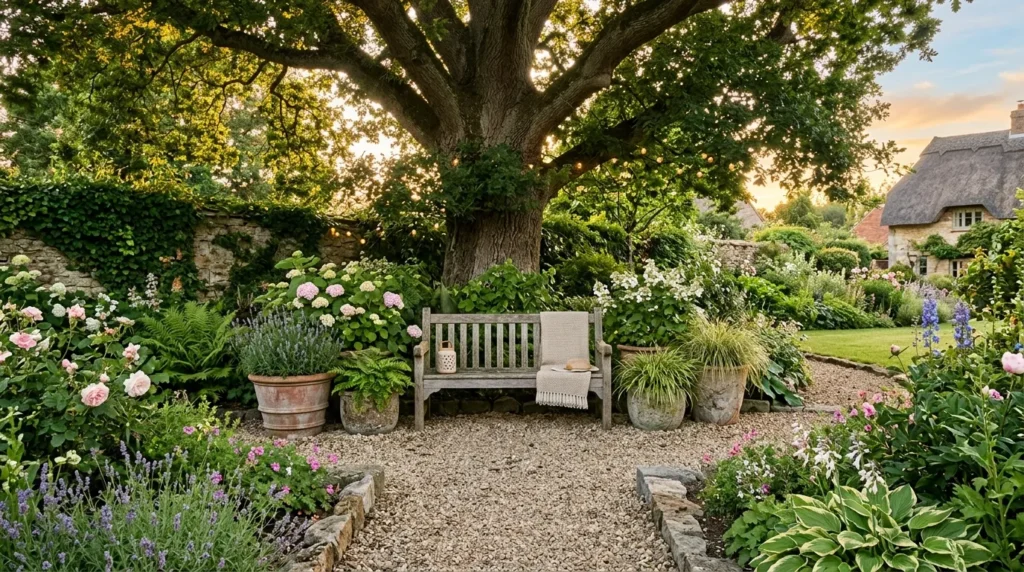
That focal point could be a beautiful planter, a small fountain, a sculptural tree, a bench, an arbor, a fire feature, a decorative gate, or a particularly striking planting arrangement.
The important thing is that everything around it supports rather than competes with it.
This is one of the strongest ways to make a budget garden feel expensive because it changes the focus from quantity to composition.
Instead of buying twenty decorative items, you can invest your attention in one strong feature and keep the surrounding area simple.
How To Style It
First identify the location where you want attention. This might be visible from a window, at the end of a path, near a patio, or beside the entrance.
Choose one feature appropriate to the size of the space.
Surround it with plants that frame rather than hide it.
For example, a simple garden bench can become a focal point when positioned beneath a tree and framed by low planting. A large planter can become a feature when placed at the end of a gravel path.
Repeat one or two materials from the focal point elsewhere in the garden. This creates cohesion.
Leave some open space around the feature. Crowding it with accessories can reduce its impact.
How To Make a Garden Look Expensive Without Spending Much
A polished garden usually comes from consistency, not the price of individual objects.
Start by choosing a limited color palette. Greenery already provides the dominant color, so neutral materials such as black, warm white, stone, terracotta, beige, and natural wood can create a cohesive foundation.
Then repeat materials.
If your garden uses natural stone around the patio, repeat that stone color near the path. If you use black planters, introduce black again through lighting or furniture.
Repetition makes individual pieces feel connected.
Scale also matters. One large planter often creates more impact than five tiny pots. One generous seating area can look more intentional than several scattered chairs.
And don’t underestimate maintenance.
Freshly swept paths, trimmed edges, healthy plants, clean furniture, and organized containers can make inexpensive garden features look dramatically better.
A simple garden that is well cared for often feels more sophisticated than a costly garden filled with too many disconnected elements.
Budget Garden Color Palettes
Choosing colors before buying decorations can prevent impulse purchases that don’t work together.
Green + Black + Warm White
A crisp combination that works especially well in modern gardens.
Green + Terracotta + Cream
Warm and welcoming, with a natural Mediterranean influence.
Green + Natural Wood + Beige
Soft and organic, ideal for relaxed outdoor seating.
Green + Charcoal + Stone Gray
A more contemporary palette that works well with clean architectural lines.
Green + Olive + Natural Brown
A layered nature-inspired combination that blends beautifully into planting.
Green + Muted Blue + White
A relaxed palette that can work particularly well in cottage-style outdoor spaces.
How To Decorate a Small Garden on a Budget
Small gardens benefit from editing.
Rather than trying to fit every idea into a limited space, choose one primary purpose. Maybe the garden is for morning coffee, outdoor dining, gardening, entertaining, or quiet reading.
Then build around that purpose.
Use vertical elements to save floor area. An arch, trellis, wall planter, or narrow plant stand can add greenery without consuming much ground space.
Choose larger containers instead of many tiny pots. A few substantial planters can make the garden feel less cluttered.
Use one rug or seating zone to create a clear destination.
Mirrors can also be useful in enclosed garden areas or patios where appropriate, particularly when positioned to reflect greenery.
Keep pathways clear.
In a small space, negative space is valuable. You don’t have to decorate every corner.
Common Budget Garden Decorating Mistakes
Buying Too Many Small Decorations
Small accessories can quickly become expensive and visually cluttered.
Ignoring Scale
Tiny planters and furniture can disappear in a large garden, while oversized features can overwhelm a small one.
Mixing Too Many Styles
A garden filled with farmhouse, modern, tropical, vintage, and Mediterranean elements can feel disconnected.
Skipping Maintenance
Even beautiful decor loses impact when surrounded by weeds, dirty surfaces, or overgrown edges.
Using Indoor Materials Outdoors
Not every fabric, paint, wood product, or accessory is designed for outdoor conditions. Check product specifications before using materials outside.
Overcrowding Seating Areas
Furniture needs enough room for people to move comfortably.
Decorating Without a Focal Point
Without an anchor, the garden can feel like a collection of unrelated objects.
FAQ
How can I make my garden look expensive on a budget?
Focus on composition rather than quantity. Use a limited color palette, repeat materials, create clean garden edges, group planters, define seating areas, and add one strong focal point. Keeping pathways tidy and plants healthy also makes inexpensive features look more intentional and polished.
What garden decor looks expensive?
Large planters, simple outdoor furniture, warm lighting, natural stone, gravel paths, wood accents, architectural arches, and well-scaled focal pieces can all create an elevated appearance. The key is selecting a few strong elements and arranging them with enough space around them.
How can I decorate a small garden cheaply?
Choose one main purpose for the space and build around it. Use vertical structures such as trellises or arches, group several planters instead of scattering them, and create one compact seating area. Simple gravel, repurposed furniture, and solar lighting can add structure without requiring a major budget.
What colors make a garden look sophisticated?
Greenery combined with restrained neutrals usually creates a timeless appearance. Black, warm white, beige, natural wood, terracotta, stone gray, and muted olive can all complement plants without competing with them. Repeating two or three colors throughout the garden helps create visual cohesion.
How do I make cheap planters look expensive?
Group planters rather than displaying them randomly, choose a consistent color or finish, and vary their heights. A large container can also create more impact than several tiny pots. Repainting mismatched containers in a coordinated outdoor finish can create a more unified appearance.
What is the easiest way to improve a garden without renovating?
Clean and define the existing space first. Trim overgrown plants, refresh planting-bed edges, reorganize containers, add warm lighting, and create a clear seating area. These changes can significantly improve the garden’s appearance without altering the underlying landscape.
Does outdoor lighting make a garden look better?
Thoughtful outdoor lighting can make a garden feel more inviting after sunset and highlight paths, seating, plants, and architectural features. Instead of lighting everything equally, use several low-intensity sources to create layers and depth. Always use fixtures and connections rated for outdoor conditions.
Conclusion
A beautiful garden doesn’t depend on an expensive collection of outdoor furniture and accessories. The most effective budget-friendly approach is to focus on scale, repetition, texture, structure, and thoughtful placement.
Start with the basics. Clean garden edges, defined paths, healthy plants, and an organized seating area create a strong foundation. Then add one or two visual anchors, such as grouped planters, a large container, an arch, or a statement focal point.
Lighting can transform the atmosphere after sunset, while simple cushions, outdoor rugs, and greenery can make inexpensive furniture feel more complete.
If you’re working with a small budget, resist the temptation to buy everything at once. Use what you already own, repaint suitable furniture, repurpose sturdy objects, and add improvements gradually.
The goal is not to make the garden look expensive because it contains expensive things. It’s to create an outdoor space where every element feels like it belongs.
Start with one area that bothers you most. Give it a clear purpose, a cohesive palette, and enough breathing room. Once that area feels finished, use the same design language elsewhere.
A thoughtful garden can feel polished, welcoming, and personal at almost any budget.
Related Articles
- 10 Garden Decor Ideas That Make a Backyard Feel More Luxurious
- 10 Small Garden Ideas with Beautiful Greenery
- 10 DIY Garden Projects That Make Your Home Stand Out
- 10 Backyard Landscape Design Ideas with Beautiful Greenery
- 10 Small Balcony Ideas with Beautiful Greenery