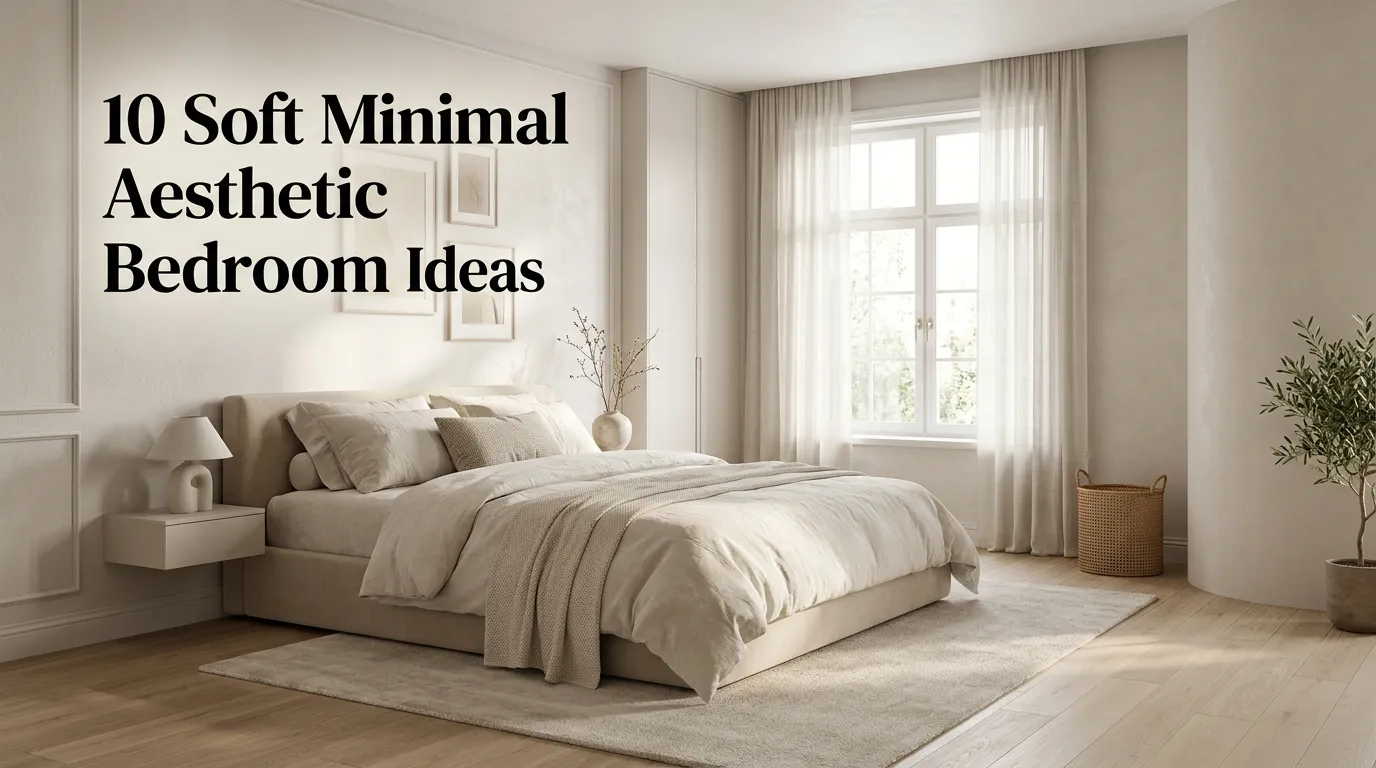
10 Soft Minimal Aesthetic Bedroom Ideas
A bedroom doesn’t need lots of furniture, layers of decoration, or a complicated color scheme to feel beautiful. Sometimes the most inviting rooms are the ones that feel calm the moment you walk through the door.
Soft minimalism combines the simplicity of a pared-back room with the warmth that makes a bedroom feel comfortable. Instead of stark white walls and completely empty surfaces, this style uses gentle neutrals, natural textures, warm lighting, and carefully chosen decor.
The result is a space that feels uncluttered without feeling cold.
In my experience, the biggest difference comes from choosing fewer pieces and giving each one enough room to breathe. A simple linen duvet can become a focal point when the surrounding furniture is understated. A wooden nightstand can add warmth without needing a collection of accessories on top. Even a small bedroom can feel spacious when the visual weight is carefully balanced.
Soft minimalism also works well because it can adapt to different homes and budgets. You don’t need to replace every piece of furniture. Changing the bedding, simplifying the nightstand, adding warmer lighting, or introducing natural materials can shift the entire atmosphere.
The ideas below focus on practical ways to create a soft minimalist bedroom while keeping it cozy, livable, and personal.
Whether you’re refreshing a master bedroom, guest room, apartment bedroom, or small sleeping space, these approaches can help you create a room that feels restful without looking overly styled.
Table of Contents
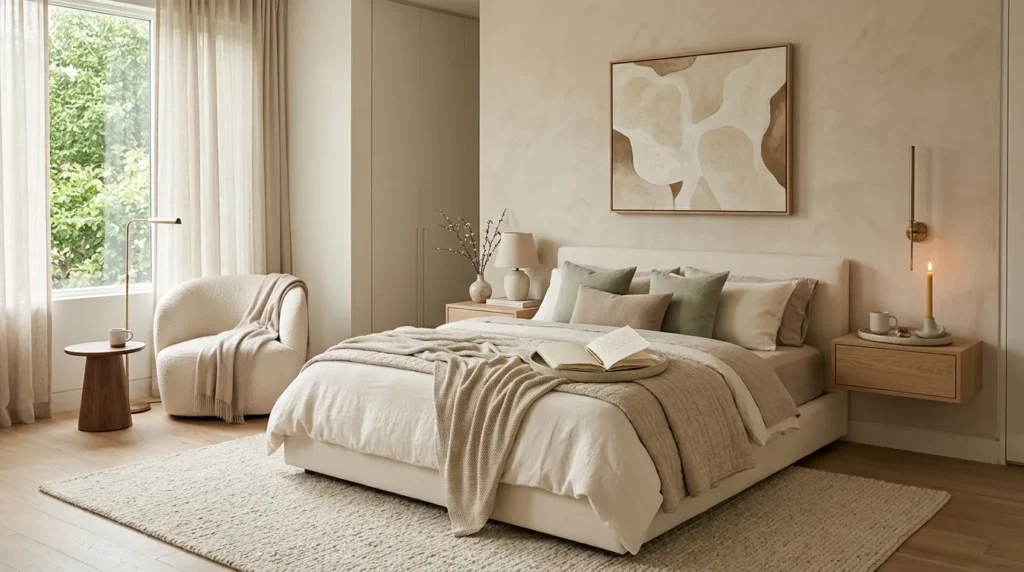
1. Warm Neutral Bedding
Build a calm foundation with layered cream, beige, and soft taupe textiles.
2. Natural Wood Accents
Add warmth and organic character through understated wooden furniture and details.
3. Soft Layered Textures
Create coziness with linen, cotton, wool, boucle, and other tactile materials.
4. Minimal Nightstands
Keep bedside surfaces simple with only a few useful and beautiful pieces.
5. Gentle Ambient Lighting
Use warm, diffused lighting to create a relaxed bedroom atmosphere.
6. Low Profile Furniture
Choose streamlined furniture that keeps the room visually open and balanced.
7. Organic Wall Decor
Add subtle artwork and natural shapes without overwhelming the walls.
8. Neutral Layered Curtains
Use soft window treatments to filter light while adding texture and privacy.
9. Simple Greenery
Introduce a small amount of greenery for freshness and natural color.
10. Clutter Free Styling
Create a peaceful finished look by reducing visual distractions and unnecessary objects.
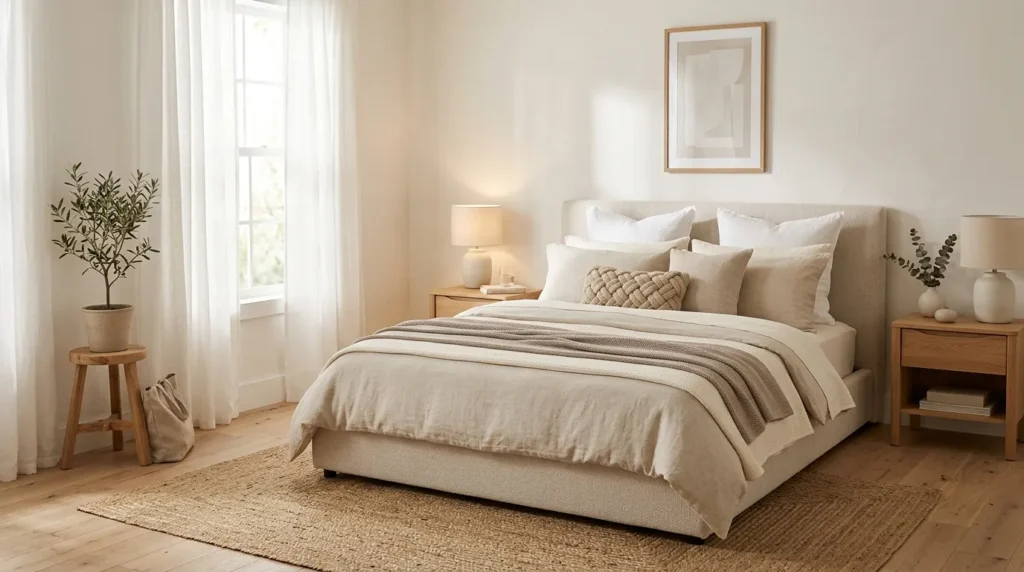
1. Warm Neutral Bedding
Quick Benefits
- Creates a peaceful foundation
- Makes the room feel softer
- Works with many decorating styles
- Makes layering easy
- Keeps the bedroom visually calm
Why It Works
Bedding occupies a large visual area, so changing it can have an immediate effect on the atmosphere of a bedroom.
Warm neutrals such as ivory, cream, oatmeal, beige, sand, and muted taupe create a gentle backdrop for soft minimal styling.
Unlike a room filled with contrasting colors, a neutral bedding palette allows texture to provide most of the visual interest.
The key is avoiding a completely flat look.
Different shades within the same family can make the bed feel layered without becoming busy.
A cream duvet paired with warm beige sheets and a slightly darker throw creates subtle depth while keeping the overall appearance relaxed.
How To Style It
Start with a simple duvet cover in ivory, cream, or warm white.
Add sheets in a slightly different neutral shade.
Layer two or three pillows in complementary colors rather than filling the bed with decorative cushions.
A lightweight textured throw at the foot of the bed adds warmth.
Choose natural-looking fabrics such as cotton or linen when practical.
Keep patterns minimal.
If you want additional contrast, introduce it through a muted taupe or warm brown accent rather than a bright color.
2. Natural Wood Accents
Quick Benefits
- Adds warmth
- Prevents neutral rooms from feeling cold
- Introduces organic texture
- Works with minimalist furniture
- Creates a timeless appearance
Why It Works
Soft minimalism depends heavily on texture because there are fewer decorative objects competing for attention.
Natural wood is one of the easiest ways to introduce warmth.
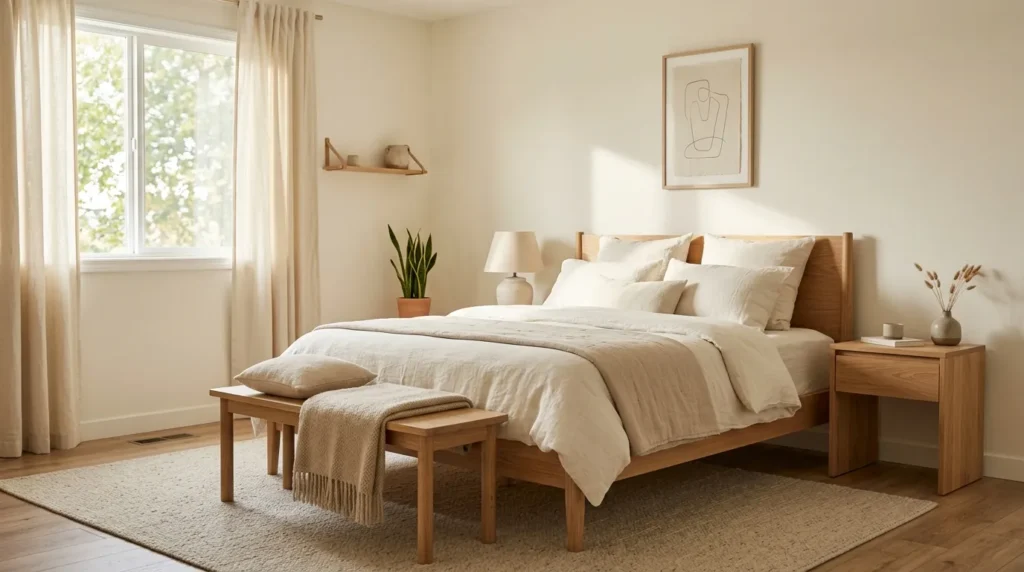
A simple oak nightstand, wooden bed frame, bench, stool, or picture frame can provide visual contrast against cream walls and bedding.
The beauty of wood is that it doesn’t need much decoration.
The grain itself adds character.
Lighter woods tend to keep a room airy, while medium warm woods can create a richer atmosphere.
How To Style It
Choose one or two wood tones and repeat them around the room.
An oak bed frame can work with a matching nightstand and small wooden picture frame.
If your existing furniture is darker, balance it with lighter bedding and walls.
Avoid filling the room with too many different wood finishes.
One simple wooden bench at the foot of the bed can be enough.
A small stool can also serve as a bedside surface when space is limited.
Let the natural material remain visible rather than covering every wooden surface with accessories.
3. Soft Layered Textures
Quick Benefits
- Adds warmth without visual clutter
- Makes neutral colors more interesting
- Creates a cozy atmosphere
- Makes the bedroom feel tactile
- Works in every season
Why It Works
A minimalist bedroom can easily become too plain when everything has the same smooth finish.
Texture solves that problem without requiring more color or decoration.
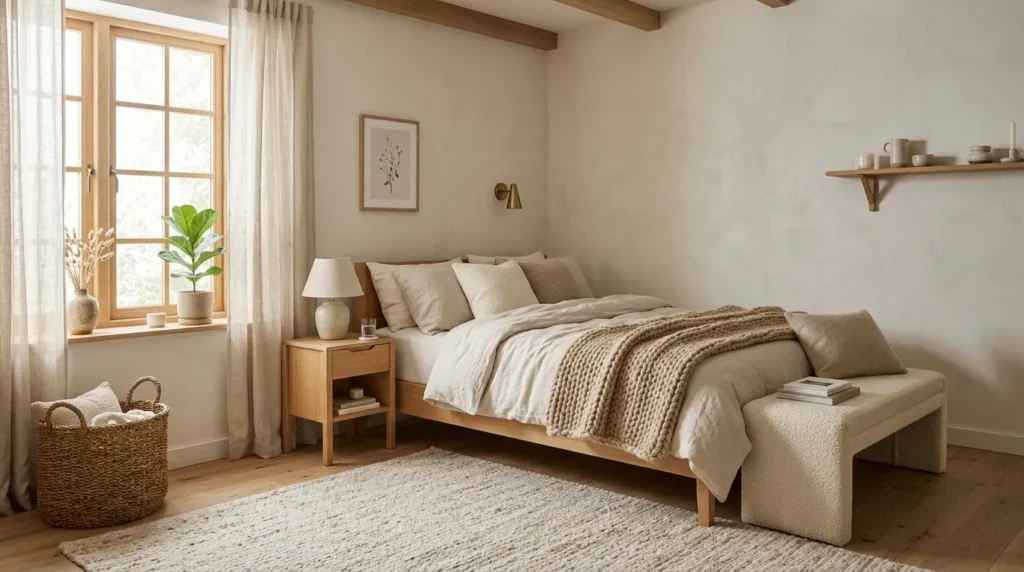
Think about how linen, cotton, wool, woven baskets, boucle, wood, ceramic, and soft rugs interact.
You don’t need all of them.
Even three different textures can make a noticeable difference.
The goal is subtle contrast.
A smooth ceramic lamp beside a textured linen pillow looks more interesting than two completely identical surfaces.
How To Style It
Start with your largest textiles.
Use a cotton or linen duvet.
Add a woven or knitted throw.
Place a textured rug beneath the bed if the room allows.
Use a woven basket for extra blankets or everyday items.
A ceramic vase can introduce a smooth handmade-looking surface.
Keep the colors close together.
Texture becomes the star when the palette remains restrained.
4. Minimal Nightstands
Quick Benefits
- Reduces visual clutter
- Keeps essentials accessible
- Creates a cleaner bedroom
- Makes small rooms feel more spacious
- Highlights intentional decor
Why It Works
Nightstands tend to become clutter magnets.
Books, chargers, water glasses, skincare, receipts, and miscellaneous objects can quickly collect beside the bed.
A soft minimalist bedroom benefits from a more intentional bedside arrangement.
That doesn’t mean your nightstand needs to be completely empty.
It simply means each item has a reason for being there.
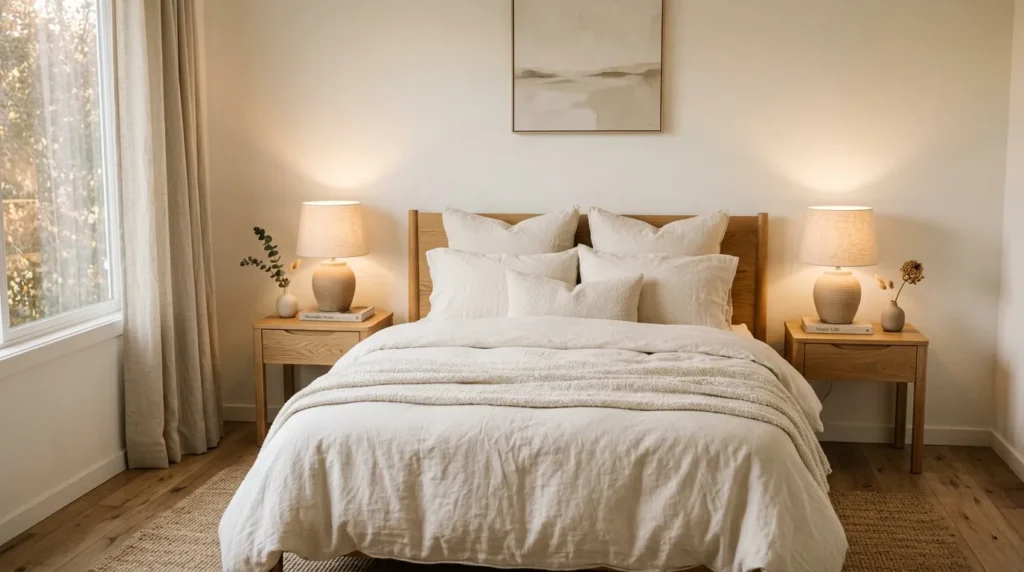
A small lamp, one book, and a ceramic dish can create a beautiful arrangement without making the surface feel crowded.
How To Style It
Start by clearing the entire nightstand.
Return only what you use regularly.
Choose a simple lamp with a warm shade.
Add one book or journal.
A small ceramic tray can hold jewelry or other tiny essentials.
If you enjoy flowers or greenery, add one small vase.
Hide chargers and less attractive practical items in a drawer or cable-management solution.
Leave some empty surface visible.
That negative space is part of the aesthetic.
5. Gentle Ambient Lighting
Quick Benefits
- Creates a relaxing mood
- Softens neutral interiors
- Makes the bedroom feel warmer
- Supports nighttime routines
- Adds atmosphere without clutter
Why It Works
Lighting can completely change the appearance of a minimalist bedroom.
Bright overhead lighting can make neutral spaces feel flat or harsh.
Warm, layered lighting creates a much softer environment.
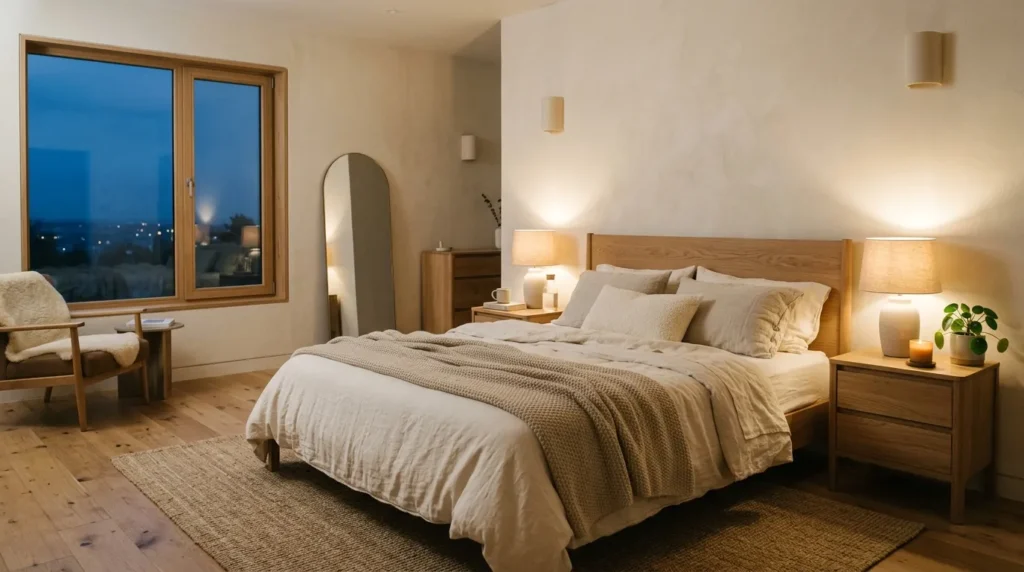
Bedside lamps are particularly useful because they provide focused light without illuminating the entire room.
Wall sconces can work well when nightstand space is limited.
Floor lamps can add height and another source of ambient light.
The goal is not darkness.
It’s gentle illumination.
How To Style It
Use warm-toned bulbs appropriate for the fixtures.
Place matching lamps on both sides of the bed for a balanced look.
If the bedroom is small, consider wall-mounted lighting to preserve nightstand space.
A floor lamp beside a reading chair can create a separate lighting zone.
Avoid relying entirely on one ceiling fixture.
During the day, maximize natural light with simple window treatments.
At night, use several low-intensity sources instead of one very bright light.
6. Low Profile Furniture
Quick Benefits
- Keeps sightlines open
- Makes the room feel less crowded
- Works well in small bedrooms
- Creates visual balance
- Supports minimalist styling
Why It Works
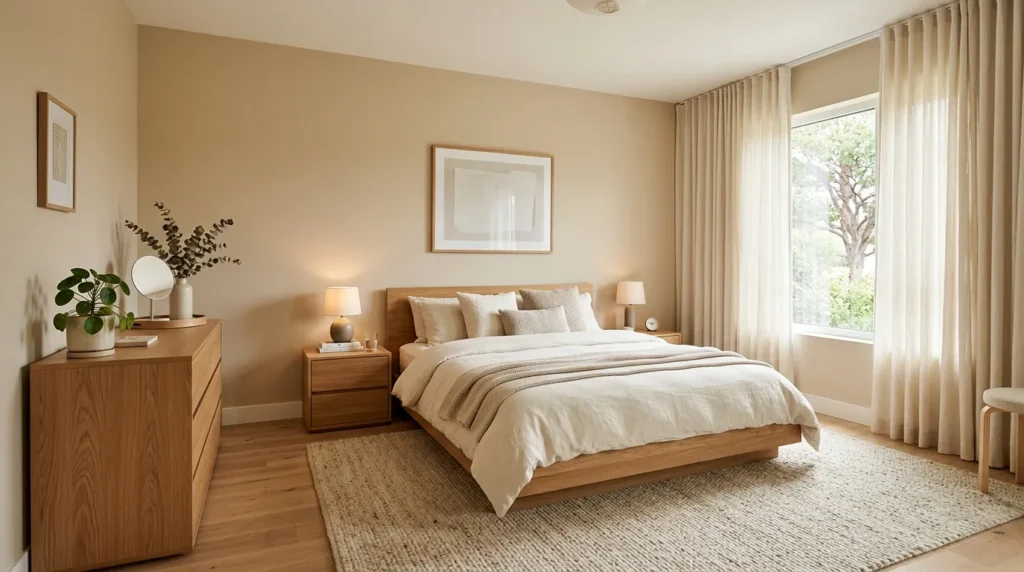
Furniture scale matters as much as the number of pieces in a room.
A large bed frame, oversized dresser, bulky nightstands, and heavy storage pieces can make even a spacious bedroom feel crowded.
Low-profile furniture creates more visual breathing room.
A streamlined bed frame allows more of the wall and floor to remain visible.
Simple furniture also gives textiles and natural materials more attention.
How To Style It
Choose furniture with clean lines and minimal ornamentation.
A platform bed can work particularly well in a soft minimalist room.
Select nightstands that are proportional to the bed.
If storage is necessary, choose a simple dresser with flat or understated fronts.
Avoid filling every available wall.
Leave some open space between furniture pieces.
For a small bedroom, consider furniture with built-in storage to reduce the number of separate pieces.
7. Organic Wall Decor
Quick Benefits
- Adds personality
- Keeps blank walls from feeling stark
- Introduces visual interest
- Works with neutral palettes
- Creates a finished appearance
Why It Works
Minimal doesn’t mean empty.
A completely bare bedroom can sometimes feel unfinished rather than peaceful.
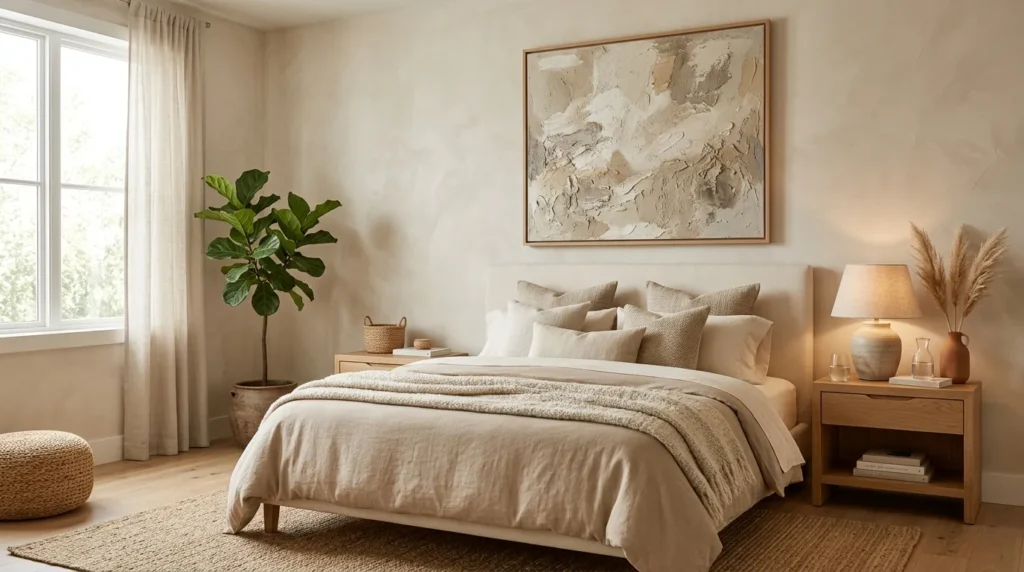
Organic wall decor adds personality while maintaining the understated character of the room.
Abstract artwork, botanical prints, textured canvas, natural wood frames, and simple line drawings can all work well.
The most important factor is scale.
One larger piece can often look more intentional than many tiny decorations scattered across the wall.
How To Style It
Choose artwork with colors already present in the room.
Cream, beige, taupe, muted brown, dusty green, and soft gray can work beautifully.
Hang one large artwork above the bed if the wall and room proportions allow it.
Alternatively, create a small symmetrical arrangement with two or three related pieces.
Use natural wood or simple neutral frames.
Avoid mixing too many art styles.
The artwork should complement the room rather than compete with the bedding.
8. Neutral Layered Curtains
Quick Benefits
- Softens windows
- Adds privacy
- Filters natural light
- Creates vertical height
- Completes the room
Why It Works
Window treatments can have a surprisingly large impact on bedroom design.
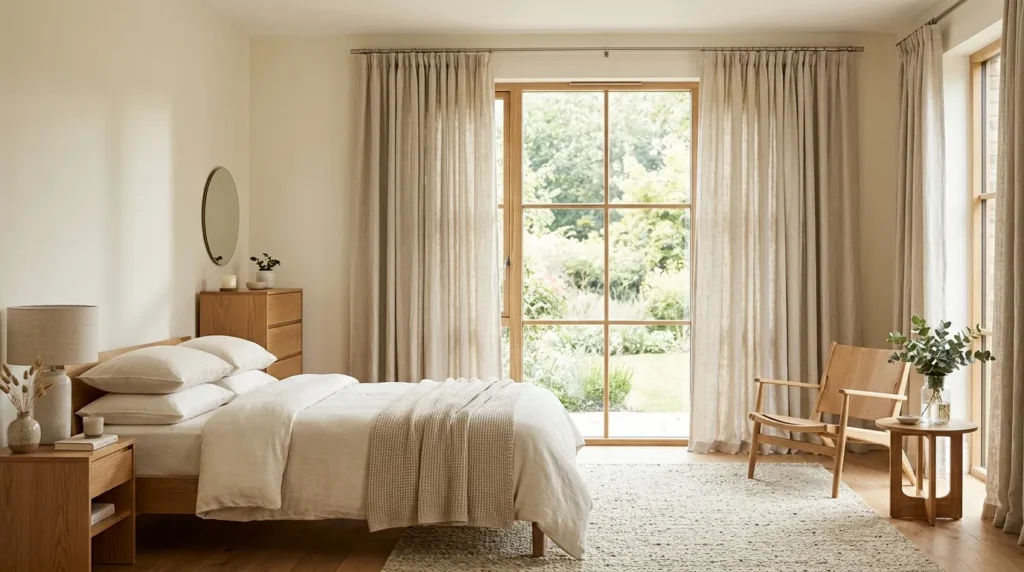
Soft neutral curtains help create the gentle atmosphere associated with minimalist bedrooms.
Hanging curtains higher and allowing them to fall toward the floor can emphasize the height of the room.
Light-filtering fabrics can also soften daylight without making the bedroom feel dark.
The texture of the fabric matters as much as the color.
A lightweight linen-style curtain can create a relaxed look, while a heavier neutral fabric can feel more substantial.
How To Style It
Choose curtains that coordinate with the bedding and walls rather than creating strong contrast.
Cream, oatmeal, warm white, and soft beige are versatile options.
Hang the curtain rod appropriately high and wide for the window configuration.
Allow enough fabric for a relaxed, full appearance.
For bedrooms that receive strong morning sunlight, combine attractive curtains with suitable window coverings that provide the level of light control you prefer.
Keep the surrounding window area relatively uncluttered.
9. Simple Greenery
Quick Benefits
- Adds natural color
- Softens minimalist interiors
- Brings organic shapes into the room
- Works with neutral palettes
- Creates a fresh atmosphere
Why It Works
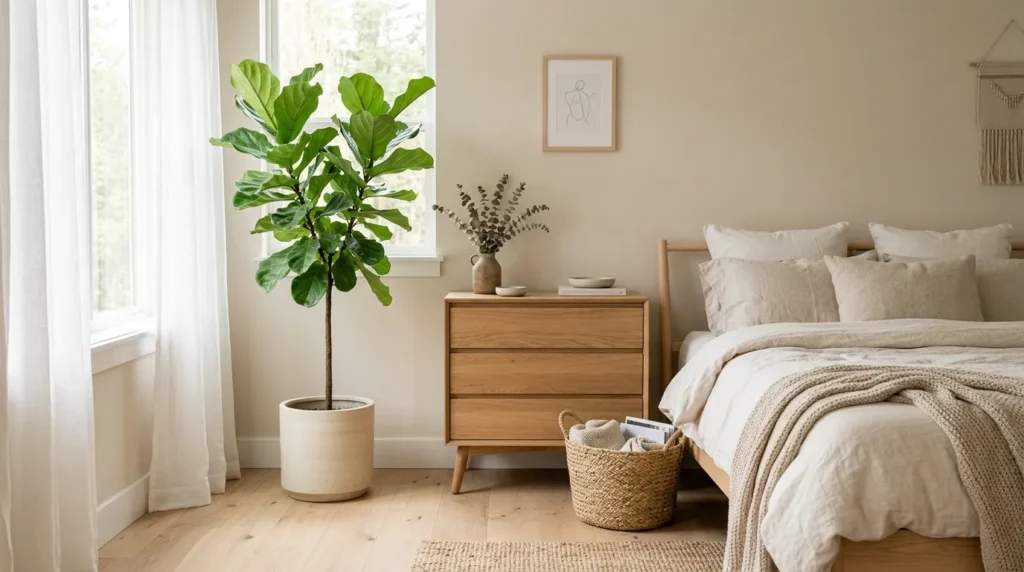
A small amount of greenery can make a neutral bedroom feel more alive.
Plants introduce organic shapes that contrast beautifully with the straight lines of minimalist furniture.
You don’t need a bedroom filled with plants.
One substantial plant in an empty corner or a small plant on a nightstand can be enough.
The container also contributes to the overall aesthetic.
Ceramic, terracotta, concrete-inspired, and natural woven planters can complement a soft neutral palette.
How To Style It
Choose plants based on the natural light available in your bedroom.
Place a taller plant in an unused corner where it won’t interfere with movement.
Use a smaller plant on a dresser or nightstand if you prefer a subtle touch.
Keep the planter simple.
If maintaining live plants isn’t practical, carefully selected faux greenery can provide a similar visual effect.
Avoid adding plants simply to fill empty space.
Choose greenery because it contributes to the room’s atmosphere.
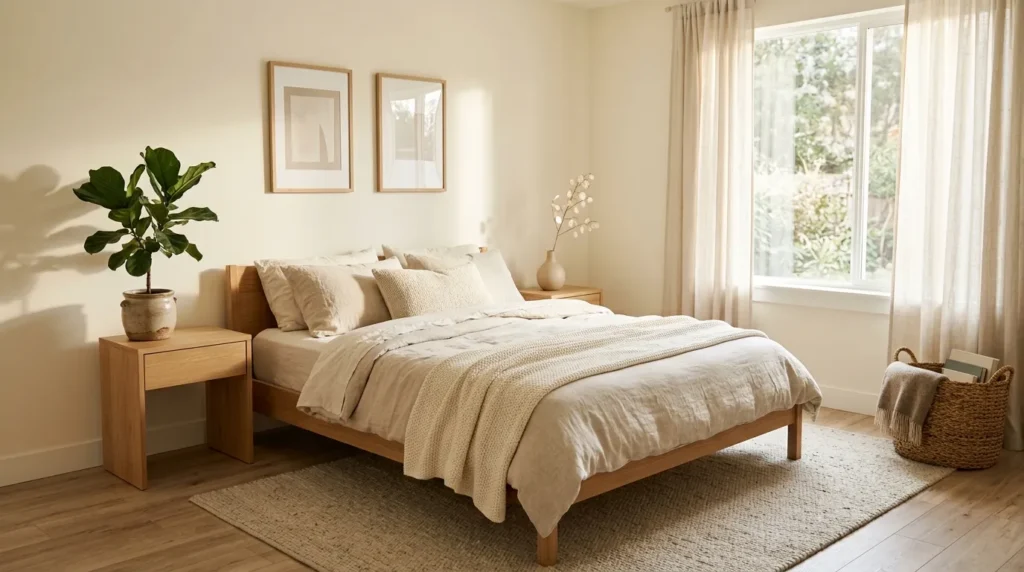
10. Clutter Free Styling
Quick Benefits
- Creates a peaceful appearance
- Makes cleaning easier
- Highlights favorite pieces
- Makes the room feel more spacious
- Supports a consistent aesthetic
Why It Works
The foundation of soft minimalism isn’t simply beige decor.
It’s intentionality.
When every surface contains several objects, even beautiful objects can create visual noise.
A minimalist bedroom benefits from empty space.
This doesn’t mean removing everything personal.
Instead, select the objects you genuinely enjoy seeing.
A favorite book, framed photograph, handmade ceramic, or small vase can have more impact when it isn’t surrounded by ten other accessories.
How To Style It
Begin with the visible surfaces.
Clear the dresser, nightstands, shelves, and floor.
Then add back only the pieces that serve a purpose or bring genuine enjoyment.
Use closed storage for items you need but don’t want visually displayed.
Keep laundry contained.
Create a designated place for chargers and everyday accessories.
Make the bed each morning if that habit helps you maintain the room.
At the end, step back and look at the bedroom as a whole.
If one area feels visually heavy, remove one more thing.
How to Create a Soft Minimal Bedroom on a Budget
You don’t need a complete bedroom makeover to create this aesthetic.
Start with the largest visual elements.
Refresh the Bedding
A neutral duvet cover can change the appearance of the entire bed.
Simplify the Nightstand
Remove unnecessary objects and keep only a few useful pieces.
Change the Lighting
A warm bedside lamp can create more atmosphere than expensive decorative accessories.
Add One Natural Material
A wooden stool, woven basket, or linen textile can introduce warmth.
Edit the Walls
Remove artwork that no longer fits the room and replace it with one simple piece you genuinely enjoy.
Rearrange Existing Furniture
Sometimes moving a dresser, chair, or bed can create more visual breathing room without spending anything.
Add Greenery
One healthy plant can add organic color and shape.
The best budget-friendly approach is to edit first and shop second.
Soft Minimal Bedroom Color Palette Ideas
A restrained color palette helps the room feel cohesive.
Cream + Beige + Natural Wood
Warm, timeless, and versatile.
White + Taupe + Oak
Clean with subtle warmth.
Oatmeal + Warm Gray + Brown
Soft and sophisticated.
Ivory + Muted Sage + Natural Wood
Fresh without becoming colorful.
Sand + Cream + Terracotta
Earthy and relaxed.
Warm White + Charcoal + Oak
Minimal with slightly stronger contrast.
Choose one primary neutral and one or two supporting shades.
Then let texture provide the variation.
Soft Minimalism vs. Stark Minimalism
These two styles can look similar, but they create different atmospheres.
Stark minimalism often emphasizes crisp lines, strong simplicity, limited decoration, and high visual restraint.
Soft minimalism keeps the simplicity but introduces warmer materials, textiles, organic shapes, and gentle colors.
If you love uncluttered spaces but don’t want your bedroom to feel cold, soft minimalism can offer a comfortable middle ground.
The room remains edited, but it still feels lived in.
FAQ
What is a soft minimalist bedroom?
A soft minimalist bedroom combines simple furniture and uncluttered styling with warm neutral colors, natural materials, comfortable textiles, gentle lighting, and limited decor. The goal is to create visual calm without making the room feel empty or sterile.
What colors work best for a soft minimalist bedroom?
Cream, ivory, beige, oatmeal, taupe, warm white, muted sage, soft brown, and warm gray all work well. Rather than using many contrasting colors, choose a small group of complementary neutrals and create interest through texture, wood, greenery, and lighting.
How do I make a minimalist bedroom cozy?
Use layered bedding, natural wood, soft rugs, textured fabrics, warm lighting, and a small amount of greenery. The room can remain visually simple while still feeling comfortable. Texture is particularly useful because it adds warmth without requiring additional colors or decorative objects.
How do I create a soft minimalist bedroom on a budget?
Start by editing what you already own. Remove unnecessary decor, rearrange furniture, simplify the nightstands, and improve the lighting. Then consider one high-impact update such as neutral bedding, a textured rug, simple curtains, or a wooden accent piece.
What furniture works best in a soft minimalist bedroom?
Choose streamlined furniture with simple silhouettes and proportions appropriate for the room. Platform beds, understated nightstands, simple dressers, wooden benches, and furniture with concealed storage can work particularly well. Avoid filling the room with pieces that aren’t necessary.
How much decor should a minimalist bedroom have?
There isn’t a fixed number. The goal is to keep the pieces that serve a purpose or genuinely add meaning. A few carefully selected pieces often create more impact than many small accessories. Empty space is also part of the design.
Can a small bedroom have a soft minimalist aesthetic?
Yes. Soft minimalism can work particularly well in small bedrooms because it emphasizes visual simplicity. Choose appropriately scaled furniture, use light neutral colors, keep surfaces clear, and use vertical space thoughtfully. Avoid unnecessary furniture that reduces usable floor area.
Conclusion
A soft minimalist bedroom doesn’t need to feel empty, expensive, or overly perfect.
The most successful rooms balance simplicity with comfort.
Start with a calm neutral palette, then add warmth through natural wood, layered textiles, gentle lighting, and a small amount of greenery. Keep the furniture streamlined and give your favorite pieces enough space to stand out.
If your bedroom currently feels crowded, don’t try to change everything at once.
Clear one surface.
Simplify the nightstand.
Swap in softer bedding.
Move one piece of furniture.
Add warmer lighting.
Small changes can completely shift the atmosphere.
The goal isn’t to remove every personal detail. It’s to create enough visual breathing room that the details you genuinely love become easier to notice.
A soft minimalist bedroom should feel peaceful when you enter, comfortable when you rest, and easy enough to maintain in everyday life.
Start with what you already have, remove what no longer serves the room, and gradually build a space that feels calm, warm, and unmistakably yours.
Related Articles
- 10 Modern Bedroom Ideas with Cozy Hotel Vibes
- 10 Bedroom Wall Decor Ideas That Make a Room Feel Larger
- How to Make a Small Bedroom Feel Bigger with Light Colors
- How to Decorate a Bedroom with Elegant Decor
- 10 Modern Cozy Aesthetic Bedroom Ideas