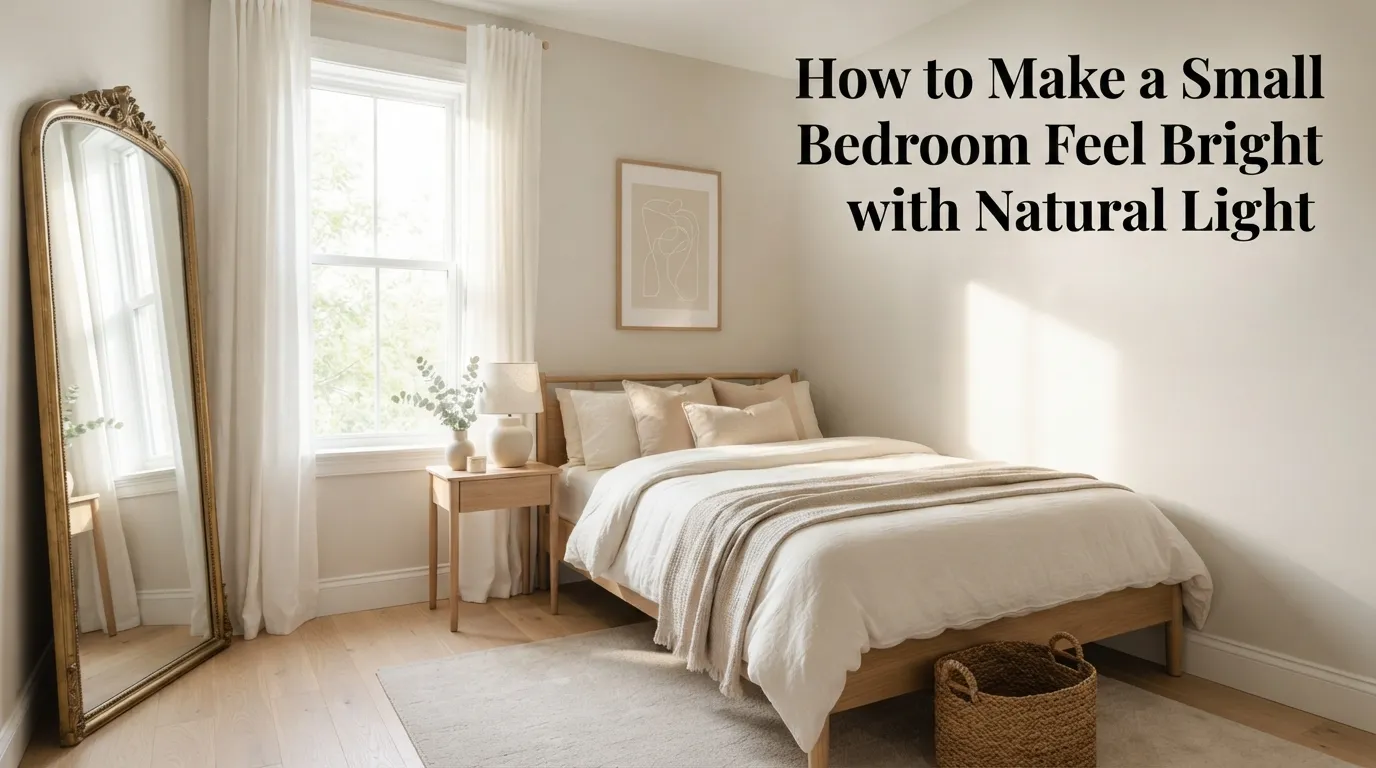
How to Make a Small Bedroom Feel Bright with Natural Light
A small bedroom can feel surprisingly dark even when it has a perfectly good window. Limited floor space, heavy curtains, dark furniture, bulky bedding, and poorly positioned mirrors can all prevent natural light from making the room feel as bright and open as it could.
The good news is that you don’t need to remodel the room or replace every piece of furniture to make a noticeable difference. Small changes to the way you handle windows, walls, furniture, mirrors, and color can help daylight travel farther through the space.
In my experience, the biggest improvement often comes from removing things that interrupt the light rather than adding more decoration. A bulky dresser blocking part of a window can have a greater impact than an entire collection of bright accessories. Similarly, heavy curtains can make a room feel closed off during the day, while lightweight window treatments can soften sunlight without sacrificing brightness.
Color also matters. Warm whites, soft creams, pale beige, and gentle neutrals reflect more daylight than very dark finishes. But an all-white room isn’t necessary. Natural wood and subtle warm tones can keep a small bedroom feeling inviting rather than stark.
The ideas below focus on realistic ways to work with the natural light you already have. Whether you’re decorating a small apartment bedroom, guest room, rental, or compact primary bedroom, these changes can help create a lighter atmosphere while keeping the space comfortable and personal.
You don’t need to tackle everything at once. Start with the window, then work outward through the room.
Table of Contents
1. Light Filtering Curtains
Use lightweight window treatments to soften sunlight while keeping the room bright.
2. Reflective Wall Colors
Choose light wall colors that help bounce daylight around the bedroom.
3. Strategic Mirrors
Position mirrors to reflect available daylight into darker areas.
4. Clear Window Areas
Keep furniture and accessories from blocking valuable natural light.
5. Light Bedding Layers
Use pale bedding to create a brighter visual foundation around the bed.
6. Glossy Accent Surfaces
Introduce subtle reflective finishes that help distribute daylight.
7. Open Furniture Layout
Arrange furniture to create unobstructed paths for natural light.
8. Sheer Window Layers
Filter harsh sunlight while maintaining an airy daytime atmosphere.
9. Light Wood Finishes
Use pale natural wood to add warmth without making the room feel heavy.
10. Airy Wall Decor
Keep artwork and wall styling light enough to preserve the room’s brightness.
1. Light Filtering Curtains
Quick Benefits
- Allows more daylight inside
- Creates a softer atmosphere
- Adds privacy during the day
- Makes windows feel larger
- Works with many decorating styles
Why It Works
Window treatments can determine how much natural light actually reaches the bedroom.
Heavy blackout curtains may be useful when sleeping, but leaving them fully closed throughout the day can make a small room feel considerably darker.
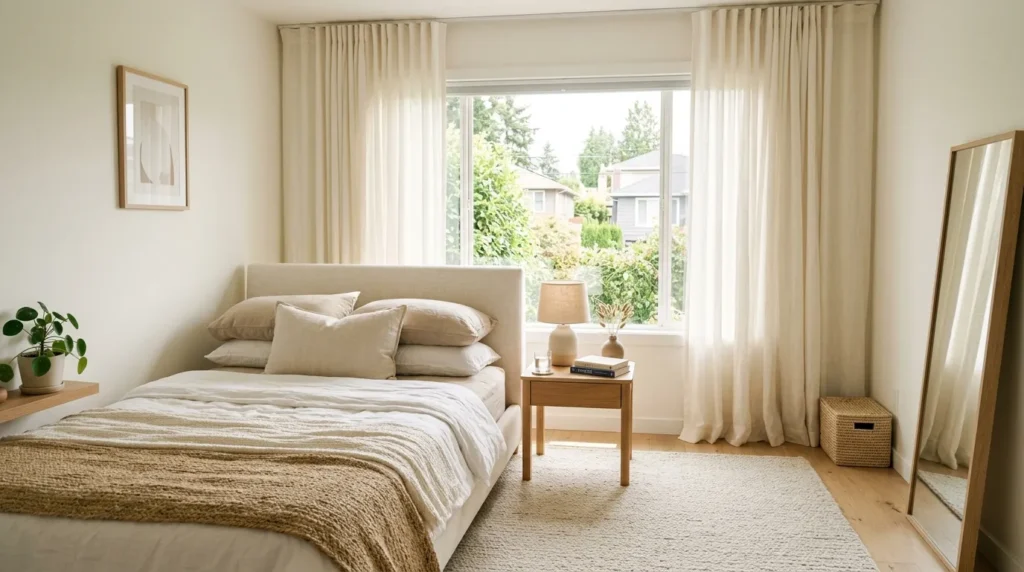
Light-filtering curtains offer a practical middle ground. They allow daylight to enter while reducing glare and providing a degree of privacy.
White, ivory, cream, and very pale beige fabrics are particularly versatile because they don’t visually compete with the incoming light.
The fabric itself matters, too. Lightweight linen-style or cotton curtains tend to create a softer appearance than thick, heavily lined panels.
How To Style It
Choose curtains that are light in color and relatively lightweight.
If privacy is important, consider combining a sheer or light-filtering layer with a separate room-darkening treatment that can be closed at night.
Mount the curtain rod according to the window and room configuration, often extending beyond the window frame where practical so the curtains can sit outside the glass when open.
During the day, keep the panels fully pulled aside.
Avoid placing decorative objects directly in front of the window.
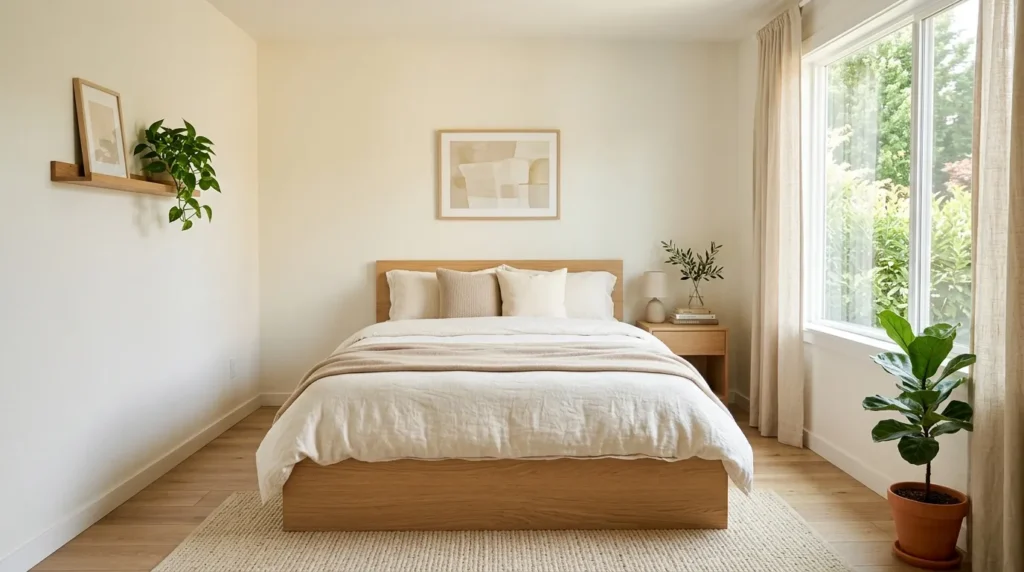
2. Reflective Wall Colors
Quick Benefits
- Helps distribute daylight
- Makes walls feel brighter
- Creates a more open appearance
- Works well in small rooms
- Provides a versatile decorating foundation
Why It Works
Wall color has a major influence on how a room responds to natural light.
Light colors generally reflect more available daylight than very dark colors, which can absorb more light and make a compact room feel visually heavier.
Warm white, soft ivory, pale cream, light greige, and gentle beige can all work beautifully in bedrooms.
Pure bright white isn’t your only option.
In fact, a slightly warm neutral can make a naturally bright room feel more comfortable because it prevents the space from looking overly stark.
The goal is to create a reflective backdrop while maintaining the mood you want.
How To Style It
Choose a light wall color that works with the direction and quality of your natural light.
If the room receives cool northern light, a warm white or creamy neutral can add softness.
If the bedroom receives strong warm sunlight, a balanced off-white or pale greige may prevent the room from feeling too yellow.
Use the same or similar light tone across major walls for visual continuity.
Then introduce contrast through bedding, wood, artwork, or small accessories.
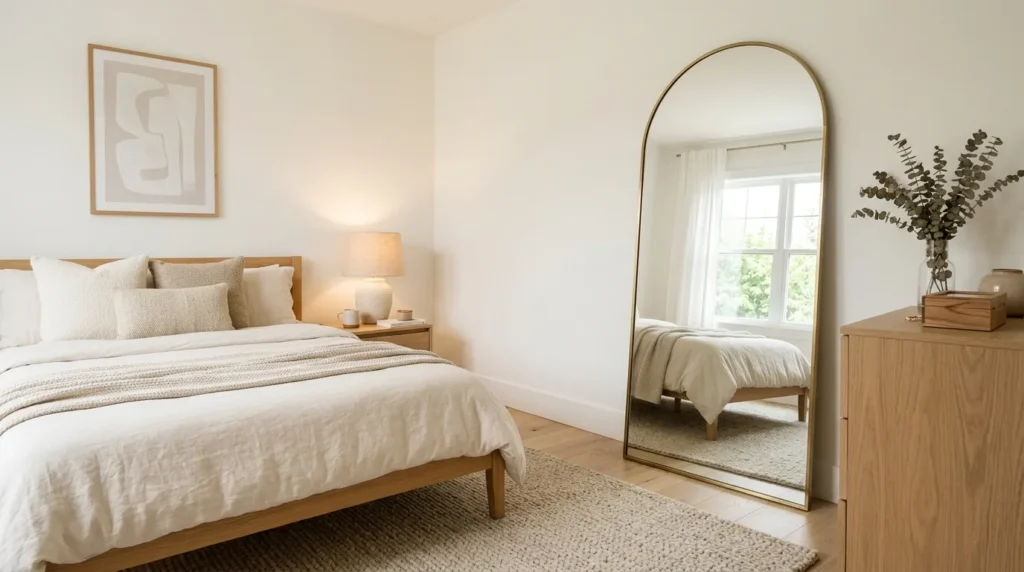
3. Strategic Mirrors
Quick Benefits
- Reflects available daylight
- Visually expands the room
- Adds depth
- Brightens darker corners
- Creates a decorative focal point
Why It Works
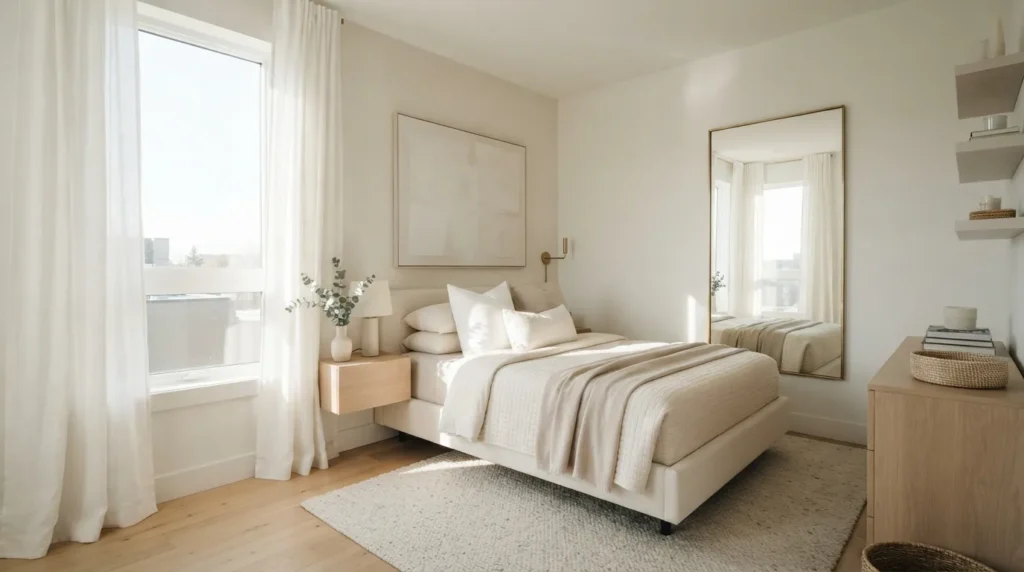
A mirror doesn’t create additional light, but it can redirect existing light and create the impression of greater depth.
When positioned thoughtfully, a mirror can reflect a window, a bright wall, or another light surface into an area that feels darker.
This makes mirrors particularly useful in small bedrooms where every visual trick counts.
The important word is strategically.
A mirror placed opposite a dark wall won’t necessarily transform the room. You want its reflected view to contribute something bright or visually open.
How To Style It
Try positioning a large mirror across from or adjacent to the bedroom window, depending on the layout.
A full-length mirror leaning securely against an appropriate wall can work in a compact room.
For a smaller space, use a round wall mirror above a dresser.
Choose a slim frame in light wood, brushed metal, or another finish that complements the room.
Keep the area reflected in the mirror tidy.
A mirror showing a cluttered corner can make the room feel busier rather than brighter.
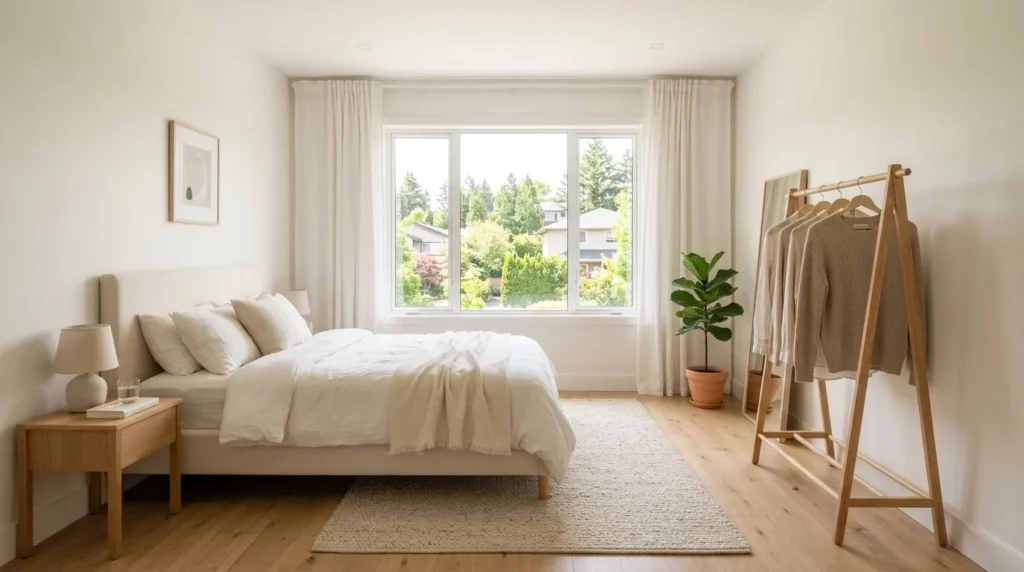
4. Clear Window Areas
Quick Benefits
- Maximizes available daylight
- Creates a cleaner view
- Makes the window feel larger
- Improves visual openness
- Costs nothing to implement
Why It Works
One of the easiest ways to brighten a small bedroom is simply to stop blocking the window.
A tall dresser, bookshelf, plant collection, or oversized headboard positioned directly in front of the glass can reduce the amount of daylight reaching the room.
Even partial obstruction can make a difference.
If your bedroom is small, furniture placement becomes especially important because there may be only one major source of natural light.
Think of the window as a valuable part of the room’s layout rather than just an opening in the wall.
How To Style It
Move bulky furniture away from the window whenever the layout allows.
Keep plants near the window only if they don’t block significant portions of the glass.
Avoid stacking storage containers on the windowsill.
Keep curtains fully open during daylight hours.
If a desk must sit near the window, choose a low-profile design that preserves as much glass exposure as possible.
Even clearing a portion of the window can improve the overall feeling of the room.
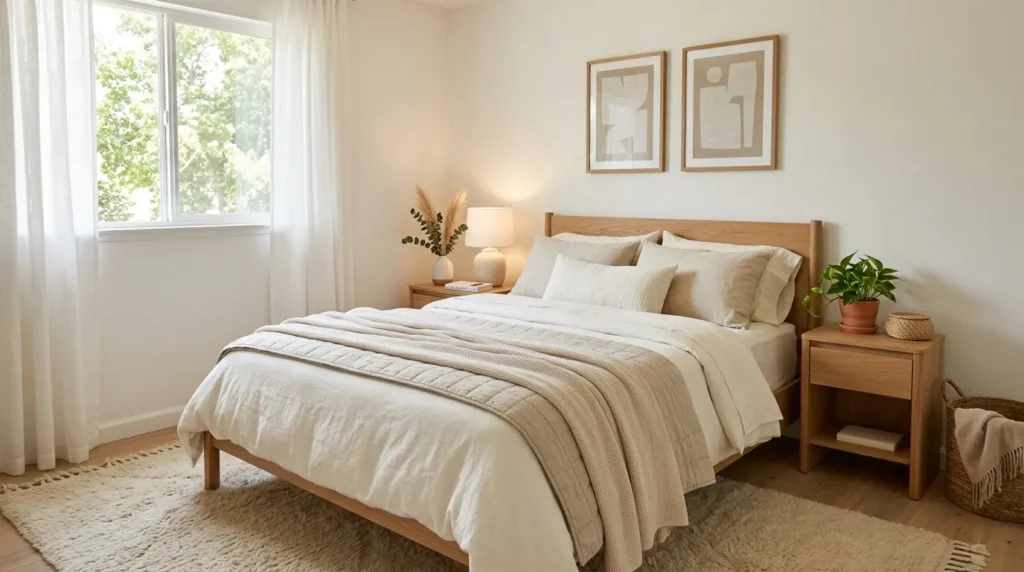
5. Light Bedding Layers
Quick Benefits
- Brightens the largest furniture piece
- Makes the room feel softer
- Reflects daylight visually
- Creates a calm atmosphere
- Works with many styles
Why It Works
The bed is usually the largest object in a bedroom, which means its color and visual weight have a major impact.
Dark bedding can create a strong visual block in a small room.
Light bedding, on the other hand, creates a larger reflective-looking surface that helps maintain an airy appearance.
Cream, ivory, white, pale beige, oatmeal, and soft gray are easy choices.
You can still add depth without introducing dark colors.
Texture can provide interest where strong color contrast would otherwise be used.
How To Style It
Choose a light duvet or quilt as the main layer.
Add sheets in a similar neutral shade.
Use a small number of pillows in complementary tones.
A lightweight beige or oatmeal throw can create dimension at the foot of the bed.
Choose linen, cotton, or other breathable-looking fabrics for a relaxed appearance.
If you want contrast, introduce it through natural wood, muted artwork, or a subtle warm accent rather than a large dark blanket.
6. Glossy Accent Surfaces
Quick Benefits
- Adds subtle reflection
- Helps bounce light visually
- Creates a polished finish
- Works with modern interiors
- Adds interest without extra clutter
Why It Works
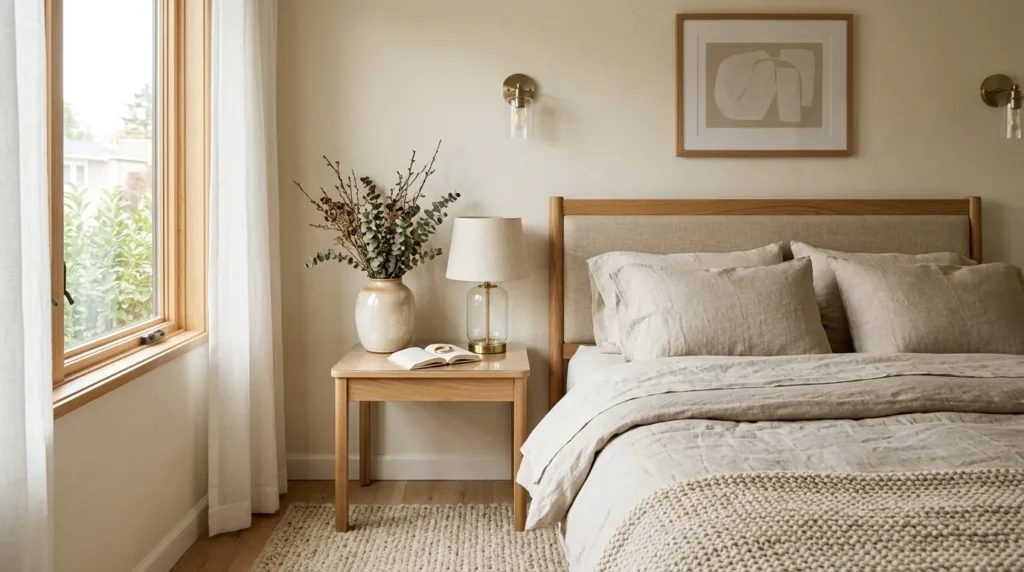
Reflective surfaces can help a small bedroom feel brighter when used in moderation.
You don’t need mirrored furniture throughout the room.
Small accents such as a glass lamp base, polished metal hardware, glazed ceramic vase, or lightly reflective tabletop can catch and reflect daylight.
The key is subtlety.
Too many shiny surfaces can make a bedroom feel cold or overly decorative.
A few carefully selected reflective details can provide enough variation while preserving the relaxed atmosphere.
How To Style It
Choose one or two reflective materials.
A glass bedside lamp paired with brushed brass hardware can work nicely in a warm neutral bedroom.
A ceramic vase with a smooth glazed finish can catch daylight on a dresser.
Keep reflective pieces away from areas where they create uncomfortable glare.
Balance them with softer materials such as linen, cotton, wood, and woven textures.
The contrast between matte and reflective surfaces creates visual depth.
7. Open Furniture Layout
Quick Benefits
- Improves light movement
- Makes walking areas clearer
- Creates visual breathing room
- Helps the room feel larger
- Makes cleaning easier
Why It Works
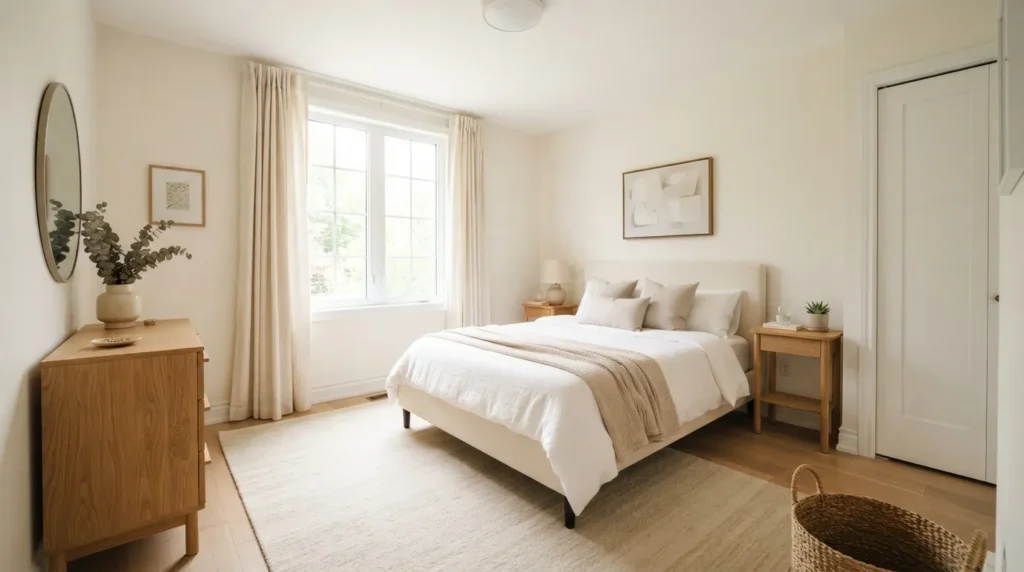
Furniture placement can determine whether natural light reaches the rest of the room or stops at the first obstacle.
In a compact bedroom, every piece of furniture has a visual footprint.
A bed pushed into an awkward position, an oversized dresser, or unnecessary accent chair can make the room feel crowded even when the furniture technically fits.
An open layout creates clearer sightlines.
You can see more of the floor and walls, and daylight has fewer visual obstacles between the window and the rest of the room.
How To Style It
Start by identifying the primary path from the window into the room.
Keep that area as visually open as possible.
Choose furniture with proportions appropriate to the bedroom.
A narrow nightstand may work better than a wide one.
A wall-mounted shelf can replace a bulky cabinet.
If possible, position larger furniture against walls rather than directly in front of the window.
Before purchasing anything new, experiment with rearranging the furniture you already own.
8. Sheer Window Layers
Quick Benefits
- Softens direct sunlight
- Maintains brightness
- Adds privacy
- Creates an airy appearance
- Adds subtle texture
Why It Works
Bedrooms with strong afternoon or morning sunlight can have the opposite problem: too much direct glare.
Completely bare windows may allow intense sunlight to create uncomfortable brightness, while heavy curtains can make the room unnecessarily dark.
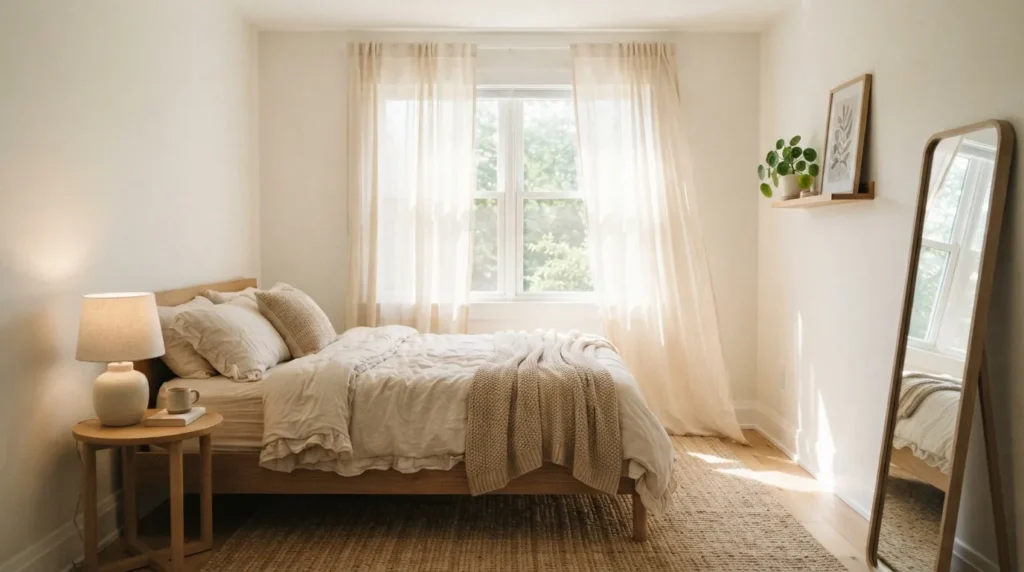
Sheer panels offer a useful compromise.
They diffuse incoming daylight, making it softer while preserving the bright quality of the room.
This can be particularly attractive when the bedroom has warm neutral decor because the filtered sunlight creates gentle shadows and highlights across the textiles.
How To Style It
Choose sheer panels in white, ivory, or another very pale neutral.
Use them alone if privacy requirements are minimal.
For more flexibility, layer sheers with room-darkening curtains.
Keep the fabric long enough to create a soft vertical line.
Avoid overly elaborate curtain designs.
The simpler the panels, the more naturally they blend into a minimalist or contemporary bedroom.
9. Light Wood Finishes
Quick Benefits
- Adds warmth
- Keeps furniture visually lighter
- Works with neutral walls
- Introduces natural texture
- Prevents an overly sterile look
Why It Works
A bright bedroom doesn’t need to be entirely white.
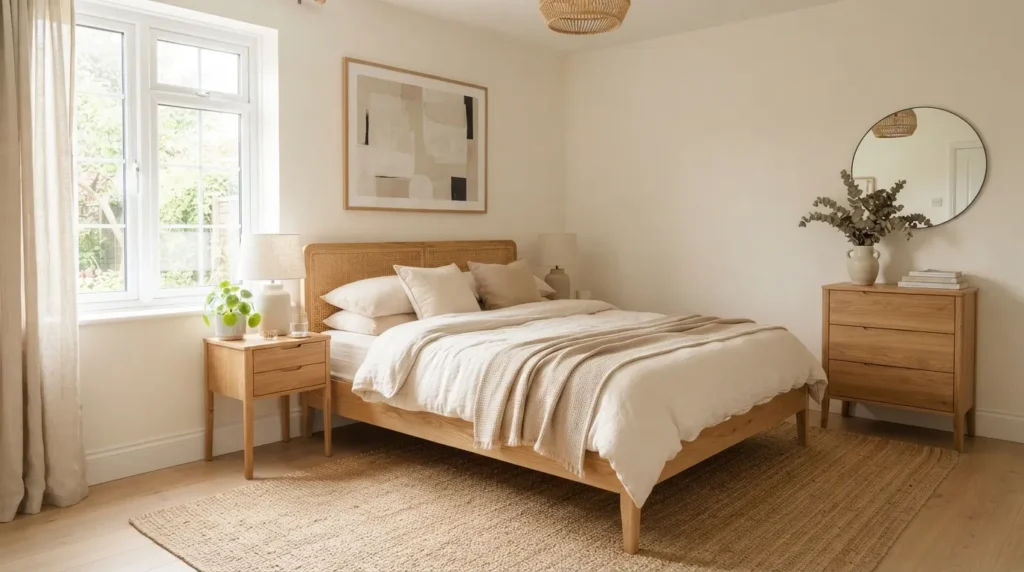
Natural wood is a useful way to add warmth while keeping the overall visual weight relatively light.
Pale oak, ash, birch-inspired finishes, and other light woods can work beautifully alongside cream walls and neutral textiles.
Wood also provides texture.
This is important because a room decorated entirely in white can sometimes feel flat.
The grain of natural-looking wood gives the eye something to notice without introducing a strong color contrast.
How To Style It
Choose one dominant wood finish and repeat it around the room.
A pale wood bed frame can coordinate with a nightstand and small wall frame.
If your existing furniture is darker, don’t assume you need to replace it.
Instead, balance it with light walls, pale bedding, and lighter textiles.
Avoid mixing too many unrelated wood tones.
A small amount of natural wood can be enough to make a bright bedroom feel warm and inviting.
10. Airy Wall Decor
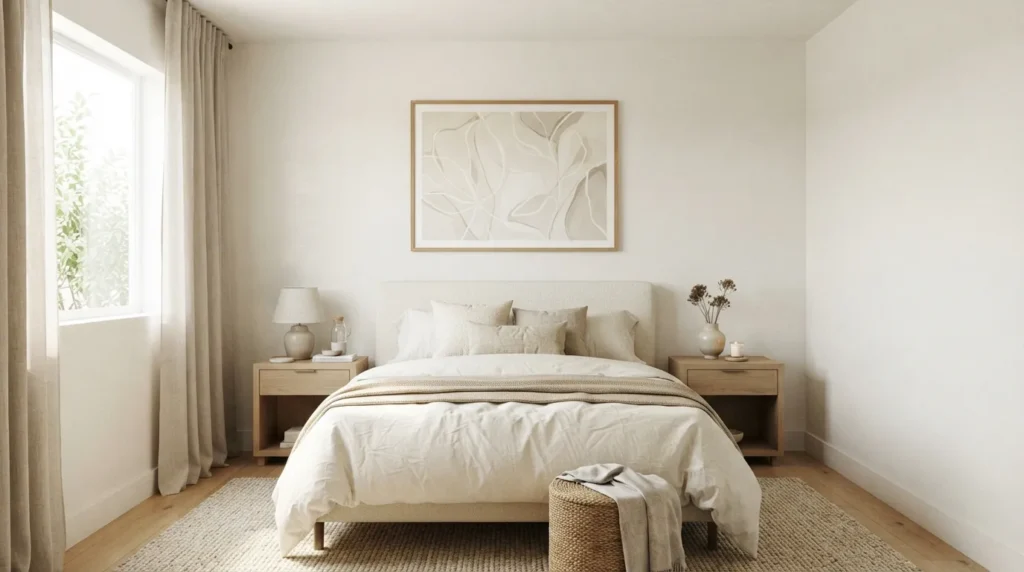
Quick Benefits
- Keeps walls visually light
- Adds personality
- Creates a finished look
- Supports a bright color palette
- Prevents visual heaviness
Why It Works
Wall decor can either enhance the openness of a small bedroom or make it feel visually crowded.
Large collections of dark frames, busy patterns, and heavy artwork can create strong visual blocks.
A brighter bedroom benefits from simpler wall styling.
This doesn’t mean leaving every wall empty.
Instead, choose artwork with light backgrounds, subtle colors, natural imagery, or delicate line work.
One larger piece can often look more intentional than a collection of many small frames.
How To Style It
Choose artwork that repeats colors already present in the bedroom.
Soft botanical prints, abstract neutral artwork, pale landscapes, and simple line drawings can work well.
Use light wood, white, or slim metal frames.
Place one substantial piece above the bed or dresser.
If creating a gallery wall, keep the palette consistent.
Avoid covering every available wall.
Leave enough negative space around the artwork so the bedroom continues to feel open.
How to Make a Small Bedroom Brighter Without Painting
You can improve the room’s brightness even if painting isn’t possible.
Start with the window.
Replace heavy curtains with lightweight panels or open the existing curtains fully during the day.
Next, examine the largest surfaces.
Light bedding, pale rugs, and neutral textiles can visually brighten the room without changing the walls.
Then look at furniture.
If a dark dresser is making one area feel heavy, balance it with a light-colored lamp, artwork, or textile.
Mirrors can also help reflect the daylight already available.
For renters, these changes are especially useful because they don’t require permanent alterations.
How to Use a Mirror for More Natural Light
The best mirror placement depends on the room’s layout.
A mirror across from a window can reflect the window and its daylight, potentially making the room feel brighter and deeper.
A mirror beside a window can also capture light while reflecting another portion of the room.
A full-length mirror can make a small bedroom feel more spacious because it increases the sense of visual depth.
Before hanging a mirror, stand where it will go and look at what it will reflect.
The reflected view matters just as much as the mirror itself.
Best Colors for a Dark Small Bedroom
If your bedroom receives limited daylight, consider colors such as:
- Warm white
- Soft ivory
- Cream
- Pale beige
- Light greige
- Oatmeal
- Very pale sage
- Soft warm gray
A common mistake is assuming that the brightest possible white is always the best choice.
Depending on the room’s natural light, a warmer off-white can feel more inviting.
Test paint samples on multiple walls if painting is an option. Natural light changes throughout the day, so a color that looks perfect in morning sunlight may appear different in the evening.
What to Remove From a Small Bedroom
Sometimes the quickest way to make a room feel brighter is to remove visual obstacles.
Consider removing or relocating:
- Bulky furniture near windows
- Heavy curtains during the day
- Excessive decorative pillows
- Dark storage bins
- Unnecessary floor furniture
- Large collections of small wall decorations
- Objects covering windowsills
- Oversized lamps
- Furniture that blocks walking paths
You don’t necessarily need less furniture overall.
You need furniture that works with the available space and light.
Common Mistakes When Brightening a Small Bedroom
Blocking the Main Window
Even beautiful furniture can work against the room when it blocks valuable daylight.
Using Too Many Dark Accents
A few dark details can create contrast, but too many can increase visual weight.
Relying Only on White
Brightness also comes from layout, window treatments, reflective surfaces, and natural light.
Using Mirrors Without Considering Their Reflection
A mirror reflecting a cluttered or dark corner won’t necessarily improve the room.
Choosing Heavy Curtains
Thick panels can be useful at night, but keeping them closed all day limits natural light.
Overdecorating the Walls
Too many frames and decorative objects can make a small bedroom feel visually crowded.
Ignoring Furniture Scale
A piece can technically fit while still being too visually heavy for the room.
Frequently Asked Questions
How can I make a small bedroom brighter without changing the windows?
Start by maximizing the daylight coming through your existing window. Use lightweight curtains, clear objects away from the glass, add a strategically positioned mirror, and choose lighter bedding and wall colors. Rearranging bulky furniture can also help daylight reach more of the room.
What color makes a small bedroom look brighter?
Warm white, cream, ivory, pale beige, and light greige are popular choices because they create a light visual backdrop. The best shade depends on the room’s natural light. Test samples in the actual bedroom because daylight can change the appearance of paint throughout the day.
Where should I put a mirror to make my bedroom brighter?
Try positioning the mirror so it reflects the window or another bright part of the room. A mirror opposite or beside the window can work well depending on the layout. Before installing it, check what the mirror will reflect because a cluttered or dark view can reduce the intended effect.
Should bedroom curtains be light or dark?
Light-colored, lightweight curtains generally help maintain a bright daytime atmosphere. If you need darkness for sleeping, consider layering sheer or light-filtering curtains with room-darkening panels. This gives you flexibility between daytime brightness and nighttime light control.
How do I brighten a small bedroom that gets very little sunlight?
Use a combination of light wall colors, pale bedding, unobstructed windows, strategically placed mirrors, lightweight curtains, and an open furniture arrangement. Since limited sunlight cannot be increased indefinitely through decor, the goal is to maximize and distribute what is available.
Can dark furniture work in a bright small bedroom?
Yes. You don’t have to replace dark furniture. Balance it with light walls, pale bedding, warm natural textures, and an uncluttered layout. A few darker pieces can actually provide useful contrast while the lighter surrounding surfaces keep the room from feeling heavy.
Does natural light make a small bedroom look bigger?
Natural light can contribute to a more open visual feeling, particularly when windows remain unobstructed and the room uses light colors and reflective surfaces. Good furniture placement and clear sightlines also help create a sense of spaciousness.
Conclusion
Making a small bedroom feel brighter isn’t about filling the room with white furniture or adding more decorative objects.
It starts with working with the daylight you already have.
Keep windows clear, use lightweight curtains, choose colors that reflect rather than visually absorb light, and position mirrors where they can reflect bright areas of the room. Then look at the larger pieces, especially the bed and furniture surrounding the window.
Small changes can have a surprisingly noticeable effect.
You might start by replacing heavy curtains, moving one dresser, or switching to lighter bedding. Once those changes are made, you can decide whether the room needs anything else.
The goal is a bedroom that feels naturally bright during the day while still being warm and comfortable at night.
If your space feels dark right now, don’t try to change everything at once. Start with the window and work outward. A clearer view, lighter textiles, and a more open layout may be all the room needs to feel considerably fresher.
Related Articles
- 10 Small Bedroom Ideas That Make the Space Feel Bigger
- How to Decorate a Small Bedroom Without Making It Feel Crowded
- 10 Minimal Aesthetic Bedroom Ideas for Adults
- How to Make a Small Bedroom Feel More Comfortable Naturally
- 10 Neutral Bedroom Ideas That Feel Calm and Cozy