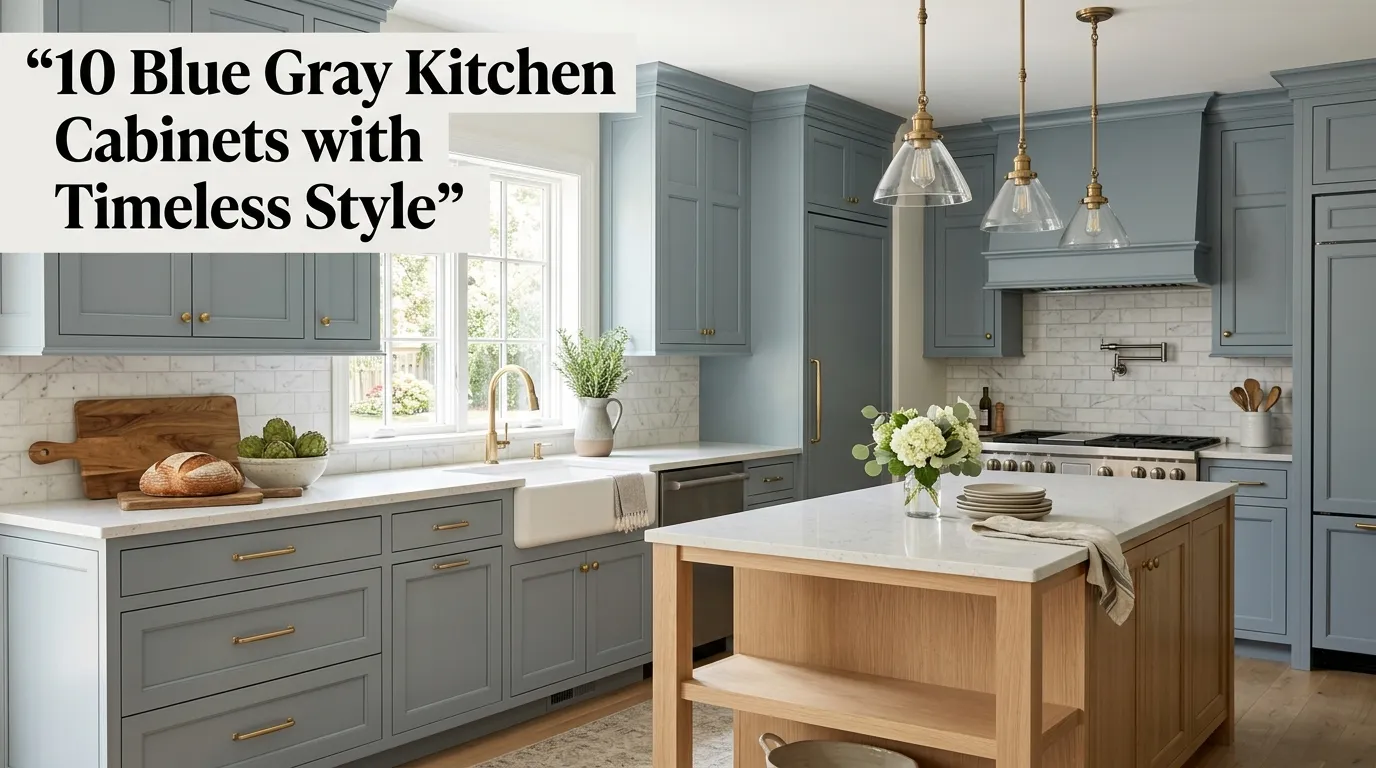
10 Blue Gray Kitchen Cabinets with Timeless Style
Blue gray kitchen cabinets have a special way of making a kitchen feel both current and established. The color sits comfortably between cool blue and understated gray, giving cabinetry enough personality to stand out without overwhelming the rest of the room.
That balance is one reason this shade works so well in kitchens. It can feel relaxed in a farmhouse-inspired space, polished with marble countertops, sophisticated alongside brass hardware, or clean and contemporary with white walls and simple lighting.
The challenge is choosing the right version of blue gray. Some shades lean noticeably blue, while others appear almost gray depending on natural light, flooring, countertops, and surrounding finishes. A cabinet color that looks soft and neutral in a showroom can look much cooler in a north-facing kitchen.
I’ve found that the most successful blue gray kitchens rarely rely on the cabinet color alone. The surrounding materials matter just as much. Warm wood, creamy whites, natural stone, aged brass, and soft lighting can keep cooler cabinet tones from feeling sterile.
Whether you’re planning a full kitchen renovation, updating an island, or simply collecting inspiration for a future project, these ideas show how to make blue gray cabinetry feel intentional and timeless.
Before committing to paint or new cabinets, always test samples in your actual kitchen. Look at them in morning, afternoon, and evening light, and place the sample beside your countertop, backsplash, flooring, and hardware.
Table of Contents
1. Classic Blue Gray Cabinets
A balanced blue gray creates a versatile foundation for traditional and transitional kitchens.
2. Blue Gray Island
Use blue gray on the island to create contrast without repainting every cabinet.
3. Brass Hardware
Pair muted blue gray cabinetry with warm brass for an elegant contrast.
4. White Marble Pairing
Combine cool-toned cabinets with bright stone surfaces for a refined kitchen.
5. Warm Wood Accents
Introduce natural wood to soften blue gray cabinetry and add warmth.
6. Two Tone Cabinets
Mix blue gray lowers with lighter upper cabinets for visual balance.
7. Farmhouse Blue Gray
Blend blue gray cabinets with rustic textures for a comfortable farmhouse look.
8. Modern Blue Gray
Use simple cabinetry and streamlined finishes for a contemporary interpretation.
9. Soft Blue Gray
Choose a lighter shade for an airy kitchen with subtle color.
10. Dark Blue Gray
Use a deeper shade to create a dramatic but sophisticated kitchen.
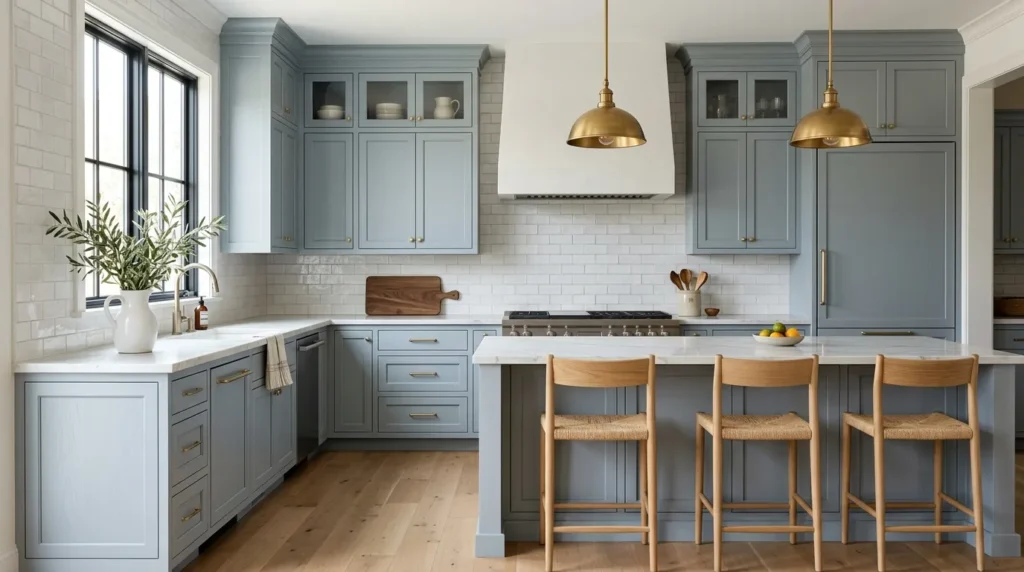
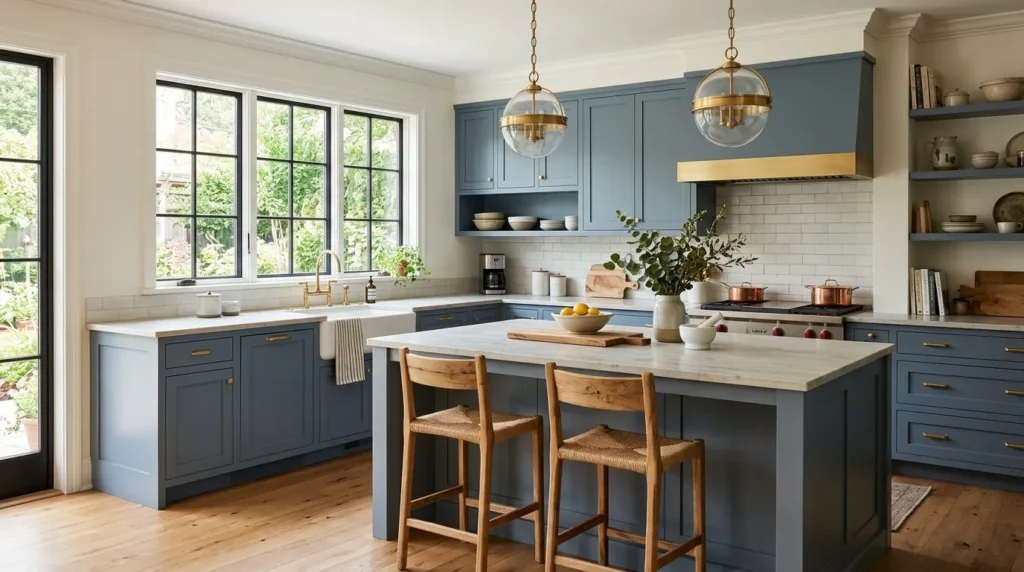
1. Classic Blue Gray Cabinets
Quick Benefits
- Versatile across decorating styles
- Adds color without becoming overwhelming
- Works with light countertops
- Complements many hardware finishes
- Creates a calm visual foundation
Why It Works
A medium blue gray is one of the easiest versions of this color to work with because it has enough pigment to make the cabinets noticeable while retaining a neutral quality.
The gray component keeps the blue from feeling overly bright or coastal, while the blue undertone adds more character than a standard gray cabinet.
This shade works especially well in transitional kitchens where traditional cabinet profiles meet contemporary finishes. Shaker doors, simple countertops, and classic hardware can make the color feel timeless rather than trend-driven.
The surrounding palette determines the final impression. Pairing blue gray with crisp white can create a fresh appearance, while cream, natural wood, and aged metal make it feel warmer.
How To Style It
Choose a blue gray that complements your countertop rather than selecting the cabinet color first.
For a classic look, use Shaker-style doors, simple white backsplash tile, and brushed or aged brass hardware.
Natural stone countertops can add subtle variation without competing with the cabinetry.
Use warm white walls or trim if the blue gray feels too cool beside bright white.
Finish the look with natural wood cutting boards, woven accessories, or simple ceramic pieces.
2. Blue Gray Island
Quick Benefits
- Adds color without overwhelming the room
- Creates a kitchen focal point
- Works with white perimeter cabinets
- Allows easier experimentation
- Defines the central workspace
Why It Works
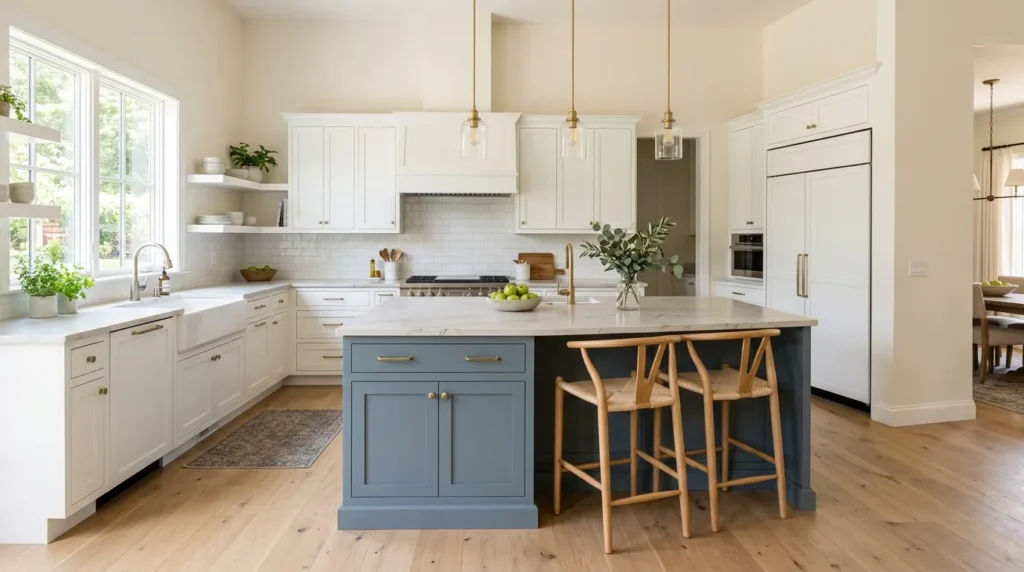
If you’re hesitant about covering an entire kitchen in blue gray, the island is an excellent place to introduce the color.
A blue gray island can create contrast while keeping the rest of the kitchen light and neutral. This approach works particularly well in open-concept homes where the kitchen needs to coordinate with adjacent dining and living spaces.
The island naturally attracts attention, so a deeper or more saturated blue gray can work here than might feel comfortable across an entire wall of cabinetry.
The key is connecting the island color to other elements in the room.
How To Style It
Use white, cream, or light gray cabinetry around the perimeter.
Choose a countertop that works with both colors. White quartz, natural stone, or warm-toned surfaces can all work depending on the shade.
Repeat the blue gray subtly through bar stools, textiles, artwork, or decorative ceramics.
For hardware, brass adds warmth while matte black creates a sharper modern contrast.
Keep the island countertop relatively uncluttered so the cabinetry remains the visual focal point.
3. Brass Hardware
Quick Benefits
- Adds warmth
- Creates elegant contrast
- Works with traditional cabinetry
- Makes blue gray feel more sophisticated
- Offers an easy design update
Why It Works
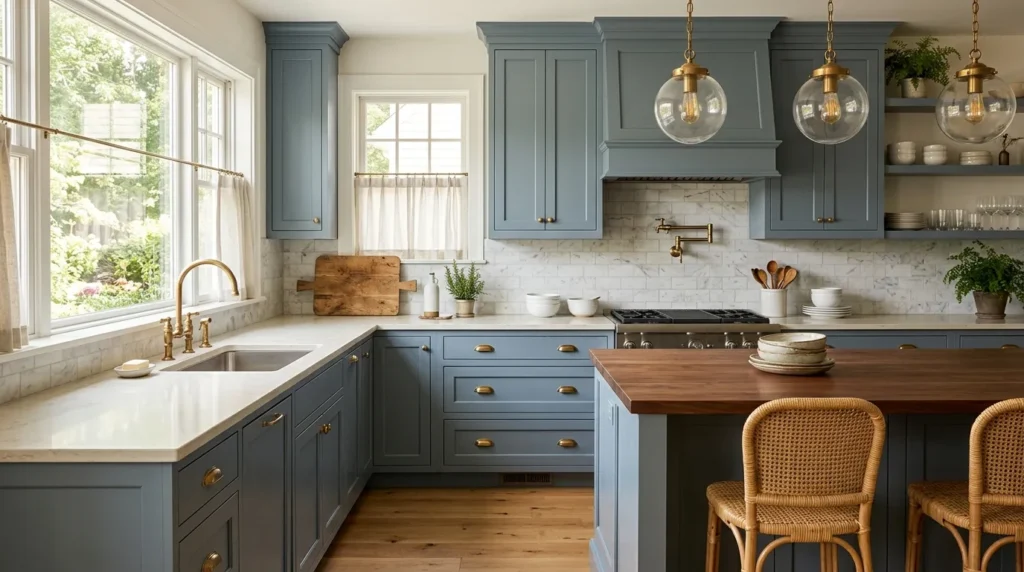
Blue gray and brass create a particularly appealing balance. The cabinet color is cool and understated, while brass introduces warmth and a small amount of visual shine.
This combination can make a kitchen feel polished without requiring elaborate decoration.
Brass also works across different styles. A traditional kitchen can use antique-looking brass pulls, while a contemporary space can use simple brushed brass handles.
The finish matters. Highly reflective yellow gold can create a completely different effect from muted or aged brass.
How To Style It
Choose hardware that suits the cabinet proportions and door style.
Use pulls on drawers and appropriately sized handles on cabinet doors rather than mixing too many shapes.
Repeat the brass finish through one or two other details, such as pendant lights or a faucet.
Avoid matching every metal in the kitchen perfectly. A controlled mix of finishes can feel more collected and natural.
Pair the blue gray cabinets with warm wood or creamy surfaces if you want to further balance the cool undertones.
4. White Marble Pairing
Quick Benefits
- Creates a refined appearance
- Adds brightness
- Highlights cabinet color
- Works with traditional and modern styles
- Creates visual contrast
Why It Works
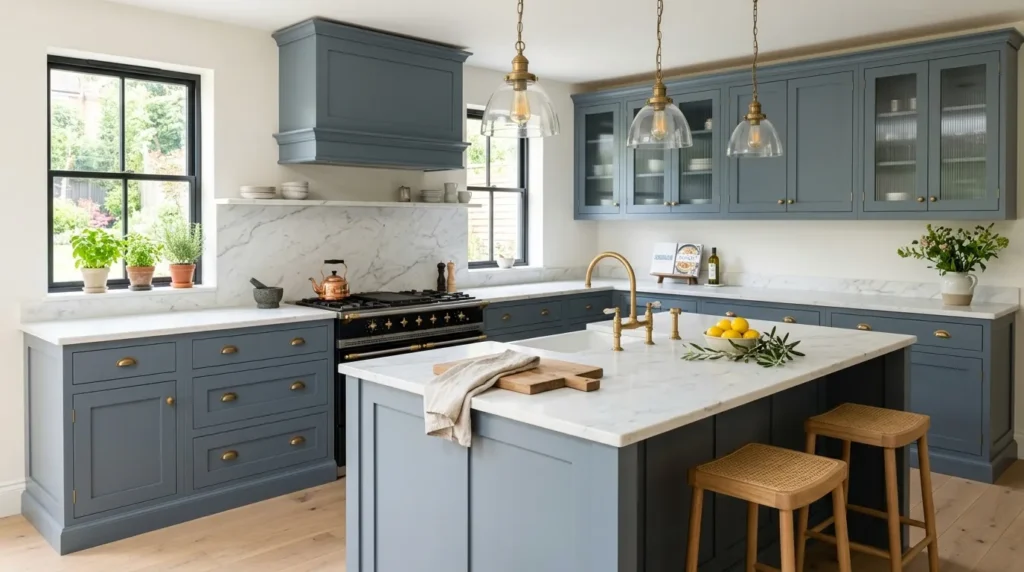
Blue gray cabinetry can look particularly elegant beside white stone surfaces. The light countertop creates a clean visual break while allowing the cabinet color to remain the star.
Veined marble or marble-look surfaces add another layer of interest. Soft gray veining can visually connect with the cabinets, creating a coordinated palette.
The important consideration is undertone. A blue gray cabinet with very cool white stone may look colder than expected, while a warmer stone can soften the entire room.
How To Style It
Choose countertops after considering the exact cabinet sample under your kitchen’s lighting.
For a classic look, pair blue gray Shaker cabinets with white counters, simple backsplash tile, and traditional hardware.
A slab backsplash can create a more contemporary appearance.
Use warm pendant lighting and natural wood accessories to prevent the room from becoming too cool.
Keep decorative accents relatively restrained because the stone and cabinetry already provide visual interest.
5. Warm Wood Accents
Quick Benefits
- Balances cool cabinet tones
- Adds natural texture
- Makes the kitchen feel welcoming
- Works with modern and farmhouse styles
- Creates visual warmth
Why It Works
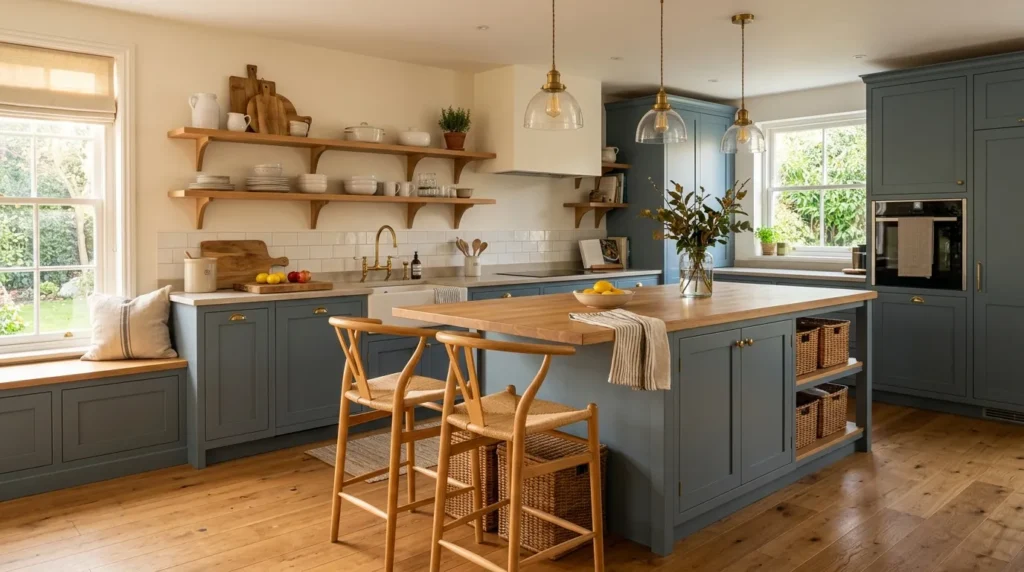
One of the easiest ways to make blue gray cabinetry feel warmer is to introduce natural wood.
Wood brings variation and organic texture that painted cabinets cannot provide. Even a few carefully chosen elements can change the overall feeling of the kitchen.
This approach is particularly effective in kitchens with lots of blue gray cabinetry because the wood prevents the room from becoming visually one-dimensional.
You don’t need to install an entirely wood island. Open shelving, stools, cutting boards, beams, flooring, or furniture can provide enough warmth.
How To Style It
Choose wood tones that complement the undertones in the cabinet color.
Light oak creates an airy Scandinavian-inspired feeling, while medium walnut adds more contrast.
Use wooden counter stools at an island for an easy introduction of warmth.
If you have wood flooring, allow its natural variation to become part of the overall palette.
Add woven baskets, wooden serving boards, and simple natural accessories for subtle texture.
6. Two Tone Cabinets
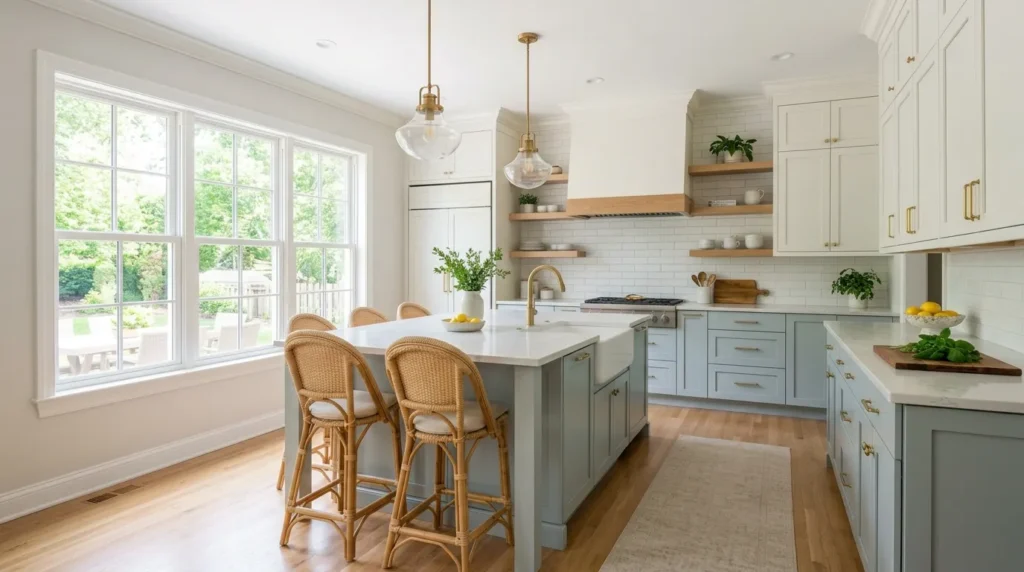
Quick Benefits
- Adds visual dimension
- Keeps the kitchen feeling light
- Creates clear zones
- Works in open layouts
- Allows stronger color on lower cabinets
Why It Works
Two-tone kitchens offer a useful solution when you love blue gray but don’t want every cabinet painted in the same color.
Blue gray lower cabinets paired with white or cream uppers create a natural visual hierarchy. The darker lower section grounds the kitchen while the lighter upper cabinets help maintain an open feeling.
This arrangement is especially effective in smaller kitchens because the lighter upper cabinetry can visually recede.
The combination also gives you more flexibility with countertops, backsplashes, and hardware.
How To Style It
Use blue gray on base cabinets and the island while keeping upper cabinets white or warm cream.
Choose one dominant countertop material that works with both cabinet colors.
Keep the backsplash relatively simple so the two cabinet colors remain the primary visual contrast.
Use matching hardware across both cabinet colors to tie the design together.
If the kitchen has open shelving, use wood or a matching neutral finish to bridge the two tones.
7. Farmhouse Blue Gray
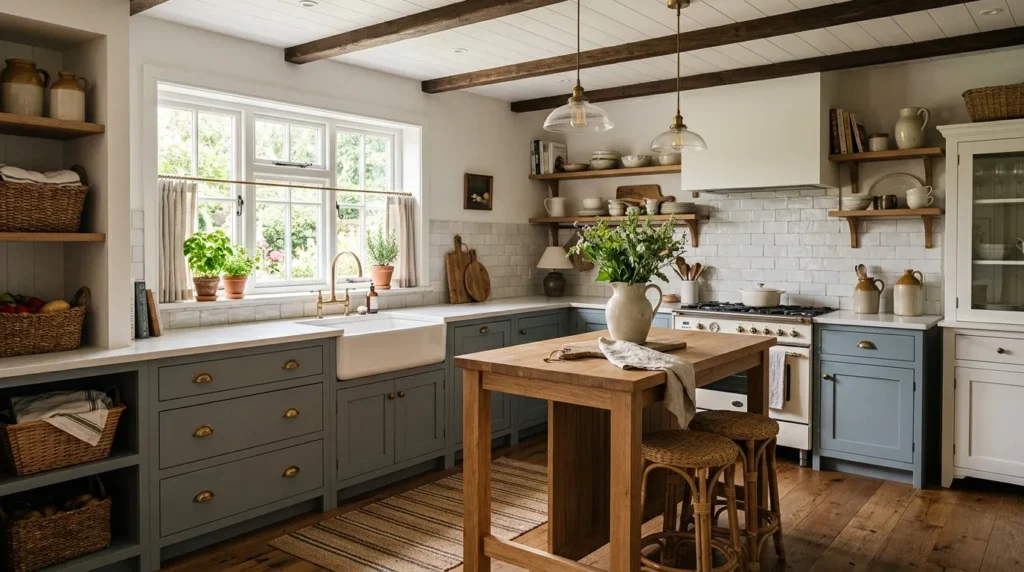
Quick Benefits
- Creates a relaxed atmosphere
- Works with natural materials
- Complements farmhouse architecture
- Feels comfortable rather than formal
- Pairs beautifully with vintage details
Why It Works
Blue gray has a natural relationship with farmhouse style because it can feel both old-fashioned and fresh.
The color becomes especially inviting when paired with natural wood, simple ceramics, apron-front sinks, vintage-inspired lighting, and classic cabinet profiles.
The goal is not to make every element look rustic. Too many distressed finishes can make the kitchen feel themed rather than lived-in.
Instead, mix a few traditional details with cleaner contemporary pieces.
How To Style It
Choose a muted blue gray rather than an intensely saturated blue.
Pair it with warm white walls and natural wood accents.
Consider aged brass or antique-style hardware.
Use simple subway tile or handmade-look backsplash tile for texture.
Add woven baskets, ceramic pitchers, wooden boards, and a few practical countertop pieces.
Keep appliances and fixtures streamlined enough that the room still feels functional and current.
8. Modern Blue Gray
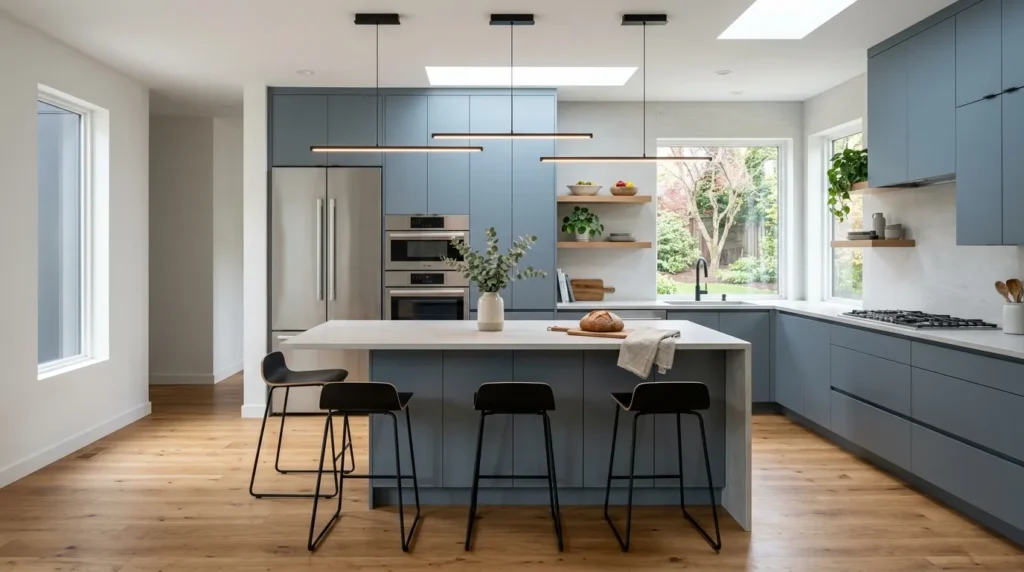
Quick Benefits
- Creates a sophisticated palette
- Works with clean cabinetry
- Complements contemporary materials
- Feels polished without being stark
- Allows minimalist styling
Why It Works
Blue gray does not have to be traditional. In a modern kitchen, it can become a sophisticated neutral when paired with simple cabinetry and restrained decoration.
Flat-panel or slim Shaker doors can make the color feel more architectural. Large-format backsplash materials, streamlined hardware, and integrated appliances reinforce the contemporary look.
The color provides more personality than white while remaining relatively easy to coordinate.
How To Style It
Use simple cabinet profiles and minimal hardware.
Choose a countertop with subtle veining or a quiet solid finish.
Consider a full-height backsplash for a more architectural effect.
Use black, brushed brass, or stainless steel hardware depending on the desired contrast.
Keep countertop styling minimal. A few carefully selected pieces will have more impact than a crowded collection of accessories.
9. Soft Blue Gray
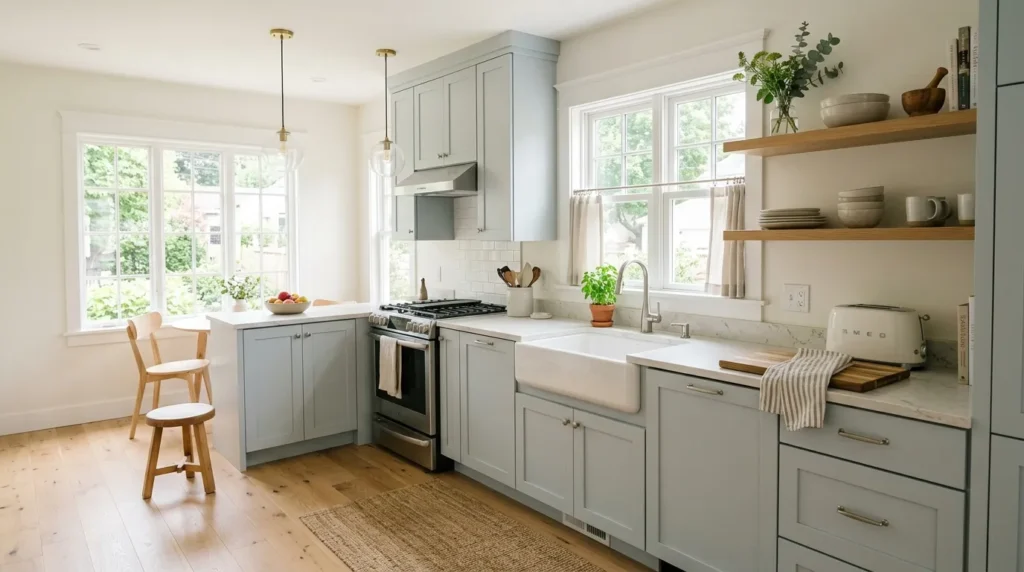
Quick Benefits
- Creates an airy feeling
- Works well in smaller kitchens
- Adds subtle color
- Reflects natural light beautifully
- Complements light wood
Why It Works
A pale blue gray can create the feeling of color without visually weighing down the room.
This is especially useful in smaller kitchens, kitchens with limited natural light, or spaces where the goal is an airy and relaxed atmosphere.
Because lighter shades can change considerably under different lighting conditions, sampling is particularly important.
A soft blue gray may appear almost neutral during one part of the day and noticeably blue during another.
How To Style It
Pair pale blue gray cabinets with warm white walls and light countertops.
Use light oak or natural maple accents to keep the palette warm.
Choose simple brushed nickel, brass, or matte black hardware depending on the desired style.
Use glass-front cabinets or open shelving sparingly if you want to add visual depth.
Avoid filling the room with too many cool gray accessories. Warm textures can keep the palette balanced.
10. Dark Blue Gray
Quick Benefits
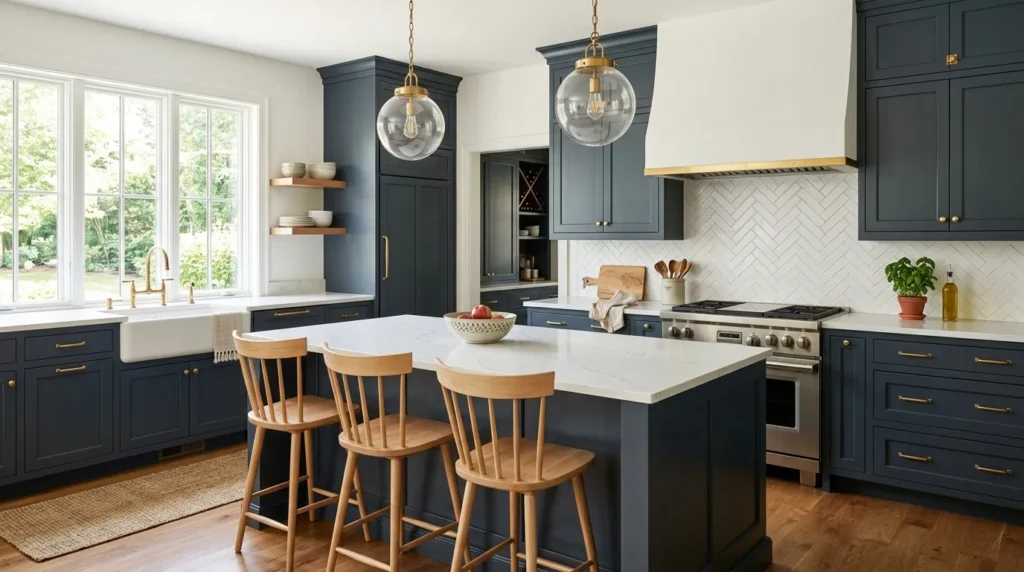
- Creates dramatic contrast
- Adds depth
- Makes a strong design statement
- Works beautifully with brass
- Can make large kitchens feel grounded
Why It Works
A deep blue gray can bring a dramatic quality to the kitchen without the intensity of pure navy or black.
This color works especially well in larger kitchens with plenty of natural light. It can also be effective on an island or lower cabinetry when you want to introduce contrast without darkening the entire room.
The surrounding materials are important. Dark cabinetry can look sophisticated with light countertops, warm wood, and carefully positioned lighting.
How To Style It
Use dark blue gray on an island or lower cabinets if you want contrast without committing to a fully dark kitchen.
Pair it with light countertops and a simple backsplash.
Brass hardware can create an elegant warm accent, while black hardware creates a more monochromatic appearance.
Use pendant lighting over the island to add warmth and visual focus.
Balance the darker cabinetry with light walls, natural textures, or open space elsewhere in the kitchen.
How To Choose The Right Blue Gray
Not every blue gray will look the same in your kitchen.
Before making a final decision, consider the room’s natural light.
North-facing rooms can make cool colors appear cooler, so a blue gray with warmer undertones may be more comfortable.
South-facing rooms typically receive stronger, warmer light, which can change how blue and gray undertones appear throughout the day.
Also consider artificial lighting. Warm bulbs can soften a blue gray, while cooler bulbs may emphasize its blue component.
The countertop matters just as much.
Place your cabinet sample directly beside the countertop material. If the counter has cream or beige undertones, a very cool blue gray may create unwanted contrast.
The same applies to flooring.
A warm wood floor can make blue gray cabinetry feel balanced, while cool gray flooring may produce a much colder overall palette.
Blue Gray Kitchen Hardware Ideas
Hardware is one of the easiest ways to influence the style of blue gray cabinets.
Brass
Creates warmth and a classic, slightly elevated appearance.
Matte Black
Provides strong contrast and works especially well in contemporary kitchens.
Brushed Nickel
Offers a softer metallic appearance and works well with cool blue gray.
Chrome
Creates a crisp, polished effect but can feel more formal.
Aged Bronze
Adds warmth and works beautifully with farmhouse and traditional kitchens.
The best choice depends on the cabinet shade and the other finishes already present in the room.
Best Countertops For Blue Gray Cabinets
Blue gray cabinets are versatile, but some countertop combinations are particularly effective.
White quartz: Clean and practical-looking with a bright visual effect.
Natural marble: Adds movement and classic character.
Soapstone: Creates a deeper, sophisticated palette.
Butcher block: Introduces natural warmth and works especially well with farmhouse styling.
Warm white quartz: Helps prevent cooler cabinet colors from feeling sterile.
Light natural stone: Creates subtle variation without overwhelming the cabinetry.
Always compare physical samples whenever possible. Photos and small digital color swatches cannot accurately reproduce how materials will interact under your kitchen’s specific lighting.
How To Make Blue Gray Cabinets Feel Warm
If your kitchen feels too cool after installing blue gray cabinets, you do not necessarily need to change the cabinet color.
Start by introducing warmer elements.
Natural wood is one of the easiest options. Wood stools, shelves, flooring, or accessories can immediately soften the palette.
Lighting also makes a major difference. Warm-toned bulbs can create a more comfortable evening atmosphere.
Brass hardware and fixtures can introduce small points of warmth.
Cream rather than stark white can also change the feeling of the room.
Finally, bring in texture. Woven baskets, linen textiles, ceramic accessories, wood cutting boards, and natural stone can keep a blue gray kitchen from feeling flat.
Common Blue Gray Kitchen Mistakes
Choosing A Color From A Small Screen
Digital color representations can be misleading. Always test physical samples in your kitchen.
Ignoring Undertones
A blue gray may lean green, purple, blue, or neutral gray. Compare samples directly with your existing finishes.
Using Too Many Cool Materials
Blue gray cabinets paired with cool gray flooring, bright white walls, cool metal, and blue-toned lighting can make the room feel cold.
Forgetting Natural Light
The same cabinet color can look completely different in morning and evening light.
Matching Everything Too Closely
A kitchen does not need every finish to be identical. Controlled contrast creates more visual interest.
Overdecorating The Countertops
Blue gray cabinetry already provides color. Keep accessories purposeful and allow the cabinetry to remain visible.
Frequently Asked Questions
Are blue gray kitchen cabinets timeless?
Blue gray cabinets can have a timeless quality when the shade is muted and paired with classic materials. Simple cabinet profiles, natural stone, warm wood, and understated hardware tend to age more gracefully than highly trend-specific combinations. Choosing a color that works with the existing architecture of your home can also help the kitchen remain cohesive over time.
What color goes best with blue gray kitchen cabinets?
White, cream, natural wood, soft beige, and selected metallic finishes all work well with blue gray. The best choice depends on the exact undertone of the cabinets. Warm materials can soften a cooler blue gray, while crisp white and black accents can create a more contemporary appearance.
Are blue gray cabinets good for a small kitchen?
Yes. Lighter blue gray shades can work particularly well in smaller kitchens because they introduce color without the visual weight of very dark cabinetry. Pairing them with light countertops, warm white walls, and good lighting can help the room feel open and balanced.
What hardware looks best with blue gray cabinets?
Brass, matte black, brushed nickel, and aged bronze can all work with blue gray cabinets. Brass adds warmth and elegance, matte black creates contrast, and brushed nickel provides a softer coordinated appearance. Choose the finish based on the cabinet shade and the other fixtures already present.
Do blue gray cabinets make a kitchen look cold?
They can if every surrounding element is also cool-toned. The solution is usually to introduce warmth through wood, warm white surfaces, brass hardware, natural stone, textiles, and warmer lighting. A balanced combination of cool cabinetry and warm materials can make the kitchen feel comfortable rather than cold.
Can blue gray cabinets work with wood floors?
Absolutely. Wood flooring is one of the most effective ways to warm up blue gray cabinetry. Light oak creates an airy appearance, while medium or dark wood provides stronger contrast. Compare the cabinet sample with the actual flooring because the undertones in both materials can significantly affect the finished look.
Should blue gray cabinets be used throughout the kitchen?
They can, but they do not have to be. If you’re unsure about committing to the color, using blue gray on the island or lower cabinets is a practical alternative. White or cream upper cabinets can keep the room visually lighter while still allowing blue gray to become a focal point.
Conclusion
Blue gray kitchen cabinets offer a useful middle ground between traditional neutrals and stronger cabinet colors. They bring personality into the kitchen while remaining surprisingly flexible with countertops, hardware, flooring, lighting, and decor.
The key is choosing the right shade for your space rather than selecting blue gray based solely on a photograph. Test samples beside your countertops and flooring, and view them under different lighting conditions before making a final decision.
From a classic full-cabinet look to a contrasting blue gray island, there are plenty of ways to use the color without making the kitchen feel overly coordinated. Brass hardware can add warmth, natural wood can soften cooler tones, and white or cream surfaces can keep the room bright.
If you’re planning a kitchen update, start with the element you are least likely to change—such as the countertop or flooring—and build the cabinet palette around it.
A thoughtful combination of color, texture, and materials can make blue gray cabinetry feel less like a passing trend and more like a natural part of the home’s design.