10 DIY Wall Art Ideas Using Textured Canvas
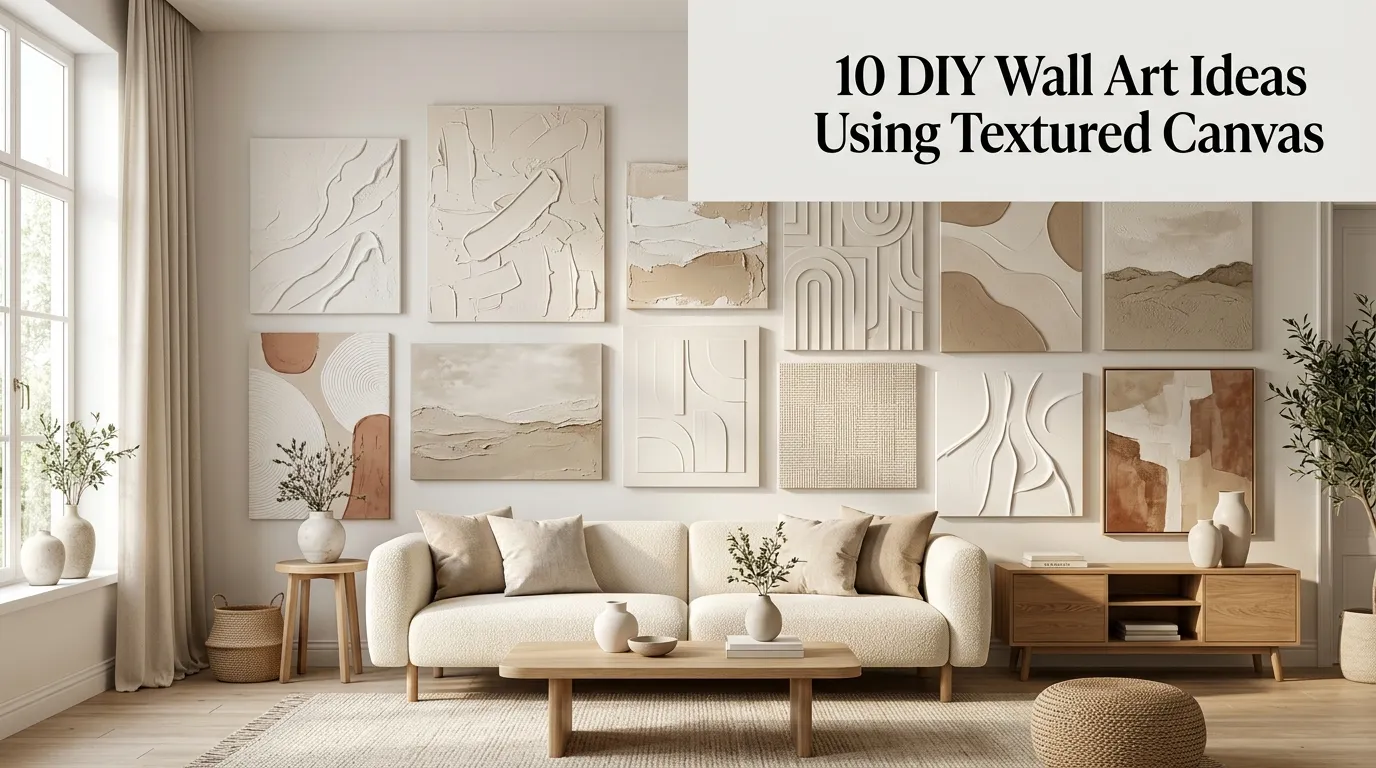
A blank wall can make an entire room feel unfinished, but filling it with expensive artwork isn’t the only way to create a polished look. Textured canvas wall art offers an especially versatile solution because you can build dimension, movement, and personality with relatively simple materials.
What I love about textured canvas projects is how adaptable they are. A basic canvas can become a soft neutral abstract, a raised plaster-style design, a bold geometric piece, or an organic artwork inspired by nature. You can adjust the colors, texture, size, and pattern to suit almost any room.
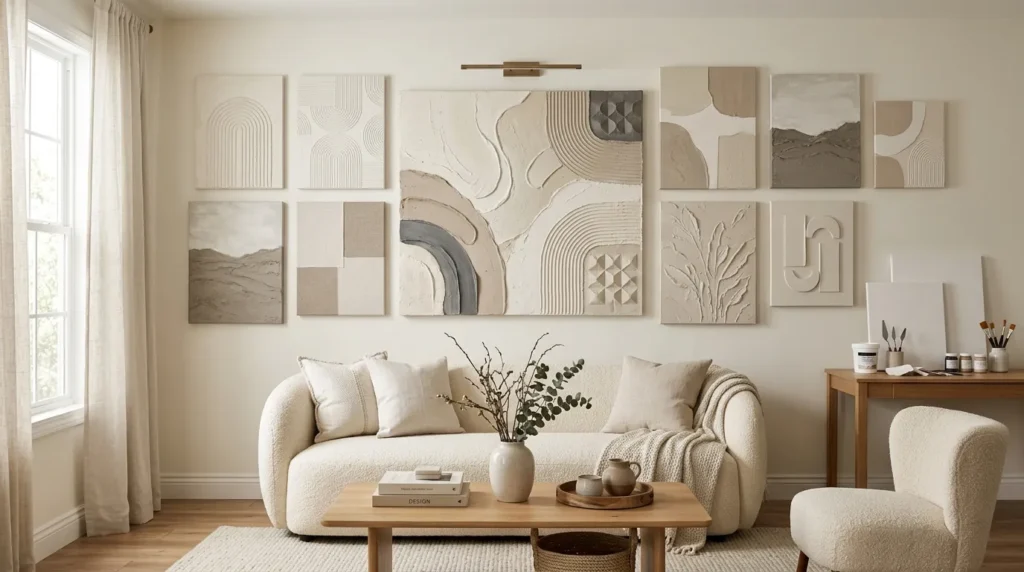
I’ve noticed that neutral textured art works particularly well in modern homes because it adds visual interest without introducing a lot of competing color. The raised surface catches natural and artificial light differently throughout the day, giving the artwork subtle depth that a completely flat print doesn’t provide.
You also don’t need advanced artistic skills. Many of these projects rely on simple shapes, layered materials, palette-knife strokes, or intentionally imperfect lines. That makes them approachable for beginners while still producing a sophisticated result.
Before starting, think about where the artwork will hang. A large canvas can anchor a living room sofa or bedroom wall, while smaller pieces work beautifully as part of a gallery arrangement. Consider the colors already present in your space, too. Pulling one or two shades from your furniture, rug, curtains, or accessories can make homemade artwork feel naturally connected to the room.
Below are ten textured canvas ideas ranging from minimalist and organic to bold and sculptural. Each one can be customized to your preferred aesthetic, making it easy to create wall art that feels personal rather than mass-produced.
Table of Contents
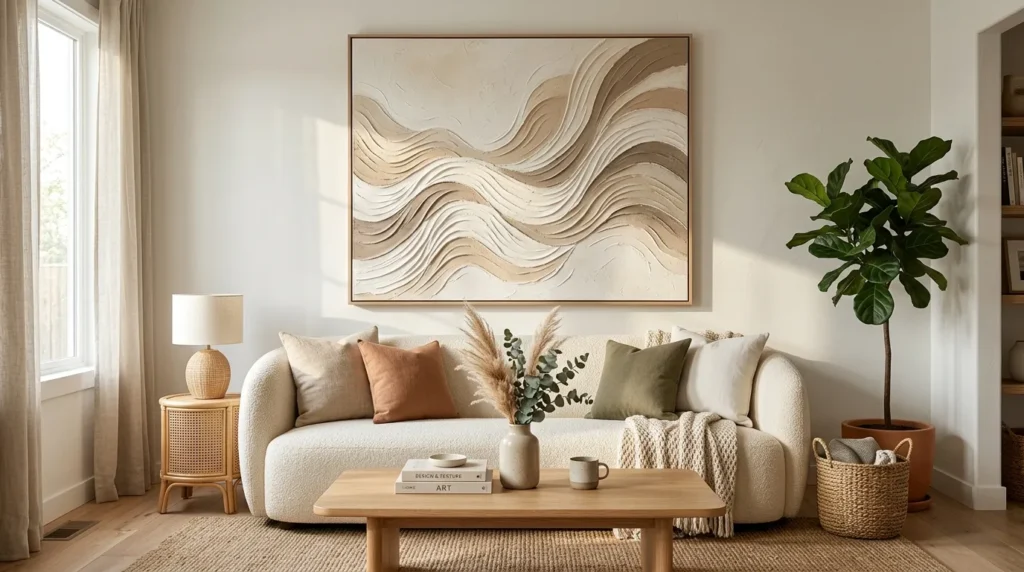
1. Raised Neutral Waves
Create soft dimensional waves with modeling paste and neutral paint for a calming modern display.
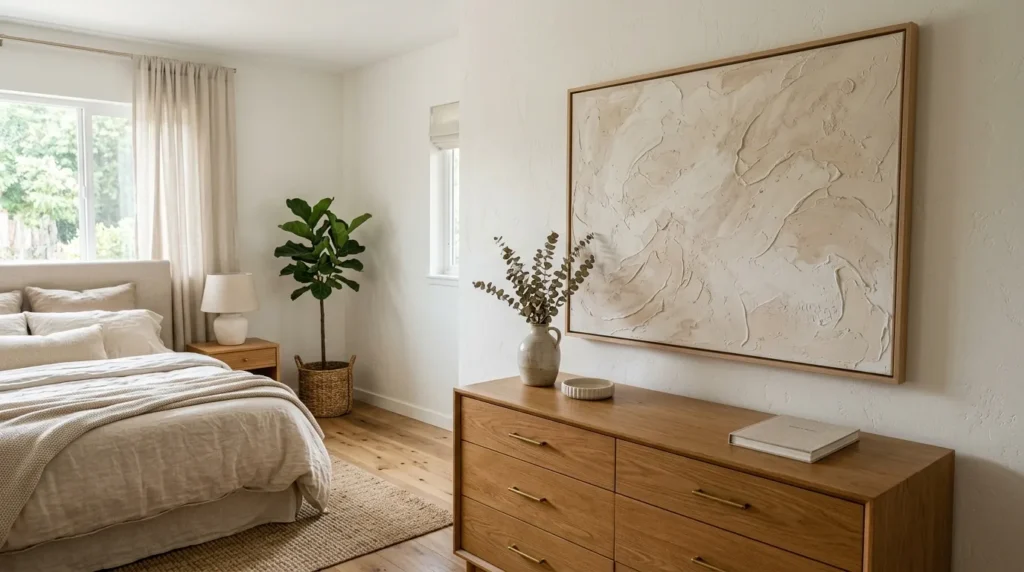
2. Plaster Abstract Canvas
Build an imperfect plaster-like surface with layered texture and soft earthy tones.
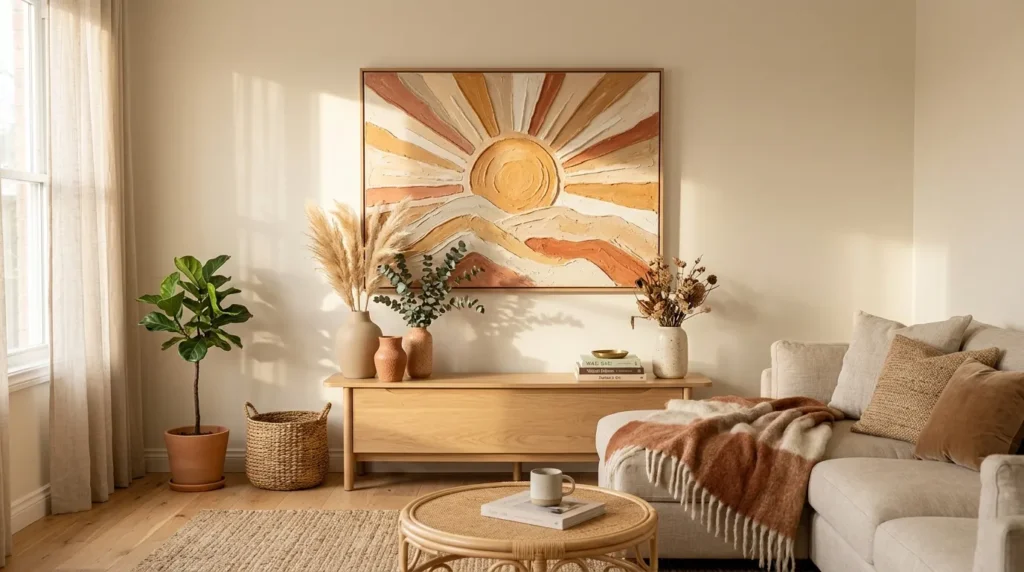
3. Textured Sun Shapes
Combine raised circular forms and warm neutrals for a simple sun-inspired composition.
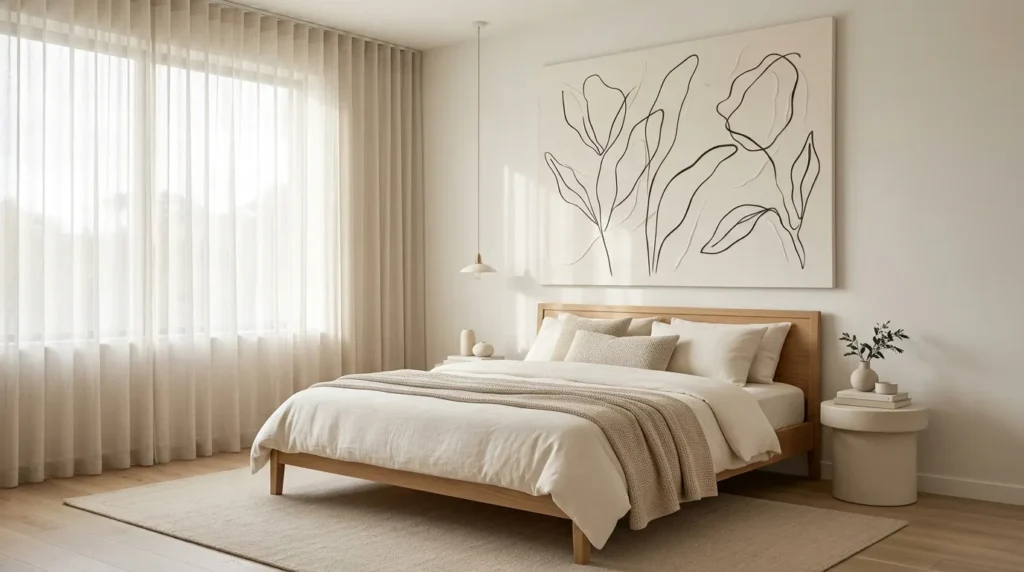
4. Organic Line Art
Pair minimalist painted lines with raised texture for an elegant contemporary artwork.
5. Layered Neutral Blocks
Create geometric dimension with overlapping textured shapes in coordinated neutral colors.
6. Textured Botanical Canvas
Use raised leaves and organic shapes to bring a subtle nature-inspired element indoors.
7. Sculptural Arch Art
Build dimensional arches for a soft architectural design that works beautifully with modern interiors.
8. Rustic Linen Canvas
Combine canvas, fabric, and texture paste for a relaxed artwork with natural character.
9. Tonal Abstract Art
Layer several shades of one color to create depth without relying on strong contrast.
10. Minimalist Texture Pair
Create two complementary canvases with simple raised patterns for a balanced wall display.
1. Raised Neutral Waves
Quick Benefits
- Beginner-friendly
- Uses a simple abstract pattern
- Works with neutral interiors
- Adds visible dimension
- Easy to customize
Why It Works
Wave patterns are particularly effective on textured canvas because the raised surface creates shadows that change as the light moves across the artwork.
The design doesn’t require precise drawing. Instead, the beauty comes from repetition and variation. Soft curves can make a room feel calmer, while neutral colors keep the artwork versatile.
A palette of ivory, beige, taupe, sand, and warm white can create a sophisticated appearance that works with modern, Scandinavian, minimalist, or organic interiors.
The texture itself becomes the decoration.
This type of canvas is also a good starting point if you’re new to DIY wall art. You don’t have to create a recognizable image. The goal is simply to create an attractive rhythm across the surface.
How To Style It
Start with a stretched canvas, texture paste or modeling paste, a palette knife, and acrylic paint.
Apply the paste in curved horizontal or diagonal bands. Vary the thickness slightly rather than making every wave identical.
Allow the texture to dry completely according to the product instructions.
Paint the entire canvas in a warm neutral shade, or use two closely related colors to emphasize the raised areas.
For an understated appearance, keep the palette monochromatic.
Hang a large version above a sofa, console, bed, or dining room sideboard.
If you prefer a smaller display, create three narrow canvases using similar wave patterns and hang them as a group.
2. Plaster Abstract Canvas
Quick Benefits
- Creates architectural texture
- Works beautifully with neutral palettes
- Has a handmade appearance
- Doesn’t require detailed painting
- Adds depth to plain walls
Why It Works
Plaster-style artwork has a naturally imperfect quality that makes a room feel more layered.
Instead of relying on painted details, the surface itself becomes the focal point. Small ridges, ridges, grooves, and raised sections catch light and create shadows.
The technique pairs especially well with interiors featuring natural wood, linen, stone, ceramic, and other tactile materials.
One thing that works especially well is keeping the color close to the wall color. The subtle contrast allows the texture to provide most of the visual interest.
How To Style It
Apply modeling paste or a suitable texture medium across the canvas using a wide palette knife.
Create broad strokes, shallow ridges, or irregular raised sections.
Don’t try to make the surface perfectly smooth. Small imperfections contribute to the handmade character.
Once dry, paint the canvas with a warm white, ivory, beige, or light taupe acrylic.
You can also leave sections slightly lighter and shade recessed areas with a diluted neutral tone.
Place the artwork somewhere with directional light so the texture creates natural shadows.
A large square canvas above a minimalist console or bed can make a particularly strong statement.
3. Textured Sun Shapes
Quick Benefits
- Adds warmth
- Creates a clear focal point
- Works with earthy interiors
- Easy to customize
- Looks beautiful as a standalone piece
Why It Works
Circular shapes naturally draw attention, making a sun-inspired composition an easy way to create a focal point.
The design can range from extremely minimal to more decorative. A simple raised circle surrounded by subtle rays can look modern, while layered circles and warmer colors can create a more artistic appearance.
Texture makes the sun shape feel dimensional rather than simply painted onto the canvas.
Warm shades such as sand, ochre, muted terracotta, cream, and camel work particularly well.
How To Style It
Begin with a neutral painted background.
Use a circular object or stencil to lightly mark the main sun shape.
Apply texture paste around the circle or create a raised central disc.
Add simple raised rays using a palette knife or narrow tool.
Once dry, paint the artwork in one or two warm shades.
For a contemporary look, use a large cream circle on a beige background.
For more contrast, introduce muted terracotta or ochre.
Hang the canvas against a plain wall where the circular shape has enough negative space around it.
Pair it with natural wood furniture and woven accessories for an earthy look.
4. Organic Line Art
Quick Benefits
- Minimalist appearance
- Adds subtle dimension
- Works in modern rooms
- Requires few colors
- Easy to personalize
Why It Works
Line art can sometimes feel too flat when it is painted directly onto a canvas. Adding texture beneath or around the lines creates another layer of visual interest.
The combination of simple lines and tactile surface works particularly well in minimalist rooms where there aren’t many decorative elements.
Organic curves are generally more relaxed than rigid geometric lines.
You can draw a continuous face-inspired line, abstract botanical forms, arches, or free-flowing shapes.
How To Style It
Paint the canvas in warm white, cream, beige, or pale gray.
Create a subtle textured background using modeling paste.
Allow the surface to dry.
Draw one continuous organic line using a pencil before applying acrylic paint or a paint marker.
Keep the line relatively simple.
Black creates a stronger modern contrast, while dark brown, charcoal, or muted taupe creates a softer effect.
For a larger statement, use one oversized canvas.
For a hallway or bedroom, create a pair of smaller canvases with related but slightly different line drawings.
Keep the surrounding decor simple so the artwork remains the focal point.
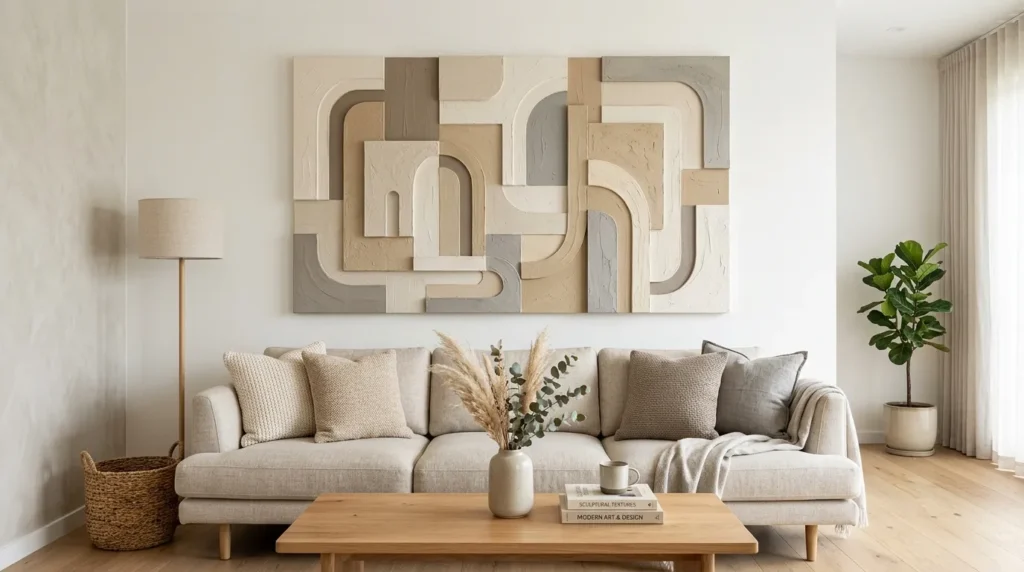
5. Layered Neutral Blocks
Quick Benefits
- Creates geometric structure
- Adds depth
- Works with modern decor
- Allows multiple colors
- Easy to customize
Why It Works
Geometric artwork doesn’t have to be flat.
Raised blocks, overlapping rectangles, arches, or circles can create a sculptural appearance while maintaining a clean modern aesthetic.
This approach is especially useful when your room already contains strong straight lines from furniture, windows, cabinetry, or shelving.
The artwork introduces another layer of geometry without requiring complex painting skills.
A restrained color palette keeps the design sophisticated.
How To Style It
Paint the canvas with a base color such as warm white or beige.
Mark several overlapping geometric forms.
Apply texture paste to selected shapes rather than the entire canvas.
Once dry, paint each shape in related shades.
Try combinations such as cream, taupe, sand, and warm gray.
For more contrast, add one darker shape in charcoal or deep brown.
Don’t make every section the same size.
Varying the scale creates movement.
Hang the finished canvas above a clean-lined sofa or console.
A thin natural wood frame can add another layer of warmth around the artwork.
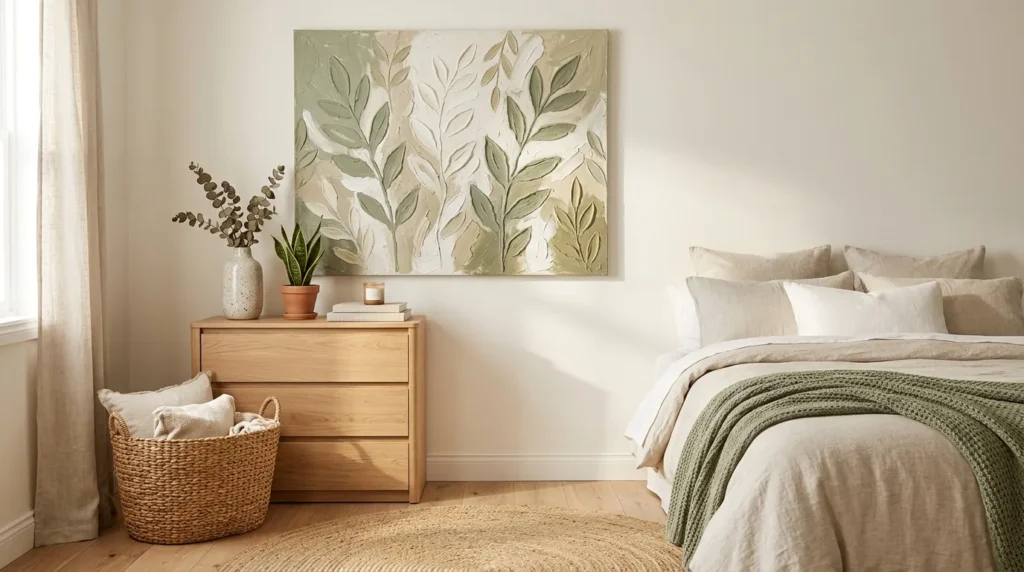
6. Textured Botanical Canvas
Quick Benefits
- Brings nature indoors
- Adds organic texture
- Works with earthy palettes
- Creates a calming focal point
- Complements natural materials
Why It Works
Botanical designs are timeless, but raised leaves and stems make them feel more tactile and contemporary.
Instead of painting realistic flowers, focus on simplified shapes. A few raised leaves can suggest an entire botanical composition without making the artwork look overly traditional.
This approach works beautifully with linen, wood, rattan, stone, and other natural textures.
It is also easy to coordinate with existing greenery in the room.
How To Style It
Begin with a warm neutral background.
Sketch a few simple stems.
Apply texture paste to create raised leaves, branches, or abstract botanical forms.
Let the surface dry completely.
Paint the raised elements in muted sage, olive, beige, or simply a slightly darker shade of the background.
For a monochromatic look, use one neutral shade throughout.
You can also add a small amount of muted green for contrast.
Frame the artwork in natural wood or hang it unframed for a more relaxed appearance.
This design works particularly well above a bedroom dresser, reading chair, entryway console, or living room sideboard.
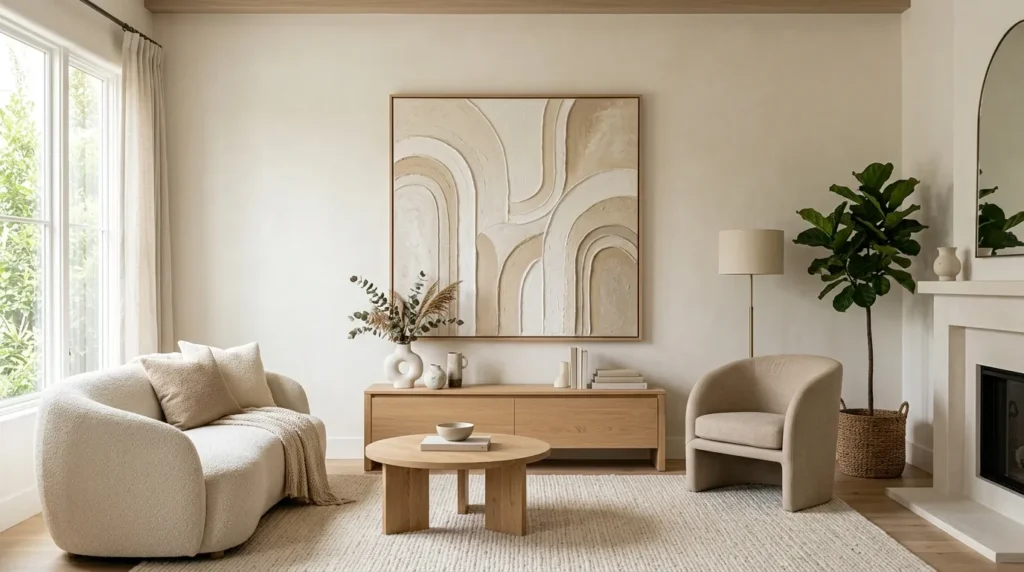
7. Sculptural Arch Art
Quick Benefits
- Adds architectural interest
- Works with modern interiors
- Creates soft visual movement
- Looks sophisticated in neutral colors
- Can be made in multiple sizes
Why It Works
Arches have become a popular interior design shape because they soften rooms dominated by rectangles and straight lines.
On textured canvas, arches become even more interesting because their curves can be raised from the surface.
A composition made from overlapping arches can resemble architecture, doorways, or abstract landscapes.
This makes the artwork versatile enough for living rooms, bedrooms, hallways, and home offices.
How To Style It
Paint the background in warm ivory, beige, or pale taupe.
Use a ruler and curved template to create clean arch shapes.
Apply texture paste to selected arches, leaving other shapes flat.
Once dry, paint the raised areas in related neutral tones.
You can create several overlapping arches in different sizes.
For a minimalist version, use only cream and beige.
For an earthy palette, add muted clay, sand, or terracotta.
A large vertical canvas can emphasize the architectural quality of the design.
Pair it with rounded furniture, natural wood, and soft textiles.
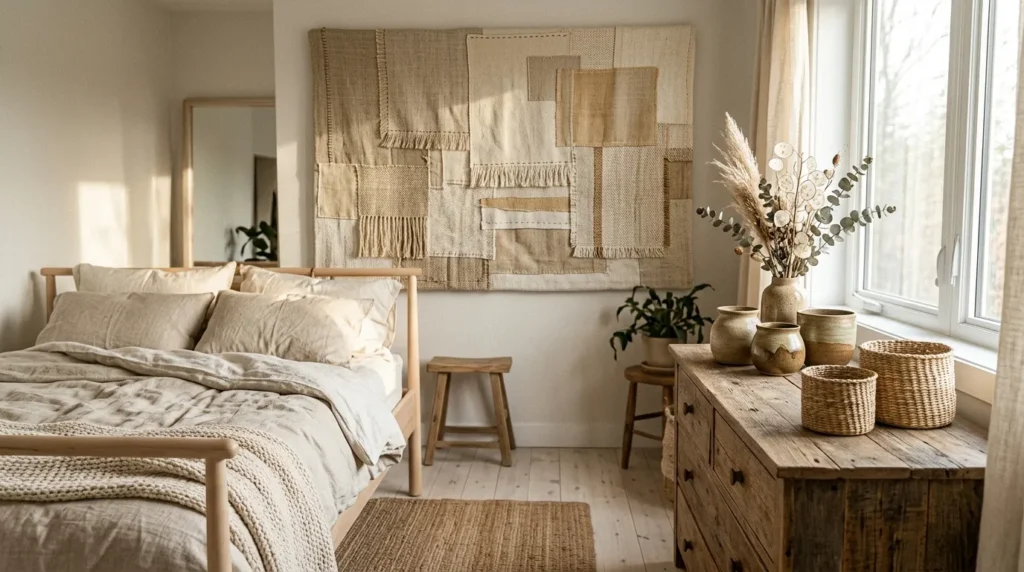
8. Rustic Linen Canvas
Quick Benefits
- Adds natural texture
- Creates a relaxed appearance
- Uses accessible materials
- Works with farmhouse and organic decor
- Makes a warm wall accent
Why It Works
Texture doesn’t have to come entirely from modeling paste.
Fabric can provide another tactile layer, and linen is particularly effective because of its visible weave and natural irregularity.
Combining linen with canvas creates an artwork that feels softer and more organic.
This style works especially well in rooms with woven baskets, wood furniture, neutral upholstery, and natural fiber rugs.
How To Style It
Start with a stretched canvas or sturdy art board.
Attach a piece of neutral linen securely across the surface using an appropriate fabric adhesive or another suitable method.
Add simple raised texture paste shapes over selected areas.
You can create horizontal lines, abstract arches, botanical shapes, or small geometric forms.
Choose a palette of cream, flax, oatmeal, taupe, and warm beige.
Allow each material to dry properly before adding the next layer.
Keep the design understated.
A natural wood frame can complement the linen beautifully.
This piece works particularly well above a console, bed, or small reading nook.
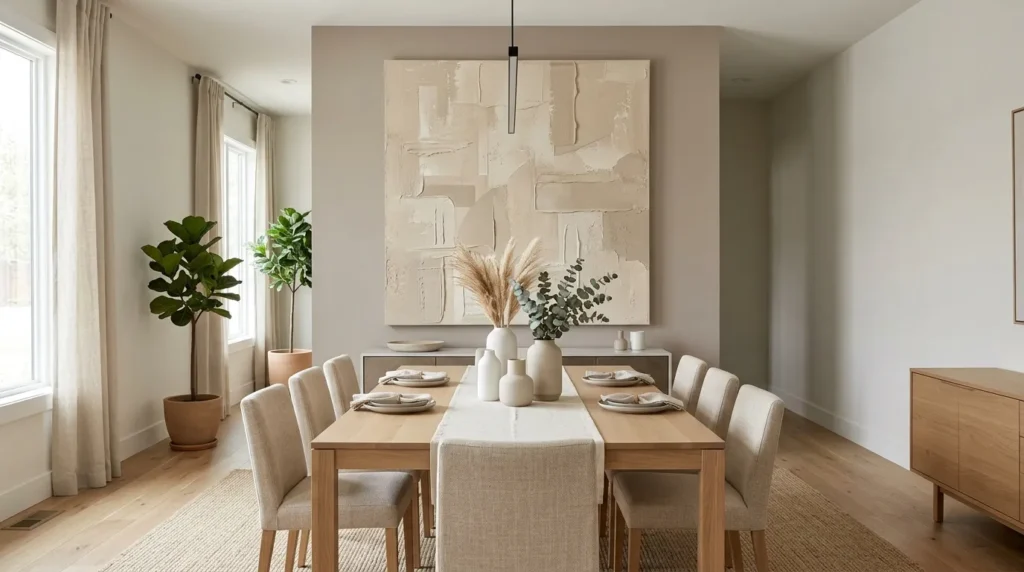
9. Tonal Abstract Art
Quick Benefits
- Creates sophisticated depth
- Uses one primary color family
- Easy to coordinate
- Works with minimalist decor
- Lets texture become the focus
Why It Works
A tonal artwork uses different shades of one color rather than relying on strong contrast.
This makes it particularly useful when you want wall art that adds interest without introducing a new color into the room.
Texture becomes the main source of variation.
For example, several shades of beige can appear completely different depending on how they interact with light and raised surfaces.
The result can feel calm, sophisticated, and intentionally understated.
How To Style It
Choose one color family based on the room.
Warm beige, soft gray, muted sage, dusty blue, or terracotta can all work.
Create a textured background using modeling paste.
Add raised shapes, brush marks, grooves, or abstract ridges.
Once dry, paint different areas in slightly varied shades.
Keep the differences subtle.
For an especially refined look, use three shades that are only slightly apart.
Hang the artwork against a contrasting wall so the texture remains visible.
Pair it with simple furniture and minimal accessories.
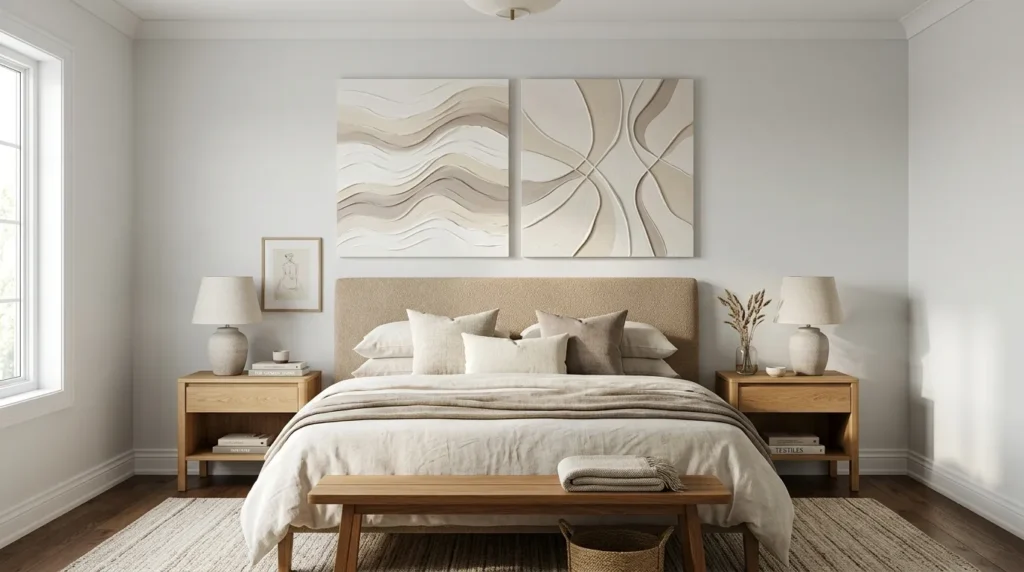
10. Minimalist Texture Pair
Quick Benefits
- Creates visual balance
- Works well over furniture
- Easy to customize
- Ideal for gallery-style arrangements
- Provides coordinated wall decor
Why It Works
Two related canvases can create more visual impact than one small piece while maintaining a minimalist appearance.
The trick is to make the pieces complementary rather than identical.
One canvas can feature raised waves while the other uses arches or organic lines.
Keeping the color palette consistent connects the pair.
This is especially effective above a wide dresser, sofa, console table, or bed.
How To Style It
Choose two canvases in matching dimensions or complementary proportions.
Paint both with the same base color.
Use related textures but vary the pattern slightly.
For example, one canvas could feature horizontal raised lines while the second contains curved abstract forms.
Keep both pieces within the same color family.
Hang them with consistent spacing.
If you want a more relaxed arrangement, use slightly different sizes and align them along one edge.
Place the pair above furniture with enough width to visually support the artwork.
Best Materials for Textured Canvas Art
You can create many textured effects with a surprisingly small collection of supplies.
Stretched Canvas
Choose a size appropriate for your wall. Larger canvases create more impact, while smaller canvases work well in pairs or gallery arrangements.
Modeling Paste
Useful for raised designs, ridges, arches, waves, and sculptural details.
Palette Knife
Helps spread texture paste and create directional marks.
Acrylic Paint
A practical choice for adding color to dried texture.
Paint Brushes
Use different sizes for backgrounds, details, and finishing.
Pencil
Useful for lightly sketching patterns before applying texture.
Fabric
Linen, cotton, or other suitable materials can introduce additional texture.
Painter’s Tape
Helpful for creating clean geometric sections and straight lines.
Always check the manufacturer’s instructions for your chosen materials, especially drying time and suitable surfaces.
How To Make DIY Textured Art Look More Expensive
The artwork doesn’t need complicated details to look polished.
Start with scale. A large, simple canvas can make a stronger impression than several tiny pieces scattered across a wall.
Limit the palette. Two to four related colors usually create more cohesion than a large collection of unrelated shades.
Create intentional texture. Random texture can look messy. Repeat shapes or directional strokes so the surface feels designed.
Leave breathing room. Don’t fill every part of the canvas with texture.
Consider the frame. Natural wood can add warmth, while a thin neutral frame can create a more contemporary appearance.
Think about lighting. Raised artwork becomes much more interesting when natural or directional light creates shadows across the surface.
Match the room. Pull colors from existing furniture, rugs, curtains, or accessories.
The most expensive-looking DIY art often isn’t the most complicated. It is usually the piece with the clearest composition.
How To Hang Textured Canvas Wall Art
Placement can completely change how your artwork feels in the room.
For artwork above a sofa, bed, or console, the piece or arrangement generally looks most balanced when it relates visually to the furniture beneath it.
A very small canvas can feel lost above a large sofa, while an oversized piece can overwhelm a narrow wall.
For a pair of canvases, keep the spacing consistent.
For a gallery arrangement, establish the overall shape before hanging anything.
Don’t automatically center artwork at the exact center of the wall. Consider the furniture, ceiling height, windows, doors, and other architectural elements.
And give textured artwork enough surrounding space to remain visible.
A highly dimensional canvas can become visually crowded when surrounded by too many decorative objects.
Common DIY Textured Canvas Mistakes
Applying Texture Too Thickly
Heavy layers can crack or take significantly longer to dry. Follow the product’s recommended application thickness.
Skipping the Base Coat
A suitable base color can make the finished texture look more cohesive.
Using Too Many Colors
A broad palette can distract from the texture.
Making Every Shape Identical
Small variations can create a more natural handmade appearance.
Hanging Art Too High
Artwork often looks disconnected from furniture when there is excessive space between them.
Ignoring the Wall Color
The canvas and wall don’t have to match, but they need enough contrast for the texture to remain visible.
Rushing the Drying Process
Allow texture mediums and paint to dry according to their instructions before adding additional layers.
FAQ
What can I use to create texture on canvas?
Modeling paste, texture paste, plaster-style mediums, heavy-body acrylics, fabric, sand-compatible art mediums, and other purpose-made texture products can create raised surfaces. Choose a product intended for canvas or your specific substrate and follow the manufacturer’s instructions for application and drying.
How do you make textured canvas art for beginners?
Start with a simple design such as waves, arches, lines, or basic geometric shapes. Apply a manageable layer of modeling paste with a palette knife, allow it to dry completely, then paint over it with acrylic paint. A neutral monochromatic palette is particularly forgiving for first projects.
What colors look best for textured wall art?
Neutral shades such as cream, ivory, beige, taupe, warm gray, sand, and soft brown work beautifully. Earthy shades such as muted sage and terracotta can also add color without overpowering the texture. Choose colors that already appear elsewhere in your room for a cohesive result.
Does textured canvas art need a frame?
No. A gallery-wrapped canvas can look beautiful unframed, particularly in modern and minimalist rooms. A natural wood or slim neutral frame can add warmth and definition if you prefer a more finished appearance. The choice depends on the style of the room and the edges of the canvas.
How long does textured canvas art take to dry?
Drying time depends on the thickness of the texture medium, room conditions, and manufacturer’s instructions. Thin applications can dry more quickly than thick sculptural layers. Avoid painting over texture that still feels soft or cool, as doing so can affect the finished surface.
How do you make DIY wall art look professional?
Use a limited color palette, create a clear composition, vary texture intentionally, and choose a canvas size appropriate for the wall. Clean edges and proper drying also matter. Most importantly, avoid adding details simply to fill empty space. A simple design with strong proportions often looks more polished.
Can textured canvas art work in a small room?
Yes. Smaller rooms often benefit from one substantial textured piece rather than many small decorations. Choose a canvas that complements the wall and furniture scale. Light neutral colors can keep the artwork visually quiet while the texture adds depth and interest.
Conclusion
DIY textured canvas art is one of those projects where simple materials can create surprisingly sophisticated results.
You don’t need to reproduce a complicated painting or have formal art training. A palette knife, canvas, texture medium, and carefully chosen paint colors can be enough to create artwork with dimension and personality.
The most important part is choosing a design that complements your space. Soft waves and tonal abstracts work beautifully in calm neutral interiors. Geometric blocks and arches suit modern rooms. Botanical textures bring an organic feeling, while linen and wood accents add warmth.
Start small if you’re experimenting for the first time. Practice your texture technique on cardboard or an inexpensive canvas before committing to a large piece.
Once you’re comfortable, consider making a larger statement canvas or a pair of coordinating pieces.
Think about scale, color, texture, and placement together. A simple handmade artwork can become a major feature when it has enough space around it and relates naturally to the rest of the room.
The best DIY wall art doesn’t need to look homemade in a negative sense. It can look personal, tactile, intentional, and completely unique to your home.
Related Articles
- 10 DIY Wall Art Ideas for a Modern Home
- 10 DIY Wall Decor Ideas Using Budget-Friendly Supplies
- 10 Modern Living Room Ideas with Timeless Elegance
- 10 Bedroom Wall Decor Ideas with Modern Wall Panels
- 10 Neutral Home Decor Ideas for a Calm and Cozy Space