10 DIY Coffee Tables with Contemporary Style
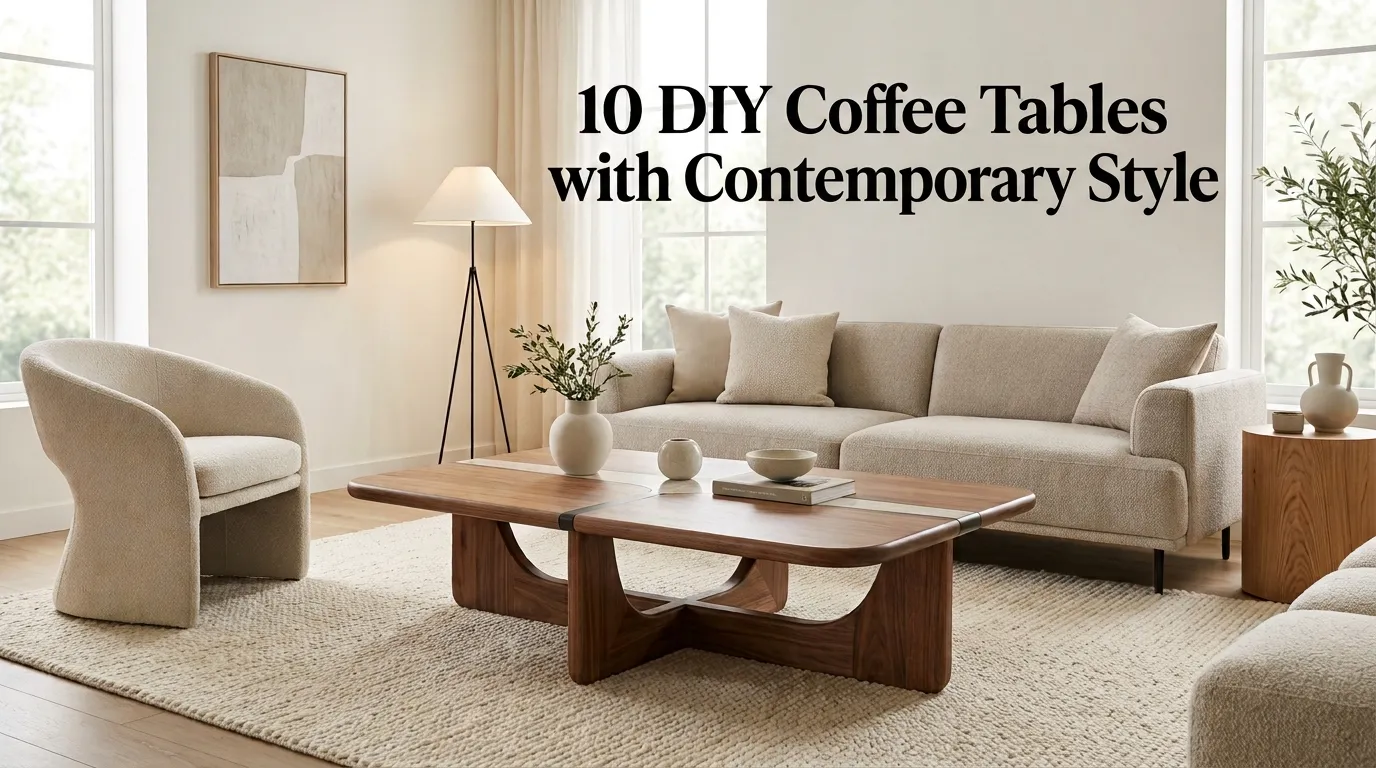
A coffee table can quietly shape the entire look of a living room. It sits at the center of the seating area, ties furniture together, provides a place for books and drinks, and often becomes one of the first pieces guests notice. That makes it a surprisingly worthwhile DIY project.
Contemporary coffee tables are especially appealing because they do not require complicated decoration to make an impression. Clean lines, natural wood, smooth finishes, simple geometric shapes, and thoughtful proportions can create a polished look without making the room feel overly formal.
The best part is that you can often create a custom piece for your exact space. A store-bought table may be too wide, too low, too bulky, or simply not the right color. Building your own lets you choose the dimensions, materials, finish, and storage features.
I’ve noticed that the most successful DIY furniture projects usually start with the room rather than the project itself. Look at your sofa, rug, flooring, and other furniture before deciding on a design. A beautiful coffee table can still feel out of place if its proportions or materials compete with everything around it.
These ideas range from simple wood designs to more sculptural tables with contemporary shapes. Some are suitable for beginners, while others are better for DIYers comfortable with more detailed woodworking or construction.
Before starting, measure your living room carefully and choose materials appropriate for furniture construction. Use proper tools, secure every connection, and follow manufacturer instructions for finishes, adhesives, hardware, and any power tools.
With the right design, a DIY coffee table can look less like a weekend project and more like a custom piece made specifically for your home.
Table of Contents
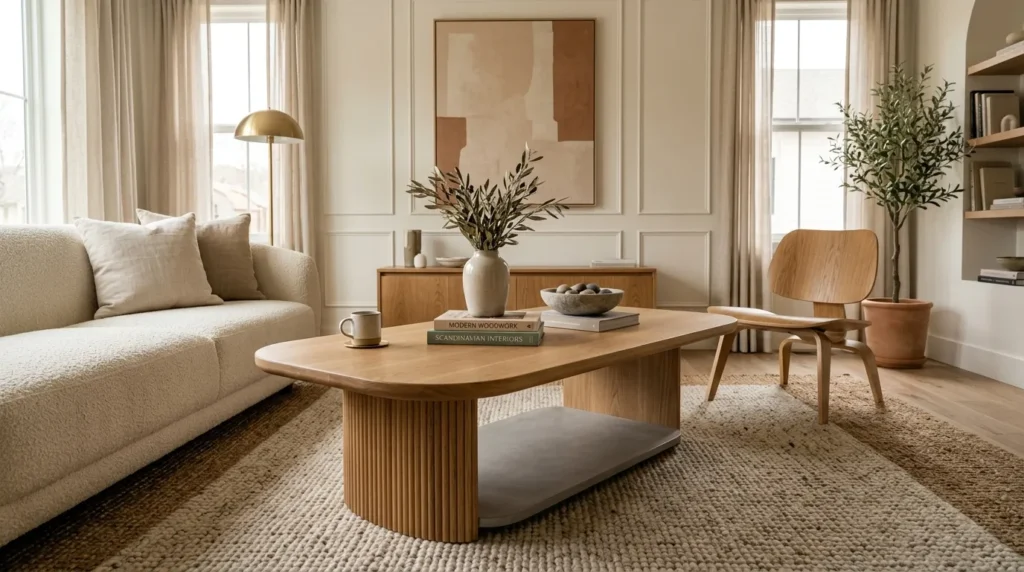
1. Slatted Wood Table
Use evenly spaced wood slats to create a warm contemporary coffee table with architectural texture.
2. Chunky Wood Table
Build a substantial low-profile table from thick timber for a simple, sculptural appearance.
3. Waterfall Edge Table
Create a sophisticated silhouette with continuous wood flowing from the tabletop toward the floor.
4. Hairpin Leg Table
Combine a simple wood top with slim metal legs for an airy contemporary look.
5. Nested Coffee Tables
Create flexible living room styling with two or more tables that slide together.
6. Round Pedestal Table
Use a circular top and central base to create a softer alternative to rectangular furniture.
7. Storage Coffee Table
Add hidden or open storage to make the coffee table useful as well as attractive.
8. Concrete Top Table
Pair a smooth concrete-style surface with a simple base for an industrial contemporary look.
9. Two Tone Table
Combine contrasting materials or finishes for a custom designer-inspired piece.
10. Minimalist Platform Table
Keep the design exceptionally simple with a low platform shape and clean geometric lines.
1. Slatted Wood Table
Quick Benefits
- Adds natural texture
- Creates a contemporary focal point
- Works with neutral interiors
- Can be customized to different sizes
- Pairs well with modern furniture
Why It Works
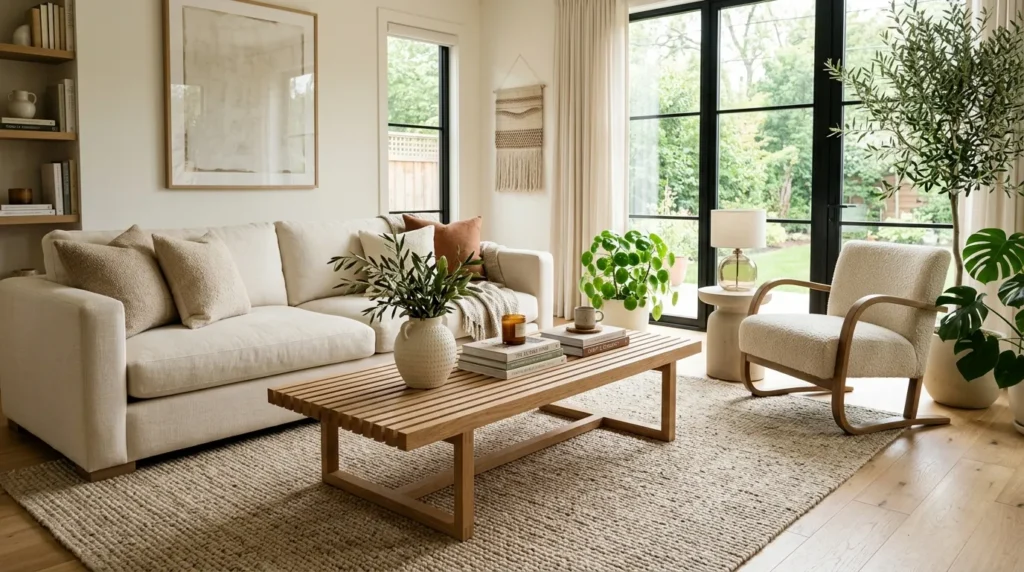
Slatted wood is an easy way to give a simple coffee table more architectural character. Instead of relying on ornate details, the design uses repetition to create visual interest.
The narrow gaps between the wood pieces add shadow and texture, making the tabletop feel more dimensional. This works particularly well in contemporary living rooms where the rest of the furniture has relatively clean silhouettes.
Natural wood also brings warmth to rooms that contain cooler materials such as gray upholstery, black metal, or polished stone.
The beauty of this design is that it can be adapted to different levels of DIY experience. A straightforward rectangular base can support the slatted surface, while more advanced woodworkers can experiment with different spacing and edge details.
How To Style It
Start with straight, properly dried boards or furniture-grade lumber. Choose a wood species and finish that complements your existing flooring and furniture.
For a lighter Scandinavian-inspired look, consider pale oak or another light-toned wood.
For a richer appearance, medium walnut or a similar darker finish creates more contrast.
Keep the base relatively simple so the slatted top remains the main feature.
Style the finished table with a small stack of books, a ceramic bowl, and one low-profile decorative object. Avoid covering the slats completely because the texture is part of the design.
2. Chunky Wood Table
Quick Benefits
- Has a substantial appearance
- Creates a strong focal point
- Works with contemporary and organic interiors
- Provides visual weight
- Uses simple geometric construction
Why It Works
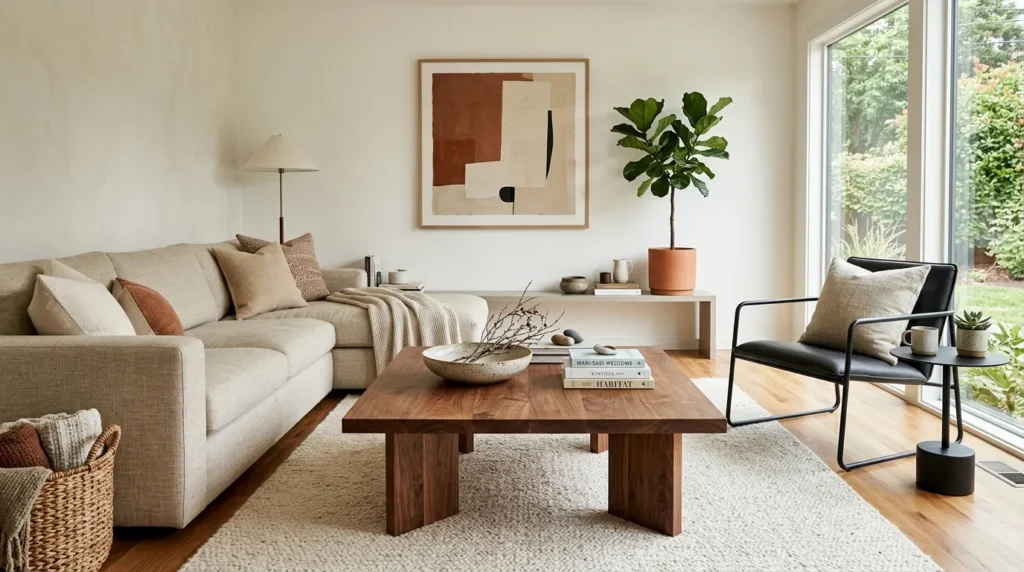
A chunky wood coffee table can look surprisingly sophisticated when the shape is kept simple.
Thick legs, a substantial tabletop, and a low profile give the piece a sculptural quality. Rather than looking delicate, it becomes an architectural element in the living room.
This style is especially effective in larger rooms where a lightweight coffee table might feel visually lost between a large sofa and area rug.
The key is proportion. A chunky table can quickly become too bulky if the tabletop is oversized or the legs are excessively thick. The finished dimensions should relate to the sofa and the amount of walking space around it.
How To Style It
Use thick timber or laminated boards to create the substantial appearance.
Sand the edges carefully for a smooth, furniture-quality finish.
A natural matte finish allows the wood grain to remain visible and works beautifully with contemporary neutral interiors.
For a more modern appearance, paint the entire piece in a muted neutral color.
Keep the surrounding furniture slightly lighter or more streamlined if the table is visually heavy.
A low ceramic tray or a simple stack of large-format books can provide decoration without competing with the strong shape.
3. Waterfall Edge Table
Quick Benefits
- Looks custom made
- Creates a continuous silhouette
- Works beautifully in modern interiors
- Highlights natural wood grain
- Has a sophisticated appearance
Why It Works
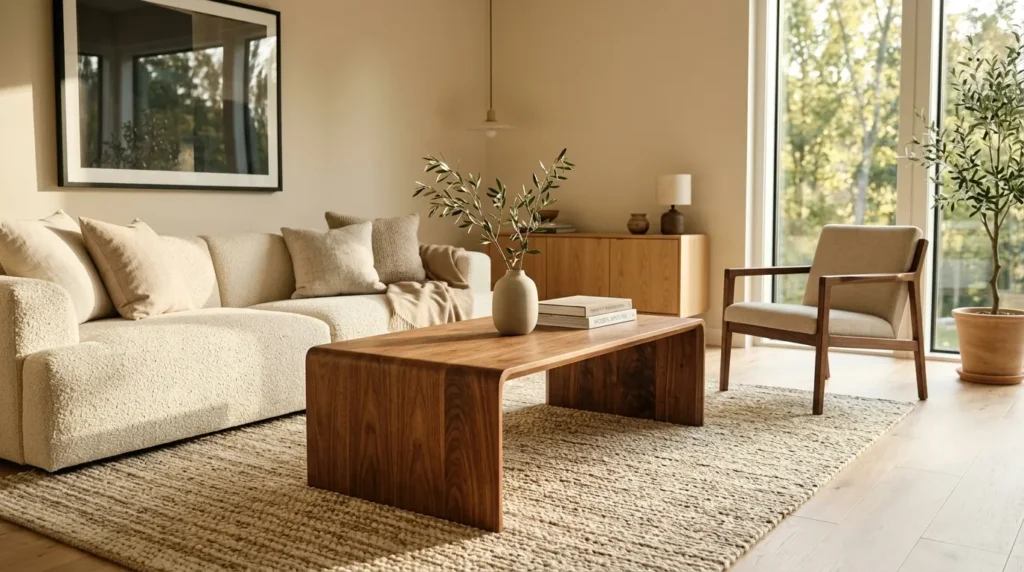
The waterfall edge design gets its name from the way the tabletop appears to flow downward at the ends.
This creates a continuous visual line instead of the traditional tabletop-and-legs arrangement. The result feels architectural and carefully considered.
The style is particularly effective when made from beautiful wood because the continuous grain can become part of the visual feature.
It is more demanding than a basic four-leg table because the corners and joints need to be carefully constructed. Precise measurements and a clean finish are important.
How To Style It
Choose a high-quality wood board or furniture-grade panel with an attractive grain pattern.
Keep the shape relatively simple. The waterfall edge is already distinctive, so additional decorative details are unnecessary.
A medium natural wood finish can complement cream upholstery and warm neutral rugs.
For a more dramatic look, choose a darker wood finish and pair it with lighter furniture.
Because the table has strong vertical ends, leave enough visual space around it. Avoid placing bulky baskets or stools directly beside the edges.
4. Hairpin Leg Table
Quick Benefits
- Lightweight appearance
- Easy to customize
- Combines wood and metal
- Works in small rooms
- Offers a modern industrial feel
Why It Works
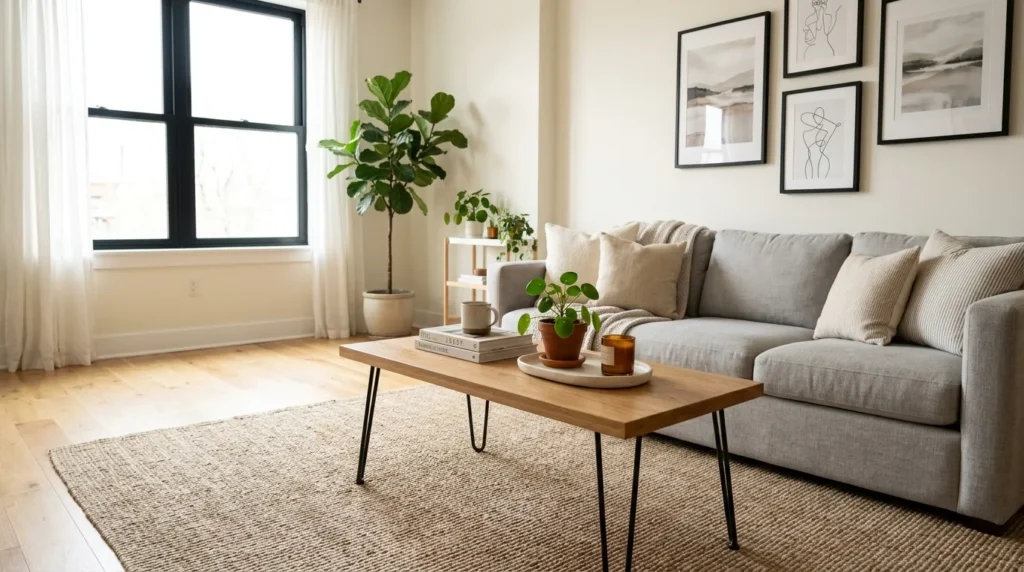
Hairpin legs are a classic DIY furniture choice because they can transform a simple tabletop into a finished coffee table with relatively little visual complexity.
The slim metal legs keep the space beneath the table open, which can be useful in smaller living rooms. You can see more of the area rug and floor, helping the room feel less crowded.
The combination of wood and metal also fits naturally into contemporary, industrial, minimalist, and eclectic interiors.
How To Style It
Choose a tabletop that is sturdy enough for the intended use and appropriate for the leg hardware.
Light wood creates a softer appearance, while dark-stained wood with black metal legs creates stronger contrast.
Round or rectangular tabletops can both work, depending on the shape of the room.
Keep the styling minimal. A shallow tray, a few books, and a small plant are enough.
If your living room already contains black metal accents, repeat the finish in the coffee table to create continuity.
5. Nested Coffee Tables
Quick Benefits
- Flexible arrangement
- Excellent for smaller rooms
- Adds visual interest
- Can provide multiple surfaces
- Easy to separate when entertaining
Why It Works
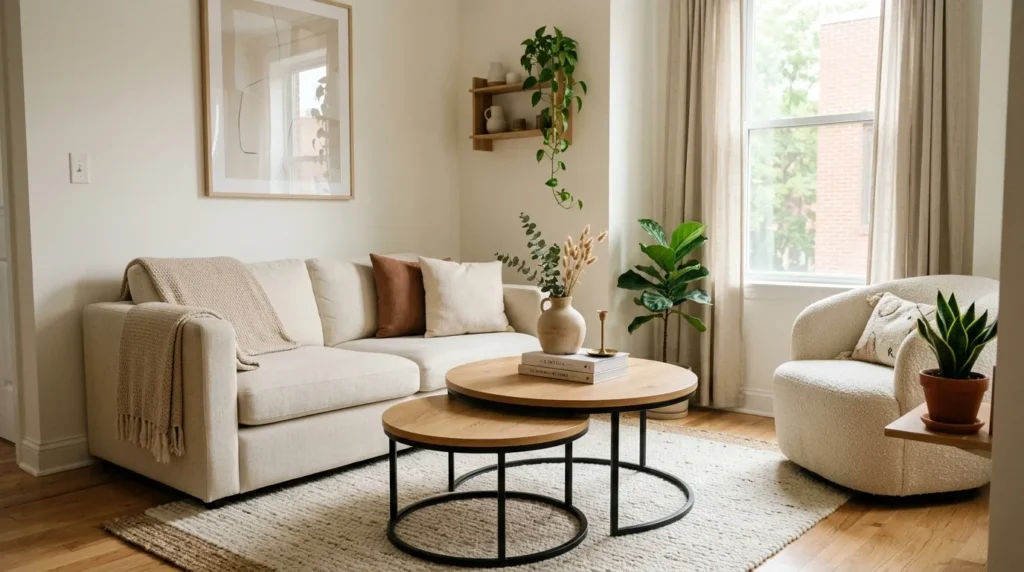
Nested coffee tables are useful when you want the appearance of one central table but occasionally need additional surfaces.
Two or three tables can be designed at different heights so they slide partially beneath one another. When you need more table space, simply separate them.
This arrangement is particularly useful in apartments and smaller living rooms where permanent large furniture can make circulation difficult.
The tables can also introduce layered shapes into a contemporary space without requiring complicated decoration.
How To Style It
Keep the materials consistent across the set so the tables feel like one coordinated design.
Experiment with different tabletop shapes. A large oval combined with a smaller round table can create an organic contemporary look.
For a more architectural effect, use rectangular forms with staggered heights.
Choose slim legs or low platforms so the pieces remain visually light.
Keep the tallest table close to the center of the seating area and slide the smaller tables underneath when they are not needed.
This design is particularly practical when you regularly entertain because the smaller pieces can be moved beside chairs or sofas as temporary side tables.
6. Round Pedestal Table
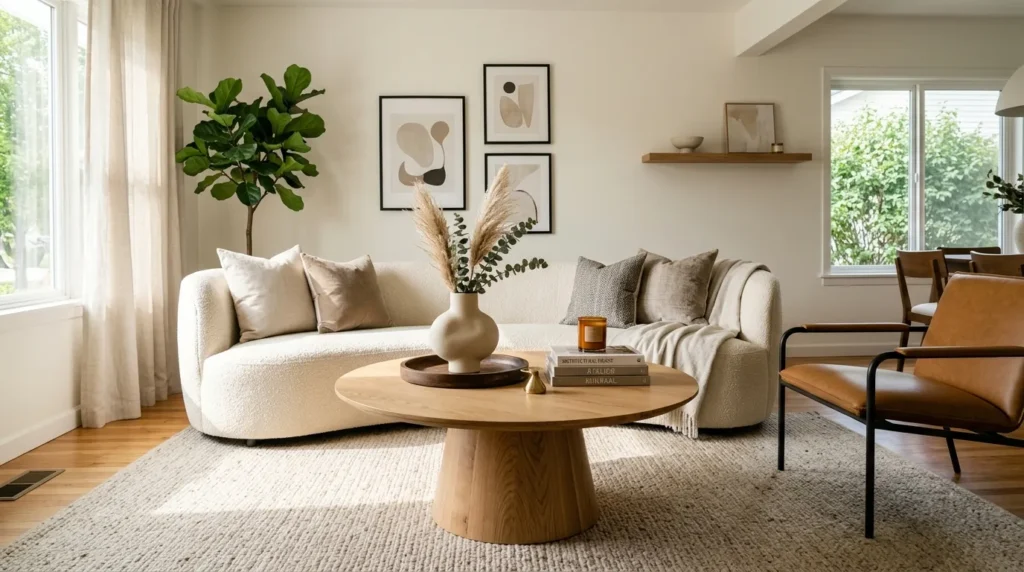
Quick Benefits
- Softens rooms with straight lines
- Eliminates sharp corners
- Creates a sculptural focal point
- Works in conversational layouts
- Looks elegant with simple styling
Why It Works
A round coffee table introduces a different geometry into a living room filled with rectangular sofas, rugs, cabinets, and windows.
The curved tabletop creates visual softness while the pedestal base keeps the design clean.
Round tables are also useful in conversation-focused seating arrangements because people can move around them more naturally.
A pedestal design eliminates the need for four individual legs, creating a stronger central silhouette.
How To Style It
Choose a tabletop size that leaves comfortable clearance around the sofa and chairs.
A wood top with a simple painted pedestal can create an attractive mixed-material effect.
For a monochromatic contemporary room, use the same finish throughout the table.
A round tray can reinforce the geometry while providing a practical surface for smaller objects.
Keep decorative pieces low enough that they do not interfere with conversation across the table.
7. Storage Coffee Table
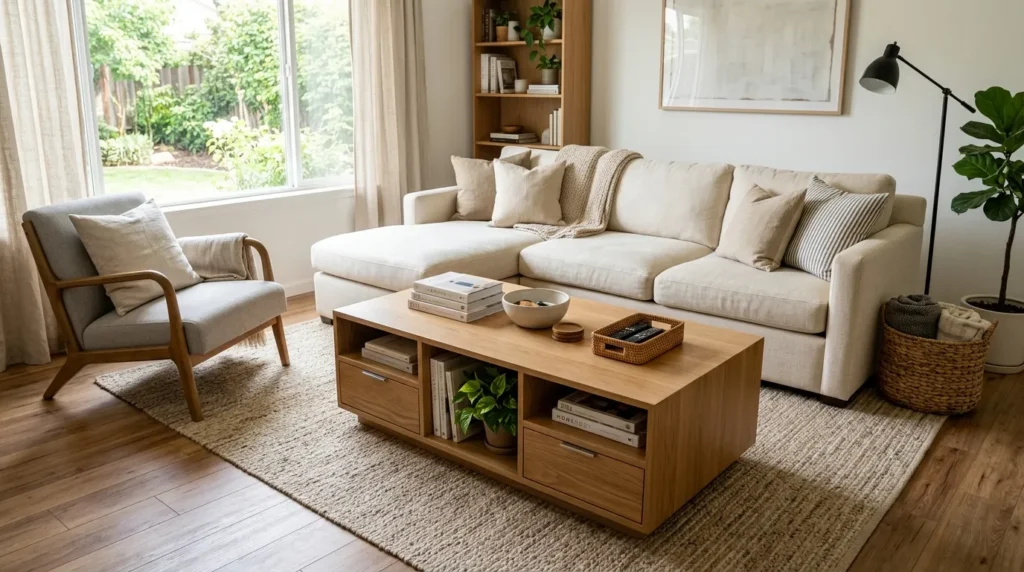
Quick Benefits
- Provides hidden organization
- Makes small rooms more practical
- Reduces visible clutter
- Combines furniture and storage
- Can be customized to household needs
Why It Works
A coffee table with storage can be especially useful in a busy living room. Remote controls, magazines, blankets, games, and other everyday items can quickly make a room feel cluttered.
Hidden storage allows you to keep those items close without leaving everything visible.
The contemporary approach is to make the storage part of the geometry rather than adding decorative hardware everywhere.
Lift-top designs, drawers, open shelves, and recessed compartments can all work.
How To Style It
For a clean appearance, choose push-to-open drawers or recessed handles.
Open shelving works well for books and decorative baskets, while enclosed compartments are better for items you want to hide.
Use storage dimensions that match what you actually plan to keep inside.
A lift-top design can be particularly useful if you sometimes work or eat from the sofa, but make sure the mechanism is sturdy and properly installed.
Keep the visible tabletop relatively uncluttered. The storage feature already provides plenty of function.
8. Concrete Top Table
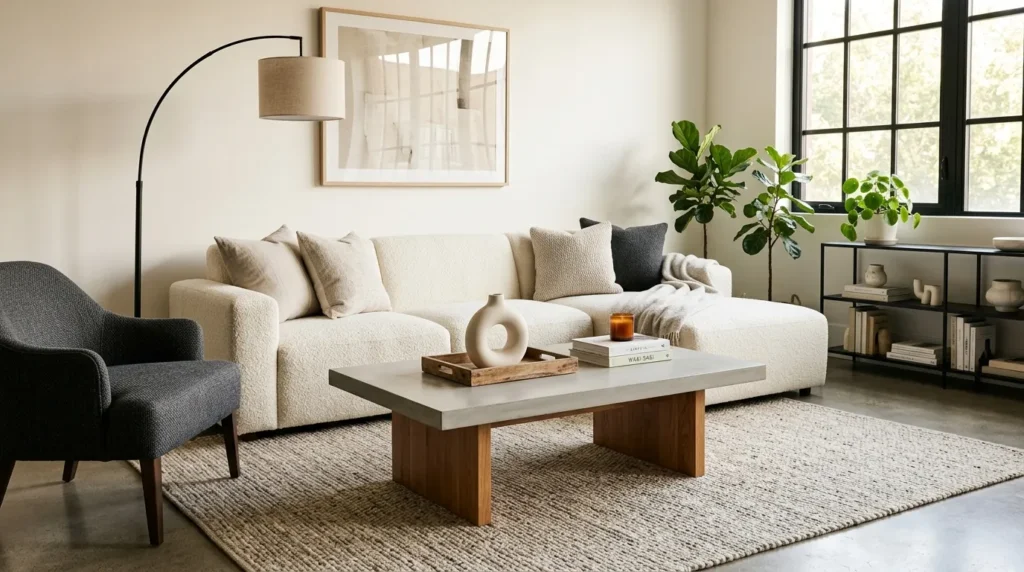
Quick Benefits
- Creates an industrial feel
- Offers strong material contrast
- Looks contemporary
- Works with wood and metal
- Provides a durable-looking surface
Why It Works
Concrete introduces a cool, architectural quality that contrasts beautifully with warm wood and soft upholstery.
A concrete-style tabletop can make an otherwise simple coffee table feel substantial and custom.
However, actual concrete can be heavy, and the weight needs to be considered when choosing the base and planning the final placement.
For many DIYers, a lightweight concrete-look material or suitable furniture surface may offer a more practical alternative while achieving a similar visual effect.
How To Style It
Pair the top with a simple wood base for warmth.
Black metal creates a more industrial appearance.
Keep the surrounding colors relatively soft: cream, beige, charcoal, natural wood, and muted green work well.
Add a woven basket or wood accessory to prevent the space from feeling overly hard.
Use felt pads or appropriate protective materials beneath decorative objects and furniture contact points to protect the finished surface.
9. Two Tone Table
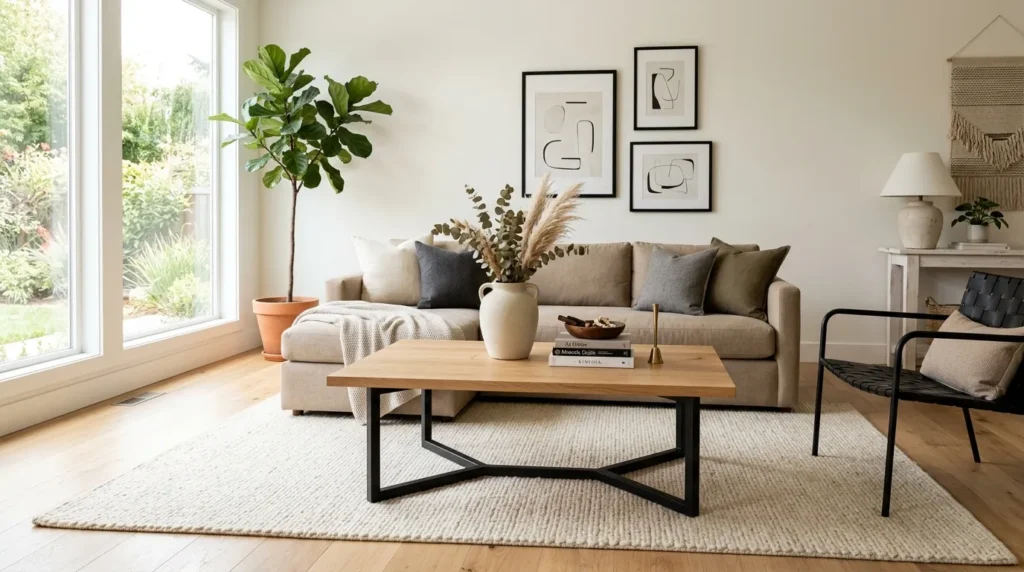
Quick Benefits
- Adds visual contrast
- Allows creative customization
- Works with existing furniture
- Creates a designer-inspired appearance
- Makes a simple shape more interesting
Why It Works
A two-tone coffee table can look considerably more sophisticated than a single-finish piece when the colors or materials are carefully selected.
The contrast can come from painted legs and a natural wood top, a dark base with a light surface, or two complementary wood finishes.
This approach is useful when your living room already contains several finishes and you want the coffee table to connect them.
The key is restraint. Two intentional finishes look polished; too many can make the table appear disconnected from the room.
How To Style It
Choose one dominant material and one supporting accent.
For example, pair a natural oak tabletop with a matte black base.
Another option is a warm walnut top with a cream-painted base.
Repeat at least one of the table’s finishes elsewhere in the room.
If the living room already contains colorful furniture, keep the table palette neutral.
Use simple decor on top so the contrasting materials remain visible.
10. Minimalist Platform Table
Quick Benefits
- Creates a clean silhouette
- Works beautifully in contemporary rooms
- Has a low visual profile
- Easy to coordinate with decor
- Makes small spaces feel less crowded
Why It Works
Minimalism is not about having no design details. It is about making each detail intentional.
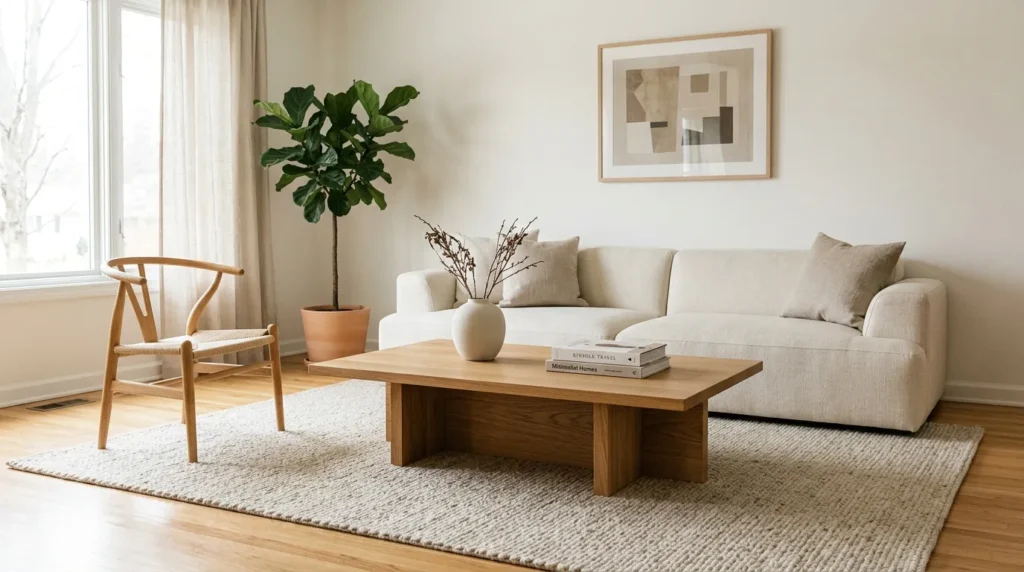
A platform coffee table can consist of a simple low rectangular or square form with a continuous base. Because there are few separate elements, the proportions and finish become especially important.
This style works particularly well in contemporary living rooms with low sofas, simple rugs, and uncluttered decor.
The table should feel substantial enough to anchor the seating area without blocking the visual flow through the room.
How To Style It
Choose a low profile that complements the height of your sofa.
Use a single material for a monochromatic appearance, or introduce one contrasting surface for additional dimension.
Matte finishes generally reinforce the contemporary aesthetic.
A large tray can organize smaller objects while preserving the clean tabletop.
Add one sculptural vase, a stack of books, or a small bowl rather than filling the surface with accessories.
How To Choose The Right Coffee Table Size
Before buying lumber or cutting anything, measure your living room.
The coffee table should be proportional to the sofa and leave enough space for people to move comfortably around it.
A useful starting point is to think about the distance between the table and surrounding seating. You want enough room for legs and movement without making the table feel disconnected from the sofa.
The table height should also relate to the seating.
A very tall coffee table can feel awkward beside a low contemporary sofa, while an extremely low table may be inconvenient for everyday use.
Measure your existing sofa height and consider how you use the room.
If you frequently eat, work, or play games at the coffee table, practical height and surface area become more important than appearance alone.
For a small living room, consider:
- Round or oval shapes
- Nested tables
- Slim legs
- Open bases
- Compact rectangular designs
- Tables with hidden storage
For a larger room, you can consider:
- Oversized rectangular tables
- Chunky wood designs
- Large round pedestal tables
- Storage-heavy pieces
- Larger architectural shapes
The goal is balance rather than following one universal measurement.
Best Materials For DIY Coffee Tables
The material you choose has a major influence on both appearance and difficulty.
Solid Wood
Provides natural grain and can be sanded and refinished. It is an excellent choice for warm contemporary designs.
Plywood
High-quality plywood can be useful for modern furniture, especially when the edges are intentionally incorporated into the design.
MDF
Offers a smooth surface for painting and can work well for certain furniture designs. It needs appropriate edge treatment and protection from moisture.
Metal
Slim metal legs or frames can make a wood tabletop feel lighter and more contemporary.
Concrete
Creates an architectural appearance but can be heavy and requires careful planning.
Glass
Can make a room feel visually open, although it requires careful handling and appropriate furniture-grade materials.
Choose materials based on the design, your tools, experience level, and how the table will actually be used.
How To Make A DIY Coffee Table Look Expensive
A sophisticated result usually comes from preparation rather than expensive materials.
First, make the cuts precise. Uneven edges can make even beautiful wood look unfinished.
Next, spend time sanding. Progress through appropriate grits and remove dust before applying the finish.
Pay attention to the edges. Rounded or carefully softened edges can make a simple table feel more refined.
Choose a finish that suits the material. A quality matte or satin finish often looks more contemporary than an overly glossy surface.
Hardware should also be intentional. If screws or brackets are visible, make sure they look deliberate and align consistently.
Finally, consider scale. A simple coffee table with excellent proportions often looks more sophisticated than an elaborate table that is too large or too small for the room.
How To Style A Contemporary Coffee Table
A coffee table should be useful first, but a few thoughtful decorative elements can make it feel finished.
Try grouping items in varying heights.
A stack of books creates a low horizontal layer. A ceramic vase introduces height. A shallow tray provides structure.
Natural materials such as wood, stone, ceramic, and linen work particularly well with contemporary furniture.
Avoid filling every corner.
Leave part of the tabletop open for everyday use. A coffee table covered with decorations can quickly become inconvenient.
If you have children or pets, prioritize stable, durable accessories and avoid fragile objects with sharp edges.
Seasonal changes can be simple. Swap flowers, books, or a small decorative object rather than completely restyling the table every few weeks.
Common DIY Coffee Table Mistakes
Making The Table Too Large
A table that dominates the seating area can make the living room feel cramped.
Ignoring Sofa Height
The relationship between the sofa and table affects both appearance and everyday comfort.
Using Poor-Quality Lumber
Warped or damaged boards can make construction much more difficult.
Rushing The Finish
Uneven sanding or applying finish before properly preparing the surface can make a handmade piece look unfinished.
Adding Too Many Features
Contemporary furniture usually benefits from simplicity. Extra shelves, decorative trim, and unnecessary hardware can weaken the design.
Forgetting Floor Protection
Furniture can scratch hardwood, laminate, tile, or other flooring. Add appropriate protective pads beneath the finished table.
Skipping Structural Testing
Before placing heavy objects on the table, check that all joints and connections are secure and stable.
How To Choose A Finish
The finish should complement both the wood and the room.
A natural clear finish highlights wood grain and works well with contemporary organic interiors.
A light stain can enhance the wood while keeping the overall appearance airy.
A medium walnut finish adds warmth and contrast.
A dark finish creates a stronger statement and works beautifully against light rugs and upholstery.
A painted finish allows you to coordinate the table directly with your existing palette.
For high-use furniture, choose a finish appropriate for the level of wear the table will receive and follow its application and curing instructions carefully.
Frequently Asked Questions
Is it cheaper to DIY a coffee table?
A DIY coffee table can cost less than some high-end furniture, but the savings depend on the materials, tools, hardware, and finish you choose. If you already own basic woodworking tools, a straightforward design can be particularly economical. The biggest advantage is often customization—you can create the exact size, color, and style needed for your room.
What is the easiest DIY coffee table design?
A basic tabletop attached to ready-made legs is generally one of the simplest approaches. Hairpin-leg tables are another accessible option because the legs are already formed and can be attached to a properly prepared tabletop. A simple platform or basic four-leg design can also work well for beginners.
What type of wood is best for a DIY coffee table?
There is no single best wood for every project. Oak, maple, walnut, pine, and other furniture-suitable woods can all work depending on budget, appearance, and construction method. Hardwood provides durability, while quality softwood can offer a more affordable option. Always choose boards that are straight, properly dried, and appropriate for furniture construction.
How high should a contemporary coffee table be?
The ideal height depends on your sofa and how you use the table. A coffee table generally works best when its height relates closely to the seating rather than standing substantially above it. Measure your sofa before building and consider whether you mainly use the table for drinks and decor or for eating and working.
How can I make a small living room coffee table look less bulky?
Choose a slim base, open legs, rounded edges, or a lower visual profile. Nested tables can provide flexibility without permanently occupying a large footprint. Light wood, glass, or a visually open metal base can also help the room feel less crowded. Keep enough floor and rug visible around the table.
Can I make a coffee table without woodworking experience?
Yes. Start with a simple design that uses pre-cut or easy-to-cut components and straightforward hardware. A tabletop with purchased legs is often a manageable first project. Avoid complicated joinery, heavy concrete structures, or designs requiring advanced tools until you are comfortable with basic construction techniques.
How do I protect a DIY coffee table?
Use a furniture-appropriate finish suited to the material and expected use. Follow the manufacturer’s preparation, application, drying, and curing instructions. Add protective pads beneath objects and furniture contact points where appropriate. Clean spills promptly and avoid using harsh products that could damage the finish.
Conclusion
A DIY coffee table can be one of the most rewarding furniture projects for a living room because the finished piece becomes both functional and decorative.
The best contemporary designs do not depend on complicated construction or excessive ornamentation. Clean proportions, quality materials, thoughtful finishes, and a shape that suits the room can make a relatively simple project look remarkably polished.
If you want warmth, a slatted or chunky wood design can bring natural texture into the space. For something lighter, hairpin legs or nested tables create an airy appearance. A waterfall edge adds a more custom furniture feel, while a minimalist platform table can work beautifully in a modern home.
Start by measuring your sofa, rug, and available walking space. Then choose a design that fits the way you actually use your living room.
Take your time with the preparation, especially sanding, measuring, joining, and finishing. Those small details often make the biggest difference between a table that looks homemade and one that feels genuinely custom.
You don’t have to build the most complicated design to create something special. A thoughtfully proportioned table made from a few well-chosen materials can become the centerpiece your living room was missing.