
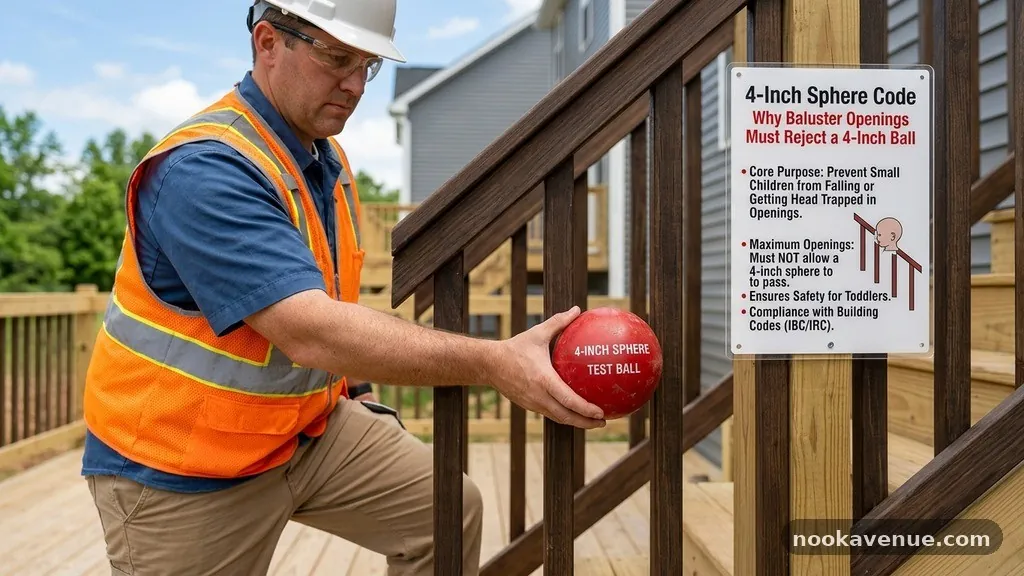
The 4-Inch Sphere Code: Why Baluster Openings Must Reject a 4-Inch Ball
The 4-Inch Sphere Code exists to ensure that guardrails and balusters remain safe for children by preventing them from getting their heads or limbs trapped in gaps. Building codes in the United States mandate that any opening in a guard must not be large enough for a 4-inch diameter sphere to pass through.
This simple yet vital requirement acts as a critical line of defense in residential and commercial construction. By understanding why this rule exists and how it applies to various materials like wood, glass, and cable, you can ensure your home or project meets safety standards while avoiding common compliance pitfalls.
The Core Purpose of the 4-Inch Sphere Code
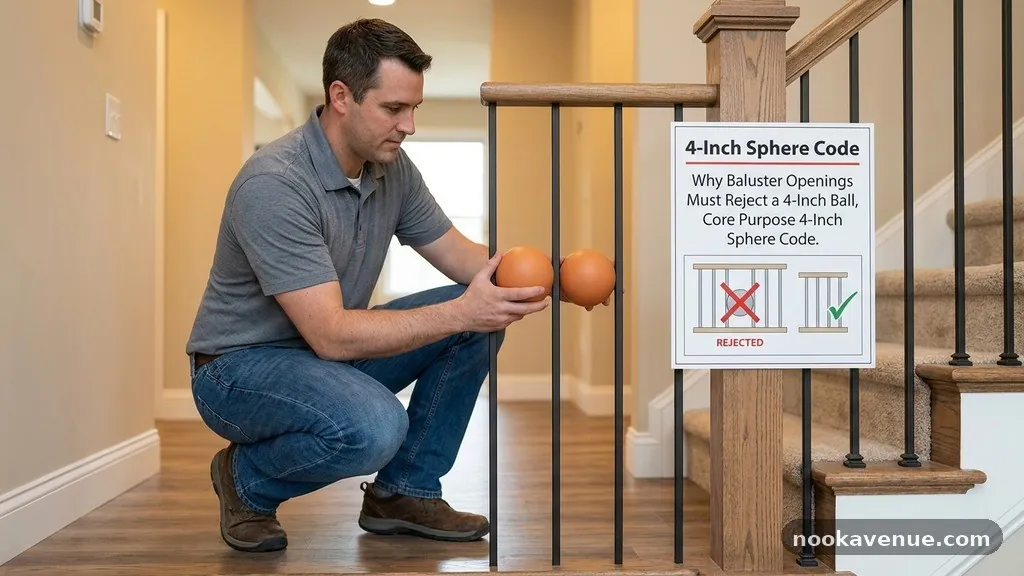
The primary objective of the 4-inch sphere rule is child safety. Infants and toddlers possess unique physical dimensions, and their heads are often the largest part of their bodies compared to their torsos. If a child can fit their head through an opening in a railing, there is a significant risk that their body will follow, leading to a dangerous entrapment situation.
When a child’s head becomes lodged between balusters, panic often causes them to struggle, potentially leading to airway constriction or severe injury. The 4-inch measurement was not chosen arbitrarily by code officials. It is based on anthropometric data regarding the head size of small children, specifically those under the age of five.
By requiring that a 4-inch sphere cannot pass through any part of the guard, the code effectively eliminates the possibility of a child’s head getting stuck. This standard applies to the entire height of the railing system. It is not enough for the gap to be safe at the bottom; it must remain consistent all the way up to the top rail.
Regulatory Origins and Enforcement
The 4-inch sphere code is a staple of the International Residential Code (IRC) and the International Building Code (IBC). These documents serve as the foundation for most local building regulations across the United States. While local jurisdictions may adopt their own amendments, the 4-inch requirement is almost universally accepted and enforced by municipal inspectors.
When a building inspector arrives for a final check on a new deck or staircase, they often carry a physical 4-inch sphere. They will attempt to pass this ball through every gap in the balusters, between the bottom rail and the floor, and near the posts. If the ball passes through, the railing fails the inspection immediately.
Failure to comply with these regulations can lead to significant headaches for homeowners and contractors. You might be required to tear out an entire railing system and rebuild it to meet the spacing requirements. Beyond the legal and financial implications, the moral imperative to provide a secure environment for families is the most important reason to adhere strictly to these guidelines.
Applying the Rule to Different Railing Materials
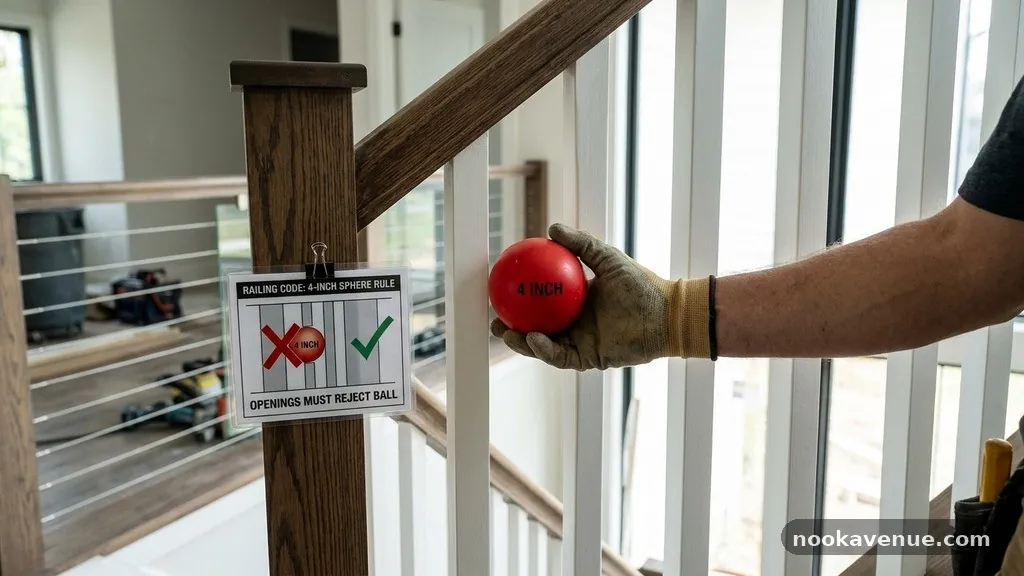
The 4-inch rule applies regardless of the materials used in the construction of the guard. Whether you are building with wood, metal, glass, or cable, the physical limitation remains the same. However, the way you measure and maintain that spacing can vary significantly depending on the design.
Wood balusters are the most common application where this rule is tested. Because wood can warp, shrink, or expand over time due to weather conditions, installers must be careful to account for these movements. A gap that is exactly 4 inches on a cold, dry day might shrink significantly in the summer, or conversely, pull apart as the lumber dries out.
Cable railing systems present a unique challenge regarding the 4-inch sphere code. Because cables are flexible, they can be spread apart by a child or even by the pressure of someone leaning against them. To combat this, installers must use intermediate posts or cable stabilizers that keep the lines from deflecting more than the allowed amount under pressure.
Understanding Deflection and Load Requirements
It is vital to recognize that the 4-inch sphere test is a static measurement, but railings are dynamic objects. A railing might pass the sphere test when it is brand new and untouched, but it could fail if the components deflect under a load. The code requires that guards be constructed to withstand specific structural forces without shifting.
When a person leans against a guard, the components may bend or move. If the cable or the baluster moves enough to allow a 4-inch ball to pass through while under stress, the system is considered non-compliant. This is why the spacing between posts and the tension of cable systems are so critical to the overall safety of the installation.
Engineers and contractors must calculate the expected deflection of their materials. For instance, glass railings must be tempered or laminated to ensure they don’t break under pressure. The hardware securing the glass to the posts must also be robust enough to hold the panels in place, maintaining the required gap integrity at all times.
Common Exceptions and Specific Scenarios
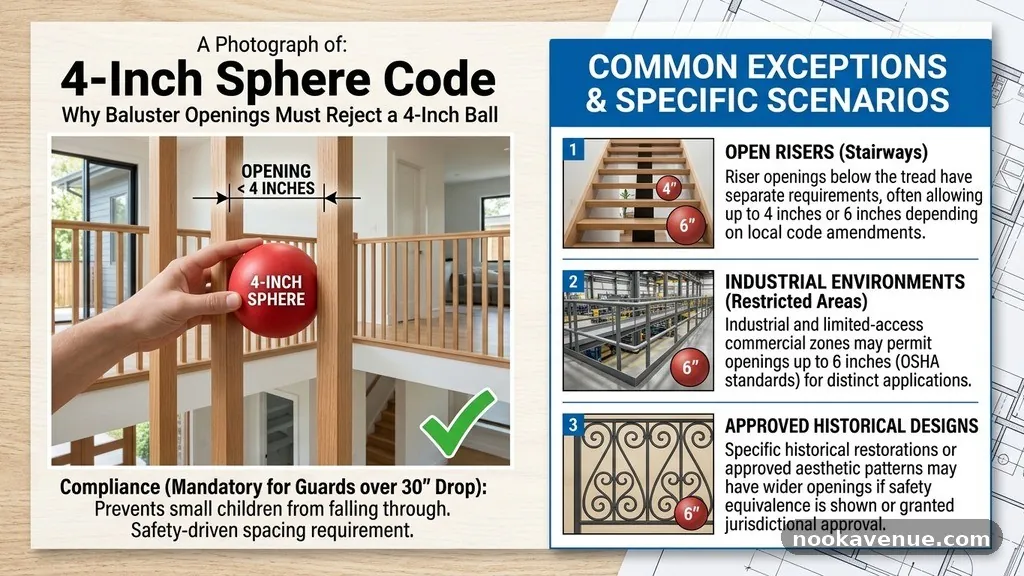
While the 4-inch sphere code is rigid in residential settings, there are specific exceptions and nuances, particularly in industrial or commercial environments. For example, some industrial walkways or areas not accessible to the general public may have different requirements. However, for any residential balcony, deck, or staircase, the rule remains the standard.
One common area of confusion involves the triangular opening formed by the riser, the tread, and the bottom rail of a staircase. The code dictates that this specific triangle must also be small enough to prevent the passage of a 4-inch sphere. This often requires the installation of a small “fillet” or blocking piece at the bottom of the stairs.
It is also important to note that the rule applies to the “clear opening.” This means you must measure the distance between the actual faces of the balusters, not the center-to-center distance. If you have 1.5-inch wide balusters, your center-to-center spacing might be 5.5 inches to achieve a 4-inch clear opening.
The Role of Inspection and Documentation
Building inspectors rely on the 4-inch sphere test because it is objective and repeatable. It removes ambiguity from the inspection process. If the ball hits the balusters and stops, the guard passes.
If it slips through, it fails. This clarity is helpful for both the builder and the homeowner.
When planning a project, it is wise to document your spacing strategy. If you are using a pre-manufactured railing system, check the manufacturer’s specifications to ensure they meet the International Code Council standards. Keep these documents on hand during the inspection process to prove that the materials are designed to be compliant.
If you are a DIY builder, do not rely on your eye to judge the spacing. Use a physical spacer block cut to slightly less than 4 inches to check your work as you go. Installing one baluster at a time and verifying the gap prevents you from discovering a systemic error only after the entire railing is finished.
Comparison of Spacing Requirements
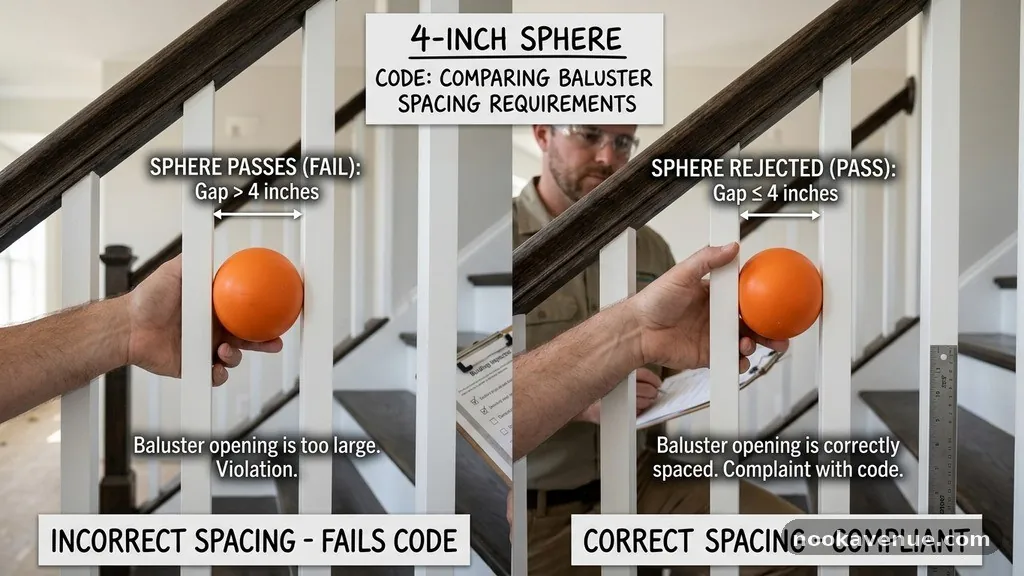
Understanding the nuances of various building components helps clarify why the 4-inch rule is part of a larger safety framework. The following table highlights how different parts of a staircase or balcony are regulated to ensure safety.
| Component | Standard Requirement | Safety Purpose |
|---|---|---|
| Baluster Spacing | Must reject 4-inch sphere | Prevents head entrapment |
| Triangle at Stair Tread | Must reject 6-inch sphere | Prevents limb/head entrapment |
| Guardrail Height | Minimum 36 inches | Prevents accidental falls |
| Handrail Height | 34 to 38 inches | Provides steady support |
Baluster Installation Best Practices
Proper installation is the only way to guarantee that your railing system will pass the 4-inch sphere test. Start by laying out your spacing on the floor before attaching the balusters to the rail. This allows you to adjust the spacing incrementally across the entire length of the deck or stair.
If you find that your layout leaves a tiny gap at the end that is slightly larger than 4 inches, you must adjust the spacing of every baluster in that run. Do not simply add a wider gap at the end to make it fit. Uniformity is not just for aesthetics; it ensures that every single opening is safe.
Consider the thickness of your materials carefully. A decorative baluster might have a wide base but a narrow middle.
The 4-inch sphere test applies to the widest opening, which is usually the narrowest point between the balusters. Always measure at the most open point to be safe.
Common Mistakes to Avoid
Many builders make the mistake of measuring from the center of one baluster to the center of the next. This is a fatal error that will almost always result in an opening that is too wide. Always measure the clear air space between the two closest points of adjacent balusters.
Another mistake is failing to account for the thickness of the railing finish. If you are painting or staining your wood, the thickness of the paint can slightly decrease the opening. While this might seem like it makes the gap safer, it can also hide poor craftsmanship that might be exposed if the wood shrinks.
Do not forget the bottom rail. The space between the bottom rail and the deck surface or stair tread is a common place for the 4-inch sphere to slip through. Ensure that your bottom rail is installed at a height that either allows the sphere to pass underneath (if designed for cleaning) or, more commonly, is close enough to the surface that the sphere cannot fit.
Frequently Asked Questions
Is a 4-inch sphere the only measurement I need to worry about?
While the 4-inch sphere is the most critical measurement for balusters, you must also consider the height of the guardrail itself, which is typically required to be at least 36 inches tall for residential decks. Additionally, the triangular opening at the bottom of a stair riser has a slightly different allowance, often up to 6 inches, to account for the geometry of the steps.
What if my local code is different from the national standard?
Always defer to your local building department’s requirements. While most states adopt the IRC, some jurisdictions have stricter amendments. If your local inspector requires a 3.5-inch opening, the 4-inch sphere will fail, and you must comply with the stricter local rule.
Can I use cable railing if the cables stretch over time?
Yes, but you must use high-quality hardware that allows for tensioning. You should also install intermediate vertical supports or cable stabilizers every few feet to prevent the cables from being pulled apart by more than 4 inches under pressure.
Does the 4-inch sphere rule apply to porch railings?
Yes, the rule applies to any guardrail system where there is a drop-off, including porches, decks, balconies, and stairs. If the porch is elevated above the ground, the safety requirements for guards are mandatory to prevent falls and entrapment.
How do I test my own railing for compliance?
You can purchase a 4-inch diameter ball or simply cut a 4-inch circle out of a piece of plywood. Use this template to check every gap between your balusters. If the template passes through any opening, that section is not compliant and needs to be adjusted.
Conclusion
The 4-Inch Sphere Code remains one of the most effective safety regulations in residential construction. By requiring that no opening in a railing allows a 4-inch ball to pass through, builders and homeowners create a secure environment that prevents tragic accidents. Whether you are installing wood, metal, or cable, the principle of the clear opening is non-negotiable.
Always prioritize uniform spacing and check your work with a physical template throughout the installation process. If you are ever in doubt about the specific requirements for your local area, reaching out to your municipal building department is the best way to ensure your project is both compliant and safe. Investing the time to get the spacing right today will provide peace of mind for years to come.