
10 Modern Bedroom Ideas with Cozy Hotel Vibes
There is something special about walking into a beautiful hotel bedroom after a long day. The bed looks inviting, the lighting feels soft, the colors are calm, and every detail seems intentionally placed. That atmosphere doesn’t require a luxury hotel suite, though. With the right combination of materials, lighting, bedding, and layout, a regular bedroom can capture that same sense of comfort at home.
The secret is less about buying expensive furniture and more about creating a layered bedroom experience. Hotels often rely on a restrained color palette, substantial bedding, symmetrical furniture, soft lighting, quality-looking textures, and clear surfaces. These choices make the room feel polished without making it feel overly decorated.
I’ve noticed that one of the biggest differences between an ordinary bedroom and a hotel-inspired space is how the room handles the area around the bed. Instead of treating the bed as just another piece of furniture, hotel-style decorating makes it the visual anchor. A substantial headboard, layered pillows, coordinated bedside tables, and warm lighting can instantly make the entire room feel more intentional.
Modern design adds another advantage. Clean silhouettes, warm neutrals, natural wood, subtle artwork, and uncluttered surfaces keep the bedroom feeling fresh rather than traditional or overly formal.
Whether you’re decorating a primary bedroom, guest room, apartment bedroom, or smaller space, these ideas can be adapted to fit your home. Some changes are as simple as upgrading the bedding arrangement or adding bedside lighting, while others involve furniture, wall treatments, or a more complete redesign.
The goal isn’t to make your bedroom look like a hotel showroom. It’s to borrow the details that make hotel rooms feel restful and combine them with the comfort, personality, and practicality of home.
Table of Contents
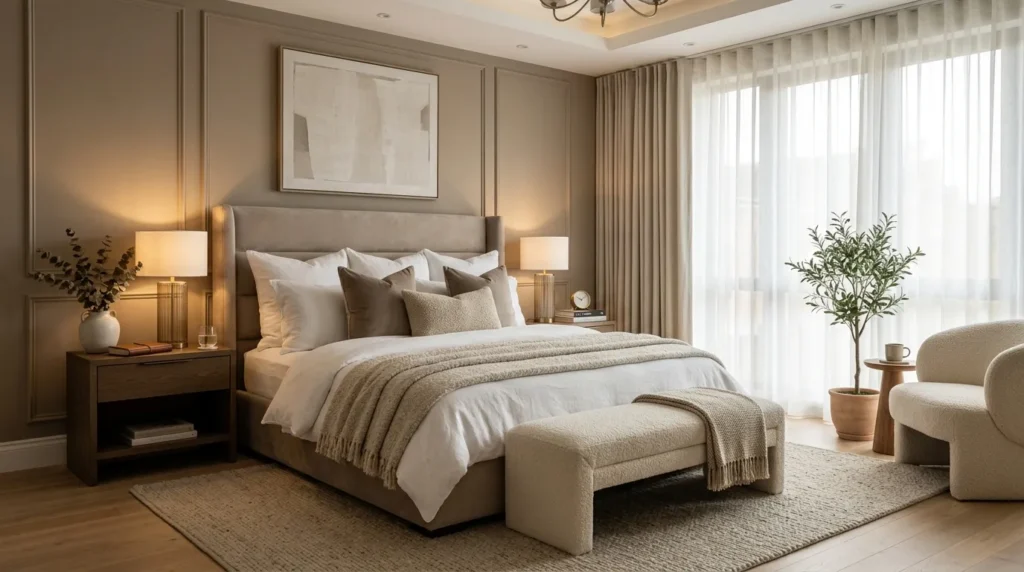
1. Layered Bedding
Create a plush, inviting bed with coordinated layers of sheets, pillows, blankets, and a duvet.
2. Upholstered Headboard
Use a substantial upholstered headboard to give the bed a polished centerpiece and softer appearance.
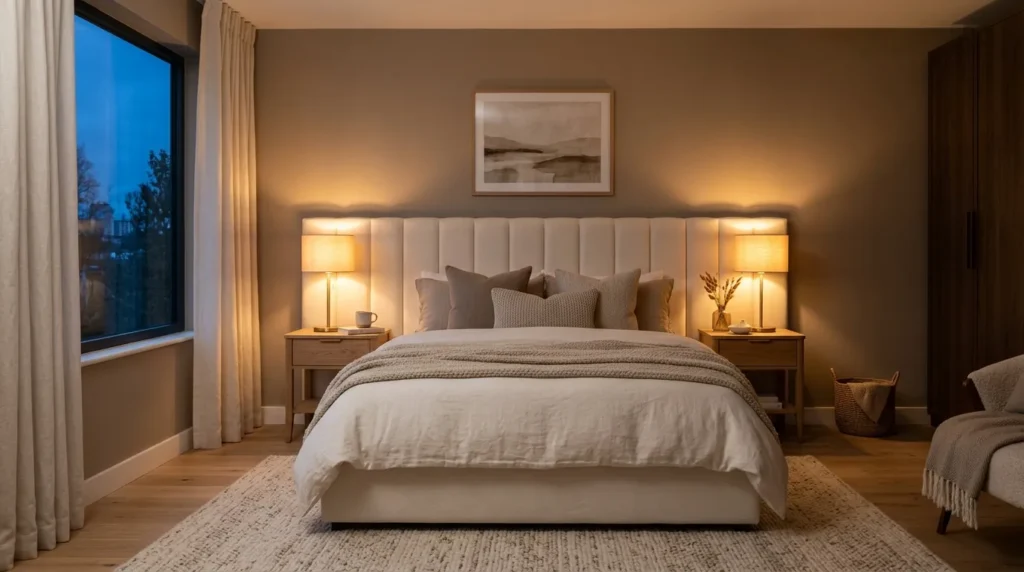
3. Warm Bedside Lighting
Create a relaxing nighttime atmosphere with strategically placed lamps and warm illumination.
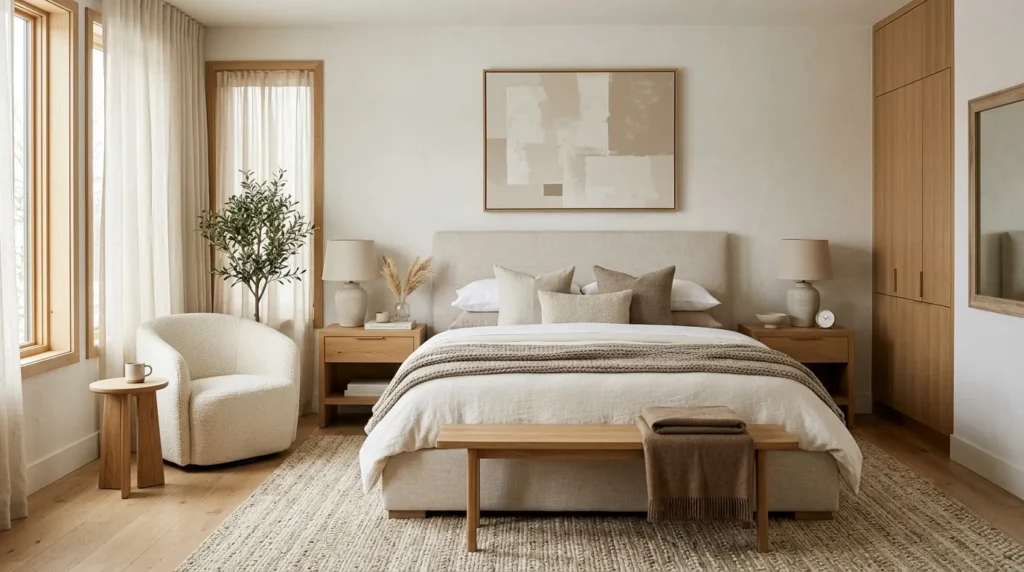
4. Soft Neutral Palette
Build a calm bedroom using creams, taupes, warm whites, beige, and other understated tones.
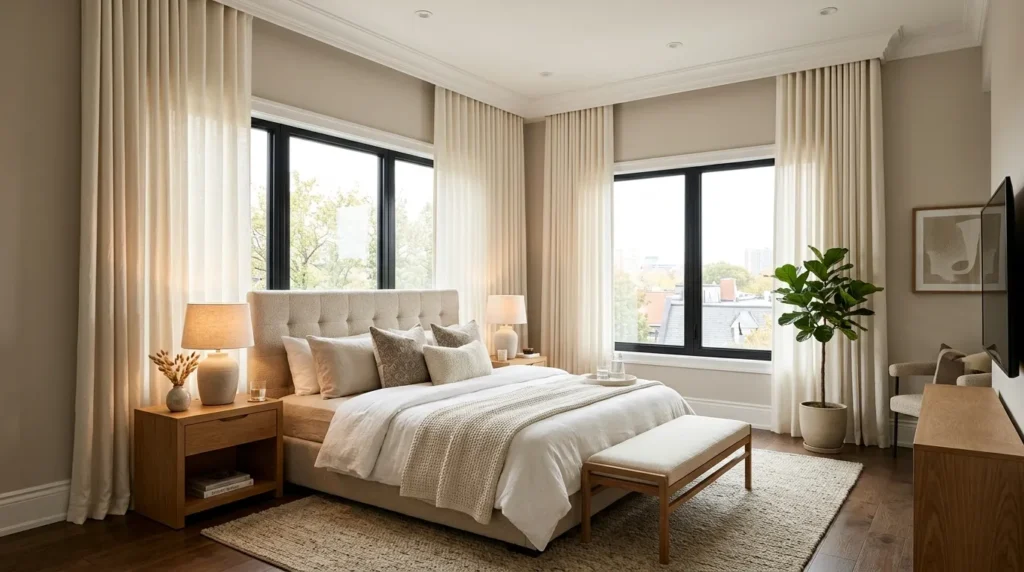
5. Floor-To-Ceiling Curtains
Use generous window treatments to add softness, height, privacy, and a finished appearance.
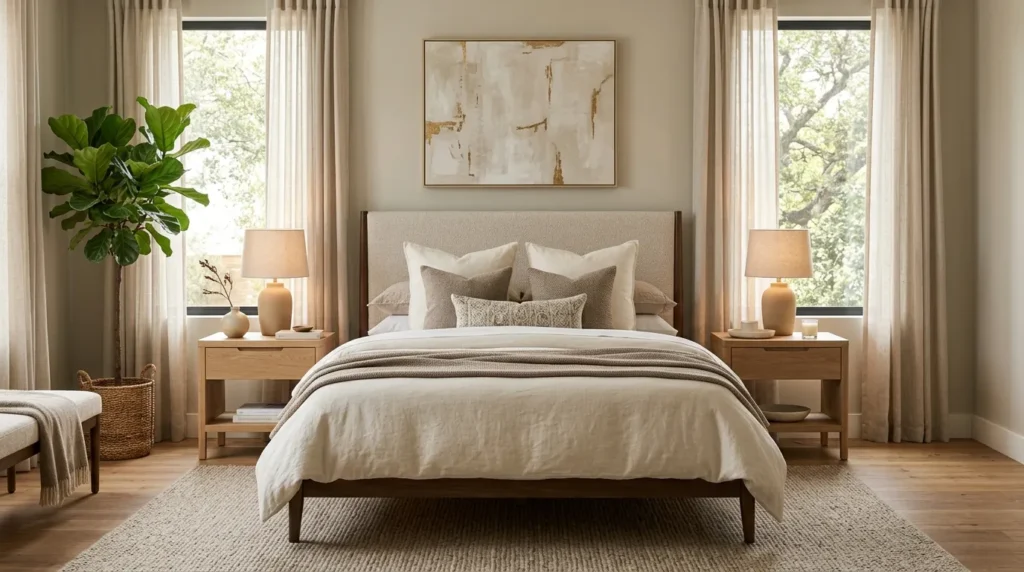
6. Symmetrical Nightstands
Create a balanced hotel-inspired arrangement by coordinating the furniture and accessories around the bed.
7. Plush Area Rug
Add softness underfoot with a properly sized rug that visually connects the major bedroom furniture.
8. Minimal Wall Art
Use a few carefully selected artwork pieces to add personality without creating visual clutter.
9. Cozy Seating Corner
Create a small retreat within the bedroom with an accent chair, bench, or compact reading area.
10. Clutter-Free Styling
Keep surfaces edited and organized so the bedroom feels peaceful, polished, and easy to maintain.
1. Layered Bedding
Quick Benefits
- Makes the bed look more inviting
- Adds softness and visual depth
- Creates a polished hotel-inspired appearance
- Allows easy seasonal changes
- Improves everyday comfort
Why It Works
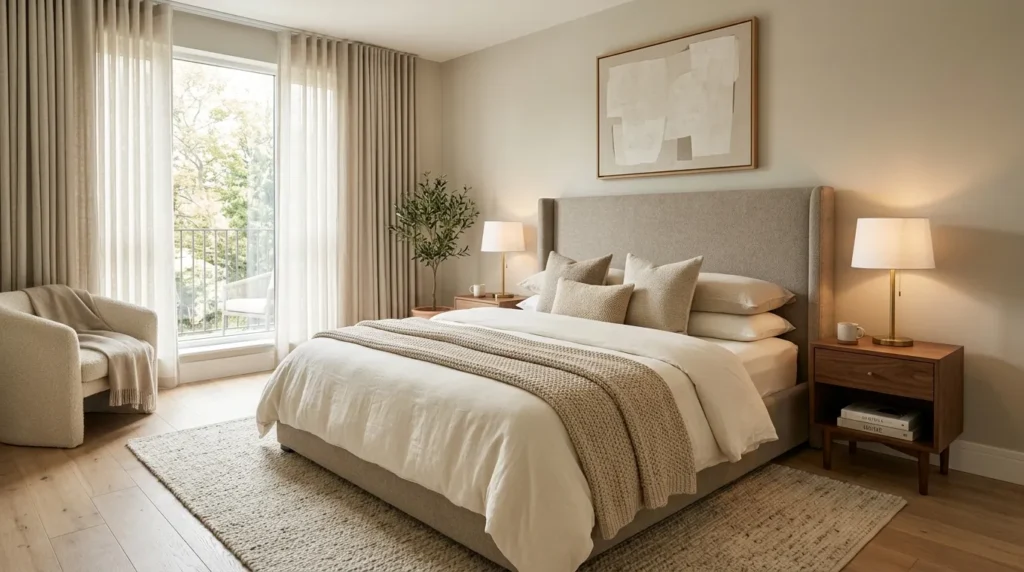
The bed is usually the largest visual element in a bedroom, so bedding has an enormous influence on the room’s overall appearance. Hotel-inspired rooms often look luxurious because the bed contains several carefully coordinated layers rather than one flat comforter.
A simple combination of crisp sheets, a substantial duvet, sleeping pillows, decorative pillows, and a folded throw can create that same effect at home. The key is coordination rather than excessive decoration.
Texture also matters. Smooth cotton sheets paired with a quilted coverlet, linen accent pillows, and a soft throw create subtle contrast while maintaining a calm palette.
A common mistake is using too many decorative pillows simply because hotel rooms sometimes display several. At home, choose enough to create fullness without making bedtime a chore.
How To Style It
Start with comfortable sheets in white, ivory, cream, or another soft neutral. Add a duvet or comforter with enough volume to create a relaxed, substantial appearance.
For a polished arrangement, place sleeping pillows against the headboard, followed by two larger decorative pillows and one or two smaller accent cushions. A lumbar pillow can provide a streamlined finishing layer.
Fold a textured blanket or quilt across the lower third of the bed. This creates a horizontal visual line that makes the bedding look styled without requiring additional color.
For an upscale modern look, keep most bedding within the same neutral family. Cream, warm white, beige, taupe, and soft gray can work beautifully together.
If you prefer a slightly warmer bedroom, add camel, muted brown, or dusty olive through one small accent.
Choose washable materials and bedding that suit your actual routine. The most beautiful bed arrangement is still practical when it can be maintained easily.
2. Upholstered Headboard
Quick Benefits
- Makes the bed a strong focal point
- Adds softness and comfort
- Creates a finished appearance
- Helps frame bedside furniture
- Works with modern and transitional styles
Why It Works
A substantial headboard is one of the easiest ways to give a bedroom a more sophisticated appearance. Hotel rooms frequently use upholstered headboards because they visually anchor the bed while adding softness and a sense of comfort.
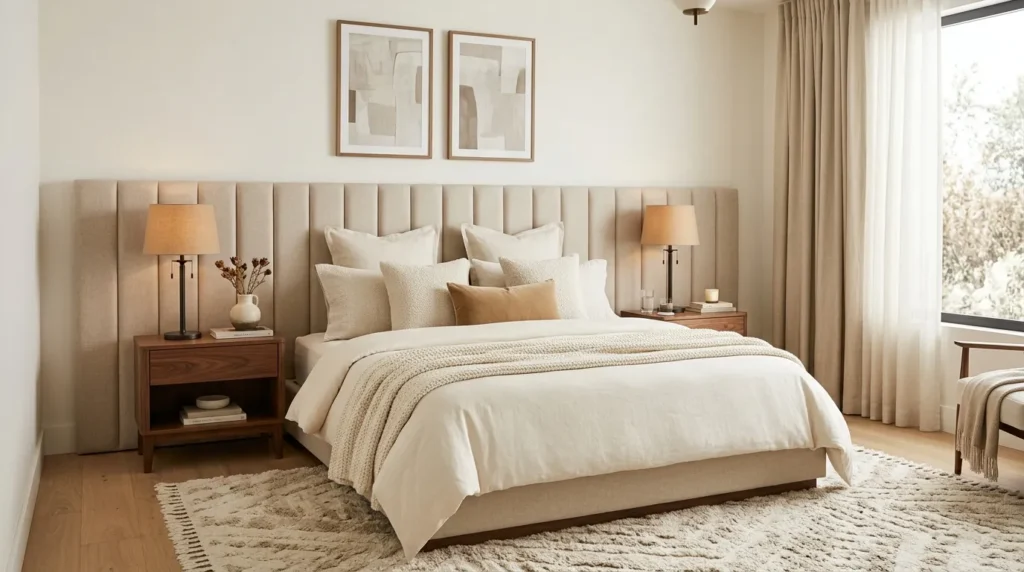
For a modern bedroom, clean lines are particularly effective. A tall rectangular headboard in beige, cream, taupe, gray, or textured fabric can create an elegant backdrop without overwhelming the room.
An upholstered headboard also helps introduce texture. Boucle, linen, velvet, and woven upholstery each create a different atmosphere, while a neutral color keeps the overall design versatile.
The scale matters. A headboard that is too small can disappear behind the bedding, while one that extends noticeably above the pillows can make the bed feel more substantial.
How To Style It
For a contemporary hotel-inspired bedroom, consider a tall upholstered headboard with simple vertical or horizontal lines.
A wide headboard can visually connect the two bedside tables and make the bed wall feel more cohesive. If the room is narrow, a headboard with a relatively simple silhouette can provide impact without making the space feel crowded.
Pair cream or beige upholstery with warm wood nightstands for an inviting combination. If you prefer a more dramatic room, choose a taupe or charcoal headboard against a lighter wall.
Avoid introducing too many patterns around the headboard. Let the texture and scale of the piece create the visual interest.
If you’re working with a rental, a freestanding headboard can transform the bedroom without permanent wall modifications.
For a budget-conscious update, a padded headboard can sometimes make a larger difference than replacing the entire bed frame.
3. Warm Bedside Lighting
Quick Benefits
- Creates a relaxing evening atmosphere
- Adds symmetry around the bed
- Provides useful reading light
- Makes the bedroom feel more polished
- Adds warmth to neutral interiors
Why It Works
Lighting is one of the most important details in a hotel-inspired bedroom. A beautiful room can feel completely different under harsh overhead lighting, while warm, layered illumination creates a softer and more relaxing environment.
Bedside lamps are particularly effective because they bring light closer to eye level. This creates a comfortable glow around the bed rather than illuminating the entire room equally.
Hotels also tend to use multiple lighting sources instead of depending on a single ceiling fixture. That approach gives you control over the atmosphere at different times of day.
A modern bedroom benefits from fixtures that are simple but sculptural. Ceramic bases, linen shades, brushed metal, glass, and matte finishes can all complement a sophisticated neutral palette.
How To Style It
Place a lamp on each side of the bed when the layout allows. Matching lamps create the classic symmetrical appearance associated with hotel rooms, but complementary fixtures can also work.
Choose shades that soften the light rather than exposing an overly bright bulb. Position reading lights where they illuminate the bedside area without shining directly into your eyes.
Add another light source across the room, such as a floor lamp or small table lamp. This helps distribute illumination throughout the space.
For evening ambiance, use warm-toned lighting that makes bedding and wood finishes look richer.
If your nightstands are small, wall-mounted sconces can free up valuable surface area. They’re especially useful beside narrow beds or compact nightstands.
Keep switches accessible from the bed when possible. Beautiful lighting becomes much more useful when you can control it without getting up.
4. Soft Neutral Palette
Quick Benefits
- Creates a calm visual environment
- Makes the bedroom feel sophisticated
- Works with many furniture styles
- Makes texture more noticeable
- Supports seasonal decorating changes
Why It Works
A restrained color palette is one of the strongest characteristics of hotel-inspired bedrooms. Neutral colors allow the eye to rest and help the room feel organized.
Warm white, ivory, beige, taupe, mushroom, soft gray, and muted brown can create a sophisticated foundation. Instead of choosing one shade for everything, combine several related tones.
For example, warm white walls can pair with a beige upholstered headboard, cream bedding, light oak furniture, and taupe accents. The colors remain subtle, but the room doesn’t feel flat because the materials and values vary.
Neutral colors also make it easier to change small details throughout the year. A heavier throw in winter or lighter linen accents in summer can alter the mood without requiring a full redesign.
How To Style It
Begin with the largest surfaces: walls, flooring, and the bed. Choose a dominant light neutral, then add one or two supporting tones.
Use texture to prevent the room from becoming bland. Linen curtains, a woven bench, a wool rug, or a boucle chair can create visual interest without introducing strong color.
For contrast, add small amounts of brown, black, or deeper taupe. Darker bedside lamps, picture frames, or furniture legs can ground the room.
If you prefer a cooler modern look, combine soft gray with cream and light natural wood. If you want a warmer atmosphere, use beige, camel, and walnut.
Test paint colors under both daylight and evening lighting before committing. Neutral colors can shift noticeably depending on the light in the room.
5. Floor-To-Ceiling Curtains
Quick Benefits
- Makes ceilings appear taller
- Adds softness around windows
- Provides privacy
- Improves the room’s finished appearance
- Creates a luxurious visual layer
Why It Works
Window treatments can dramatically influence how finished a bedroom looks. Hanging curtains close to the ceiling and allowing them to fall generously toward the floor creates a more substantial, tailored appearance.
Hotel rooms often use full window treatments because they need to manage light, privacy, and atmosphere. Bringing that idea home can make an ordinary bedroom feel more intentional.
Curtains also add a valuable layer of texture. Linen, cotton, velvet, and woven fabrics can soften hard window frames and create a more comfortable visual environment.
The important factor is fullness. Curtains that barely cover the window can make the room feel unfinished, while generous panels create a more elegant frame.
How To Style It
Mount the curtain rod several inches above the window frame when the room’s architecture allows. Extending the rod beyond the window can also make the window appear wider.
Choose panels that reach the floor. A slight break at the bottom can create a relaxed look, while a cleaner floor-length finish feels more tailored.
For a modern hotel-inspired bedroom, try ivory, warm white, oatmeal, beige, or soft taupe curtains.
If controlling daylight is important, layer decorative curtains with blackout shades or lined panels.
Avoid overly busy patterns if the rest of the room already contains several textures. Solid fabrics allow the bedding and furniture to remain the focus.
In a small bedroom, lighter curtains can help maintain an open appearance while still adding softness.
6. Symmetrical Nightstands
Quick Benefits
- Creates visual balance
- Frames the bed
- Provides practical storage
- Makes styling easier
- Reinforces a polished hotel aesthetic
Why It Works
Symmetry is one of the simplest design principles to use in a bedroom. Matching or visually balanced nightstands on either side of the bed immediately create a sense of order.
This is especially noticeable because the bed is naturally centered within the room. When the furniture around it follows that same structure, the entire bedroom feels more intentional.
Symmetry doesn’t require every object to be identical. You can use matching nightstands but introduce slightly different accessories, or choose complementary pieces that have similar proportions.
The practical advantage is just as important. Each person has an accessible place for a lamp, book, phone, water, or other nighttime necessities.
How To Style It
Choose nightstands with enough surface area for the items you actually use. Drawers or cabinets are helpful when you want to keep small objects hidden.
Place a lamp on each side of the bed, then add one or two simple accessories such as a small ceramic vessel, framed photograph, or book.
Avoid filling every inch of the nightstand. Open space contributes to the calm hotel-inspired appearance.
For a modern look, pair wood nightstands with an upholstered headboard. If the room already contains several warm wood elements, consider a painted or stone-look bedside table for contrast.
If the bedroom is very small, floating nightstands can provide a similar visual effect while leaving more floor area visible.
Keep charging cables organized and out of sight when possible. Small practical details make a surprisingly large difference in maintaining a polished room.
7. Plush Area Rug
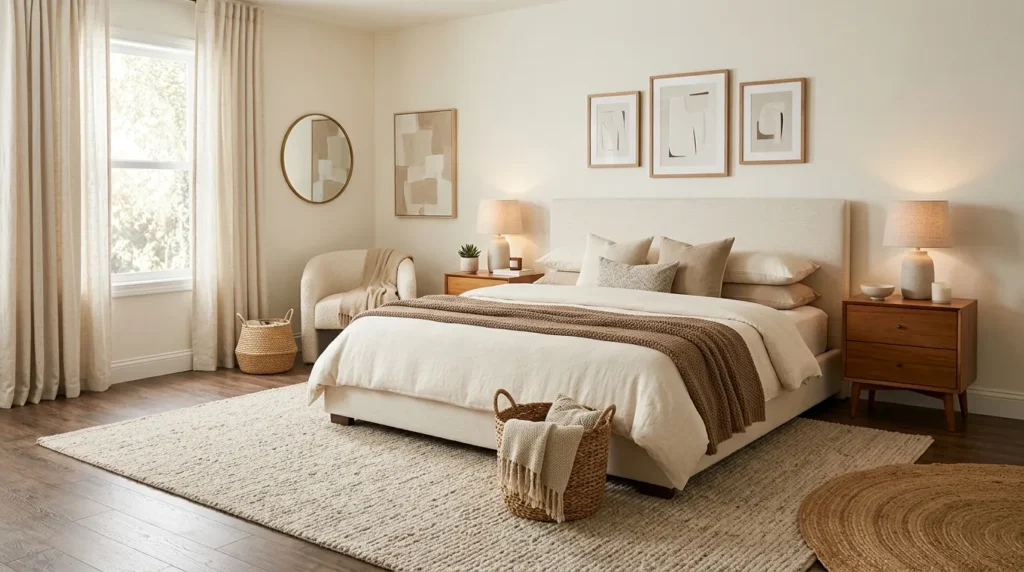
Quick Benefits
- Adds warmth underfoot
- Softens hard flooring
- Defines the bed area
- Adds texture
- Makes the room feel more comfortable
Why It Works
A bedroom can have beautiful furniture and bedding yet still feel incomplete when the floor is left visually disconnected from the rest of the design.
An area rug helps solve that problem by creating a soft foundation beneath the bed and nearby furniture. It also introduces another layer of texture, which is especially useful in neutral rooms.
The size matters more than many people realize. A rug that is too small can make the bed look disconnected from the room. A larger rug extending beyond the sides and foot of the bed creates a more cohesive arrangement.
Soft neutrals work particularly well with hotel-inspired decorating. Cream, oatmeal, beige, taupe, and muted patterns can complement the bedding without competing with it.
How To Style It
For a larger bedroom, position a generously sized rug beneath the bed so it extends beyond both sides and toward the foot.
If a large rug isn’t practical, runners can be placed on either side of the bed. This creates softness underfoot while using less material.
Choose a low-pile option if doors need to swing over it. For a more luxurious feeling, a plush pile can work in areas with adequate clearance.
Match the rug to the room’s overall temperature. A warm beige rug can make a cooler bedroom feel cozier, while a soft gray-beige can support a more contemporary palette.
If the room already contains heavily textured bedding and curtains, choose a rug with subtle texture rather than a dramatic pattern.
8. Minimal Wall Art
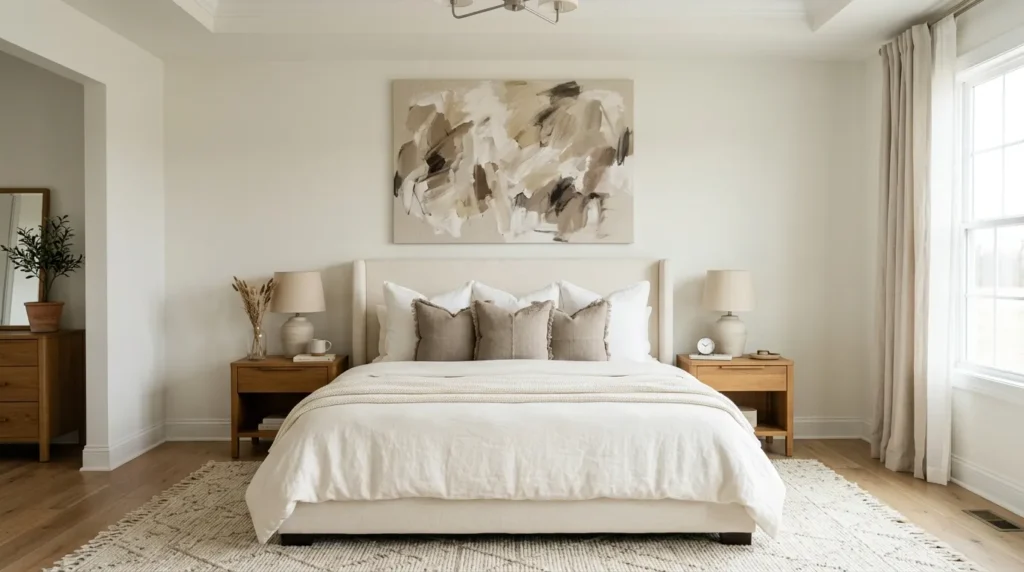
Quick Benefits
- Adds personality
- Creates a finished wall
- Reinforces the color palette
- Prevents visual clutter
- Provides an opportunity for focal points
Why It Works
Hotel rooms often use artwork sparingly. Instead of covering every wall, they rely on a few larger pieces that complement the overall room.
That approach works beautifully in modern bedrooms because the bed, headboard, and bedding already create a strong focal point. Artwork can support the design without competing with it.
Abstract forms, landscape photography, botanical artwork, architectural prints, and simple line drawings can all work with neutral interiors.
The key is scale. One small print floating above a large headboard can feel undersized. A larger piece or a pair of coordinated prints usually creates stronger visual balance.
How To Style It
Choose artwork that repeats one or two tones already present in the room. Beige, cream, charcoal, olive, brown, and muted clay can connect naturally with neutral bedding and furniture.
For a symmetrical arrangement, place matching or coordinated artwork on either side of the bed.
Alternatively, use one large horizontal piece above the headboard.
Keep frames simple. Natural wood works well in warm rooms, while black or dark bronze can provide contrast.
Don’t feel obligated to fill every wall. Leaving some areas blank gives the bedroom a more relaxed and spacious appearance.
If you enjoy changing decor, use easily replaceable artwork so you can update the mood without altering the room’s main furniture.
9. Cozy Seating Corner
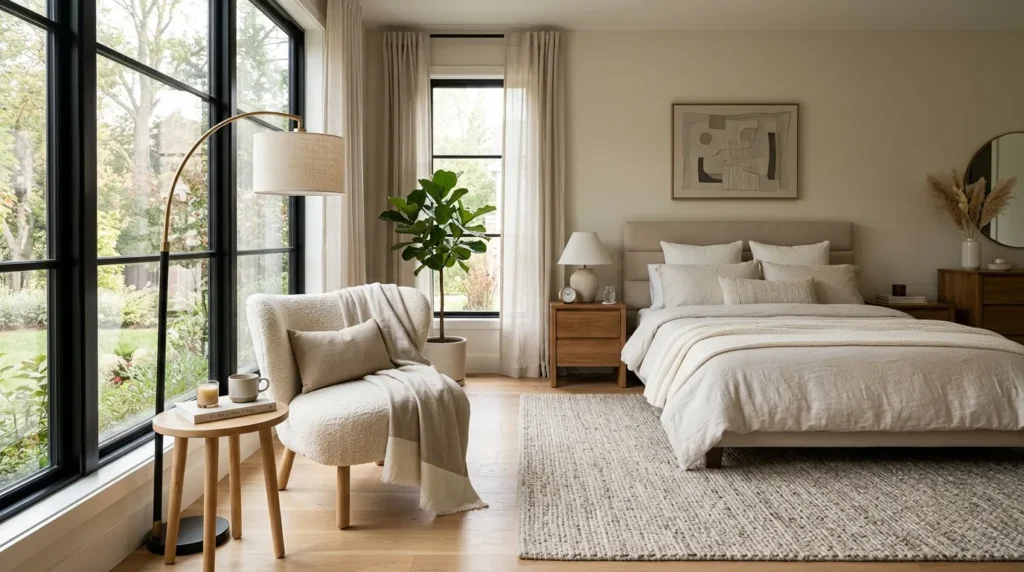
Quick Benefits
- Creates a secondary relaxation area
- Makes larger bedrooms feel complete
- Adds personality
- Provides a useful reading spot
- Makes the bedroom feel more like a private retreat
Why It Works
A bedroom with enough space for a small seating area can feel much more luxurious when the area is intentionally designed.
Hotels frequently provide a chair or small lounge area because it gives guests a place to sit without using the bed. The same principle can make a primary bedroom more functional.
A seating corner doesn’t have to be large. A comfortable chair beside a window, a small bench at the foot of the bed, or a compact accent chair beside a floor lamp can create a useful secondary zone.
The important thing is giving the area a purpose. A chair with a small table and reading lamp feels intentional, while a random chair pushed into an empty corner can look unfinished.
How To Style It
Choose seating that complements the bed rather than trying to match it perfectly.
A cream boucle chair can soften a room with wood furniture, while a leather chair can introduce warmth and contrast.
Place a small side table next to the chair for a book, drink, or lamp. Add a floor lamp if the area is used for reading.
A small rug can visually define the corner, especially in a large bedroom with an open floor plan.
For a compact bedroom, consider a narrow upholstered bench at the foot of the bed. It provides seating without consuming as much visual space as a full chair.
Keep the styling simple. One cushion, a folded throw, or a small plant can be enough.
10. Clutter-Free Styling
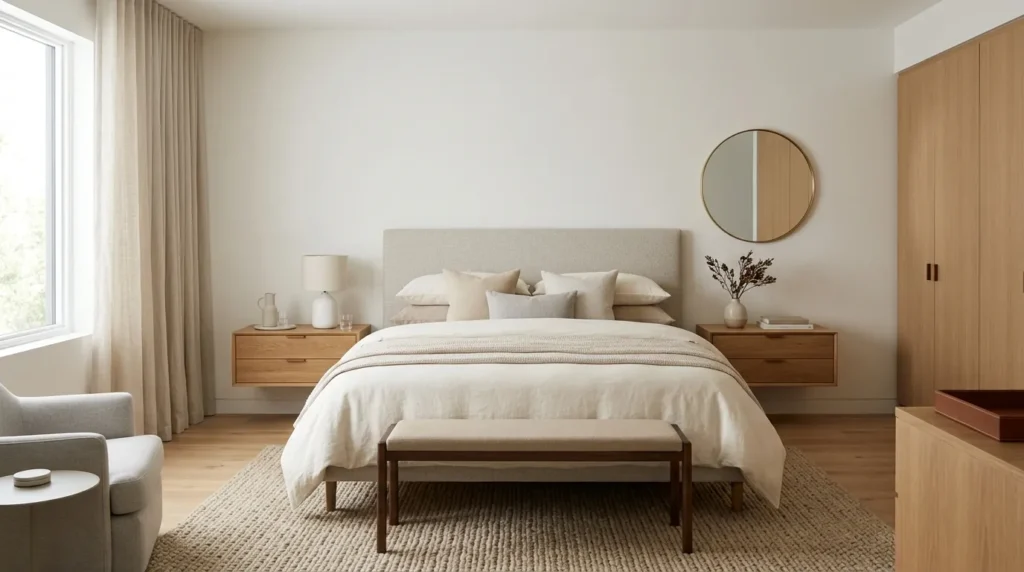
Quick Benefits
- Creates a calmer atmosphere
- Makes the room easier to maintain
- Highlights important furniture
- Improves visual organization
- Reinforces modern design
Why It Works
A hotel bedroom often feels relaxing partly because the room has been carefully edited. There are functional objects, but unnecessary clutter is kept out of sight.
That principle is extremely useful at home. A modern bedroom can have beautiful furniture and bedding, but piles of clothing, crowded nightstands, tangled cables, and overloaded surfaces can quickly change the atmosphere.
Clutter-free decorating doesn’t mean owning very few things. It means giving everyday items appropriate storage and leaving visual breathing room around the room.
This is particularly valuable in bedrooms because the space is associated with rest. A calmer visual environment can make the room feel more peaceful at the end of the day.
How To Style It
Start with visible surfaces. Keep bedside tables limited to practical necessities and a few decorative pieces.
Use baskets for blankets and textiles. Storage benches can hide extra bedding, while dressers and nightstands keep smaller belongings contained.
Create a designated place for clothing that has been worn but isn’t ready for the laundry. A bedroom chair can quickly become a clothing pile if it doesn’t have a clear function.
Keep electronics organized with cable-management solutions suited to your furniture.
On open shelves, display fewer objects and allow empty space between groups.
Before adding new decor, remove something you no longer love. This simple habit keeps the room from gradually becoming overcrowded.
The final goal is a bedroom that feels beautiful when you walk into it and easy to reset at night.
How to Create a Hotel-Inspired Bed
The bed is the centerpiece of this decorating style, so it deserves extra attention.
Start with the mattress and foundation because comfort comes before appearance. Then build outward with bedding.
A polished arrangement can include:
- Fitted sheet
- Flat sheet
- Duvet or comforter
- Sleeping pillows
- Larger decorative pillows
- Smaller accent pillow
- Folded throw or blanket
The exact number isn’t important. The visual hierarchy is.
Keep the largest layers relatively simple, then add interest through texture. A quilted coverlet, linen pillowcase, woven throw, or subtle stripe can provide variation.
For a modern hotel appearance, white and cream bedding remain reliable choices. They create a clean backdrop and allow other materials to become more noticeable.
If you prefer color, muted taupe, beige, sage, dusty blue, or warm brown can be introduced without overwhelming the room.
One practical consideration is laundry. Choose a bedding arrangement you can realistically maintain. A beautiful bed that takes fifteen minutes to dismantle every morning may not fit your lifestyle.
Modern Bedroom Lighting Layers
A bedroom feels much more sophisticated when lighting is distributed throughout the room.
Ambient Lighting
This is the general light used when you need to illuminate the entire bedroom. A ceiling fixture can provide it, but a dimmable option offers greater flexibility.
Task Lighting
Bedside lamps, reading sconces, and desk lamps provide focused illumination. These are particularly useful for reading or getting ready.
Accent Lighting
Accent lighting can highlight artwork, architectural details, or a specific corner.
The ideal combination lets you change the atmosphere depending on the time of day.
During the morning, brighter ambient light can help the room feel fresh. In the evening, bedside and floor lamps can create a much softer environment.
If you’re replacing fixtures, consider how the light itself looks as well as the fixture design. A beautiful lamp with harsh illumination won’t create the relaxing atmosphere associated with a comfortable hotel bedroom.
How To Make a Small Bedroom Feel Like a Hotel
Small bedrooms can still feel polished and luxurious when the layout is carefully edited.
Choose a bed that fits comfortably without consuming the entire room. A substantial headboard can still work, but avoid excessive surrounding furniture.
Use vertical space with tall curtains or a wall-mounted light. This draws the eye upward and keeps the floor clearer.
Floating nightstands are particularly useful in compact rooms. They provide a bedside surface while maintaining visible floor area.
Keep the palette light and warm. Cream, ivory, beige, and soft taupe can help the room feel open.
Mirrors can reflect daylight and make the space appear larger. Place them where they reflect an attractive part of the room rather than a cluttered corner.
Choose one major focal point. In most bedrooms, that focal point is the bed.
Avoid filling the room simply because there is an empty wall. Negative space can make a small bedroom feel more sophisticated.
Hotel-Inspired Bedroom Materials
Materials have a major influence on whether a bedroom feels luxurious or ordinary.
Linen
Relaxed and breathable-looking, linen adds texture and a natural quality.
Velvet
Velvet introduces richness and works particularly well through a headboard or accent chair.
Boucle
Boucle adds softness and visual interest to contemporary furniture.
Natural Wood
Wood warms up modern furniture and works with nearly every neutral palette.
Stone
Stone and stone-look surfaces add a sophisticated architectural element.
Wool
Wool rugs and throws bring softness and warmth, especially during cooler months.
Brass and Bronze
Warm metals can add subtle refinement to lamps, hardware, and small decorative details.
The most convincing interiors don’t use every material. Choose a few and repeat them thoughtfully.
FAQ
How can I make my bedroom look like a luxury hotel?
Focus on the bed, lighting, symmetry, and overall restraint. Use layered bedding, an upholstered headboard, matching or balanced nightstands, warm bedside lamps, floor-length curtains, and a coordinated neutral palette. Keep visible surfaces organized and use a few high-impact decorative pieces instead of filling the room with accessories.
What colors make a bedroom feel like a hotel?
Warm white, cream, beige, taupe, mushroom, soft gray, and muted brown are popular choices for a calm hotel-inspired bedroom. These shades create a neutral foundation that works well with wood, linen, stone, and warm lighting. Small amounts of olive, dusty blue, or muted clay can add personality without overwhelming the room.
How do I make my bed look professionally styled?
Use multiple layers rather than placing a single comforter on the bed. Start with neat sheets, add a full duvet or comforter, arrange sleeping pillows behind decorative pillows, and finish with a folded blanket or throw. Keep the colors coordinated and use different textures to create depth.
What type of lighting works best in a modern bedroom?
Layered lighting works best. Combine ambient ceiling lighting with bedside lamps, sconces, or floor lamps. Warm illumination generally creates a softer evening atmosphere. Dimmable fixtures provide additional control and allow the room to shift from bright and functional during the day to relaxed at night.
How do I decorate a bedroom without making it cluttered?
Start with functional storage and keep decorative objects limited. Give clothing, electronics, bedding, and personal items designated places. On nightstands and shelves, display only a few pieces that contribute to the room. Empty space is useful because it allows the furniture and important decorative details to stand out.
Are neutral bedrooms boring?
Neutral bedrooms can feel flat when every surface has the same color and texture. A layered neutral room uses differences in tone, material, shape, and lighting to create depth. Linen, wood, stone, boucle, wool, artwork, and subtle darker accents can make a neutral bedroom feel rich and visually interesting.
What furniture creates a hotel-inspired bedroom?
An upholstered bed or substantial headboard, coordinated nightstands, comfortable seating, a bench, and well-scaled lighting can create the strongest hotel-inspired effect. Furniture doesn’t have to match perfectly. Similar proportions, materials, and colors can create a cohesive appearance while still giving the room personality.
Conclusion
Creating a hotel-inspired bedroom at home is less about recreating a specific hotel and more about understanding why those spaces feel so comfortable.
Start with the bed. Layered bedding, a substantial headboard, and carefully arranged pillows immediately establish a polished focal point. Then build around it with warm lighting, balanced nightstands, soft curtains, and a comfortable rug.
Keep the color palette calm, but don’t let it become flat. Combine several neutral tones with natural wood, linen, wool, stone, boucle, or subtle metal accents. Texture can provide much of the visual interest without requiring bold colors.
The finishing touches matter, too. A few pieces of artwork, a comfortable chair, a beautiful lamp, or a simple ceramic vessel can give the room personality. At the same time, keeping unnecessary items out of sight helps preserve the peaceful feeling you’re trying to create.
You don’t have to renovate everything at once. Start with the detail that bothers you most or the feature that would make the biggest difference. Upgrade the bedding, improve the bedside lighting, add a larger rug, or introduce a more substantial headboard.
Build the room gradually, keeping comfort and everyday use at the center. The result can feel polished enough to resemble a boutique hotel while still feeling unmistakably like home.
Related Articles
- 10 Modern Bedroom Ideas with Hotel-Inspired Comfort
- 10 Cozy Bedroom Ideas for a Warm and Relaxing Space
- How to Decorate a Bedroom with Elegant Decor
- 10 Bedroom Wall Decor Ideas with Modern Wall Panels
- 10 Modern Cozy Aesthetic Bedroom Ideas