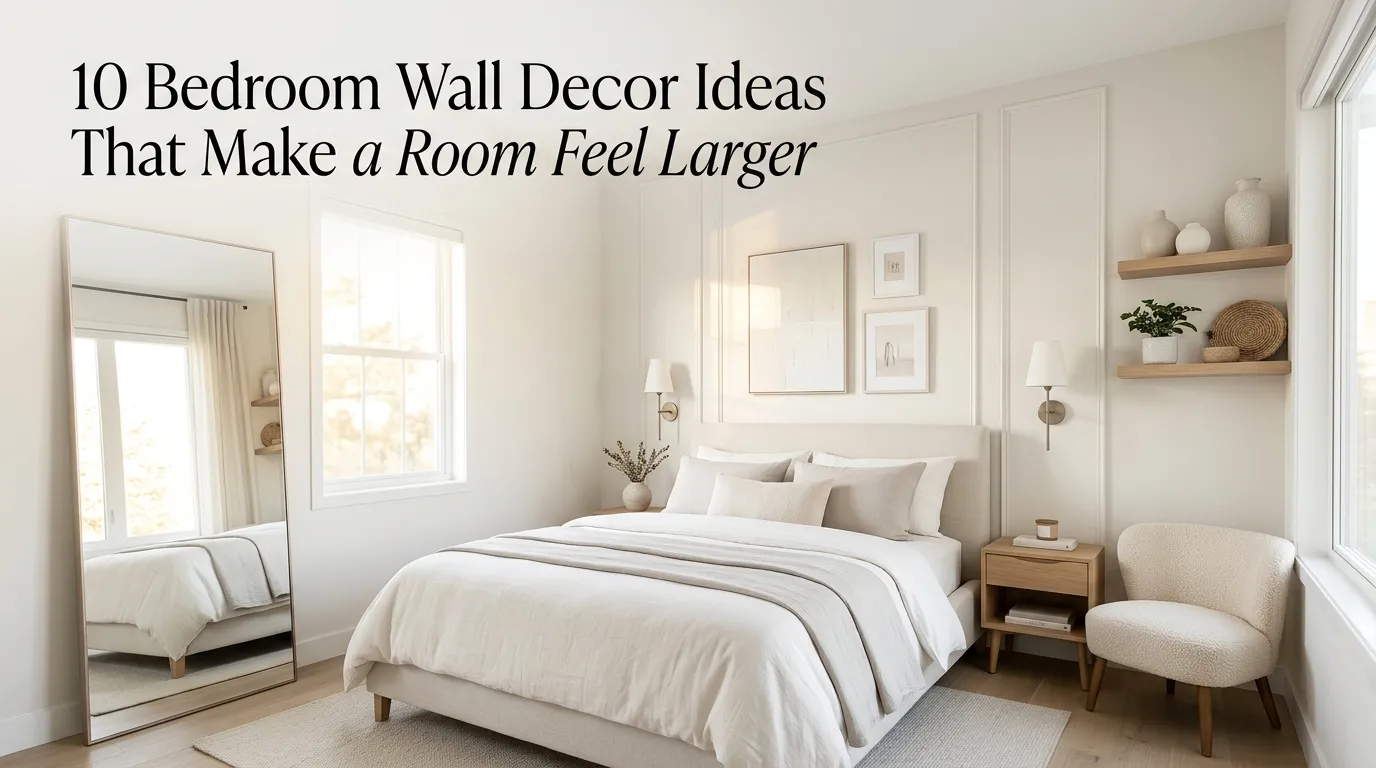
10 Bedroom Wall Decor Ideas That Make a Room Feel Larger
A small bedroom doesn’t always need more square footage to feel comfortable. Sometimes, the biggest difference comes from what happens on the walls.
The right wall decor can change how the eye moves through a bedroom, reflect more natural light, emphasize ceiling height, and create the impression of a more open layout. On the other hand, oversized clutter, poorly placed artwork, and too many small decorative pieces can make an already compact room feel visually crowded.
That’s why wall decorating deserves more attention than simply choosing something pretty to hang above the bed. Scale, placement, color, reflection, and negative space all influence how spacious a bedroom feels.
In my experience, one of the easiest ways to create a larger-looking bedroom is to make the walls work harder without filling every inch. A large mirror can bounce light around the room. Vertical artwork can draw the eye upward. A carefully chosen gallery arrangement can create one cohesive focal point instead of several competing ones. Even a light-colored accent wall can make a noticeable difference.
The good news is that these ideas can work in bedrooms of many sizes. Renters can use removable options, while homeowners can consider built-in features, paneling, paint, or permanent fixtures. You also don’t need a completely minimalist bedroom. The goal is to create visual breathing room, not an empty space.
Below are ten bedroom wall decor ideas that combine style with practical design logic. Each one is designed to help your bedroom feel brighter, taller, wider, or simply less cramped while maintaining a warm and modern appearance.
Table of Contents
1. Oversized Mirrors
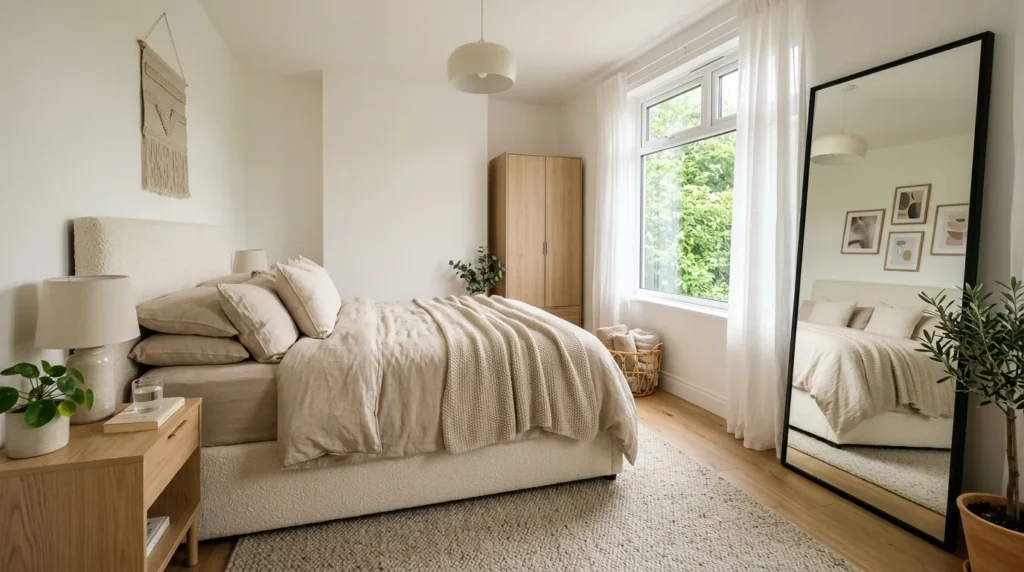
Use a large mirror to reflect light and visually expand the bedroom.
2. Vertical Artwork
Draw attention upward with tall artwork that emphasizes the height of the room.
3. Light Accent Walls
Use soft, bright wall colors to create an open and airy backdrop.
4. Wide Headboards
Choose a broad headboard to visually stretch the wall around the bed.
5. Floating Shelves
Add storage and personality while keeping the floor visually clear.
6. Large-Scale Artwork
Use one substantial artwork piece instead of many small decorations.
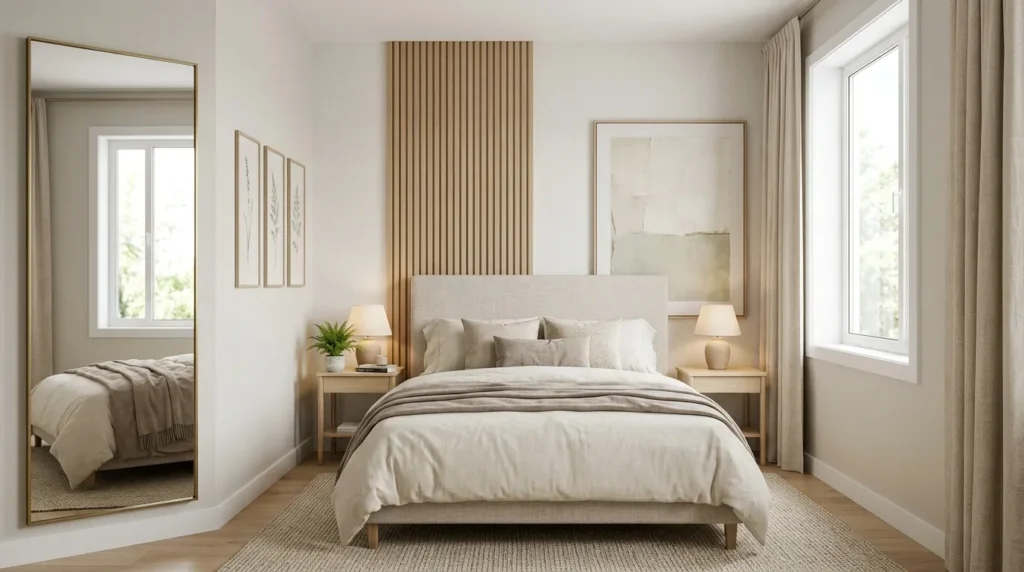
7. Vertical Wall Panels
Create architectural height with streamlined paneling and subtle texture.
8. Minimal Gallery Walls
Arrange a small collection of coordinated artwork into one organized focal point.
9. Wall-Mounted Lighting
Free up bedside surfaces while adding vertical visual interest.
10. Floor-Length Curtains
Use tall window treatments to make walls and ceilings appear more generous.
1. Oversized Mirrors
Quick Benefits
- Reflects natural and artificial light
- Creates a stronger sense of depth
- Can make walls appear wider
- Works in many decorating styles
- Adds function without taking floor space
Why It Works
Mirrors are among the most effective wall decor choices for a compact bedroom because they don’t simply decorate the wall—they visually extend the room.
When a mirror reflects a window, light-colored wall, or another attractive part of the bedroom, the reflection creates another visual layer. This can make the room feel deeper than it physically is.
Scale matters here. A tiny mirror may look attractive but have little impact on the overall perception of the room. A larger mirror can create a much stronger effect, especially when positioned where it captures daylight.
A common mistake is placing a mirror where it reflects clutter. The reflection effectively doubles whatever is already visible, so the surrounding area matters.
How To Style It
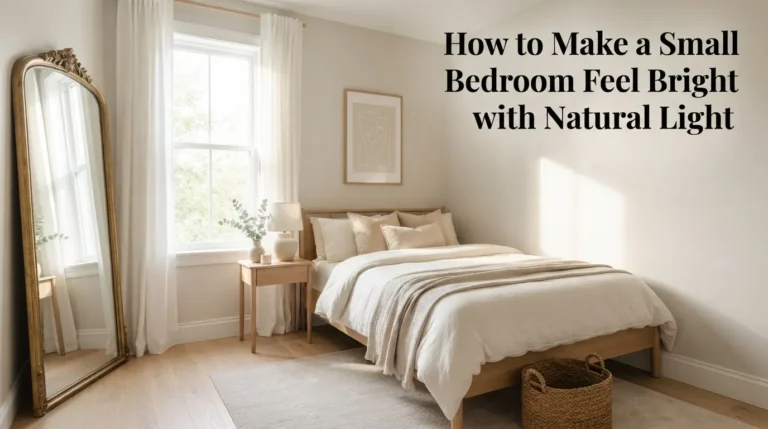
For maximum impact, choose a tall rectangular mirror and position it on a wall opposite or adjacent to a window. A full-length mirror leaning against the wall can work beautifully in a bedroom with enough floor space.
If you’re short on floor area, mount a large mirror directly onto the wall.
A wide horizontal mirror can make a narrow wall appear broader, while a tall vertical mirror can emphasize ceiling height.
Choose a frame that complements the existing room. Natural wood works well in warm modern bedrooms, while a thin black or bronze frame creates sharper contrast.
For a softer look, consider a frameless or rounded mirror.
Avoid covering every available wall with reflective surfaces. One substantial mirror usually creates more impact than several small ones.
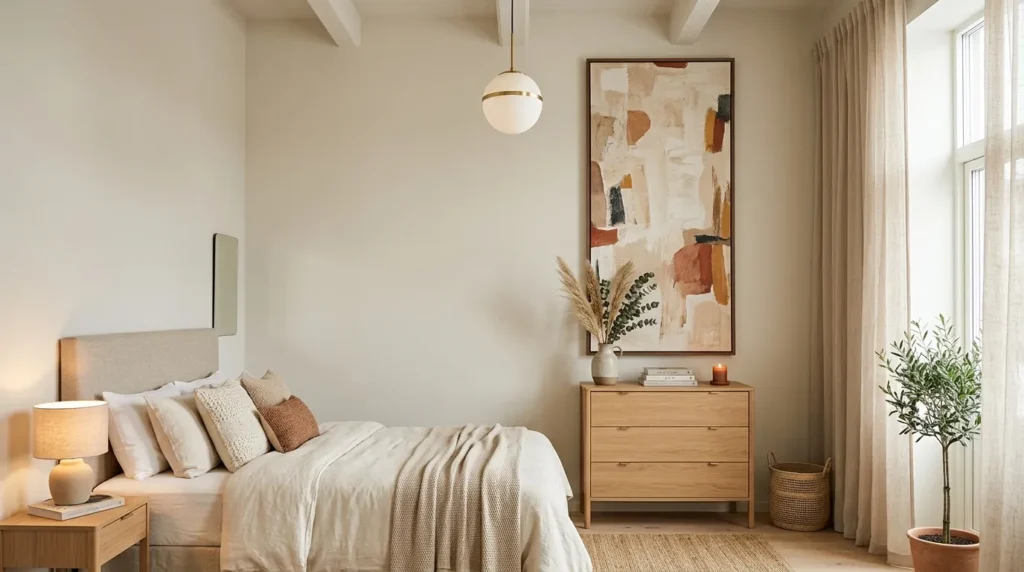
2. Vertical Artwork
Quick Benefits
- Draws the eye upward
- Emphasizes ceiling height
- Adds personality without floor clutter
- Works well in narrow spaces
- Creates a strong visual focal point
Why It Works
When a bedroom feels short or cramped, directing the eye vertically can change how the proportions are perceived. Tall artwork naturally encourages the gaze to move from the lower portion of the wall toward the ceiling.
This doesn’t mean every piece needs to be extremely tall. A portrait-oriented print, narrow pair of framed artworks, or vertically arranged collection can create a similar effect.
The technique works particularly well above a narrow dresser, beside the bed, or on a small wall where horizontal artwork might feel cramped.
Choose artwork with a relatively simple composition. Too much visual detail can counteract the spacious feeling you’re trying to create.
How To Style It
Look for tall artwork with generous negative space. Botanical illustrations, abstract compositions, architectural photography, and simple line art can all work well.
Place one tall piece above a dresser or console, keeping enough breathing room around it.
For a bedroom with matching bedside tables, consider narrow vertical artwork on each side of the bed. This creates symmetry while emphasizing the room’s height.
Keep the color palette relatively light. Cream, beige, soft gray, muted green, and warm brown can complement a neutral bedroom without visually weighing down the walls.
Use slim frames when possible. A thick, heavy frame can make the artwork appear more substantial than the room can comfortably support.
The goal is to create a vertical line that guides the eye upward rather than adding another large horizontal element.
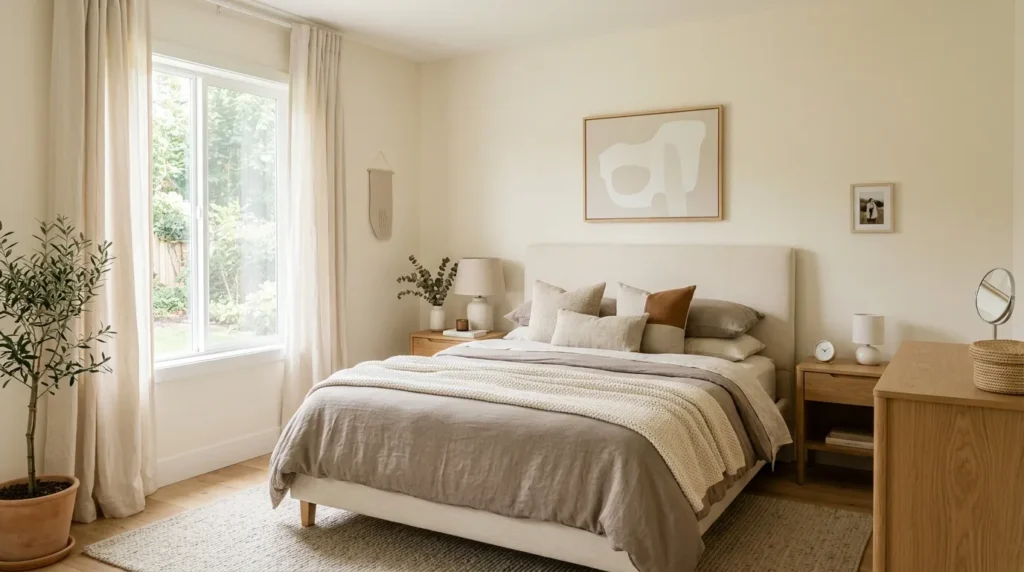
3. Light Accent Walls
Quick Benefits
- Creates an airy backdrop
- Makes the room feel brighter
- Adds visual interest without clutter
- Helps small rooms feel calmer
- Provides an easy foundation for other decor
Why It Works
Wall color can have a significant influence on how large a bedroom feels. Light shades reflect more available light and tend to create a softer visual boundary between surfaces.
Warm white, ivory, pale beige, light greige, and very soft sage can all work beautifully.
The important distinction is that a light wall doesn’t have to look stark. Warm undertones can keep the bedroom comfortable and inviting while maintaining a sense of openness.
Using a lighter tone behind the bed can also make darker furniture and artwork stand out without requiring many decorative objects.
If the bedroom receives limited natural light, choosing a highly reflective but warm neutral can help prevent the walls from feeling heavy.
How To Style It
Begin by considering the room’s natural light and existing finishes. Test paint samples at different times of day because neutral colors can shift considerably under different lighting.
For a warm modern bedroom, try ivory or soft beige. For a slightly cooler appearance, consider a pale greige.
Keep the ceiling light as well. A similar or lighter ceiling color can reduce visual interruption and make the room feel taller.
Once the wall color is established, keep wall decor relatively edited. One large mirror or artwork piece can provide enough contrast.
If you want an accent wall rather than painting the entire room, choose the wall behind the bed. A subtle color difference can define the sleeping area without visually shrinking the space.
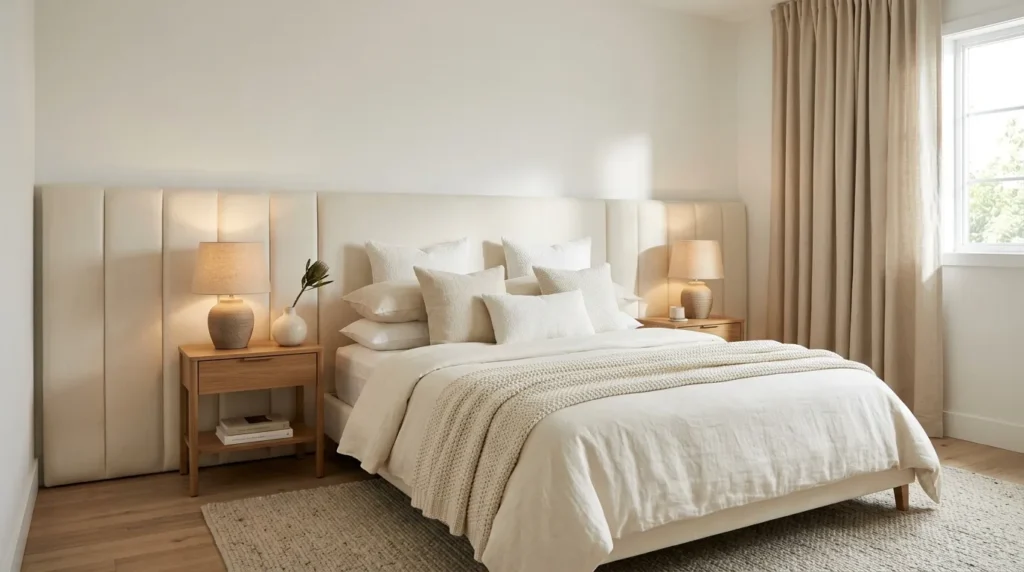
4. Wide Headboards
Quick Benefits
- Makes the bed wall feel wider
- Creates a strong focal point
- Adds softness and texture
- Frames bedside furniture
- Can make the room feel more intentional
Why It Works
A headboard doesn’t have to stop at the width of the mattress. A wider design can visually stretch across the bed wall and create the impression of a broader sleeping area.
This works especially well when the bedroom is narrow. Instead of allowing the bed to appear like a small object floating against a large wall, a wide headboard gives the entire arrangement greater presence.
Upholstered headboards also add texture without requiring multiple pieces of wall art.
The trick is choosing a design that remains visually light. A very heavy or dark headboard can have the opposite effect.
How To Style It
Consider a wide upholstered headboard in cream, oatmeal, beige, or soft taupe. Extend it slightly beyond each side of the bed for a balanced appearance.
Pair it with slim bedside tables so the overall composition remains open.
If you want additional height, choose a headboard that rises noticeably above the pillows. This can combine horizontal width with vertical emphasis.
For a modern look, choose clean lines rather than ornate detailing.
Wall-mounted or built-in headboards can be particularly effective because they create a seamless visual connection between the bed and wall.
Keep the surrounding wall decor minimal. The headboard itself can serve as the major decorative element.
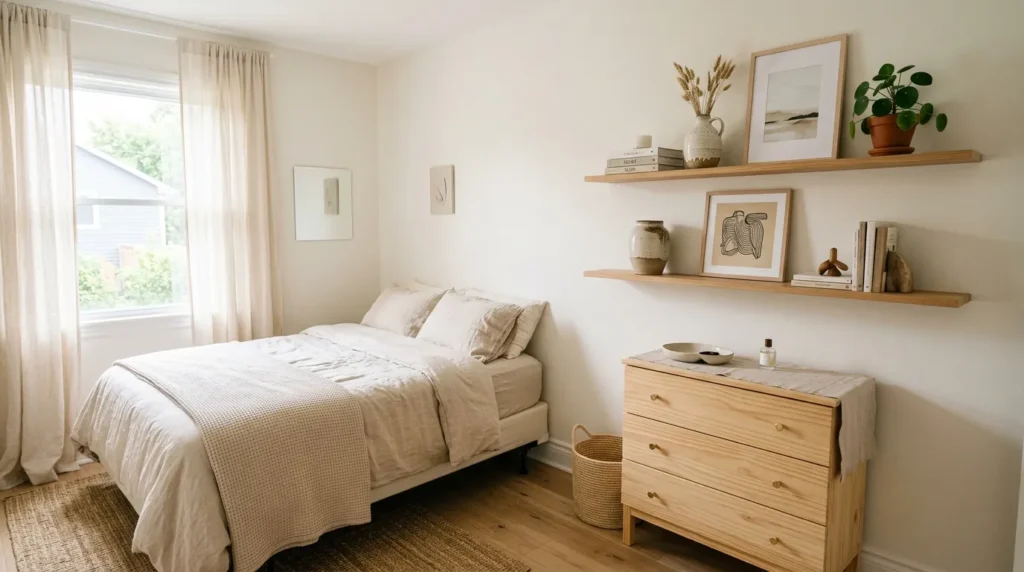
5. Floating Shelves
Quick Benefits
- Keeps floor space visually clear
- Adds useful storage
- Provides space for small decor
- Works well in compact bedrooms
- Creates flexible wall styling
Why It Works
Traditional shelving can make a small bedroom feel crowded because it occupies valuable floor area. Floating shelves create storage while leaving the floor underneath visible.
That uninterrupted floor line can make a compact room feel more open.
Shelves are also useful for creating vertical organization. Instead of spreading books, plants, photographs, and decorative objects across multiple pieces of furniture, you can contain them within one carefully edited wall arrangement.
The key is restraint. Overloaded shelves create visual clutter, which defeats the purpose.
How To Style It
Install one or two slim shelves above a dresser, desk, or empty wall section. Keep the depth relatively modest so the shelves don’t visually project too far into the room.
Use a mixture of objects with different heights. A small plant, a few books, a ceramic vase, and one framed photograph can create a balanced arrangement.
Leave visible empty sections on the shelf. Negative space helps the wall feel lighter.
For a cohesive bedroom, repeat colors already present in the bedding and furniture.
Natural wood shelves work beautifully with neutral rooms. White shelves blend more seamlessly into light walls, while dark wood or black can provide stronger contrast.
Avoid using floating shelves as an excuse to display everything you own. Rotate decorative pieces occasionally instead.
6. Large-Scale Artwork
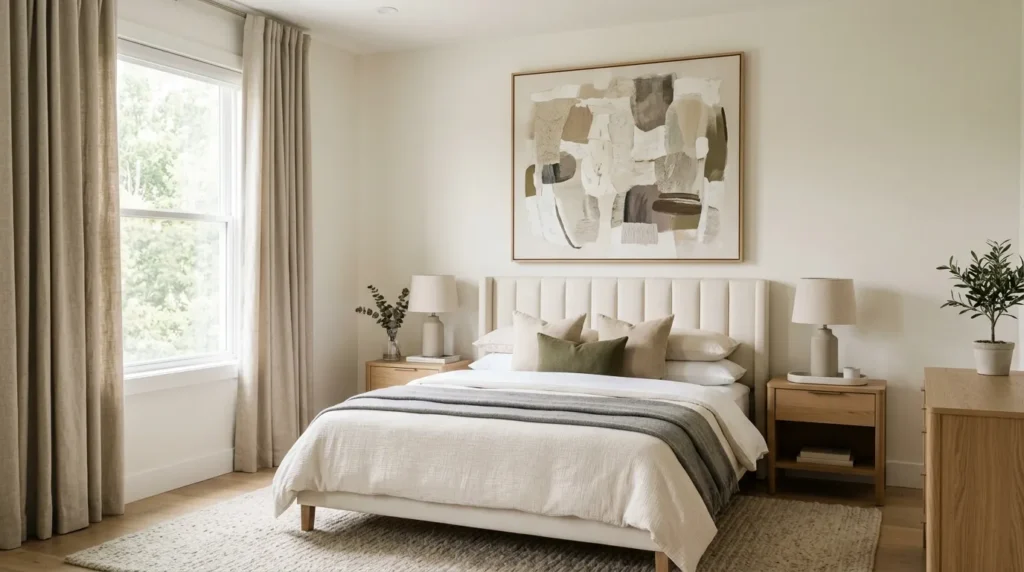
Quick Benefits
- Creates one strong focal point
- Reduces visual fragmentation
- Makes a wall feel intentional
- Adds personality
- Can replace several smaller decorations
Why It Works
Several tiny artworks can sometimes make a small bedroom feel busier than one substantial piece.
Large-scale artwork creates a single visual anchor. Instead of the eye jumping from one small frame to another, the composition reads as one unified element.
This can actually make the room feel calmer despite the artwork’s size.
The key is choosing artwork with enough negative space and a color palette that relates to the rest of the bedroom.
A large abstract canvas, landscape photograph, oversized botanical print, or minimalist textile artwork can all work well.
How To Style It
Place the artwork above the bed, dresser, or a major piece of furniture.
As a general visual guideline, the artwork should relate proportionally to the furniture beneath it. A tiny print above a wide bed can look disconnected, while an appropriately scaled piece feels integrated.
Choose soft colors if the room is already compact. Cream, beige, dusty blue, muted green, warm gray, and soft brown can add character without creating harsh contrast.
If the artwork is highly detailed or colorful, simplify the surrounding wall decor.
A simple frame can help keep the piece from feeling too heavy.
If you rent, oversized removable art or lightweight framed prints can create the same visual effect without permanent alterations.
7. Vertical Wall Panels
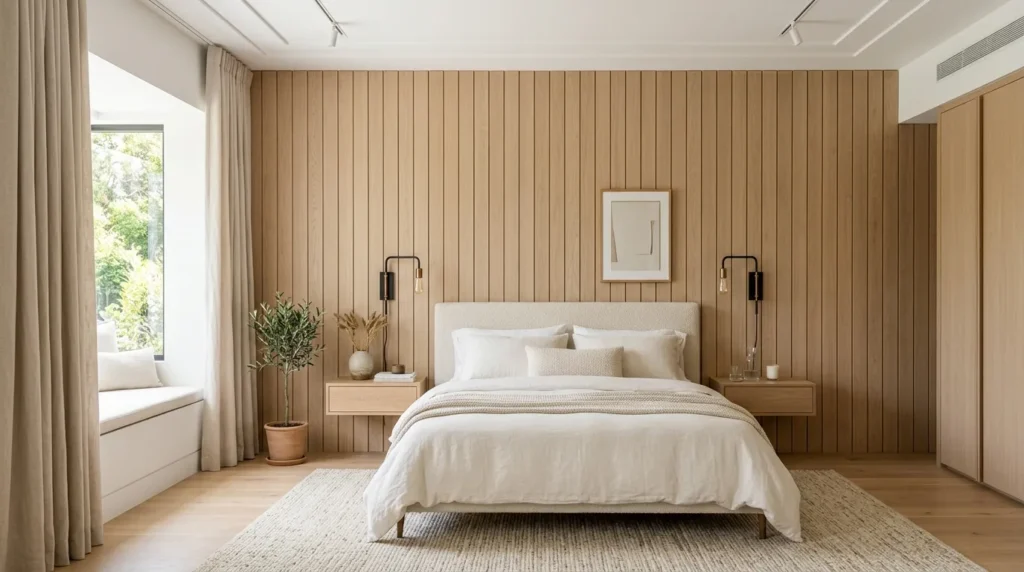
Quick Benefits
- Emphasize ceiling height
- Add architectural character
- Introduce subtle texture
- Create a sophisticated backdrop
- Work with modern bedroom styles
Why It Works
Vertical wall paneling creates lines that naturally direct the eye upward. This can make a room with standard ceilings feel taller and more architectural.
The effect can be subtle. Thin wood slats, simple rectangular molding, vertical battens, or narrow panel details can create dimension without overwhelming the bedroom.
This approach is especially effective behind the bed because it turns the wall into a cohesive architectural feature.
A light finish helps preserve the spacious feeling. Natural oak, warm white, cream, or light beige can all work beautifully.
How To Style It
Use vertical paneling on one focal wall rather than every wall in the bedroom.
The wall behind the bed is usually the easiest location because the bed naturally anchors the composition.
Keep the panel spacing consistent and relatively simple. Overly elaborate patterns can make the wall feel busy.
For a modern bedroom, combine light wood panels with cream bedding and simple black or bronze lighting.
If you’re using painted molding, choose a color close to the wall rather than creating dramatic contrast.
Renters can explore removable wood-look panels or wallpaper with vertical patterns where appropriate.
Let the paneling provide the visual interest. Avoid adding multiple large decorative pieces on top of it.
8. Minimal Gallery Walls
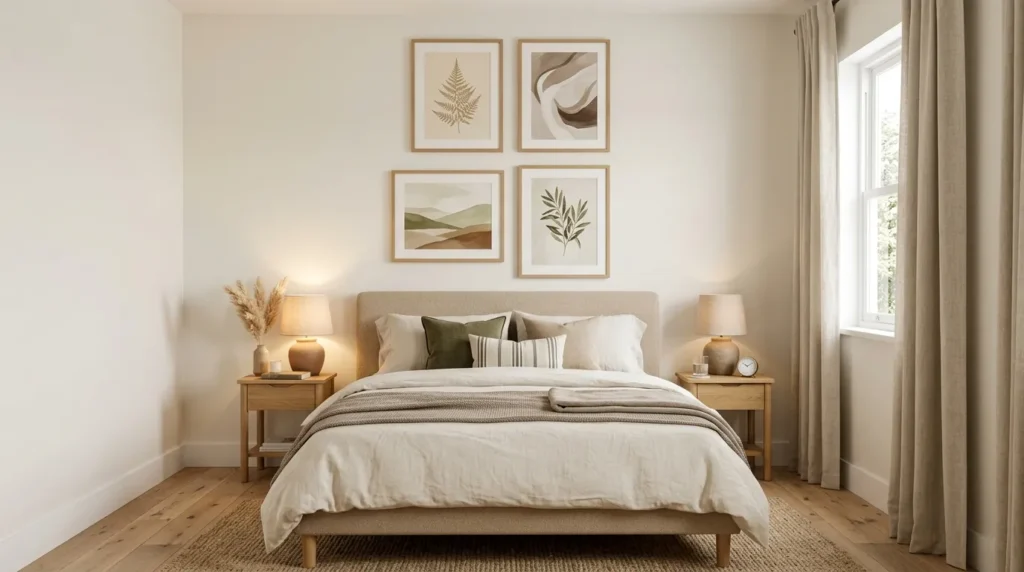
Quick Benefits
- Adds personality
- Creates a cohesive focal point
- Uses multiple pieces without looking chaotic
- Can be customized easily
- Works above beds and dressers
Why It Works
Gallery walls can either make a room feel polished or make it feel crowded. The difference usually comes down to organization.
A small, coordinated collection can create one visual group instead of several separate distractions.
For a compact bedroom, a limited gallery wall with consistent frames and a restrained color palette tends to work better than an expansive collection.
Repeating one visual characteristic—such as frame color, artwork palette, or spacing—helps the arrangement read as a single composition.
How To Style It
Choose three to five pieces rather than starting with a large collection.
Use artwork that shares a similar palette: warm neutrals, soft botanical greens, muted landscapes, or simple black-and-white imagery.
Lay the pieces on the floor first and experiment with the arrangement before hanging anything.
Keep the spacing relatively consistent.
A symmetrical arrangement can feel especially organized above a dresser. A slightly organic arrangement can work above the bed.
Use matching frames if you want a more polished appearance. Natural wood frames can soften a modern bedroom, while slim black frames provide definition.
Avoid filling the entire wall. Leave generous space around the gallery so the arrangement has room to breathe.
9. Wall-Mounted Lighting
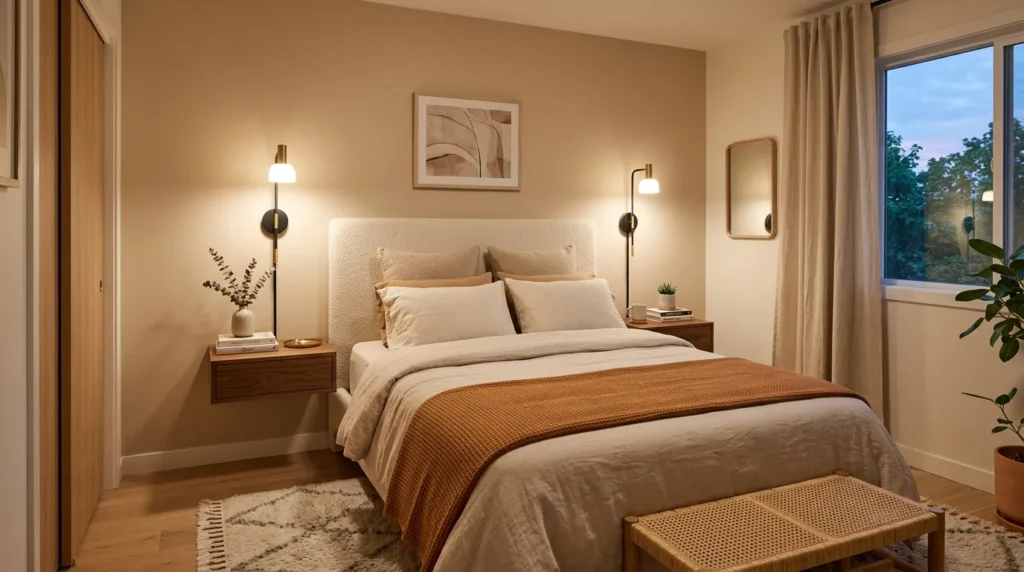
Quick Benefits
- Saves bedside surface space
- Adds vertical interest
- Creates focused light
- Makes the room feel more custom
- Works well in compact bedrooms
Why It Works
Bedside lamps are useful, but they can consume a significant amount of nightstand space. Wall-mounted sconces move the light source upward and free the surface below.
This can make a small bedroom feel less crowded because the eye sees more uninterrupted furniture and wall space.
Sconces also create a vertical element around the bed, especially when paired with a substantial headboard.
Modern fixtures with slim profiles are particularly effective because they add function without creating visual bulk.
How To Style It
Install matching sconces on either side of the bed for a classic symmetrical arrangement.
Choose fixtures with adjustable arms if you read in bed. A directional light can be more useful than a purely decorative fixture.
For an earthy modern bedroom, consider matte black, aged brass, bronze, ceramic, or warm white finishes.
Keep the surrounding nightstand decor minimal because the lighting already provides a strong visual detail.
If hardwiring isn’t practical, plug-in sconces can offer a similar appearance, provided the cords are managed neatly.
Position the lights according to the bed height and how the room is used rather than copying a fixed measurement from another bedroom.
10. Floor-Length Curtains
Quick Benefits
- Emphasize wall height
- Make windows feel larger
- Add softness
- Provide privacy and light control
- Create a finished appearance
Why It Works
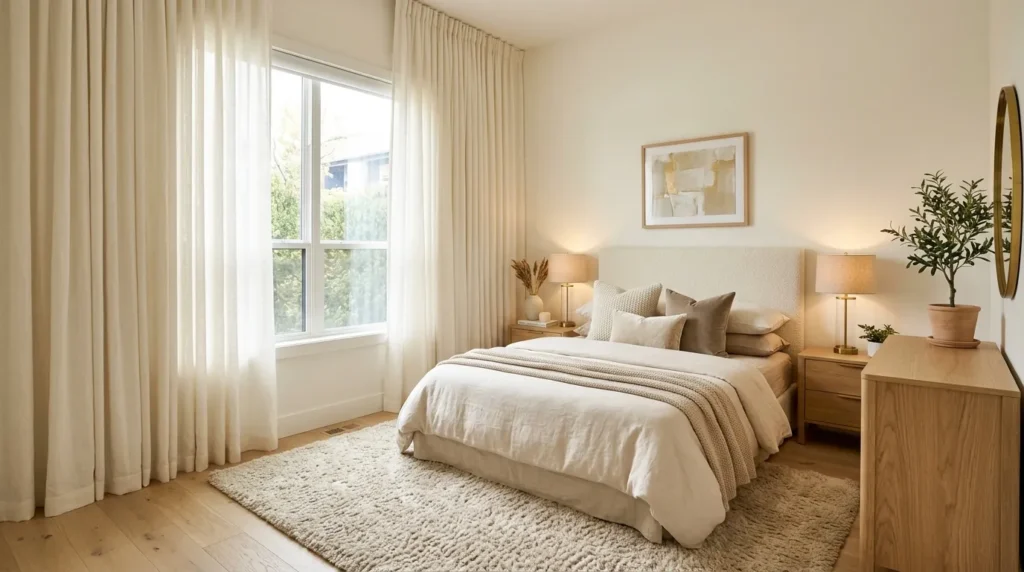
Curtains can change the perceived proportions of an entire wall. Hanging panels closer to the ceiling and allowing them to reach the floor creates a strong vertical line.
That line naturally directs the eye upward, making the bedroom feel taller.
Generous curtains also visually frame the window and can make it feel more substantial than its actual dimensions.
This is especially useful when the window itself is relatively small or positioned lower than ideal.
How To Style It
Mount the curtain rod above the window frame where the architecture allows. Extend the rod beyond the window edges so the curtains don’t cover too much glass when open.
Choose full-length panels in light colors such as ivory, cream, oatmeal, or soft beige.
For maximum flexibility, combine decorative curtains with blackout shades or lined panels.
Keep the fabric relatively simple. A subtle linen texture can add interest without creating visual weight.
Make sure the curtains reach the floor rather than stopping several inches above it. The longer vertical line contributes to the spacious appearance.
In a small bedroom, avoid bulky curtain hardware or excessively dark panels unless you specifically want a dramatic effect.
How Wall Decor Changes Bedroom Proportions
Wall decor isn’t simply about filling blank space. It influences where the eye travels.
If you want a room to feel taller, use vertical elements such as:
- Tall mirrors
- Vertical artwork
- Floor-length curtains
- Vertical wall panels
- Tall narrow shelving
- Wall-mounted sconces
If you want a room to feel wider, consider:
- Wide headboards
- Horizontal artwork
- Wide mirrors
- Extended curtain rods
- Broad low-profile artwork arrangements
If you want a room to feel brighter, focus on:
- Mirrors opposite windows
- Light wall colors
- Pale artwork
- Reflective but controlled surfaces
- Light curtains
If you want a room to feel less cluttered, use:
- One large artwork piece
- Minimal gallery arrangements
- Floating shelves
- Wall-mounted lighting
- Closed storage
The important thing is choosing the visual effect that matches the room’s actual limitation.
A narrow bedroom doesn’t necessarily need more horizontal decor. A low-ceiling room may benefit more from vertical elements. A dark room may gain more from reflective surfaces and lighter colors.
How To Make a Small Bedroom Look Bigger Without Remodeling
You can create a noticeable visual difference without removing walls or changing the room’s footprint.
Start by simplifying the wall color. A warm white, pale beige, or soft greige can create a lighter backdrop.
Next, identify the strongest focal wall. Usually, this is the wall behind the bed. Instead of decorating every wall, give this one area the most attention.
A large mirror can add depth, while tall curtains can emphasize height.
Keep furniture slightly away from windows when possible so natural light remains unobstructed.
Use floating shelves instead of bulky bookcases if you need storage.
Choose artwork according to the wall’s proportions. A tall narrow piece works well on a narrow wall, while one large horizontal piece can visually connect a wide bed.
Finally, edit what is already there. Sometimes the most effective wall decorating move is removing two or three unnecessary objects.
Wall Decor Colors That Make Bedrooms Feel Larger
Color can either support or work against a spacious feeling.
Warm White
Creates an airy foundation without the starkness of a bright pure white.
Cream
Adds warmth while keeping the room visually light.
Pale Beige
Works beautifully with wood furniture and natural textiles.
Soft Greige
Offers a modern appearance while remaining relatively light.
Pale Sage
Introduces a subtle natural tone without becoming visually intense.
Dusty Blue
Can create a calm atmosphere while maintaining a light appearance when used carefully.
For a small bedroom, keep the dominant wall color light and use deeper shades as accents rather than large blocks of dark color.
Common Wall Decor Mistakes in Small Bedrooms
Too Many Small Frames
A collection of tiny frames can fragment the wall visually. One larger piece often creates a calmer result.
Poorly Scaled Mirrors
A small mirror on a large wall may have little spatial impact.
Heavy Dark Artwork
Dark, highly detailed artwork can become the strongest visual element in the room and make the wall feel heavier.
Shelves Packed With Objects
Open shelving works best when some empty space remains visible.
Curtains That Stop Too Short
Curtains that end above the floor can visually interrupt the wall’s vertical line.
Decorating Every Wall
Blank space isn’t wasted space. It helps important elements stand out.
Ignoring the Reflection
Before installing a mirror, check what it reflects. A mirror facing a cluttered dresser can make the room feel more crowded.
FAQ
What wall decor makes a bedroom look bigger?
Large mirrors, light-colored walls, vertical artwork, wide headboards, floating shelves, and floor-length curtains can all contribute to a more spacious appearance. The best option depends on the room’s proportions. Mirrors help with depth and light, while vertical elements emphasize height and wide pieces can make a narrow room feel broader.
Does a large mirror make a small bedroom look bigger?
A large mirror can create a stronger sense of depth by reflecting light and part of the room. Position matters. A mirror placed near or opposite a window can reflect natural light, while one facing an attractive part of the bedroom can create an additional visual layer. Avoid positioning it where it reflects clutter.
What color should bedroom walls be to make the room look bigger?
Warm white, cream, pale beige, light greige, and other soft neutral shades can help create an open appearance. Light colors generally reflect more available light and create a softer visual boundary. The best shade depends on the bedroom’s natural light, flooring, furniture, and undertones.
Should wall art be big or small in a small bedroom?
One appropriately scaled large piece can often look calmer than many tiny pieces. Large artwork creates one visual focal point rather than fragmenting the wall. Choose a piece with some negative space and colors that coordinate with the bedroom so it doesn’t feel visually heavy.
Do vertical panels make a bedroom look taller?
Vertical wall panels can emphasize ceiling height because their lines direct the eye upward. Light-colored panels, subtle wood slats, or simple vertical molding can create this effect without making the room feel busy. Using them on one focal wall is often enough.
How can I decorate bedroom walls without making them feel cluttered?
Choose a limited number of strong elements and leave negative space around them. One large mirror, artwork piece, or carefully edited gallery arrangement can have more impact than many small decorations. Floating shelves also work well when they contain only a few thoughtfully selected objects.
Where should I put a mirror in a small bedroom?
A mirror can work opposite or adjacent to a window where it can reflect natural light. It can also be positioned on a wall where the reflection shows an attractive part of the room. Avoid placing it directly where it reflects a cluttered surface or an overly busy area.
Conclusion
The right wall decor can make a bedroom feel noticeably more open without changing its actual dimensions.
The most effective strategies focus on how the eye experiences the room. Mirrors can create depth and reflect light. Vertical artwork, wall panels, sconces, and floor-length curtains can emphasize height. Wide headboards and carefully scaled horizontal artwork can help a narrow room feel broader.
The key is choosing decor based on the room’s proportions rather than simply following a trend. A small bedroom doesn’t need every wall decorated. In many cases, a few well-scaled pieces surrounded by generous negative space create a more sophisticated result.
Start with the biggest opportunity. If the room feels dark, try a strategically placed mirror. If the ceiling feels low, emphasize vertical lines. If the bed wall feels empty, consider a wide upholstered headboard or one substantial artwork piece.
Then step back and look at the room as a whole. Keep colors light where possible, repeat materials for continuity, and remove anything that makes the space feel visually crowded.
A larger-looking bedroom isn’t necessarily an empty bedroom. It is a room where every visual element has enough space to breathe.
Related Articles
- 10 Modern Bedroom Ideas with Hotel-Inspired Comfort
- 10 Modern Cozy Aesthetic Bedroom Ideas
- 10 Bedroom Wall Decor Ideas with Modern Wall Panels
- How to Make a Small Bedroom Feel Bigger with Light Colors
- How to Organize a Small Bedroom Without Extra Cabinets