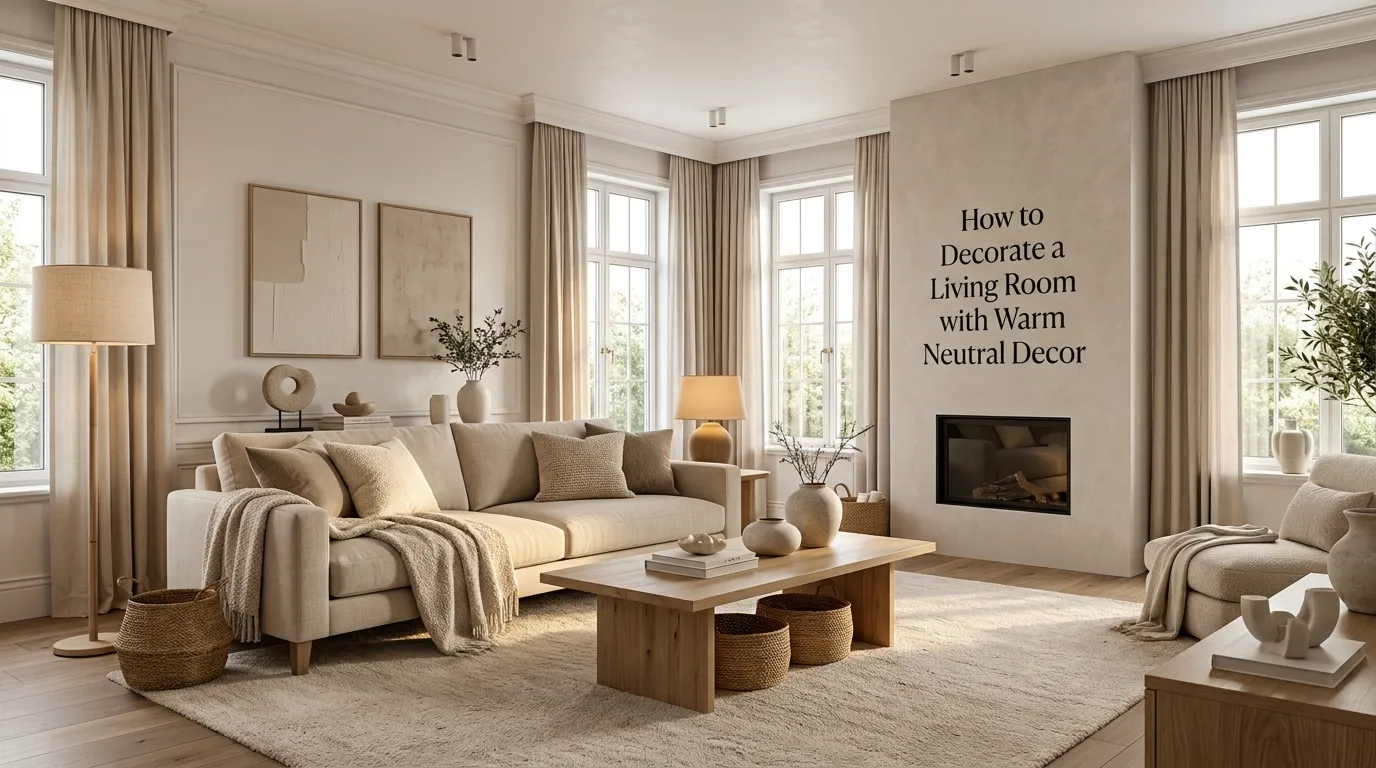
How to Decorate a Living Room with Warm Neutral Decor
A warm neutral living room can feel calm, welcoming, and beautifully put together without looking plain. The secret is not choosing one beige paint color and filling the room with matching furniture. Instead, the most inviting neutral spaces combine several shades, natural materials, soft textures, and carefully chosen contrast.
Warm neutrals include colors such as cream, ivory, oatmeal, taupe, camel, sand, warm beige, mushroom, and soft brown. Used together, these tones create a relaxed foundation that works with many decorating styles, from modern and organic to traditional and farmhouse-inspired.
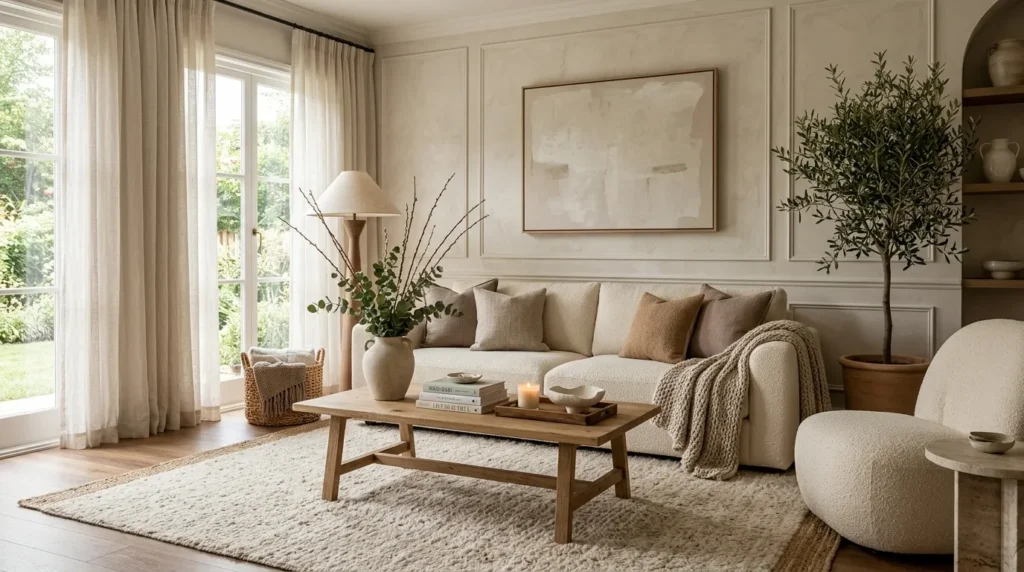
One thing that works especially well is layering neutrals instead of trying to match everything perfectly. A cream sofa can sit beautifully against a warmer beige wall, while a tan leather chair, natural wood coffee table, and woven rug add enough variation to keep the room interesting.
Texture matters just as much as color. Linen, wool, boucle, cotton, rattan, jute, wood, ceramic, and stone can make a neutral room feel collected and comfortable. Even a simple palette can have plenty of visual depth when different surfaces catch the light in different ways.
Whether you’re decorating a new home, refreshing an existing space, or simply looking for ideas before your next furniture purchase, these approaches can help you create a warm neutral living room that feels intentional and practical.
The goal is not perfection. A successful neutral room should still feel like a place where people can relax, read, entertain, and actually live.
Table of Contents
1. Layered Neutral Colors
Combine several warm neutral shades to create depth without relying on bold color.
2. Natural Wood Accents
Use wood furniture and accessories to introduce warmth and organic texture.
3. Textured Neutral Fabrics
Layer linen, cotton, wool, and boucle to keep the room visually interesting.
4. Creamy White Walls
Use warm white walls as a bright foundation for comfortable neutral furnishings.
5. Earthy Accent Pieces
Add small brown, tan, terracotta, and muted green accents for natural contrast.
6. Cozy Area Rugs
Choose rugs with warm colors and tactile patterns to anchor the seating arrangement.
7. Warm Lighting
Use layered lighting to make neutral colors feel inviting throughout the day.
8. Neutral Gallery Walls
Create visual interest with understated artwork in coordinated earthy tones.
9. Organic Shapes
Mix curved furniture and natural forms with traditional rectangular pieces.
10. Minimal Neutral Styling
Keep accessories purposeful for a clean, sophisticated living room.
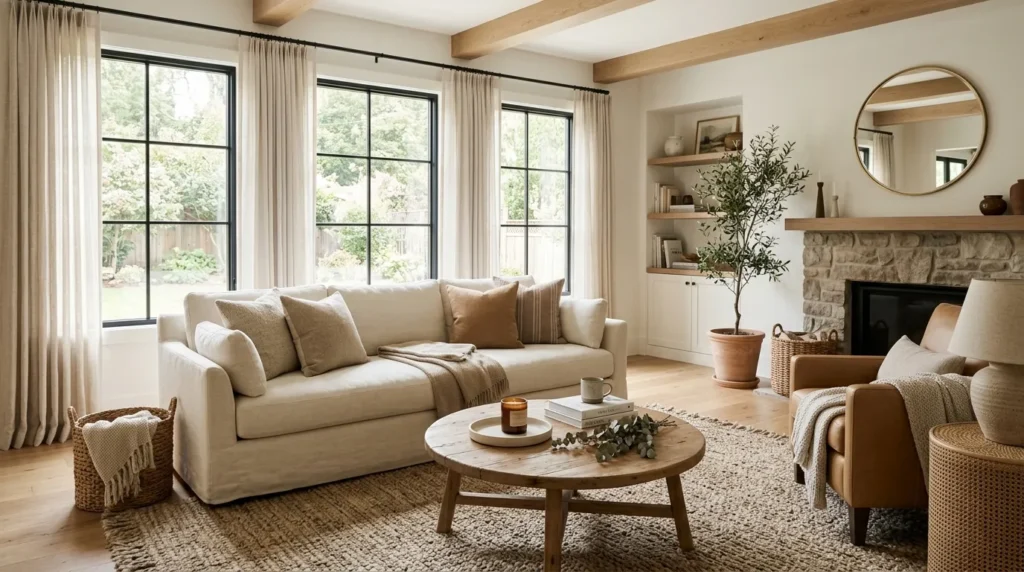
1. Layered Neutral Colors
Quick Benefits
- Creates visual depth
- Keeps the room calm
- Prevents a flat appearance
- Works with many decorating styles
- Makes furniture easier to coordinate
Why It Works
A neutral living room becomes much more interesting when you stop thinking of neutral as a single color.
Cream, beige, taupe, tan, oatmeal, ivory, and soft brown can all work together when their undertones are compatible. The slight differences between these shades create layers without introducing a strong color contrast.
A common mistake is choosing every item in exactly the same beige. While coordinated, the result can look flat because there is little variation between surfaces.
Instead, allow some pieces to be lighter and others slightly deeper.
The sofa might be creamy ivory, the walls warm beige, the rug oatmeal, and an accent chair camel. Together, those small differences create a cohesive palette.
How To Style It
Begin with two or three main neutrals.
Use the lightest shade for larger surfaces such as walls or the sofa, then introduce medium tones through rugs, chairs, curtains, and wood.
Dark brown or charcoal-brown accents can provide grounding contrast.
Before purchasing large pieces, place physical fabric or paint samples together. Warm neutrals can have yellow, pink, gray, or green undertones, and those differences become noticeable when materials are placed side by side.
Keep the strongest contrast toward the lower part of the room if you want a grounded appearance.
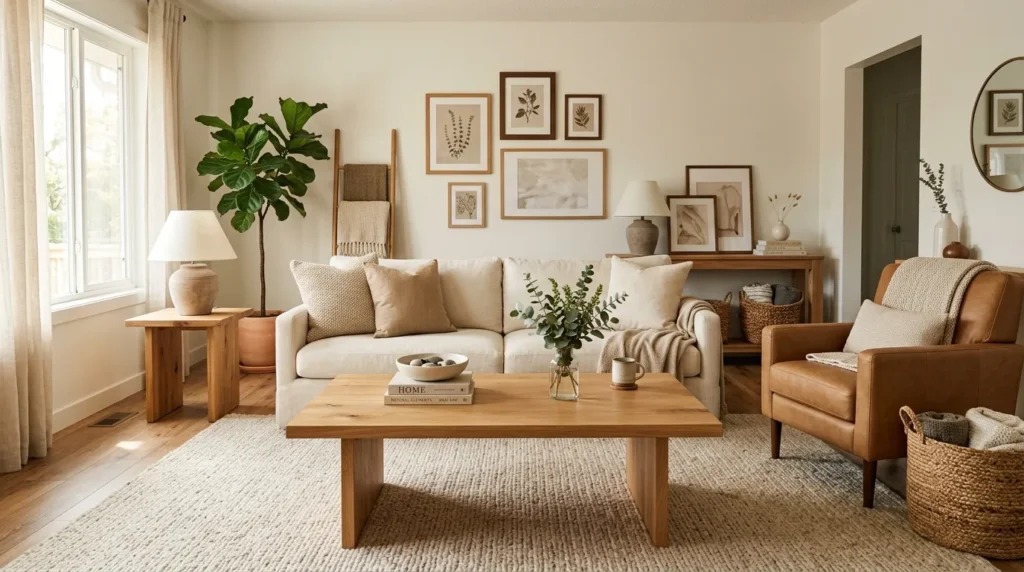
2. Natural Wood Accents
Quick Benefits
- Adds warmth
- Introduces organic texture
- Prevents the room from feeling sterile
- Works with modern and traditional styles
- Complements beige and cream beautifully
Why It Works
Wood is one of the easiest ways to make a neutral living room feel warm and lived-in.
Unlike painted surfaces, natural wood has variation in grain, tone, and texture. That variation adds character without requiring brighter colors.
Light oak can create a relaxed Scandinavian or organic-modern feeling, while walnut and medium brown woods provide richer contrast.
You also don’t need a matching wood set. A coffee table, side table, cabinet, picture frames, or decorative stool can each contribute a different layer.
The key is choosing wood tones that work together rather than trying to make every piece identical.
How To Style It
Start with one significant wood element, such as a coffee table or media console.
Then repeat the material through smaller details such as picture frames, bowls, trays, or shelving.
For a lighter room, choose oak, ash, or similar pale woods.
For more contrast, use walnut or medium brown finishes.
Pair wood with cream upholstery and textured fabrics for an organic appearance.
Avoid filling the room with too many competing wood colors. Two or three related tones are generally easier to coordinate.
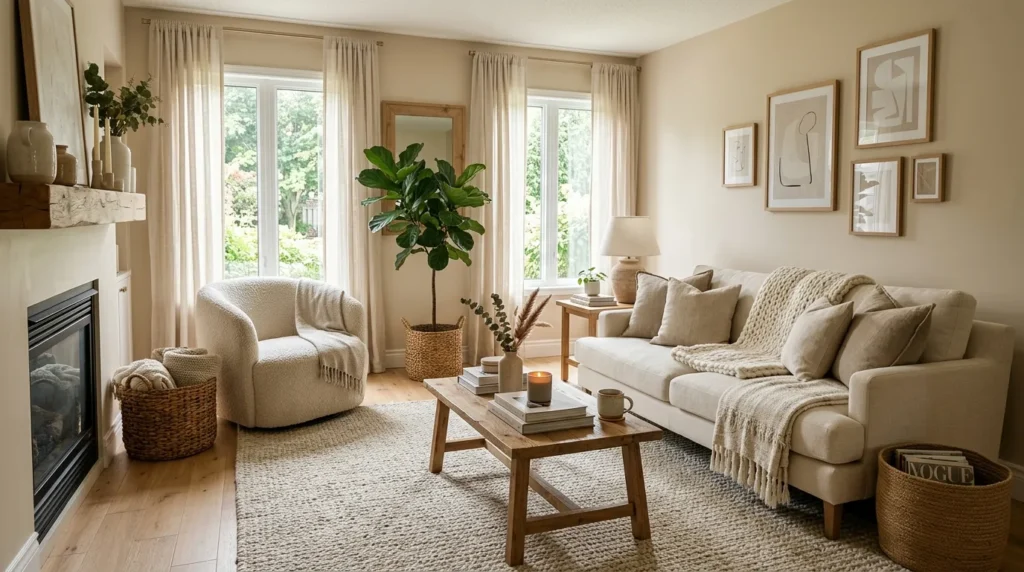
3. Textured Neutral Fabrics
Quick Benefits
- Adds visual depth
- Makes the room feel comfortable
- Prevents neutral colors from looking flat
- Creates a layered appearance
- Works without adding strong colors
Why It Works
When a room uses a restrained color palette, texture becomes one of the most important decorating tools.
Imagine a cream linen pillow beside a chunky knitted throw and a boucle accent chair. They may all share similar colors, but their surfaces look completely different.
That contrast gives the eye something to explore.
Natural fabrics also help a neutral room feel less staged. Linen curtains, cotton cushions, wool rugs, and woven throws bring softness and everyday practicality.
This approach is particularly useful if you prefer minimalist decorating but still want the living room to feel comfortable.
How To Style It
Choose fabrics with noticeably different textures.
Pair a smooth cotton sofa with a chunky knit throw.
Add linen or cotton cushions in slightly different neutral shades.
Use boucle or woven upholstery on an accent chair.
Consider a wool or wool-look rug beneath the seating area.
Don’t make every textile the same shade. Slight color variation combined with texture will make the room feel more layered.
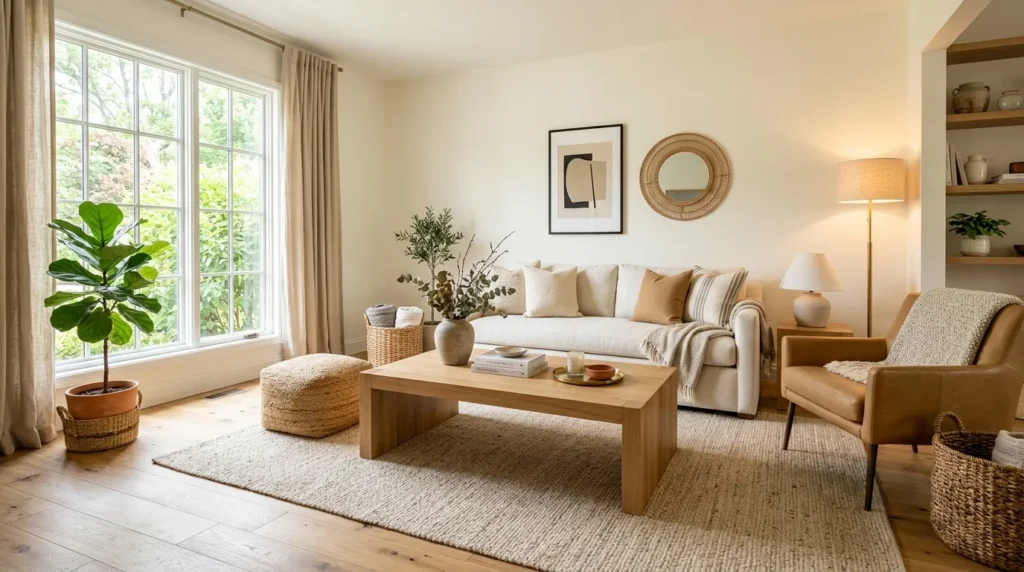
4. Creamy White Walls
Quick Benefits
- Brightens the room
- Creates a versatile backdrop
- Complements warm furnishings
- Makes natural materials stand out
- Works in many home styles
Why It Works
Warm white can be a better choice than stark white when creating a cozy neutral living room.
Creamy whites contain subtle warmth, which makes them feel softer beside beige, tan, wood, and natural textiles.
They also reflect light without creating the slightly clinical appearance that some cooler whites can produce.
The exact paint color matters, however. Two whites can look dramatically different depending on natural light and surrounding finishes.
How To Style It
Test paint samples directly on the wall before committing.
Observe them during morning, afternoon, and evening light.
If your furniture contains lots of warm beige and wood, choose a white that complements those undertones.
Use warm white trim if you want a subtle, cohesive appearance.
For contrast, introduce darker furniture or artwork rather than relying on a cooler wall color.
Keep curtains slightly lighter or similar to the walls if your goal is a soft, seamless look.
5. Earthy Accent Pieces
Quick Benefits
- Adds subtle contrast
- Creates a natural feeling
- Prevents monotony
- Makes styling more personal
- Works with warm neutrals
Why It Works
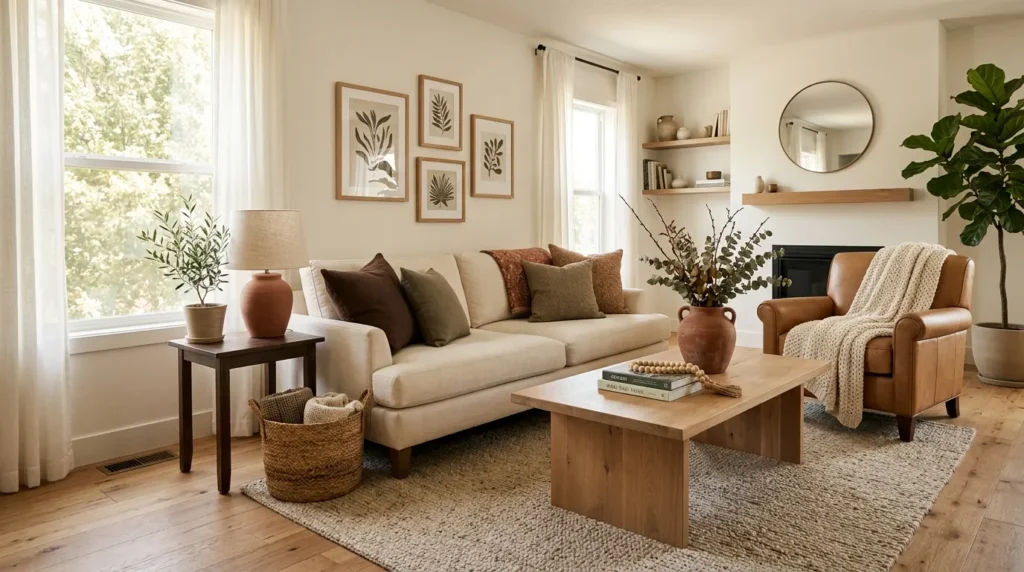
A warm neutral room doesn’t have to be completely colorless.
Small touches of earthy colors such as terracotta, camel, clay, muted olive, rust, and chocolate brown can give the space more personality while maintaining the overall neutral feeling.
These colors are particularly effective because they share a natural relationship with beige and cream.
You don’t need large colorful furniture pieces. Small accents can have plenty of impact when repeated thoughtfully.
How To Style It
Choose one or two earthy accent colors.
For example, use terracotta in a ceramic vase and a small artwork detail.
Or use muted olive through a plant, cushion, or textile.
Camel leather can introduce warmth without feeling like a traditional accent color.
Deep brown works well as grounding contrast through furniture legs, frames, baskets, or decorative objects.
Repeat the accent color in at least two places so it feels intentional.
6. Cozy Area Rugs
Quick Benefits
- Defines the seating area
- Adds softness
- Introduces texture
- Helps unify furniture
- Makes the room feel warmer
Why It Works
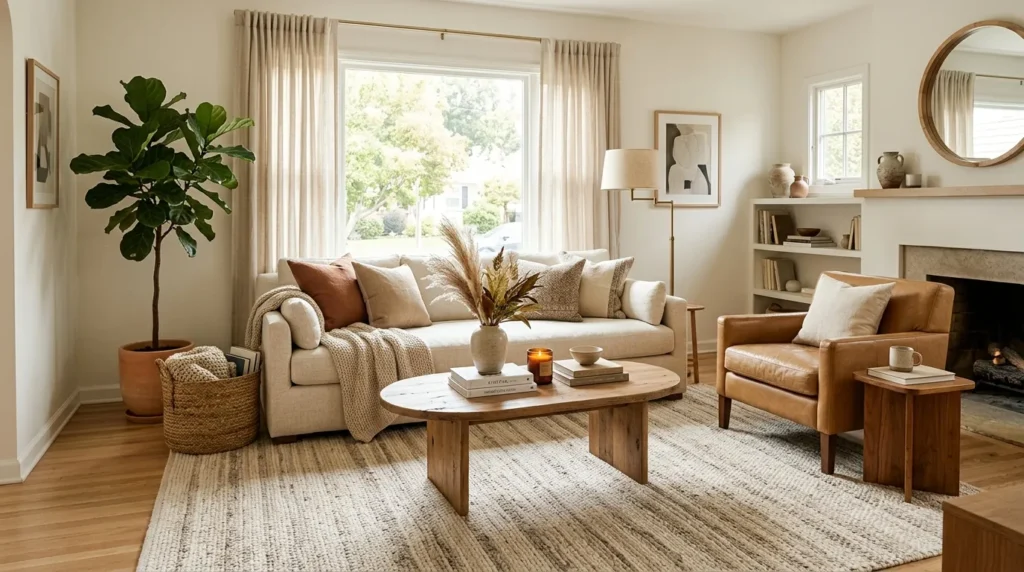
An area rug can completely change how a neutral living room feels.
Without a rug, furniture can appear visually disconnected, particularly in an open-concept space.
A large rug helps group the sofa, chairs, and coffee table into one conversation area.
Warm neutral rugs also provide another opportunity to introduce subtle pattern. A tonal geometric design, faded traditional motif, or natural woven texture can add interest without disrupting the calm palette.
How To Style It
Choose the largest rug that works comfortably within the seating arrangement.
Ideally, at least the front legs of major seating pieces should sit on the rug.
For a sophisticated look, choose a rug with subtle variations in cream, beige, taupe, and brown.
Natural jute or woven rugs work well with wood and organic furniture.
If your furniture is highly textured, consider a quieter rug.
If the furniture is simple, a patterned rug can provide more visual interest.
7. Warm Lighting
Quick Benefits
- Creates evening ambiance
- Makes neutral colors richer
- Adds depth
- Improves functionality
- Highlights textures
Why It Works
Lighting can change the entire personality of a neutral living room.
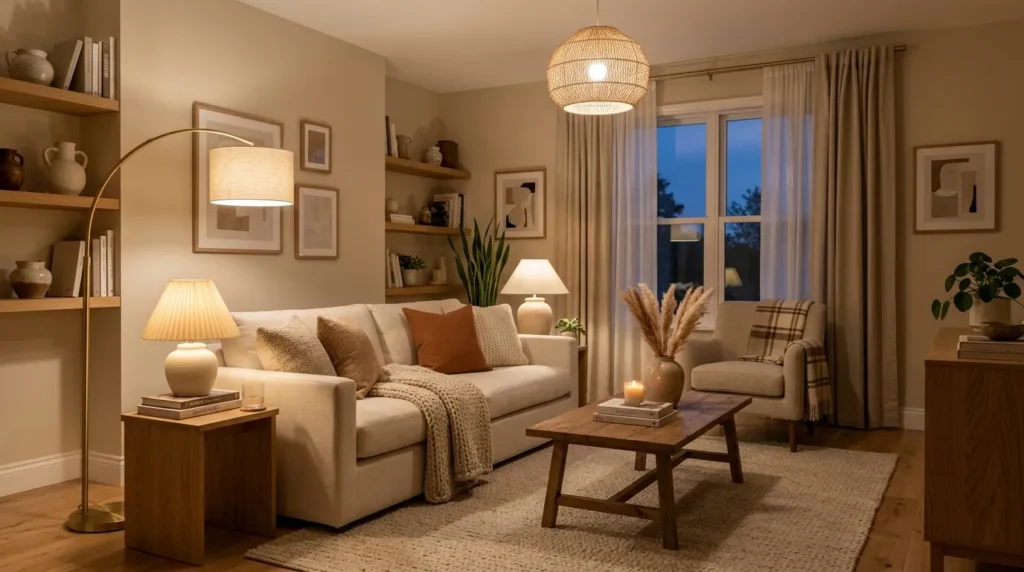
During the day, natural light may make cream walls and beige furniture feel bright and airy. At night, poorly positioned or overly cool lighting can make those same colors feel flat.
Layered lighting solves this problem.
Instead of relying on one ceiling fixture, use multiple sources at different heights.
Floor lamps, table lamps, wall lights, and accent lighting can create pools of warmth throughout the room.
How To Style It
Use a combination of overhead, ambient, and task lighting.
Place a floor lamp beside a reading chair.
Add a table lamp to a console or side table.
Use decorative lighting to highlight artwork or architectural features.
Choose bulbs that create a comfortable warm atmosphere while still providing enough illumination for everyday activities.
Use lampshades in linen, cotton, or warm neutral materials to soften the light.
8. Neutral Gallery Walls
Quick Benefits
- Adds personality
- Creates a focal point
- Works without bright colors
- Makes walls feel finished
- Can be changed easily
Why It Works
Artwork is an important part of a neutral room because it prevents the space from feeling generic.
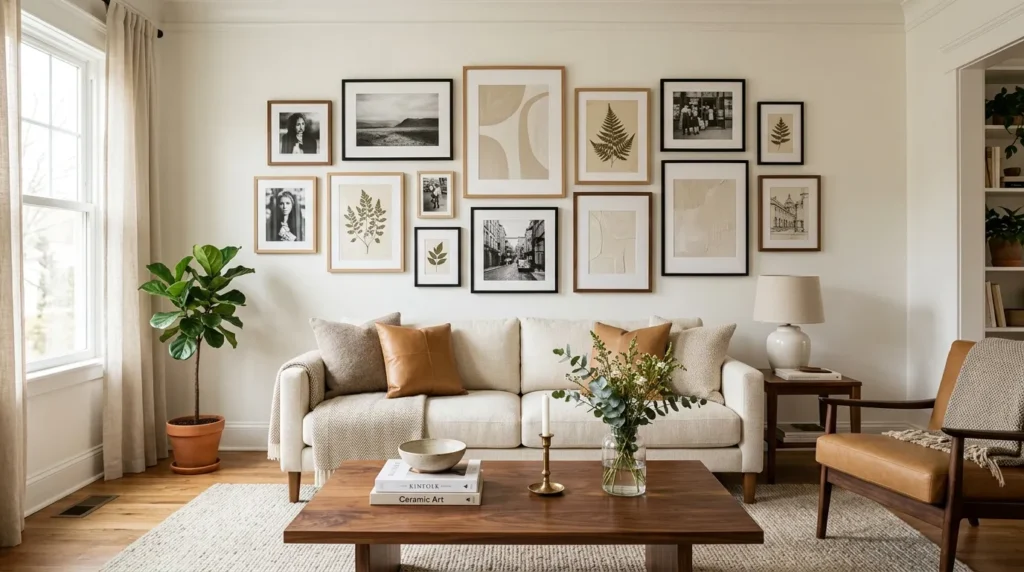
A gallery wall does not have to contain colorful artwork. Black-and-white photography, abstract line drawings, landscapes, botanical prints, and muted paintings can all work beautifully.
The trick is coordinating the overall feeling rather than matching every frame.
A neutral gallery wall also gives you an opportunity to introduce subtle darker tones that anchor the lighter room.
How To Style It
Choose artwork with a common thread.
This could be a shared palette of cream, brown, black, and muted earthy tones.
Mix frame materials if you want a collected appearance.
Black frames create stronger contrast, while natural wood frames keep the display softer.
Arrange the pieces on the floor before hanging them.
Keep spacing relatively consistent while allowing slight variation in artwork size.
Position the gallery at an appropriate height relative to the sofa rather than too close to the ceiling.
9. Organic Shapes
Quick Benefits
- Softens rectangular furniture
- Creates visual movement
- Makes the room feel relaxed
- Adds contemporary character
- Works beautifully with natural materials
Why It Works
Many living rooms contain rectangular sofas, square tables, straight shelving, and boxy cabinets.
Adding a few rounded forms can soften the overall composition.
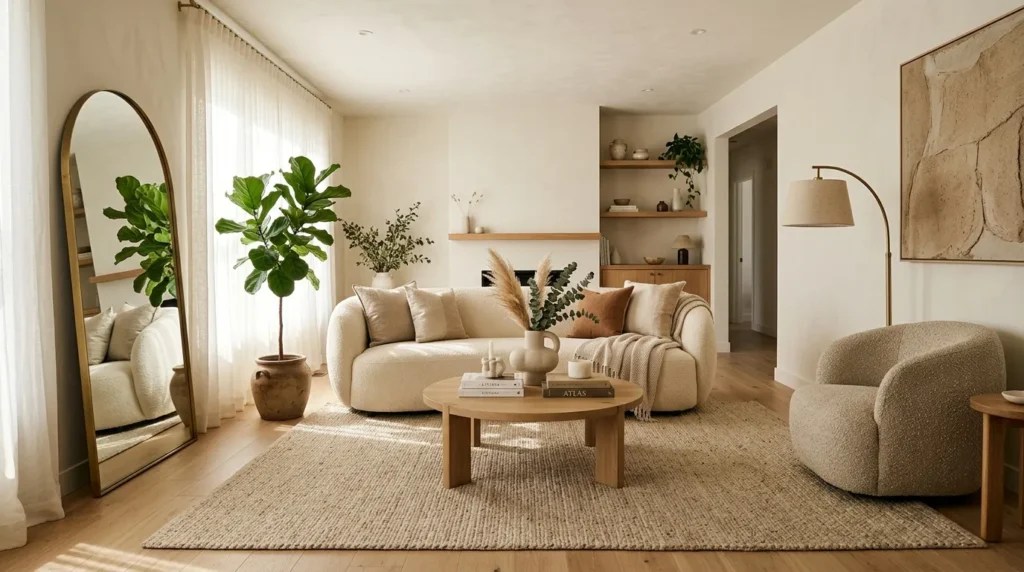
A round coffee table, curved accent chair, arched mirror, oval tray, or sculptural vase can create contrast without introducing a new color.
This is particularly effective in warm neutral interiors because organic shapes reinforce the natural, relaxed quality of the palette.
How To Style It
Start with one significant curved element.
A round coffee table is an easy option.
Then introduce smaller organic shapes through mirrors, vases, lamps, or decorative bowls.
Don’t make every piece curved. The contrast between straight and rounded forms is what creates interest.
Combine rounded shapes with natural materials such as wood, stone, ceramic, rattan, and linen.
10. Minimal Neutral Styling
Quick Benefits
- Keeps the room calm
- Makes cleaning easier
- Highlights quality pieces
- Prevents visual clutter
- Creates a sophisticated appearance
Why It Works
Warm neutral decorating does not require a large collection of accessories.
In fact, too many decorative objects can make the room feel visually busy, especially when many pieces share similar colors.
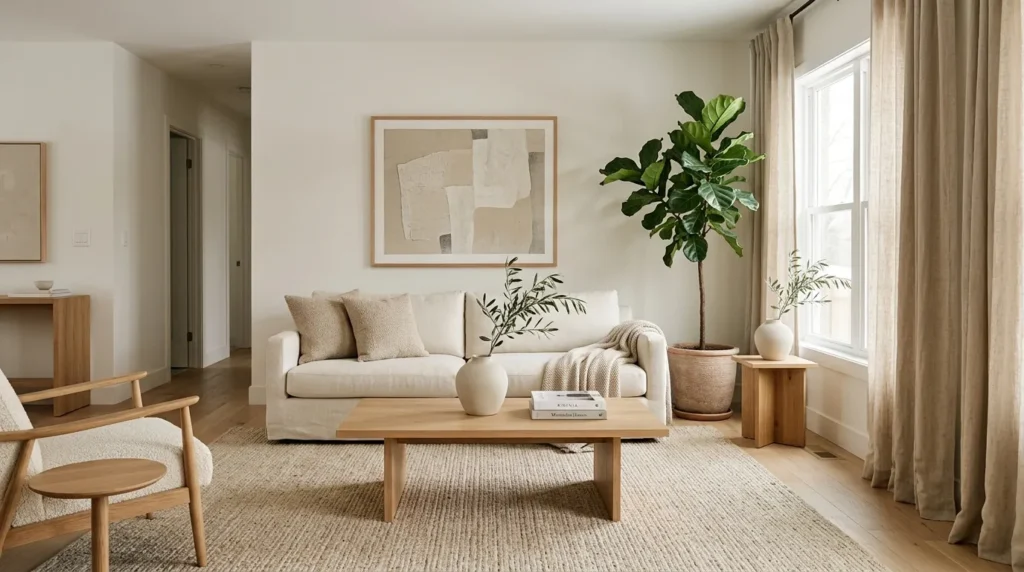
A minimalist approach allows furniture, materials, artwork, and architectural details to become the focus.
The goal isn’t to have an empty room. It is to choose fewer objects and give each one enough space to be noticed.
How To Style It
Start by clearing the major surfaces.
Return only pieces that are useful, meaningful, or visually appealing.
Use trays to group small objects on coffee tables and consoles.
Leave some empty space on shelves and tabletops.
Choose larger, simpler accessories instead of many tiny objects.
A ceramic vase, stack of books, sculptural bowl, and plant can be enough to finish a room when they are arranged thoughtfully.
How To Choose A Warm Neutral Color Palette
The easiest way to build a warm neutral palette is to start with one anchor piece.
That could be your sofa, rug, flooring, or a favorite piece of furniture.
Once you have that foundation, pull two or three related colors from it.
For example:
Lightest: warm ivory
Middle: oatmeal beige
Accent: camel
Grounding tone: medium brown
This gives you enough variation without creating a complicated color scheme.
If you prefer a softer palette, keep the contrast between shades relatively subtle.
If you want a more dramatic room, introduce deeper brown or black accents.
Always pay attention to undertones. A beige that looks warm by itself may look pink beside another beige. Testing materials together is one of the simplest ways to avoid surprises.
How To Make A Neutral Living Room Cozy
Warm neutrals naturally create a relaxed foundation, but comfort comes from more than color.
Start with the seating.
Choose upholstery that is comfortable enough for everyday use, not just attractive in photographs.
Then add tactile layers.
A soft rug underfoot, textured cushions, a throw across the sofa, and curtains that soften the windows can all contribute to a more comfortable feeling.
Lighting is equally important.
Use several light sources rather than depending on a single overhead fixture.
Finally, bring in something living. A large indoor plant, fresh branches, or a few smaller plants can add organic color without disrupting the neutral palette.
How To Decorate A Small Neutral Living Room
Neutral colors can work especially well in smaller living rooms because they create a visually cohesive background.
Choose furniture carefully.
A large sofa may be comfortable, but it can overwhelm a compact space. Consider the room’s measurements before purchasing.
Furniture with exposed legs can create more visible floor area.
Glass or visually open coffee tables can also reduce visual weight.
Use a large rug rather than several small rugs if the room allows it.
Keep wall colors light and warm, and use mirrors strategically to reflect natural light.
For storage, choose furniture that performs more than one function, such as an ottoman with hidden storage or a slim media console.
Common Warm Neutral Decorating Mistakes
Using Only One Neutral
A room filled with one shade of beige can look flat. Layer several compatible tones instead.
Ignoring Undertones
Warm neutrals are not interchangeable. Compare paint, upholstery, and flooring samples together.
Making Everything Beige
Wood, black accents, greenery, stone, and subtle earthy tones can add necessary contrast.
Choosing Furniture Without Measuring
A beautiful sofa or coffee table can still be wrong for the room if its proportions are too large.
Using Only Overhead Lighting
A neutral room can feel much colder at night when there are no lower-level light sources.
Overdecorating
Too many accessories can make a calm palette feel cluttered.
Forgetting Texture
When color is restrained, texture becomes more important. Combine smooth, woven, soft, rough, and natural surfaces.
Frequently Asked Questions
What colors go well with warm neutral decor?
Warm neutral palettes work well with cream, ivory, beige, taupe, camel, tan, brown, terracotta, muted olive, and soft black. Natural wood is also an excellent companion. You do not need to use every color; choosing two or three supporting tones usually creates a more cohesive result.
How do I make a beige living room look modern?
Combine beige with clean-lined furniture, natural wood, simple artwork, and a restrained accessory collection. Add contrast through black accents or deeper brown tones. Contemporary lighting and organic shapes can also make a beige room feel current without abandoning the warm neutral palette.
What is the best neutral color for a living room?
There is no universal best neutral because the right shade depends on natural light, flooring, furniture, and room orientation. Warm whites, beige, taupe, oatmeal, and soft greige are all versatile options. Always test paint samples in the actual room before choosing a final color.
How many colors should a neutral living room have?
A practical starting point is three to five related tones. For example, you might use warm white, beige, camel, medium brown, and a small amount of black. The exact number matters less than the relationship between the colors and their undertones.
Can warm neutral decor work with dark furniture?
Yes. Dark furniture can provide valuable contrast in a warm neutral room. Walnut, dark brown leather, charcoal, and black can anchor lighter walls and upholstery. Balance darker pieces with plenty of cream, beige, natural wood, and soft textures so the room does not feel visually heavy.
How can I add color without losing the neutral look?
Introduce small amounts of earthy color rather than bright saturated shades. Terracotta, muted olive, rust, camel, and warm brown can add personality while remaining harmonious with cream and beige. Artwork, cushions, ceramics, and plants are easy places to experiment.
Is warm neutral decor suitable for families?
Yes. The palette can be practical for everyday family spaces, but material selection matters. Choose durable upholstery, washable covers where possible, easy-care rugs, and furniture finishes that can handle regular use. Use decorative objects selectively and leave enough open space for normal family activities.
Conclusion
A warm neutral living room does not have to be boring, overly beige, or difficult to maintain. The most inviting spaces rely on thoughtful layering rather than a large number of colors.
Start with a comfortable foundation, then build around it with warm whites, beige, taupe, camel, brown, and natural wood. Add texture through linen, wool, cotton, boucle, woven materials, and ceramics. A well-chosen rug can anchor the seating area, while layered lighting can make the room feel just as welcoming in the evening as it does during the day.
Don’t worry about making every finish match perfectly. Some variation is what gives a neutral room personality.
If you’re refreshing your living room, start with one area rather than changing everything at once. A new rug, warmer lighting, textured pillows, or a natural wood coffee table can make a noticeable difference.
The goal is a room that looks beautiful but still feels comfortable enough for everyday life. When warm color, natural materials, practical furniture, and personal details come together, a neutral living room can become one of the most relaxing spaces in the home.