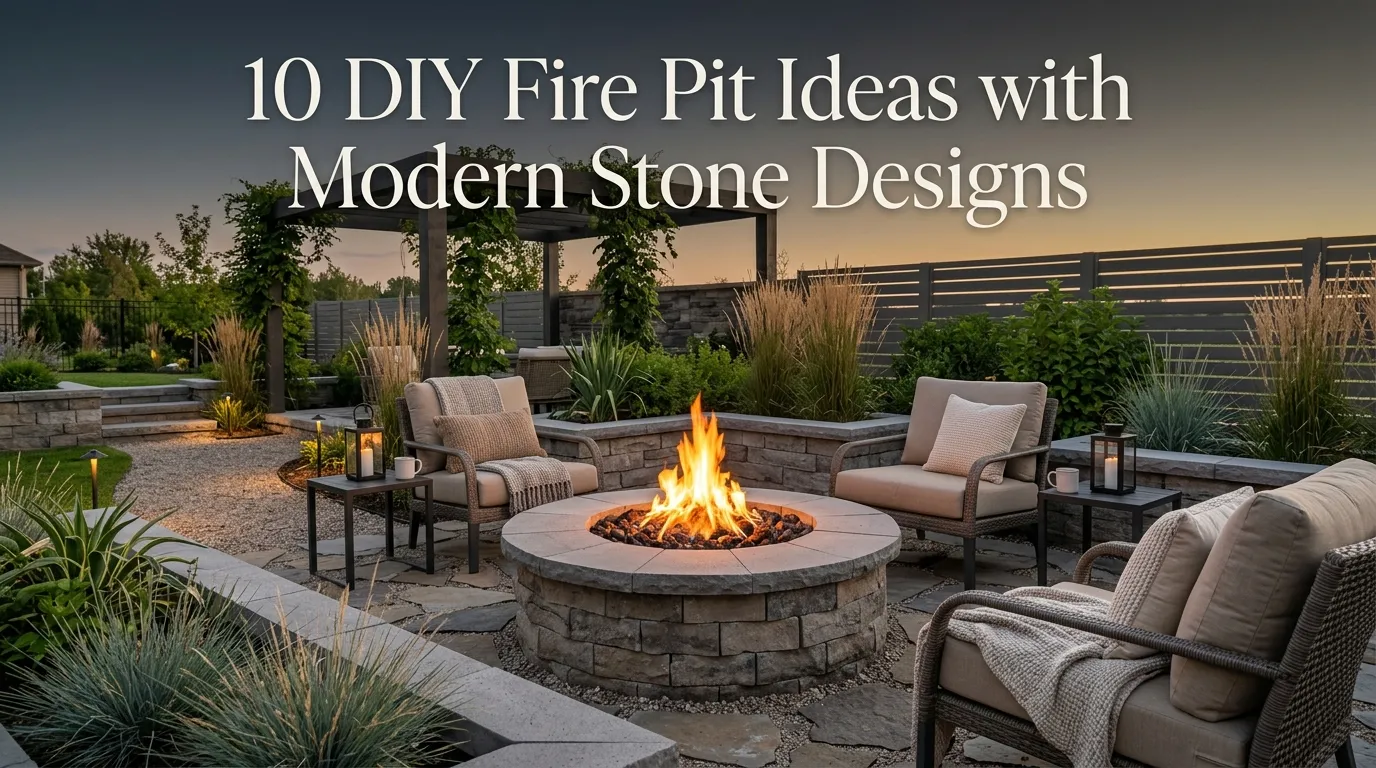
10 DIY Fire Pit Ideas with Modern Stone Designs
A fire pit can completely change the way a backyard feels after sunset. It creates a natural gathering point, adds warmth during cooler evenings, and gives an ordinary outdoor area a stronger sense of purpose. The good news is that you do not need an elaborate outdoor kitchen or a professionally built patio to create that effect.
Stone is especially useful for fire pit projects because it brings texture, weight, and an architectural quality to the landscape. From clean concrete blocks to natural fieldstone, the right material can make a simple fire feature feel like it was designed specifically for the backyard.
The key is choosing a design that works with the existing landscape rather than treating the fire pit as an isolated project. Think about the patio, seating, pathways, garden beds, and overall style of the home. A modern stone fire pit can look beautiful in a contemporary backyard, but it can also work in a more relaxed garden when paired with natural materials and softer planting.
I’ve noticed that the most successful DIY fire pit projects usually keep the shape simple. A circular pit with comfortable seating can be more inviting than a complicated structure with too many decorative elements.
Before starting any project, check local fire codes, HOA restrictions, property setbacks, and manufacturer requirements where applicable. Use only materials specifically appropriate for fire-pit construction, and never improvise with materials that can crack, explode, or release harmful substances when heated.
With that foundation in place, these modern stone designs can help you create an outdoor focal point that feels stylish, practical, and inviting.
Table of Contents
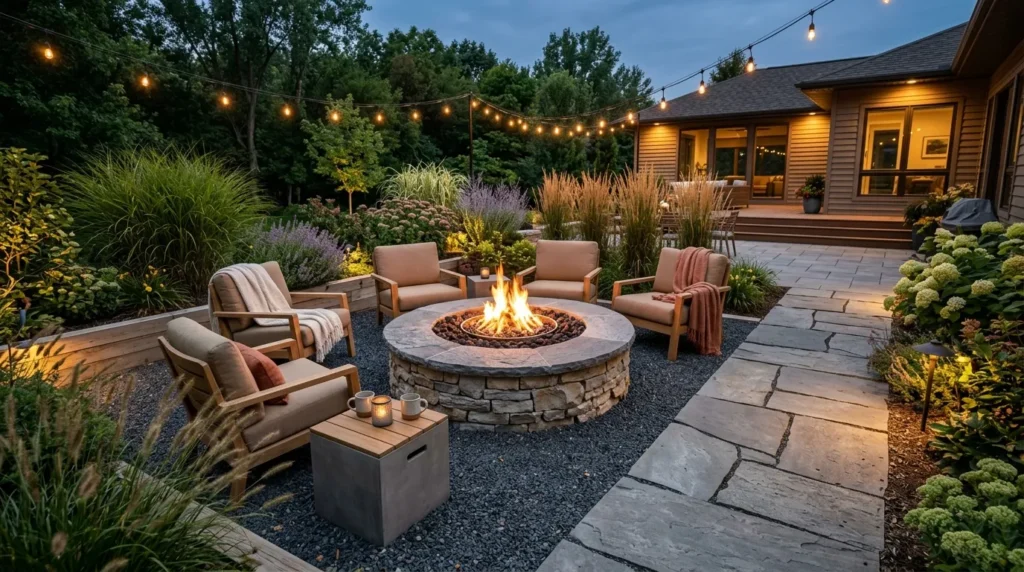
1. Concrete Block Circle
Create a clean, contemporary fire pit with simple masonry blocks arranged in a circular form.
2. Natural Stone Ring
Use irregular natural stone to create a relaxed fire pit with organic character.
3. Gravel Fire Pit
Pair a simple stone fire pit with a gravel seating area for an easy backyard gathering space.
4. Square Stone Pit
Give the backyard a modern architectural feel with a crisp square fire pit design.
5. Raised Stone Pit
Build visual height with a raised design that becomes a strong outdoor focal point.
6. Stone And Gravel
Combine contrasting textures for a modern fire pit area that feels intentional.
7. Retaining Wall Pit
Use compatible landscape masonry to create an integrated fire pit and seating arrangement.
8. Minimal Stone Pit
Keep the design understated with clean lines, neutral materials, and simple landscaping.
9. Sunken Fire Pit
Create an intimate gathering area by placing seating slightly below the surrounding landscape.
10. Fire Pit Lounge
Build the fire pit into a complete outdoor seating zone for entertaining and relaxing.
1. Concrete Block Circle
Quick Benefits
- Simple geometric appearance
- Works with modern landscapes
- Relatively straightforward design
- Easy to coordinate with outdoor furniture
- Creates a strong backyard focal point
Why It Works
A circular fire pit naturally encourages conversation because seating can be arranged around the entire perimeter. Using clean-lined concrete or masonry blocks gives the traditional shape a more contemporary appearance.
This design works particularly well when the backyard already contains straight architectural lines, such as a rectangular patio, modern fence, or geometric planting beds. The round fire pit adds contrast without making the landscape feel overly complicated.
The simplicity is also part of its appeal. Instead of relying on decorative details, the design gets its character from the shape, material, and surrounding landscape.
For a DIY project, planning is more important than rushing into construction. The foundation and placement need to be appropriate for the intended fire-pit system, and the blocks or stones must be suitable for the heat involved.
How To Style It
Choose masonry units specifically rated or appropriate for fire-pit construction rather than assuming every concrete block is safe for direct heat exposure.
Create a level, properly prepared base according to the fire-pit design and local requirements.
Keep the surrounding area simple. A circle of compacted gravel, stone, or another appropriate noncombustible surface can visually frame the pit.
Add low-profile outdoor chairs around the perimeter, leaving adequate clearance from the fire.
For a modern appearance, choose neutral gray, charcoal, beige, or warm stone tones.
2. Natural Stone Ring
Quick Benefits
- Blends naturally into gardens
- Adds organic texture
- Works with rustic and modern styles
- Creates a timeless appearance
- Pairs beautifully with greenery
Why It Works
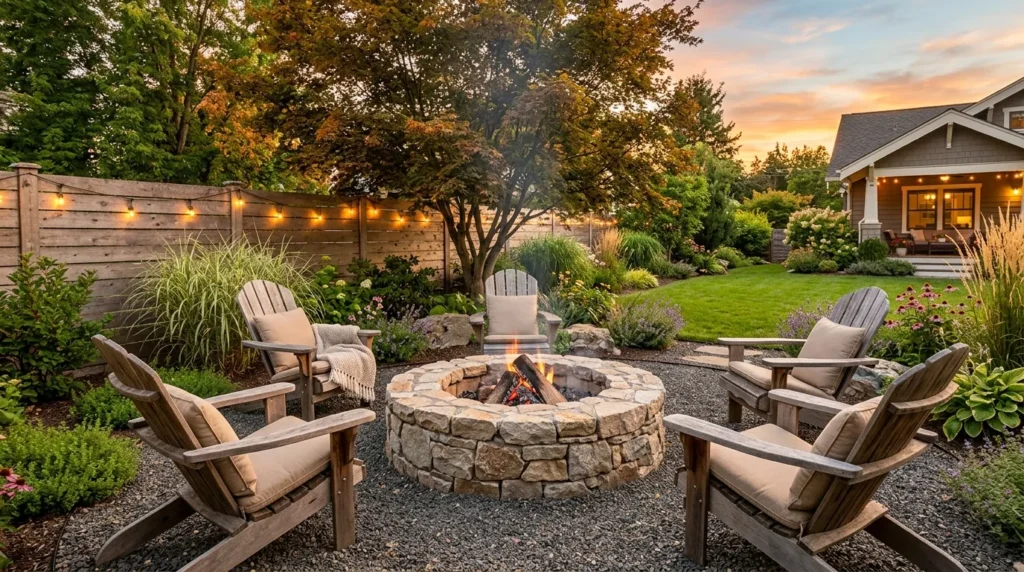
Natural stone brings variation that manufactured blocks cannot always reproduce. Each piece can have a slightly different shape, color, and texture, making the fire pit feel connected to the landscape.
The trick is to keep the surrounding design restrained. Too many different materials can make the backyard feel busy. A simple stone ring surrounded by gravel and soft planting can look remarkably polished.
Natural stone is especially effective when the rest of the yard already includes rock pathways, stone walls, or natural garden borders.
However, not every stone is appropriate for exposure to repeated high heat. The materials used within and around the fire area need to be selected with heat resistance and the specific construction method in mind.
How To Style It
Choose stones with complementary tones rather than trying to match every piece exactly.
Arrange the outer structure so it looks naturally irregular while maintaining a stable, properly constructed form.
Surround the pit with compacted gravel or another suitable noncombustible surface.
Keep plants at a safe distance from the fire feature. Low ornamental grasses and shrubs can frame the area farther away without creating a fire hazard.
Add simple wood or metal seating to contrast with the natural stone.
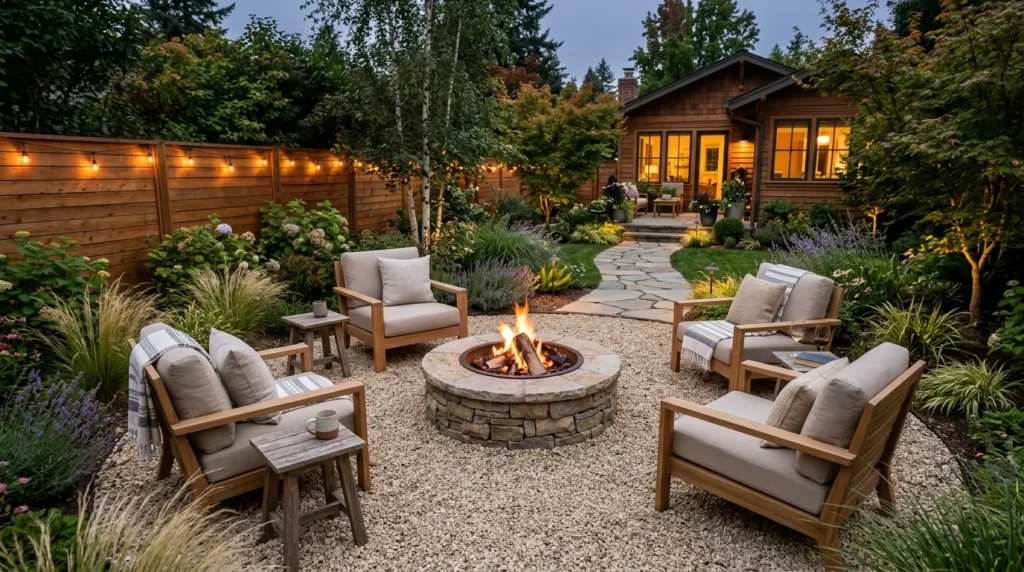
3. Gravel Fire Pit
Quick Benefits
- Creates a defined gathering area
- Complements stone beautifully
- Has a relaxed outdoor feel
- Works well in informal backyards
- Can visually separate the fire zone
Why It Works
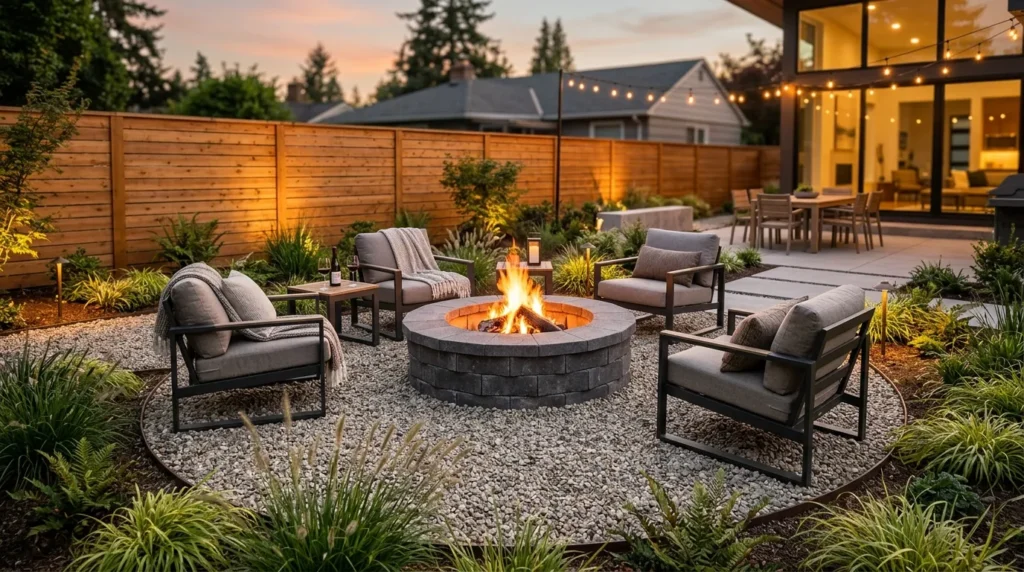
Sometimes the best way to make a fire pit stand out is not to build a complicated structure around it. A simple stone fire pit surrounded by a clearly defined gravel area can create an entire outdoor room.
Gravel provides a visual transition between the fire feature and the rest of the yard. It also gives chairs a stable-looking area to sit on while creating contrast with nearby grass or planting beds.
This style is particularly attractive for homeowners who prefer relaxed landscaping rather than formal patios.
Proper installation matters. The surface beneath and around a fire pit needs to be appropriate for the type of fire feature being used and local safety requirements.
How To Style It
Choose gravel that complements the stone color of the fire pit.
Define the seating area with a simple geometric shape such as a circle, square, or rectangle.
Place comfortable outdoor chairs around the fire pit while keeping the required clearance.
Add a pathway leading from the patio or house to make the area feel integrated into the landscape.
Keep decorative objects to a minimum. Let the stone, gravel, firelight, and surrounding greenery provide the visual interest.
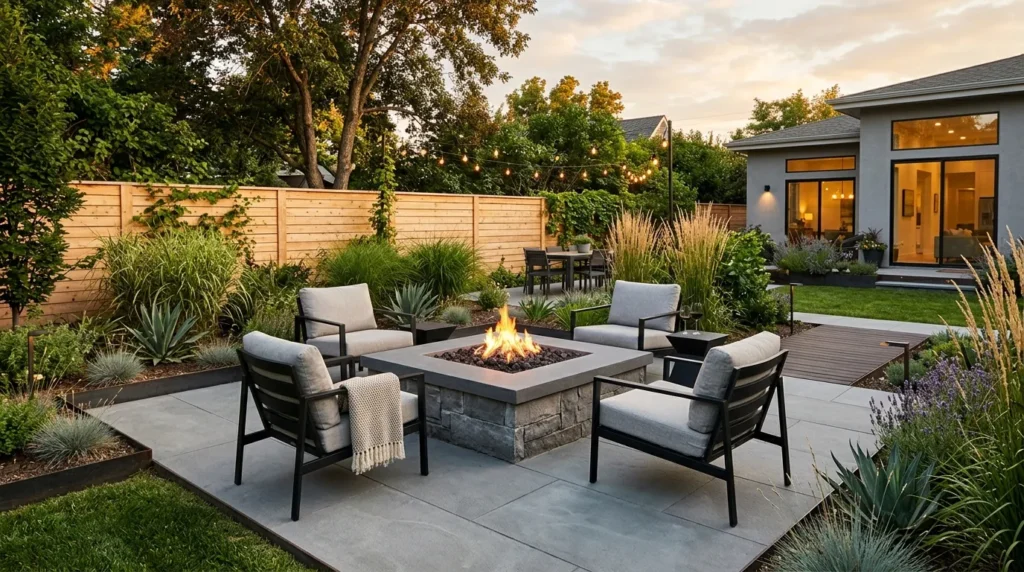
4. Square Stone Pit
Quick Benefits
- Creates a modern architectural look
- Works well with rectangular patios
- Provides strong visual structure
- Pairs with contemporary furniture
- Makes a compact space feel intentional
Why It Works
Round fire pits are classic, but a square design can feel more contemporary and architectural. Straight edges complement modern homes, rectangular patios, linear fences, and geometric garden layouts.
A square pit can also create a useful visual connection with existing hardscape. If your patio is made from rectangular pavers, for example, repeating those lines around the fire area can make the backyard feel thoughtfully planned.
This design can be especially effective in smaller yards because its geometry is easy to organize around.
As with any masonry fire pit, construction details and material selection matter. Decorative blocks that look attractive may not be suitable for direct exposure to high heat.
How To Style It
Choose a square or rectangular fire-pit form with clean edges.
Repeat the pit’s geometry in the surrounding seating arrangement or patio.
Use neutral stone colors such as gray, charcoal, cream, or soft beige.
Pair the structure with simple metal or wood furniture.
Add a large outdoor rug only in an area where it is safely separated from the fire and specifically appropriate for outdoor use.
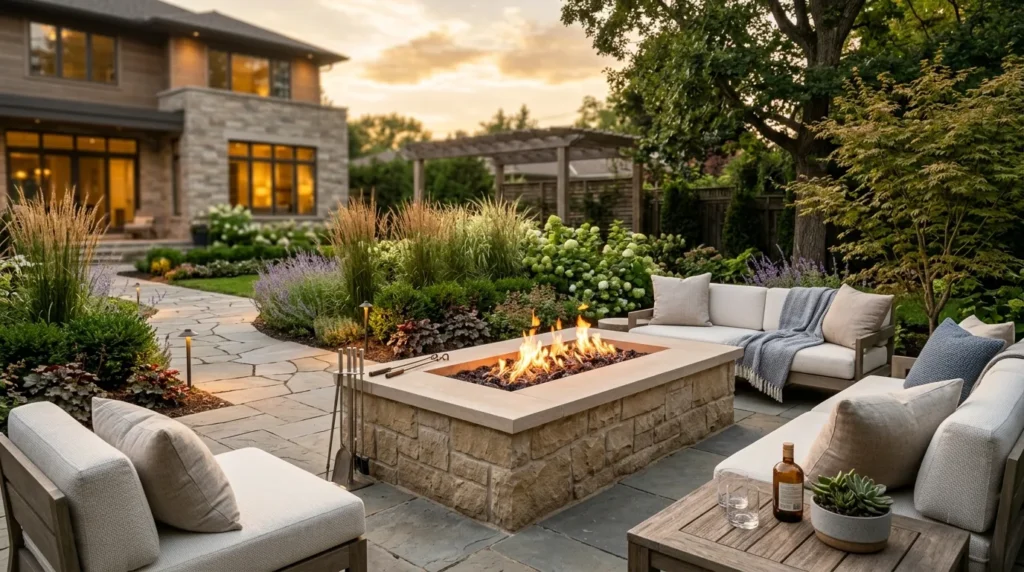
5. Raised Stone Pit
Quick Benefits
- Creates a strong focal point
- Adds visual height
- Works well with low seating
- Helps define the gathering area
- Can complement retaining walls
Why It Works
A raised fire pit can become a substantial architectural element in the backyard. Instead of sitting almost level with the surrounding landscape, the fire feature has a stronger physical presence.
This approach works particularly well when the rest of the yard contains different elevations or raised garden beds. The fire pit can become part of the existing landscape architecture rather than looking like an object placed in the middle of the lawn.
A raised structure can also visually anchor seating and make the fire area feel like a dedicated destination.
The height needs to be carefully considered for safety, comfort, and the specific fire-pit system being installed.
How To Style It
Use a simple stone or masonry finish that relates to nearby hardscape.
Keep seating slightly lower visually so the fire pit remains the central feature.
Surround the area with a noncombustible surface appropriate for the installation.
Use low planting around the outer edge, maintaining generous clearance from the fire.
For a contemporary look, combine large-format stone with streamlined outdoor chairs.
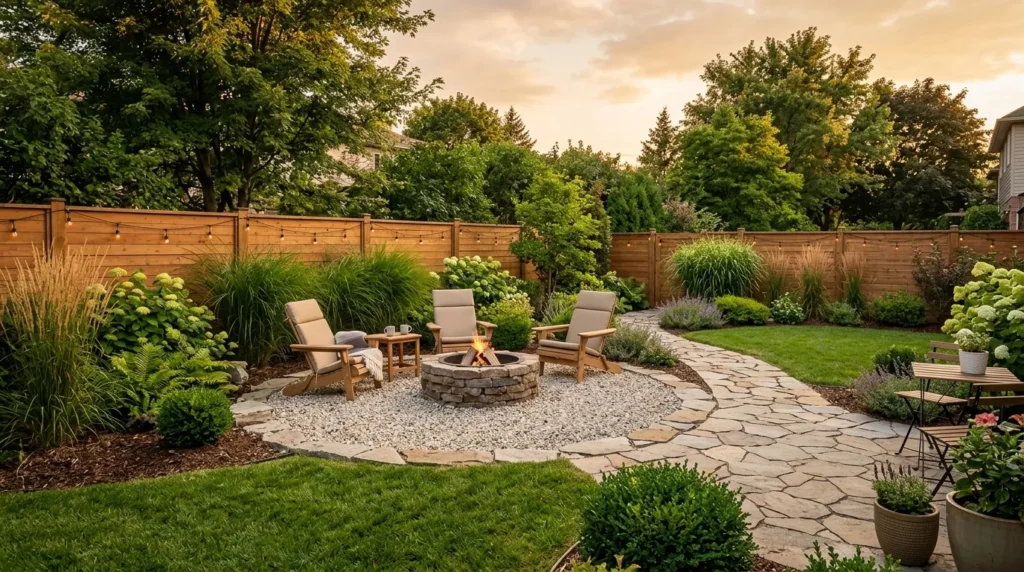
6. Stone And Gravel
Quick Benefits
- Combines contrasting textures
- Creates a polished outdoor zone
- Works with modern and rustic styles
- Visually defines the fire area
- Offers plenty of styling flexibility
Why It Works
Stone and gravel create an easy material pairing because the textures complement one another without competing.
The stone provides structure while gravel creates a softer transition around the fire pit. Together, they can make a simple fire feature look like part of a professionally considered landscape.
This combination also works across different design styles. Dark stone and charcoal gravel can feel contemporary, while warm natural stone and tan gravel can create a more relaxed garden appearance.
How To Style It
Start with a simple stone fire pit and establish a surrounding gravel zone.
Use a contrasting border if you want the area to have a stronger visual edge.
Place four to six outdoor chairs around the pit depending on available space and local safety requirements.
Repeat the stone elsewhere in the backyard through a pathway, garden border, or patio detail.
Keep the planting outside the immediate fire zone and use plants to soften the outer edges of the gravel area.
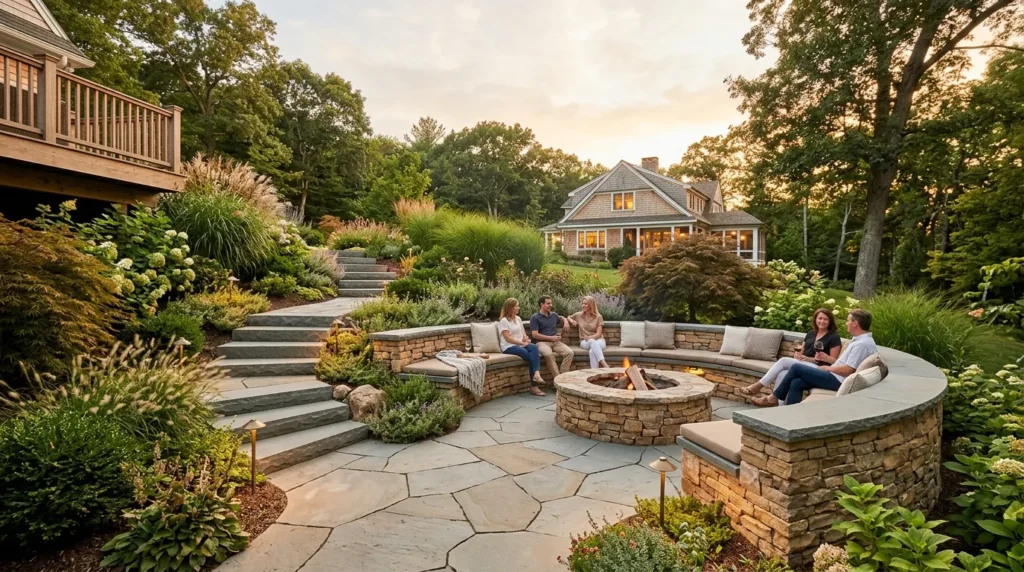
7. Retaining Wall Pit
Quick Benefits
- Integrates with existing landscape structures
- Creates architectural interest
- Works well on sloped properties
- Can visually connect multiple levels
- Provides opportunities for built-in seating
Why It Works
A retaining-wall-inspired fire pit can make excellent use of a backyard that already contains changes in elevation.
Instead of treating the fire pit as a separate object, the design can visually connect it to surrounding walls, terraces, or raised planting beds.
However, this is one of the designs where DIY construction can become more technically demanding. Retaining walls have structural requirements, and combining them with a fire feature requires careful planning.
If excavation, retaining structures, drainage, gas lines, or major hardscape are involved, professional advice may be worthwhile.
How To Style It
Match the stone or masonry finish to existing retaining walls.
Create a level gathering surface around the fire feature.
Use built-in or freestanding seating positioned at an appropriate distance.
Soften the surrounding structure with carefully selected planting.
Keep drainage in mind so water does not collect around the fire-pit foundation.
The final design should look like a natural extension of the landscape rather than an isolated masonry project.
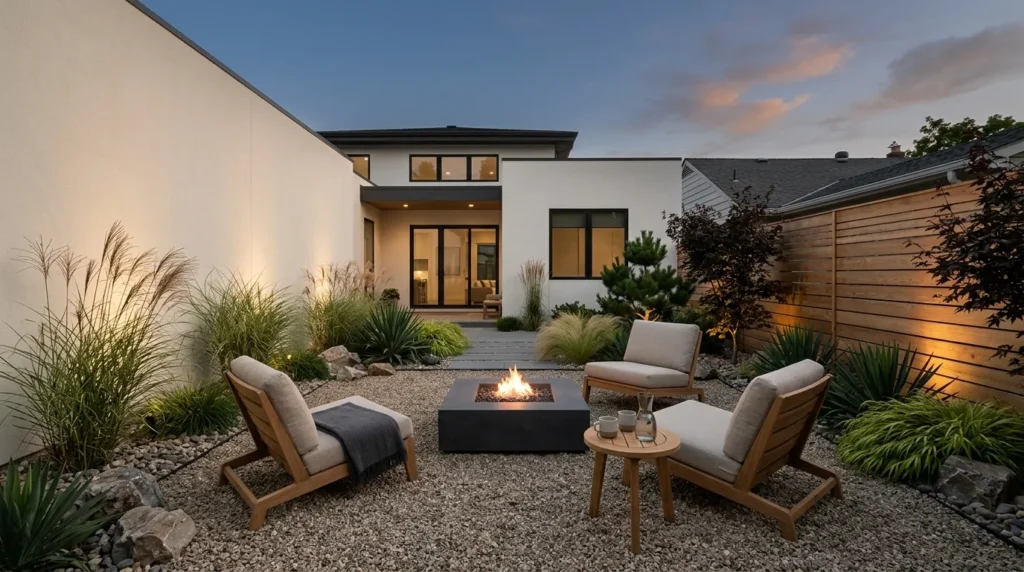
8. Minimal Stone Pit
Quick Benefits
- Fits contemporary landscapes
- Keeps the backyard visually calm
- Requires fewer decorative elements
- Highlights material quality
- Works well in smaller spaces
Why It Works
Modern landscaping often depends on restraint. A minimal fire pit can become a striking feature simply because the surrounding landscape is carefully edited.
Rather than adding multiple decorative materials, focus on one beautiful stone finish, a simple shape, and comfortable seating.
This approach works particularly well for homeowners who prefer clean architecture and uncluttered outdoor spaces.
The surrounding landscape becomes just as important as the fire pit itself. A few well-positioned trees, grasses, or sculptural plants can provide enough softness without competing with the central feature.
How To Style It
Choose one dominant stone or masonry material.
Keep the shape crisp and uncomplicated.
Use neutral outdoor furniture with simple silhouettes.
Add subtle landscape lighting around pathways and planting beds rather than over-lighting the fire pit itself.
Allow plenty of negative space around the feature. That empty space is part of the design.
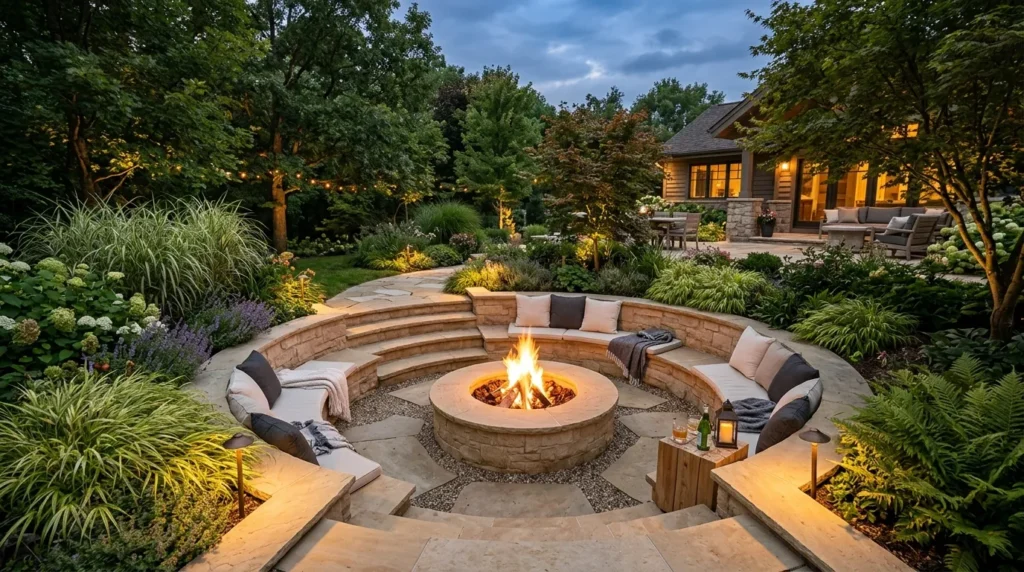
9. Sunken Fire Pit
Quick Benefits
- Creates an intimate atmosphere
- Separates the fire area visually
- Makes a large yard feel more organized
- Creates a strong gathering destination
- Can work beautifully with natural stone
Why It Works
A sunken fire pit creates a distinct outdoor room by lowering the seating area relative to the surrounding landscape.
The change in elevation naturally draws attention toward the center and can make the space feel more intimate. It is particularly striking in larger yards where a conventional fire pit might otherwise feel lost.
This is also one of the more complex approaches because excavation, drainage, retaining structures, access, and safety all become important considerations.
For that reason, a professional assessment may be appropriate depending on the site’s conditions.
How To Style It
Use broad natural stone steps to transition into the lower area.
Build a stable perimeter using materials appropriate for the design.
Choose seating that follows the curve or geometry of the fire pit.
Keep the surrounding landscape relatively simple so the change in elevation remains the focal point.
Use subtle lighting along steps and pathways to improve visibility after dark.
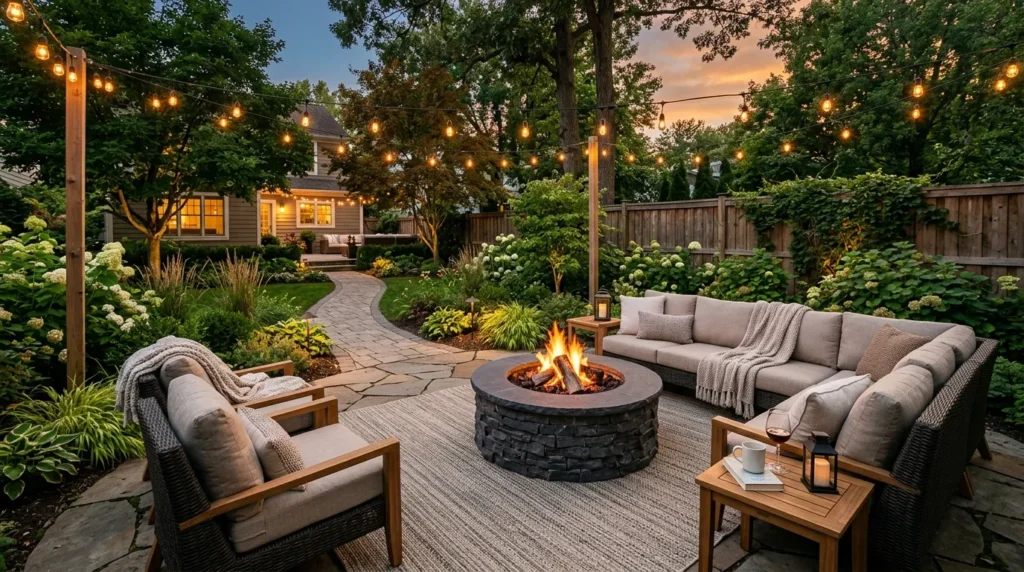
10. Fire Pit Lounge
Quick Benefits
- Creates a complete outdoor destination
- Encourages entertaining
- Combines multiple design elements
- Makes a large backyard more functional
- Adds comfort beyond the fire feature
Why It Works
The fire pit itself is only one part of the experience. Comfortable seating, lighting, landscaping, and a clear surface around it can turn the feature into a true outdoor lounge.
This approach is ideal when the goal is to spend extended evenings outside rather than simply adding a decorative fire feature.
A lounge-style layout can also help connect the fire pit to the rest of the backyard. A pathway from the patio, coordinated materials, and repeated plants can make the area feel like part of one cohesive landscape.
How To Style It
Arrange seating so guests can comfortably face one another while still enjoying the fire.
Use outdoor lounge chairs or sofas with weather-appropriate cushions.
Add a small side table for drinks and snacks, positioned safely away from the fire.
Frame the area with low landscaping, stone pathways, or gravel.
Use warm landscape lighting around the perimeter rather than relying entirely on the fire for illumination.
How To Choose The Right Stone For A Fire Pit
Stone can dramatically influence the appearance of a fire pit, but appearance should never be the only consideration.
Before choosing materials, determine what the fire pit actually requires. Some systems are designed for specific masonry components, liners, inserts, or manufactured fire-pit blocks.
Natural stone varies considerably in composition and behavior when exposed to heat. Moisture trapped inside certain materials can cause cracking or potentially dangerous breakage when rapidly heated.
For DIY projects, follow the instructions for the specific fire-pit system and choose materials explicitly recommended for that application.
For the outer decorative layer, you can often coordinate the appearance with nearby hardscape, but the fire-exposed components still need to meet the appropriate specifications.
Consider:
- Heat resistance
- Moisture exposure
- Structural stability
- Local weather conditions
- Manufacturer requirements
- Local fire regulations
- Long-term maintenance
When in doubt, consult a qualified masonry or landscape professional rather than guessing.
How To Create A Safe Fire Pit Area
A beautiful fire pit needs an equally thoughtful safety plan.
Start by checking local requirements before construction. Rules can vary by municipality, and some communities have restrictions related to open flames, wood-burning fire pits, setbacks, smoke, or seasonal conditions.
The fire pit should be positioned on a stable, appropriate surface and away from structures, combustible fencing, low branches, and other potential hazards.
Keep seating and decorative materials at a safe distance.
Never leave an active fire unattended, and make sure the fire is fully extinguished before leaving the area.
Dry vegetation, windy conditions, and drought restrictions can dramatically change whether a fire pit is appropriate on a particular day.
For gas fire features, use properly rated equipment and have gas connections installed or inspected by qualified professionals where required.
A DIY project should never involve improvising with materials or fuel systems simply to save money.
How To Design The Area Around Your Fire Pit
The space around the fire pit can make the difference between a feature that feels random and one that feels professionally integrated.
Begin with the surface.
A suitable patio, gravel area, or other approved noncombustible surface can visually distinguish the fire zone from the lawn.
Then consider seating.
Arrange chairs or benches so people can comfortably face the fire without creating cramped pathways.
Next, add landscape structure.
A few shrubs, ornamental grasses, trees, or raised beds can frame the area while maintaining appropriate clearance.
Finally, connect the fire pit to the rest of the backyard.
A stone pathway from the patio can make the fire area feel like an intentional destination.
Repeat materials where possible. If the fire pit uses warm beige stone, introducing the same stone in a nearby pathway or garden border can create continuity.
Modern Fire Pit Color Combinations
Stone gives you plenty of options for creating a cohesive outdoor palette.
Gray And Charcoal
A sophisticated combination for contemporary homes and modern patios.
Warm Beige And Cream
Works beautifully with natural wood, neutral furniture, and relaxed landscaping.
Charcoal And Natural Wood
Creates a strong contrast while keeping the overall palette simple.
Tan Stone And Greenery
Ideal for naturalistic gardens and softer backyard landscapes.
Light Gray And White
Creates an airy appearance that works well with modern outdoor furniture.
The best color combination usually repeats existing materials from the home or backyard rather than introducing an entirely unrelated palette.
Common DIY Fire Pit Mistakes
Using Decorative Materials Not Rated For Heat
A stone or block may look ideal but still be unsuitable for direct fire exposure.
Building Too Close To Structures
Fire features require appropriate clearances. Always check local requirements and the specific fire-pit manufacturer’s instructions.
Skipping The Base Preparation
A poorly prepared foundation can lead to settling, shifting, or structural problems.
Ignoring Drainage
Water can collect around fire-pit structures, especially after heavy rain. Proper drainage should be considered during planning.
Making The Fire Pit Too Large
A larger fire pit is not automatically better. The size should match the yard and the number of people who will realistically use it.
Forgetting Seating Clearance
People need enough room to move safely around the fire pit.
Treating The Fire Pit As A Standalone Object
Connecting the fire pit visually to pathways, patios, planting, and outdoor furniture creates a much more cohesive landscape.
How To Make A Small Backyard Fire Pit Feel Special
You do not need a huge backyard to create a memorable fire pit area.
In a compact yard, prioritize proportion.
Choose a smaller fire feature and keep the surrounding furniture streamlined. A circular arrangement can make efficient use of limited space, while a square pit may work better when the yard has a more architectural layout.
Use one main hardscape material and avoid introducing too many competing textures.
Vertical elements can also help. A privacy screen, trellis, or carefully positioned tree can give the fire area a sense of enclosure without consuming much floor space.
Lighting is another useful tool. A few well-positioned fixtures can make the space feel intentional after dark.
Most importantly, preserve pathways. A small backyard feels much smaller when every inch is occupied.
Related Articles
- 10 Backyard Landscaping Ideas for a Beautiful Outdoor Retreat
- 10 Backyard Patio Ideas for Cozy Outdoor Living
- 10 Backyard Privacy Ideas for a More Peaceful Space
- 10 Small Backyard Ideas That Make Every Inch Count
- 10 Outdoor Living Ideas for Entertaining at Home
Frequently Asked Questions
What is the easiest type of DIY fire pit to build?
A simple, freestanding fire pit kit or properly designed masonry ring can be easier than a complex built-in structure. The simplest option still requires appropriate materials, a stable base, adequate clearance, and compliance with local fire regulations. Always follow the instructions for the specific fire-pit system instead of assuming that any stone or block is suitable.
What stone is best for a fire pit?
The appropriate stone depends on how it will be used. Materials directly exposed to high heat should be specifically rated or recommended for fire-pit applications. Natural decorative stone can be used in some designs as an outer finish, but not every type is suitable for direct heat. Follow manufacturer recommendations and consult a professional when uncertain.
Can I build a fire pit directly on grass?
A fire pit should not simply be placed directly on grass without considering heat, stability, sparks, drainage, and local regulations. A properly prepared surface appropriate for the fire pit is generally a better approach. The surrounding area should also be kept clear of dry vegetation and combustible materials.
How far should a fire pit be from a house?
Required clearances vary depending on the type of fire pit, local regulations, fuel source, and manufacturer instructions. Check your municipality’s fire rules and the installation requirements for your specific fire pit before choosing a location. Never rely on a generic distance when local requirements may be different.
Can I put seating around a fire pit?
Yes, seating is one of the best ways to turn a fire pit into a usable outdoor gathering space, provided the furniture is positioned at a safe distance. Leave adequate room for people to move around the seating and keep combustible furniture, cushions, and textiles away from direct heat and sparks.
How can I make a fire pit look modern?
Choose a simple geometric shape, restrained color palette, clean masonry, and streamlined furniture. Gray, charcoal, beige, and natural stone tones work particularly well with contemporary landscapes. Repeating the fire-pit material in nearby pathways or garden borders can also create a cohesive appearance.
Is a DIY fire pit safe?
A DIY fire pit can be safe when it is properly designed, constructed with suitable materials, placed according to local requirements, and used responsibly. Safety becomes more complicated when projects involve gas lines, electrical systems, retaining walls, significant excavation, or structural masonry. For those situations, qualified professional assistance may be appropriate.
Conclusion
A modern stone fire pit can become one of the most inviting features in a backyard, but the best designs are about more than the fire itself. The stone, seating, ground surface, pathways, planting, and lighting all contribute to how the finished space feels.
If you want a straightforward project, a simple circular stone design surrounded by gravel can create an impressive gathering area. For a more contemporary landscape, a square or minimalist fire pit can echo the clean lines of the home. Larger properties may benefit from a raised, zoned, or sunken design that creates a stronger outdoor destination.
Whatever style you choose, begin with safety and local requirements. Select materials appropriate for fire-pit construction, plan the surrounding clearance, and think about drainage and long-term maintenance before building.
Then focus on comfort. Position seating so conversation feels natural, connect the fire pit to the rest of the backyard with pathways or repeated materials, and use subtle lighting to make the area enjoyable after sunset.
You do not need an elaborate outdoor renovation to create a memorable backyard. A thoughtfully planned fire pit, surrounded by the right materials and comfortable seating, can give your outdoor space an entirely new purpose.