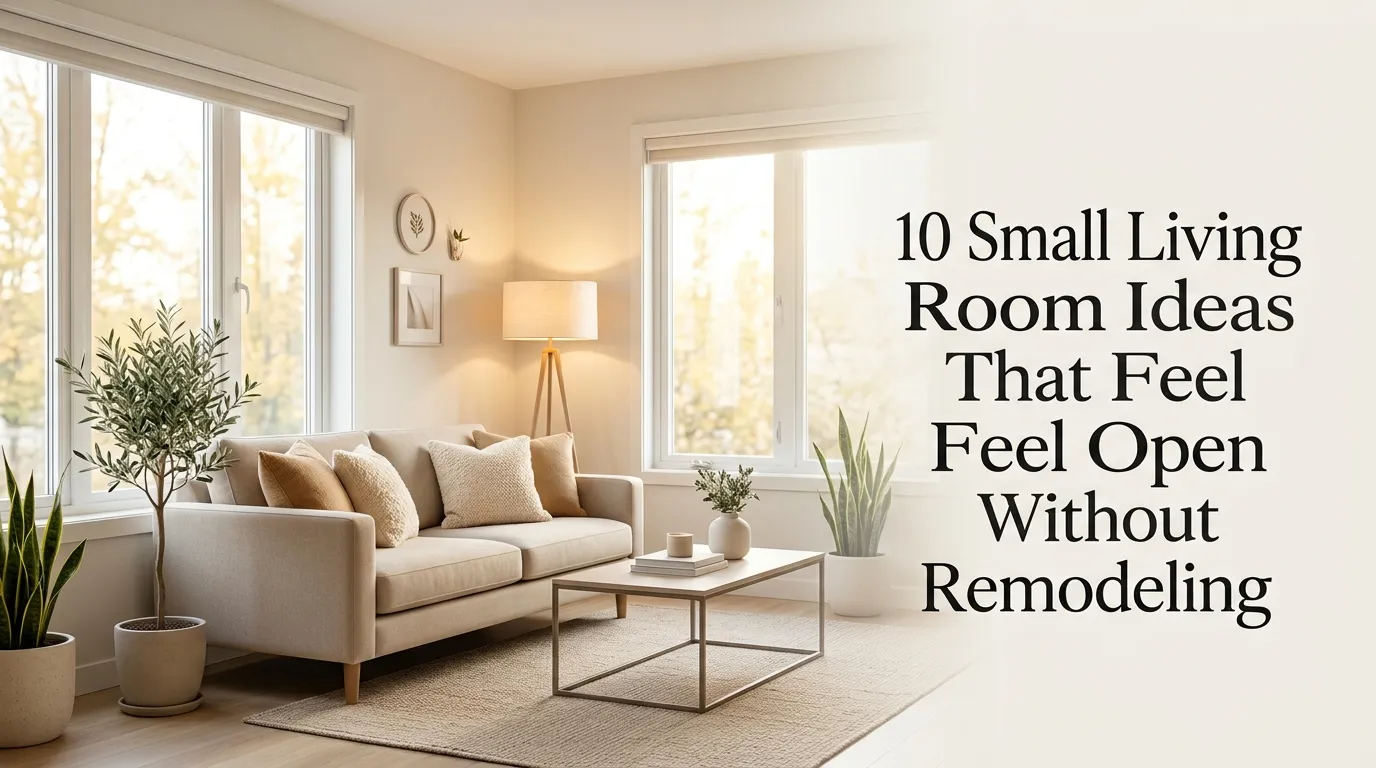
10 Small Living Room Ideas That Feel Open Without Remodeling
A small living room does not have to feel cramped, crowded, or difficult to decorate. In fact, some of the most comfortable living spaces are compact rooms that use light, scale, color, and smart furniture placement to create a surprisingly open feeling.
The challenge is usually not the square footage itself. It is what happens inside those few feet. A bulky sofa can block a walkway, too many small decorative pieces can make surfaces look busy, and dark colors can sometimes make walls feel closer than they actually are. Even furniture that looks beautiful on its own can become overwhelming when several pieces compete for limited space.
The good news is that you do not need to knock down a wall or start an expensive renovation to change the way your living room feels. Small adjustments can make a meaningful difference. Moving a sofa a few inches, choosing a lighter area rug, raising curtains closer to the ceiling, or replacing a solid coffee table with a visually lighter design can completely change the room’s appearance.
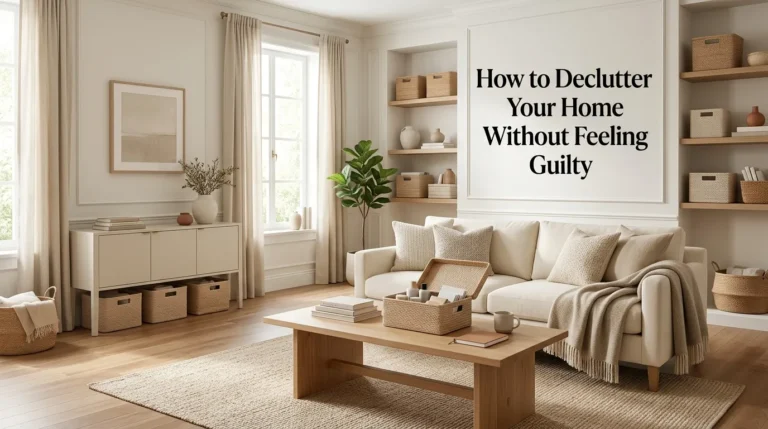
I’ve noticed that the best small living rooms are rarely the ones with the fewest belongings. Instead, they are rooms where every major piece has a purpose and the eye has enough breathing room to move around.
The ideas below focus on practical decorating changes that work for homeowners and renters alike. You’ll find simple ways to improve circulation, reflect natural light, choose furniture that fits the room, and create a polished look without remodeling.
Table of Contents
1. Light Furniture Placement
Create clearer pathways and give the room more visual breathing space.
2. Reflective Surface Accents
Use mirrors and reflective finishes to bounce light around the room.
3. Leggy Furniture Pieces
Choose furniture with visible floor space underneath to create an airy effect.
4. Soft Neutral Layers
Build a calm palette that makes the room feel cohesive rather than crowded.
5. Floor To Ceiling Curtains
Use window treatments to draw the eye upward and emphasize ceiling height.
6. Slim Coffee Tables
Replace oversized center tables with pieces that preserve circulation.
7. Strategic Mirror Placement
Place mirrors where they can visually extend the room and reflect useful light.
8. Open Storage Solutions
Reduce visual clutter while keeping everyday essentials accessible.
9. Layered Lighting
Combine several light sources to eliminate dark corners and add depth.
10. One Strong Focal Point
Give the room a clear visual anchor instead of competing with too many accents.
1. Light Furniture Placement
Quick Benefits
- Creates easier walking paths
- Makes the floor plan easier to read
- Prevents furniture from feeling oversized
- Gives windows and doors more breathing room
- Makes a compact room feel intentionally arranged
Why It Works
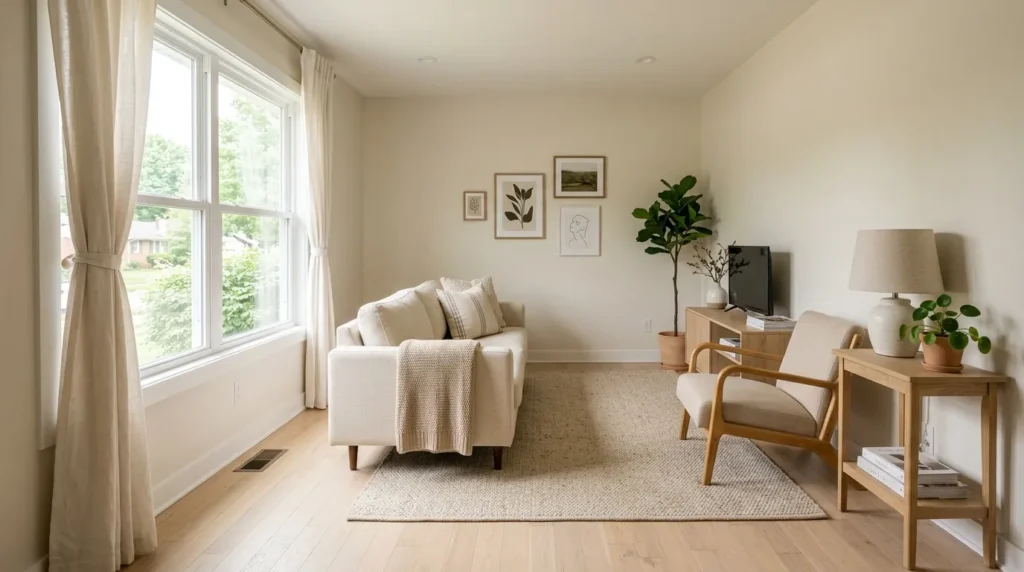
Furniture placement can have more impact on a small living room than the amount of furniture you own. When pieces are pushed into awkward positions or block natural pathways, the room immediately feels tighter. A better arrangement allows the eye to move naturally from one area to another.
Start by identifying the main path through the room. You may need a clear route between the entrance and hallway, between the sofa and another seating area, or from the living room toward an adjoining kitchen. Keeping that route visually open makes the entire space feel more spacious.
Another useful principle is avoiding the temptation to place every piece directly against a wall. Depending on the room, pulling a sofa slightly away from the wall can actually create a more intentional arrangement. Even a small amount of breathing room can make furniture look less crowded.
How To Style It
Begin with the largest piece, usually the sofa. Position it so it supports conversation without interrupting the room’s primary walkway. If you have an accent chair, angle it slightly toward the sofa rather than placing it directly opposite it.
Keep side tables appropriately scaled. A narrow table beside the sofa can provide enough room for a lamp and drink without consuming valuable floor space.
If your living room is particularly narrow, consider placing furniture along one dominant wall and keeping the opposite side visually lighter. A compact chair, small stool, or floor lamp may be enough to complete the arrangement.
Before buying anything new, experiment with your existing pieces. Temporarily moving furniture can reveal that your room has more usable space than you originally thought.
2. Reflective Surface Accents
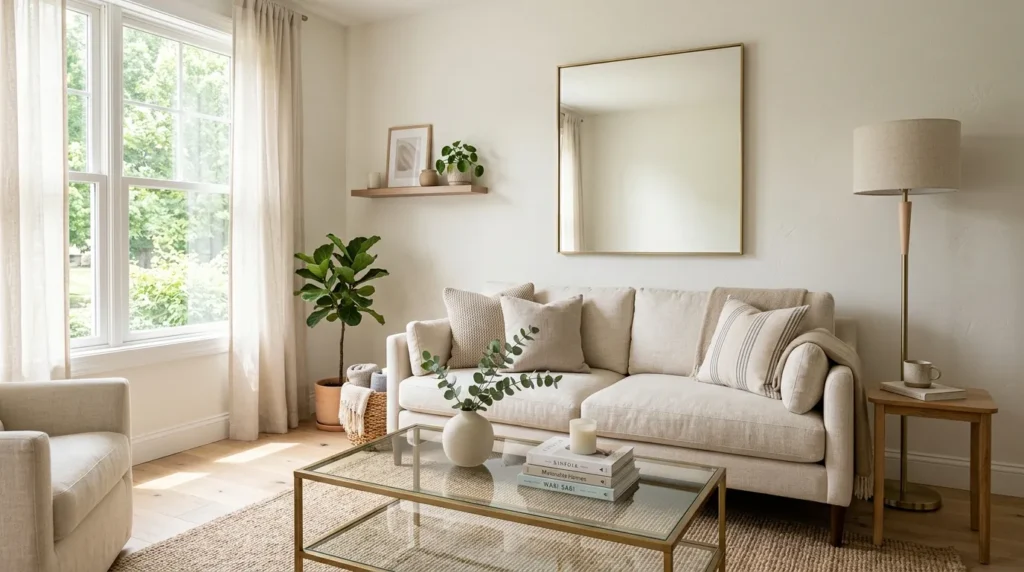
Quick Benefits
- Helps distribute natural light
- Adds visual depth
- Makes walls feel less enclosed
- Creates decorative interest without bulky furniture
- Works well with many decorating styles
Why It Works
Reflective surfaces can make a compact room feel brighter because they bounce available light around the space. A mirror is the most obvious option, but it is not the only one. Glass tabletops, polished metal accents, glossy ceramic pieces, and lightly reflective frames can also contribute to a brighter visual atmosphere.
The important thing is moderation. Covering every surface with shiny finishes can make a room feel busy rather than spacious. One or two carefully chosen reflective elements are generally more effective.
A mirror is particularly useful when positioned where it reflects a window, bright wall, or attractive architectural feature. This creates the impression of another visual opening rather than simply adding a decorative object.
This approach works especially well in living rooms that receive limited daylight. Instead of trying to make the room brighter by adding more decor, use the available light more intelligently.
How To Style It
Try a large, simple mirror above a console or behind a small seating area. Choose a frame that matches the room’s existing style. A thin black frame works well in modern spaces, while wood can soften a traditional or relaxed room.
A round mirror can introduce softer shapes when the room contains lots of straight lines. For a more contemporary look, consider a large rectangular mirror with a slim frame.
You can also introduce subtle reflective details through metal table lamps, glass vases, or a coffee table with a transparent top.
Avoid placing mirrors where they reflect visual clutter. A mirror facing a messy shelf or crowded corner simply doubles the distraction. Instead, use reflections strategically to emphasize light, greenery, artwork, or an attractive view.
3. Leggy Furniture Pieces
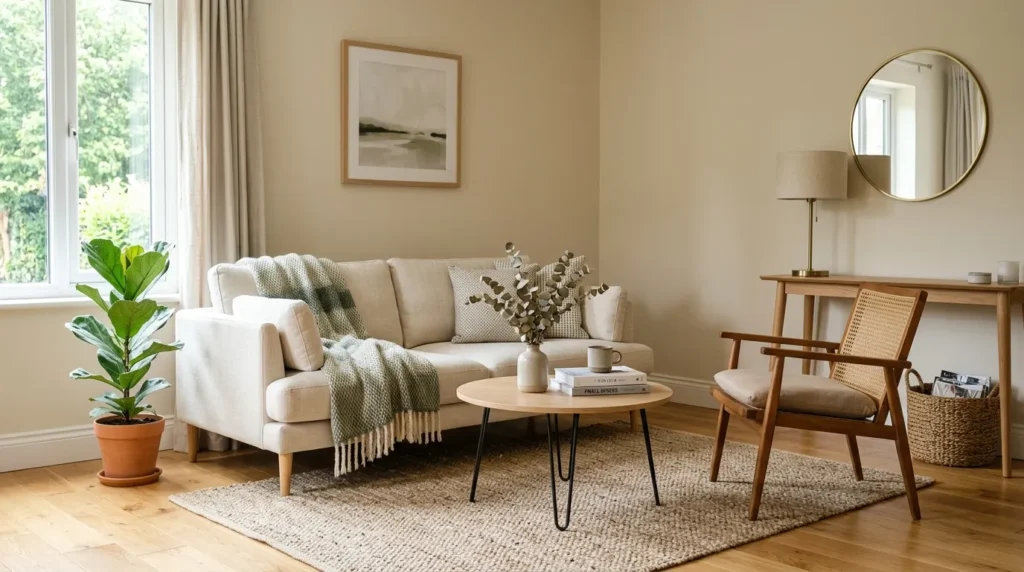
Quick Benefits
- Reveals more visible floor
- Creates a lighter visual footprint
- Makes cleaning easier
- Prevents furniture from looking boxy
- Works particularly well in compact rooms
Why It Works
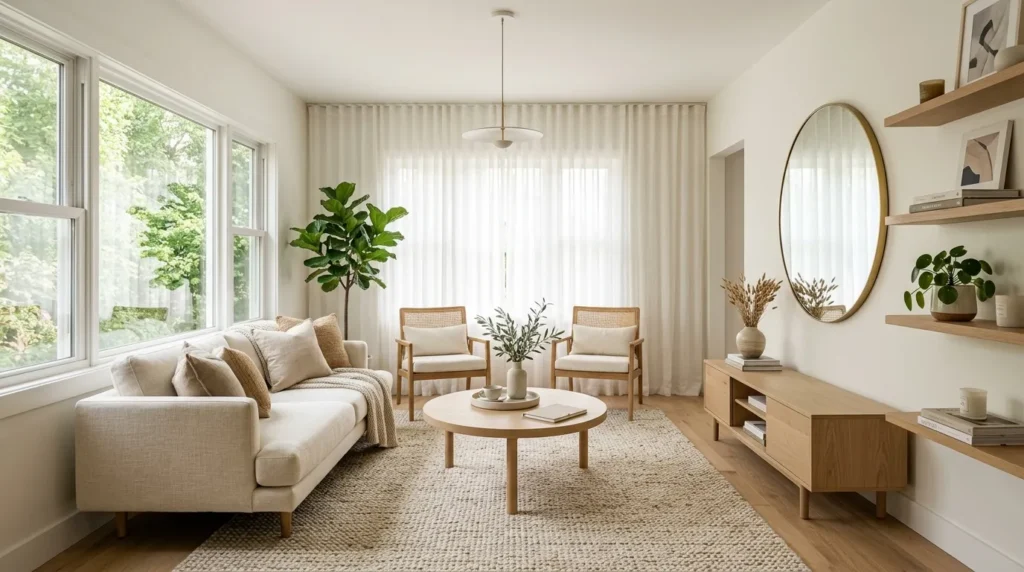
One of the easiest ways to make a small room look less heavy is to choose furniture that allows you to see some of the floor underneath it. Sofas, chairs, consoles, and cabinets with raised legs create a small gap between the furniture and floor, giving the room a more open appearance.
The difference may seem subtle, but visual weight matters in a compact space. A large upholstered sofa that extends all the way to the floor can appear considerably heavier than a similarly sized sofa with exposed legs.
This does not mean every piece needs to be raised. In fact, mixing different heights can make the room more interesting. The goal is simply to avoid having every major item look like one large solid block.
How To Style It
Look for sofas with tapered, wooden, metal, or slim upholstered legs. Pair the sofa with an accent chair that has a similarly light base.
A narrow console with open space underneath can work beautifully behind a sofa or against a wall. If you need storage, consider a cabinet raised slightly above the floor rather than a massive floor-to-ceiling unit.
When choosing an area rug, allow enough of the floor around the furniture to remain visible. This creates a visual frame around the seating arrangement.
You can also use this technique with occasional tables. A small round table with a slim base often occupies less visual space than a chunky square table, even when the two provide similar functionality.
4. Soft Neutral Layers
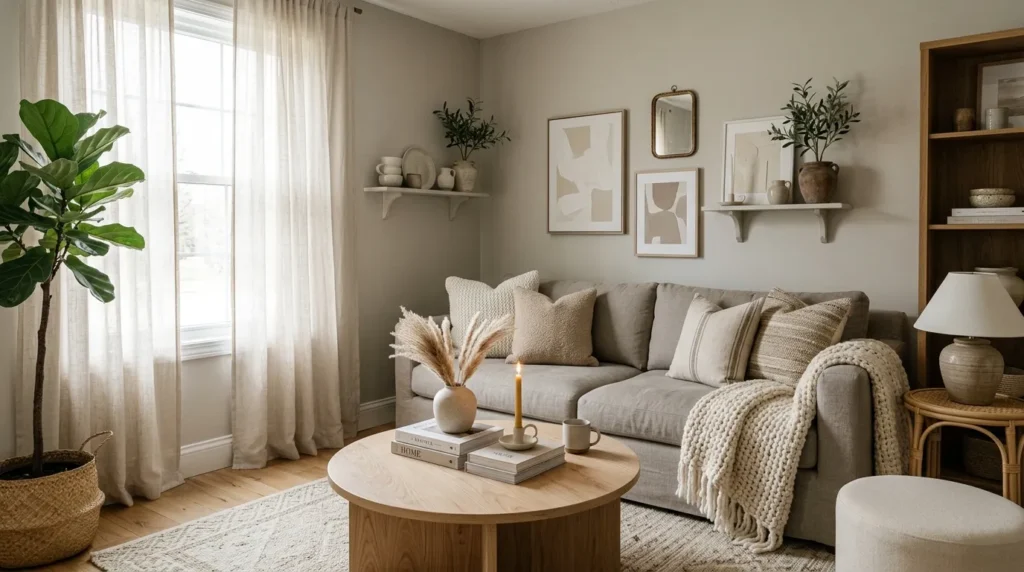
Quick Benefits
- Creates visual continuity
- Makes the room feel calmer
- Reduces harsh contrasts
- Helps small spaces feel cohesive
- Provides an easy foundation for seasonal accents
Why It Works
A soft neutral color palette can help a compact living room feel more connected because the eye encounters fewer abrupt changes between surfaces. Shades such as warm white, cream, beige, taupe, soft gray, and muted greige can create a gentle backdrop without making the room feel sterile.
The key is layering rather than using one color everywhere. A room decorated entirely in one flat shade can lack depth. Instead, combine several related tones through upholstery, rugs, curtains, pillows, wood finishes, and artwork.
Warm neutrals can be particularly inviting in living spaces because they work well with natural materials. Light oak, woven baskets, linen, cotton, and rattan can add texture without introducing overwhelming visual contrast.
How To Style It
Start with a simple base color for the walls or largest furniture piece. Then add two or three complementary neutrals.
For example, a cream sofa can be paired with a light beige rug, warm white curtains, and pale wood furniture. Add texture through a boucle pillow, woven basket, linen throw, or subtly patterned cushion.
If you love color, there is no reason to eliminate it. Instead, use stronger colors in small doses. A muted blue pillow, olive green plant pot, or terracotta accent can provide personality while keeping the overall room cohesive.
One useful trick is repeating the same accent color in several places. This makes decorative pieces feel connected rather than randomly scattered throughout the room.
5. Floor To Ceiling Curtains
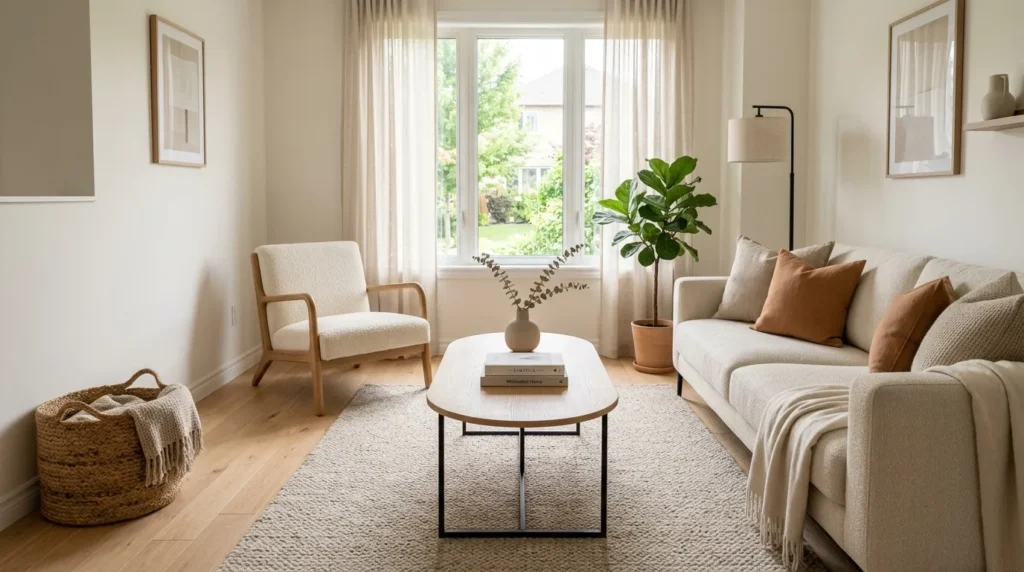
Quick Benefits
- Draws attention upward
- Emphasizes ceiling height
- Makes windows appear larger
- Softens hard architectural lines
- Adds warmth without consuming floor space
Why It Works
Window treatments can change the proportions of a room more than many people expect. Hanging curtains just above the window frame can visually emphasize the exact size of the window. Mounting the curtain rod higher and allowing the fabric to extend toward the floor draws the eye upward instead.
This is especially useful when a small living room has average or low ceilings. The vertical line created by long curtains can make the room feel taller and more elegant.
The fabric itself also matters. Heavy, dark curtains may look beautiful but can create a stronger visual block. Lightweight linen, cotton, or linen-look fabrics allow more light to filter through while still providing privacy.
How To Style It
Mount the curtain rod several inches above the window frame when the wall allows it. Extending the rod beyond both sides of the window can also make the window appear wider.
Choose curtains that reach close to the floor rather than stopping awkwardly at the bottom of the window. A soft ivory, warm white, beige, or light gray fabric can maintain an airy look.
For a more polished appearance, use simple panels with minimal patterns. If the rest of the room is very neutral, subtle vertical texture can add interest without creating visual clutter.
Keep the area directly around the window relatively open. Avoid placing a tall cabinet or oversized plant directly in front of the curtains, as this can interrupt the vertical effect you’re trying to create.
6. Slim Coffee Tables
Quick Benefits
- Preserves walking space
- Reduces visual bulk
- Makes cleaning easier
- Supports everyday living
- Provides a practical centerpiece
Why It Works
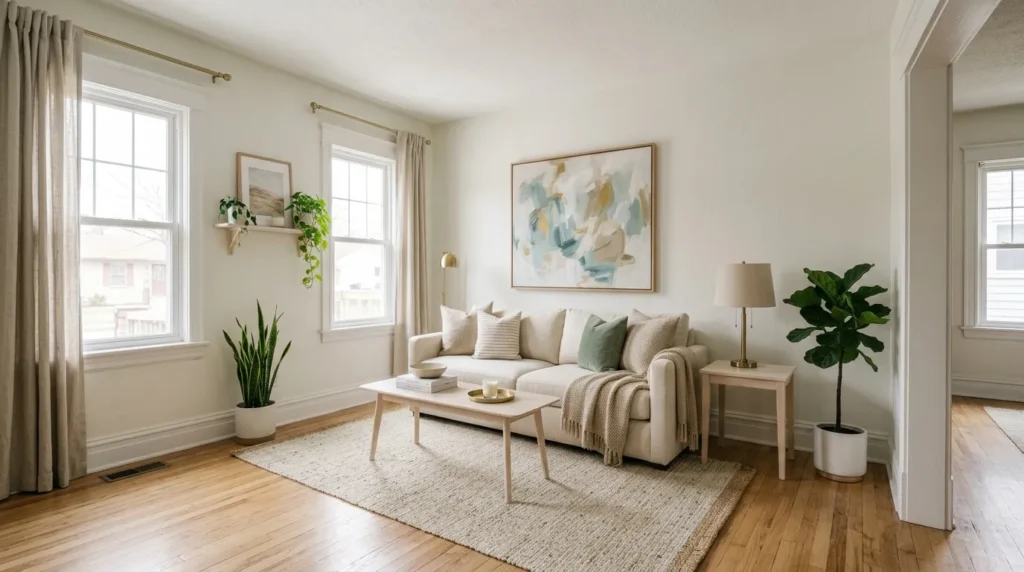
The coffee table sits near the center of most living rooms, so its size and shape have an outsized effect on how open the room feels. An oversized rectangular table can quickly become an obstacle, particularly when the sofa and television are already close together.
A slimmer table gives you the functionality you need without making the center of the room feel blocked.
Round and oval tables are especially useful in compact rooms because they eliminate sharp corners and can make movement around the table easier. A narrow rectangular table can work well when the room itself is long and narrow.
The best choice depends on your furniture dimensions and how you actually use the space. A beautiful table that makes it difficult to walk around the sofa is not a practical solution.
How To Style It
Choose a table that leaves comfortable circulation around the seating area. Before purchasing, measure the space and use painter’s tape on the floor to outline the approximate dimensions of the table.
Glass or acrylic tops can create an especially light appearance because you can see the floor underneath. If transparent furniture does not suit your style, choose a wood or metal table with a slim profile instead.
Keep the tabletop styling restrained. A low tray, small vase, coffee-table book, or candle can be enough.
If you regularly need extra storage, look for a table with one narrow lower shelf. Avoid filling the shelf completely. Leaving some empty space helps maintain the room’s airy appearance.
7. Strategic Mirror Placement
Quick Benefits
- Creates visual depth
- Reflects natural light
- Adds a decorative focal point
- Can make a narrow wall feel larger
- Provides impact without taking floor space
Why It Works
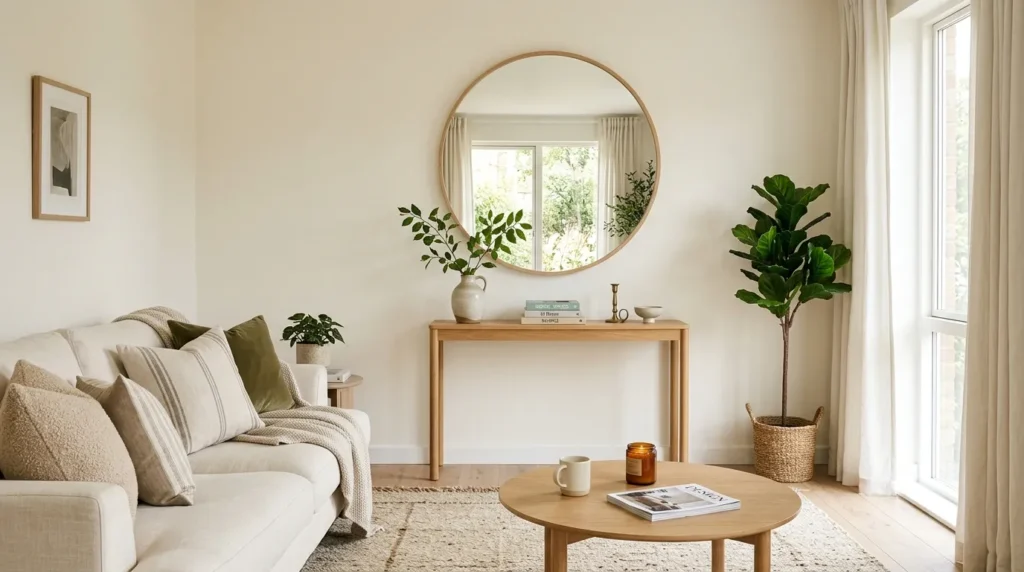
Mirrors are one of the most useful decorating tools for compact interiors, but placement matters more than size alone. A mirror can visually expand a room when it reflects something bright or attractive.
For example, positioning a mirror opposite or near a window can reflect daylight and make the room appear brighter. A mirror placed at the end of a narrow visual axis can also create the impression of additional depth.
The mistake is treating a mirror as a random wall decoration. Its reflection becomes part of the room’s design, so consider what will appear inside it before hanging it.
A large mirror does not automatically make a room look better. The shape, frame, height, and reflection all need to work with the rest of the space.
How To Style It
Try a large round mirror above a compact console for a softer look, or use a tall rectangular mirror to emphasize vertical space.
If your living room has a beautiful window view, consider a position that captures part of that view. If the room has a favorite artwork arrangement, a mirror can sometimes reflect it and reinforce the focal area.
For renters, leaning a large framed mirror against a wall can be an attractive alternative to drilling into the wall. Just make sure it is positioned securely, particularly in homes with children or pets.
Keep surrounding wall decor simple. A mirror already creates a strong visual element, so it often works best when given enough surrounding space.
8. Open Storage Solutions
Quick Benefits
- Controls everyday clutter
- Keeps essential items accessible
- Makes storage feel less bulky
- Adds vertical organization
- Helps surfaces stay visually clear
Why It Works
Clutter has a powerful effect on how spacious a room feels. Even when the furniture arrangement is excellent, stacks of books, remote controls, toys, chargers, blankets, and miscellaneous objects can quickly make a compact room appear smaller.
Smart storage solves this without requiring built-in cabinetry. The goal is to give frequently used belongings a designated home while keeping the overall room visually calm.
Open storage can work particularly well when it is not overloaded. A few carefully arranged books and decorative objects can create personality, while a packed shelf becomes another source of visual noise.
Closed storage is still valuable for less attractive necessities. The most effective small living rooms usually combine both.
How To Style It
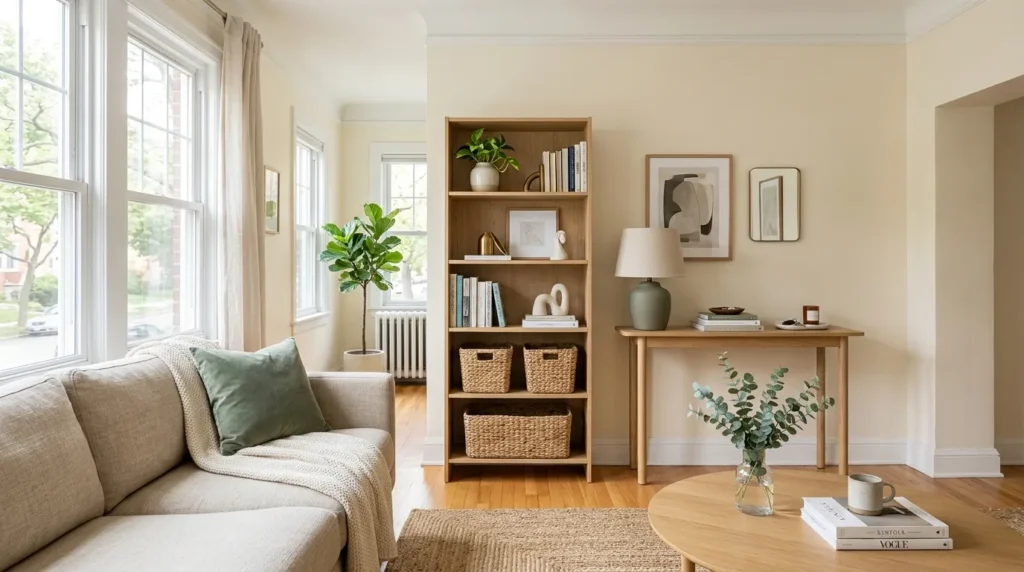
Use a slim bookcase, narrow console, ladder shelf, or small cabinet according to your available wall space.
Group similar objects together rather than spreading small items across every shelf. For example, place books in one section, baskets in another, and a few decorative pieces at eye level.
Woven baskets are useful for hiding throws, children’s items, or entertainment accessories. Choose baskets in colors that relate to your existing furniture so they feel integrated into the room.
Keep some shelves partially empty. Empty space is not wasted space in a compact room; it gives the eye a place to rest.
For a rental, freestanding storage is especially practical because it can move with you and does not require permanent installation.
9. Layered Lighting
Quick Benefits
- Brightens dark corners
- Adds warmth and depth
- Creates flexible evening lighting
- Makes the room feel more welcoming
- Reduces dependence on one harsh overhead fixture
Why It Works
A small living room can still feel gloomy if all of its lighting comes from a single ceiling fixture. Uneven lighting creates dark corners and can make walls appear visually closer.
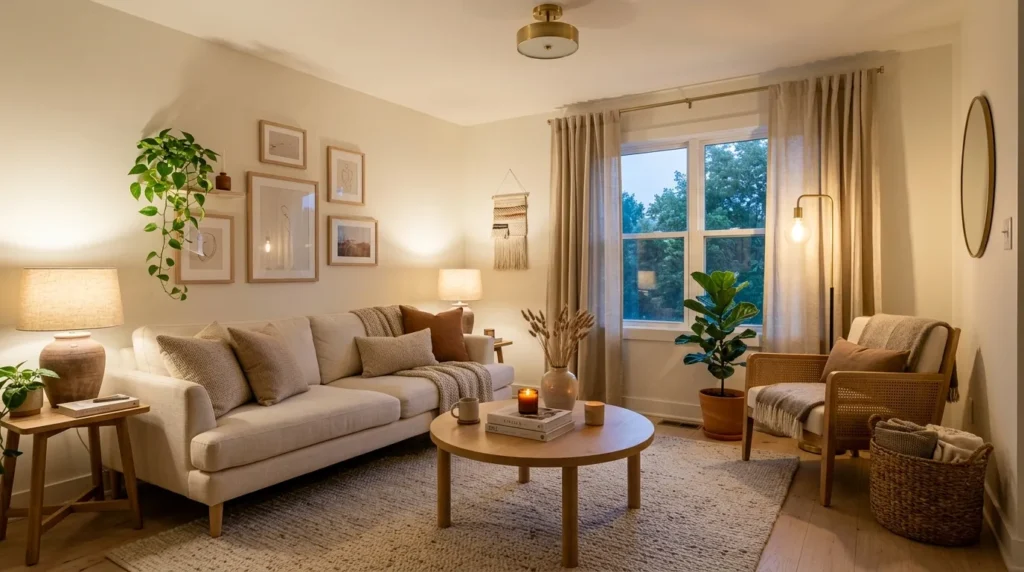
Layered lighting solves this by spreading illumination at different heights. Instead of relying on one source, combine overhead lighting with floor lamps, table lamps, wall lighting, or carefully positioned accent lights.
This approach also improves how the room feels after sunset. A living room should not have to look the same at 8 a.m. and 8 p.m. Adjustable layers allow you to create brighter lighting for cleaning and reading and softer illumination for relaxing.
How To Style It
Start with the room’s existing ceiling fixture, then add one or two secondary light sources.
A slim floor lamp can occupy an unused corner without taking much floor space. A small table lamp can add warmth to a console or side table.
Choose bulbs that suit the activity and atmosphere you want. Warmer evening light generally creates a cozy environment, while brighter task lighting is useful near a reading chair or work area.
Avoid placing every light source on one side of the room. Balance the illumination across the space so no single corner feels dramatically darker than the rest.
If your living room has limited outlets, prioritize the areas where you spend the most time and use compact fixtures.
10. One Strong Focal Point
Quick Benefits
- Creates visual organization
- Prevents decorative overload
- Gives the room personality
- Makes styling decisions easier
- Helps the space feel intentional
Why It Works
A small room does not need dozens of decorative details to feel finished. In many cases, choosing one strong focal point can make the entire space look more sophisticated.
The focal point might be a beautiful piece of artwork, a fireplace, a large mirror, a statement light fixture, an interesting rug, or even a well-styled media wall. Once you decide what deserves the most attention, the rest of the room can support it instead of competing with it.
This is particularly important in compact living rooms because there are fewer visual areas available. When every wall has a gallery arrangement, every surface has accessories, and every corner contains a decorative object, the eye has nowhere to settle.
How To Style It
Choose one feature that naturally attracts attention. If your room has a fireplace, start there. If there is no architectural feature, a large artwork piece or substantial mirror can establish the focal point.
Build the surrounding decor around that feature rather than choosing each item independently.
For example, if your focal point contains warm wood tones and muted green, repeat those colors through a cushion, plant, or small accessory elsewhere in the room.
Keep nearby surfaces relatively simple. A focal point works because it has room to stand out.
If you prefer a gallery wall, use a cohesive frame style and color palette so multiple pieces read as one visual arrangement rather than a collection of unrelated objects.
Putting Everything Together
The best small living rooms rarely rely on one decorating trick. Instead, several small decisions work together to create a room that feels comfortable, functional, and visually open.
Start with the layout before buying accessories. A well-positioned sofa and clear walking path can make a greater difference than a dozen new decorative items. Once the furniture is working, look at the room’s visual weight.
Ask yourself whether your largest pieces feel too heavy. If they do, consider furniture with exposed legs, slimmer profiles, or lighter upholstery. Then examine the walls and windows. Long curtains, strategically positioned mirrors, and a restrained neutral palette can help the room feel taller and brighter.
After that, deal with clutter. Storage does not have to mean adding a giant cabinet. A few baskets, a narrow console, or a compact bookcase can give everyday items a home.
Finally, improve the atmosphere with lighting and a clear focal point.
A useful way to approach the process is to make one change at a time. Move the sofa first and live with the new arrangement for a day. Then adjust the coffee table. Try a different curtain position. Remove a few accessories from the shelves.
This slower approach often reveals what the room actually needs instead of encouraging unnecessary purchases.
Related Articles
- 10 Small Living Room Layout Ideas for Better Everyday Flow
- 10 Cozy Living Room Ideas for a Warm and Inviting Home
- 10 Neutral Living Room Ideas That Never Feel Boring
- 10 Budget-Friendly Living Room Decorating Ideas
- 10 Modern Living Room Ideas for a Clean and Comfortable Space
Frequently Asked Questions
How can I make a small living room look bigger without remodeling?
Focus on visual space rather than structural changes. Keep walkways clear, choose furniture with a lighter profile, use mirrors to reflect light, hang curtains higher, and reduce surface clutter. A cohesive color palette can also make the room feel more connected. Even rearranging existing furniture can create a noticeable improvement without spending money.
What colors make a small living room feel more open?
Soft neutrals such as warm white, cream, beige, light taupe, and pale gray can create an open feeling because they reflect light and reduce strong visual boundaries. You do not need an entirely neutral room, though. Add muted colors through pillows, artwork, rugs, plants, or accessories while keeping the largest surfaces relatively calm.
Should furniture in a small living room be against the walls?
Not necessarily. Pushing every piece against the wall can sometimes create an awkward arrangement. If space permits, pulling a sofa slightly away from the wall can make the seating area feel more intentional. The priority should be maintaining comfortable circulation and making sure the furniture arrangement supports how you actually use the room.
Are mirrors good for small living rooms?
Yes, when they are positioned thoughtfully. A mirror can reflect natural light and create the impression of additional visual depth. Place it where it reflects a window, attractive artwork, greenery, or another bright feature. Avoid positioning a mirror so that it reflects clutter, because that can make the room feel busier rather than more spacious.
What type of coffee table works best in a small living room?
Slim, round, oval, glass, or open-base coffee tables can work particularly well. The right choice depends on your sofa, room dimensions, and walking paths. Before buying, mark the table’s approximate footprint with painter’s tape. This gives you a realistic sense of how much circulation space will remain.
How do I decorate a small living room without making it cluttered?
Choose fewer, more purposeful decorative pieces and give each item enough surrounding space. Instead of placing small accessories on every surface, create one or two intentional arrangements. Use baskets and cabinets to hide everyday clutter, and leave some shelf space empty. Repeating a few colors and materials can also make the room feel cohesive.
How can I make a small living room feel cozy and spacious at the same time?
Combine visual openness with comfortable textures. Use a light or cohesive color palette, maintain clear pathways, and select furniture with an appropriately scaled profile. Then add warmth through soft throws, textured pillows, natural wood, rugs, plants, and layered lighting. A room can feel cozy without being visually crowded.
Conclusion
A small living room does not require a major renovation to feel brighter, calmer, and more open. The biggest improvements often come from decisions that are surprisingly simple: rearranging furniture, reducing visual clutter, choosing lighter pieces, improving lighting, and using mirrors and curtains to influence how the room is perceived.
The most important thing is to work with the space you already have rather than constantly trying to make it something it is not. A compact living room can be comfortable, stylish, and highly functional when the layout supports everyday life.
Start with the change that will have the greatest impact. For some rooms, that means moving the sofa. For others, it may mean replacing an oversized coffee table, clearing a crowded shelf, or adding a mirror where it can reflect natural light.
You do not have to change everything at once. Try one or two ideas, live with the result, and build from there. Over time, those small adjustments can create a living room that feels more open while still feeling warm, personal, and genuinely yours.